45 Products
Chevy Exhaust Header
What Is a Chevy Exhaust Header?
A Chevy exhaust header replaces the cast-iron, log-style factory manifold with a set of individual primary tubes that merge into a collector. Because each cylinder gets its own tube of equal length, exhaust pulses leave the head with far less interference and far less backpressure. The result is better cylinder scavenging — spent gases are pulled out more completely, which lets a fresh charge in — and that is where the horsepower and torque gains actually come from. Whether you are building a small block, a big block or an LS, a Chevy exhaust header is the single most effective bolt-on for unlocking the flow the factory manifold was never designed to deliver.
Why Upgrade — The Problems a Chevy Exhaust Header Solves
- Your factory manifold is the bottleneck. Cast-iron log manifolds were designed for cost, packaging and quiet, not flow. Once you have added an intake, cam or cat-back exhaust, the manifold is usually the next restriction holding the whole combination back — and a Chevy exhaust header is the fix.
- Your stock manifold has cracked. Cracked manifolds — and the exhaust tick, cabin smell and under-hood heat that come with them — are a well-known issue on high-mileage GM V8s. Fitting a Chevy exhaust header solves the failure instead of patching it.
- You are swapping an LS into a classic. Factory manifolds rarely clear a swapped chassis. Purpose-built Chevy exhaust header designs are shaped around the frame rails, steering box and crossmember, so the install does not turn into a fabrication project.
- Under-hood heat is cooking everything. Ceramic-coated Chevy exhaust headers keep heat inside the tubes instead of radiating it into the engine bay, which protects wiring, hoses and paint.
Chevy Exhaust Header Styles: Long Tube, Shorty, Hugger or Turbo Manifold
The right Chevy exhaust header style depends on your chassis, how much clearance you have, and where you want the power:
- Long-tube headers — the strongest mid-range and top-end gains thanks to tuned primary length, but they need more room and usually require changes to the rest of the exhaust system.
- Shorty headers — a compact, near-direct replacement for the factory manifold. Moderate gains and far easier fitment, making them the practical choice for daily-driven trucks and tight modern engine bays.
- Block-hugger headers — the tightest option for narrow engine bays and classic swaps where clearance is the limiting factor.
- Turbo manifolds — built to feed a turbocharger rather than a naturally aspirated collector, for forced-induction LS builds.
Picking the Right Primary Tube Size
Your Chevy exhaust header primary diameter should match your displacement and the rpm range you actually use. 1-5/8″ favors low-end torque on mild small-blocks and street-driven trucks. 1-3/4″ is the all-around choice for most street LS and small-block builds. 1-7/8″ and larger suit big-blocks, stroker combinations and engines that live at higher rpm. Oversizing primaries on a mild street engine will cost you low-end torque.
Chevy Exhaust Header Materials and Coatings
- Aluminized steel — the value option, well suited to dry climates and street use.
- 409 stainless steel — far better rust and corrosion resistance if you drive where roads are salted.
- Ceramic coating — reduces under-hood temperatures and resists corrosion better than plain steel; worth the money on tight engine bays.
Choose Your Chevy Exhaust Header Fitment
Chevrolet exhaust routing and flange layout change by engine family and chassis generation, so match your exact engine and model year before ordering a Chevy exhaust header:
- Small Block Gen I (265–400) — Camaro, Chevelle, Nova, Monte Carlo, Malibu, Caprice, Bel Air, Corvette, C10, Blazer and S10 applications
- Big Block (396 / 402 / 427 / 454 / 502) — 1965–1975 muscle cars and 1968–1985 trucks and SUVs
- LS Series (LS1 / LS2 / LS3 / LS6 / LS7, 4.8L–6.2L) — 1997–2014 Camaro and Firebird, Corvette C5 and C6, plus LS swap conversions into classic Chevrolet cars and trucks
- GMT800 / GMT900 trucks and SUVs — 1999–2006 and 2007–2014 Silverado, Sierra, Tahoe, Suburban, Yukon and Avalanche with 4.8L, 5.3L, 6.0L and 6.2L engines; 1988–1997 C1500 with 305 and 350
- Modern GM performance V8 — 2010–2015 Camaro SS 6.2L
- Four-cylinder and V6 — 2.0L Cobalt SS and Ion, 2004–2010 Cobalt / HHR / Saturn, 4.3L V6 Blazer and Jimmy, classic inline-six 216 / 235 / 261
- Duramax 6.6L — 2001–2016 LB7, LLY, LBZ, LMM and LML exhaust manifolds
Chevy Exhaust Header Installation: What to Expect
A Chevy exhaust header install ranges from an easy afternoon to a full weekend depending on the vehicle. Plan for this:
- Check clearance around the steering shaft, motor mounts, starter and frame before committing to a style.
- Install with new gaskets — copper or multi-layer steel — and never reuse the factory ones.
- Tighten flange bolts in a criss-cross pattern to the manufacturer’s torque specification.
- Re-check and retighten after the first heat cycle, because new gaskets settle.
- On 1996-and-newer OBD-II vehicles, plan on a tune to correct fuel trims and address catalyst efficiency codes.
Compliance Note
Most aftermarket Chevy exhaust headers are not CARB-exempt and are not legal for street use in California or other states with strict emissions laws. Some shorty headers carry an Executive Order (EO) number — check the individual product description. Unless a product states otherwise, treat these as off-road and competition use only, and confirm your local emissions requirements before installing.
Filter products
- ENGINE
-
POWERSTROKE
- DPF Delete Exhaust
- All In One Kit
- EGR Delete Kit
- CCV PCV Reroute Kit
- DPF Delete Dual Exhaust
- Tuner
- Intercooler Pipe Kit
- Up-Pipe
- Intercooler
- CP4 Bypass Kit
- CCV Recirculating Kit
- Muffler
- Downpipe
- Intake Manifold
- Air Intake Kit
- Radiator
- Oil Catch Can
- Differential Cover
- Coolant Tube
- Valve Cover
- Transmission Pan
- Coolant Expansion Tank
- Exhaust Manifold
- Turbo
- Suspension & Lift
-
DURAMAX
- Tuner
- EGR Delete Kit
- CCV Reroute/delete kit
- DPF Delete Exhaust
- DPF Delete Dual Exhaust
- All In One Kit
- Muffler
- Up-Pipe
- Downpipe
- Intake Elbow Bridge Kit
- Intercooler
- Intercooler Pipe Kit
- Air Intake Kit
- Radiator
- Differential Cover
- Valve Cover
- Oil Pan
- Cooler Line Kit
- Fuel Sump Return Kit
- Tonneau Cover
- Coolant Tube
- Suspension & Lift
-
DODGE RAM
- Tuner
- EGR Delete Kit
- CCV Reroute/delete kit
- EGT Relocation Kit
- DPF Delete Exhaust
- All In One Kit
- Muffler
- Air Intake Kit
- Intercooler
- Intercooler Pipe Kit
- Radiator
- Valve Cover
- Differential Cover
- Intake Manifold
- Coolant Bypass Kit
- Coolant Leak Repair Kit
- Fuel Rail Plug
- Fuel Tank Sump Kit
- Oil Catch Can
- Oil Pan
- Coolant Tube
- Suspension & Lift
- ALL-IN-ONE KITS
- CATEGORIES
- Delete Tuners
Let customers speak for us
from 6111 reviews
took like 2 hours to do with all the right tools and has much better throttle response. would highly recommend!!
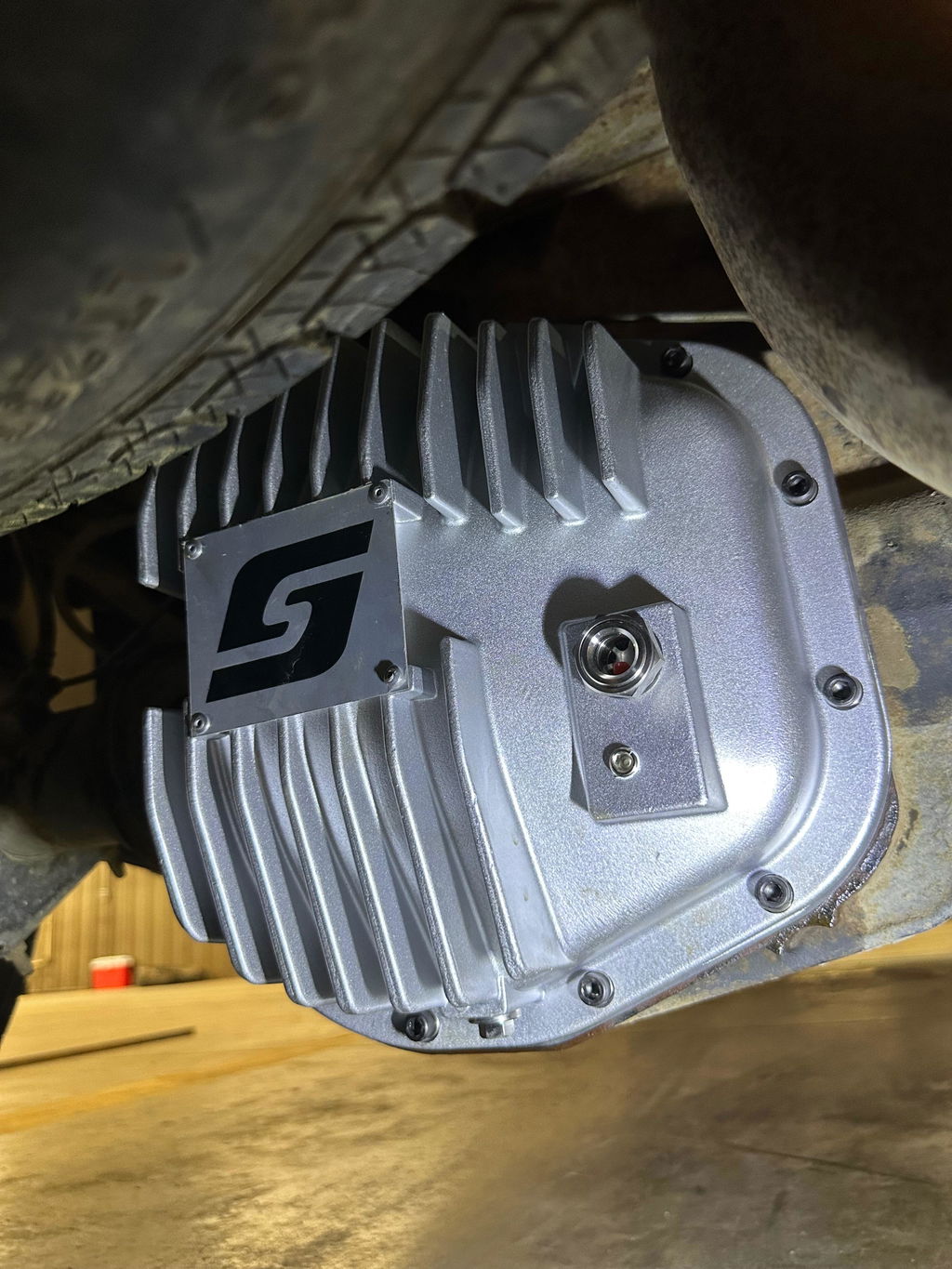
Have had the differential cover on for almost a week now and have had zero issues. The cover looks very nice and I now having the drain & fill plugs and the sight glass will make fluid changes a lot easier. Only recommendation would be to swap from Allen head bolts to regular ones as they are a bit easier to torque but other than that love it. FYI for anyone wondering I torqued all my bolts to 22 ft/lbs and have had zero leaks, couldn't find an exact torque spec but this seems to suffice!
Great for the price and pretty simple install. Did have to modify one bracket but other than that it was a slick install and great product
I got burned with a Banks manifold when their #1 proprietary fuel line split on me. This manifold takes care of that! It was an easy swap out, and worked with the banks plate.
Great Product. Quality seems really good too.
Bought a intake manifold from spelab for my 3500 6.7 cummins, and it works perfect, shipping was fast all parts included. Great company to deal with, highly recommended.
Installation was easy
Absolutely perfect fit! Super easy to install did move gasket from downpipe to DPF and reused but overall extremely pleased!
I bought the Chinese knock off because SPE Motorsports won’t sell it. As advertised. I’m sure it’ll do.
Purchased for my 2011 ram 2500 6.7 Cummins. Great product all the sensors holes lined up perfectly helped with acceleration a lot more responsive now on acceleration
Installed on a 14 3500, seamless install maybe takes 10min. Definitely opens intake up. Noticeably more sound. Not sure any performance gains other than throttle response
I’ve purchased the EGR and CCV deletes as well as the upgraded intake manifold, upper radiator hose and thermostat block, and compressed air piping. Overall I am very satisfied with the quality and fit of all of the parts. Some of the instructions could use a little more detail, but if you are in any way mechanically inclined, you’ll be able to do these yourself no problem. I did have to make a very small modification to the aluminum quick connector on the upper radiator hose in order to get it to lock in place, but other than that everything has been great!
Works amazing and easy to install
too good to not change them!
Slowly piecing this thing back together for the freedom meet this weekend 🤟
Chevy Exhaust Header faqs
A Chevy exhaust header is a performance-oriented replacement for the factory exhaust manifold. It uses equal-length primary tubes that merge into a collector, reducing exhaust backpressure and improving scavenging. This design allows exhaust gases to exit more efficiently, increasing horsepower and torque compared to the cast-iron, log-style factory manifold.
Yes. On a typical small-block or LS-based Chevy V8, a quality Chevy exhaust header can add 15-30 horsepower and 20-40 lb-ft of torque, especially in the mid- to high-RPM range. Gains are more noticeable when paired with a free-flowing exhaust and intake.
For most carbureted or older fuel-injected engines, a tune is not required but can optimize performance. For modern GM trucks with OBD-II (1996 and newer), a tune is highly recommended after a Chevy exhaust header install to eliminate the check engine light (P0420/P0430 catalyst efficiency codes) and adjust fuel trims for the improved exhaust flow.
Shorty Chevy exhaust headers are compact and often direct replacements for factory manifolds, offering moderate gains without major fitment changes. Long-tube Chevy exhaust headers have longer primary tubes that maximize scavenging and power, but may require modifications to the exhaust system and chassis. SPELAB offers both styles for various Chevy applications.
Most aftermarket Chevy exhaust headers are not CARB-exempt and are not legal for street use in California or other states with strict emissions laws. Some shorty headers may carry an Executive Order (EO) number; check the product description. For off-road or competition use only unless stated otherwise.
Your Chevy exhaust header primary tube diameter should match the engine's displacement and the rpm range you actually use. 1-5/8 inch favors low-end torque on mild small-blocks and street-driven trucks. 1-3/4 inch is the all-around choice for most street LS and small-block builds. 1-7/8 inch and larger suit big-blocks, stroker combinations and engines that live at higher rpm. Oversizing primaries on a mild street engine costs you low-end torque.
Yes. This collection includes dedicated LS swap Chevy exhaust headers for classic Chevrolet cars and trucks, including C10, S10, Camaro, Chevelle and Nova conversions, as well as universal LS swap designs. These Chevy exhaust headers are shaped to clear the frame rails, steering box and crossmember, and come in long-tube and shorty configurations depending on how much clearance your chassis has.
Included hardware varies by kit, so check the individual Chevy exhaust header listing before ordering. Most ship with the flange and collector hardware, but gaskets, bolts and O2 sensor extensions are often sold separately. Always install a Chevy exhaust header with new gaskets rather than reusing the factory ones.
Yes. A Chevy exhaust header changes the exhaust note because individual primary tubes alter how exhaust pulses merge at the collector. Expect a deeper, more defined tone with a sharper edge under acceleration compared to the muted sound of a cast-iron log manifold. The final character depends on the rest of your exhaust system.
Yes. Alongside the V8 applications, this collection covers Chevy exhaust headers for four-cylinder and V6 platforms, including the 2.0L Cobalt SS and Ion, 2004-2010 Cobalt / HHR / Saturn four-cylinders, the 4.3L V6 in Blazer and Jimmy, and classic Chevrolet inline-six 216 / 235 / 261 applications.