What a Fuel Rail Plug Actually Does
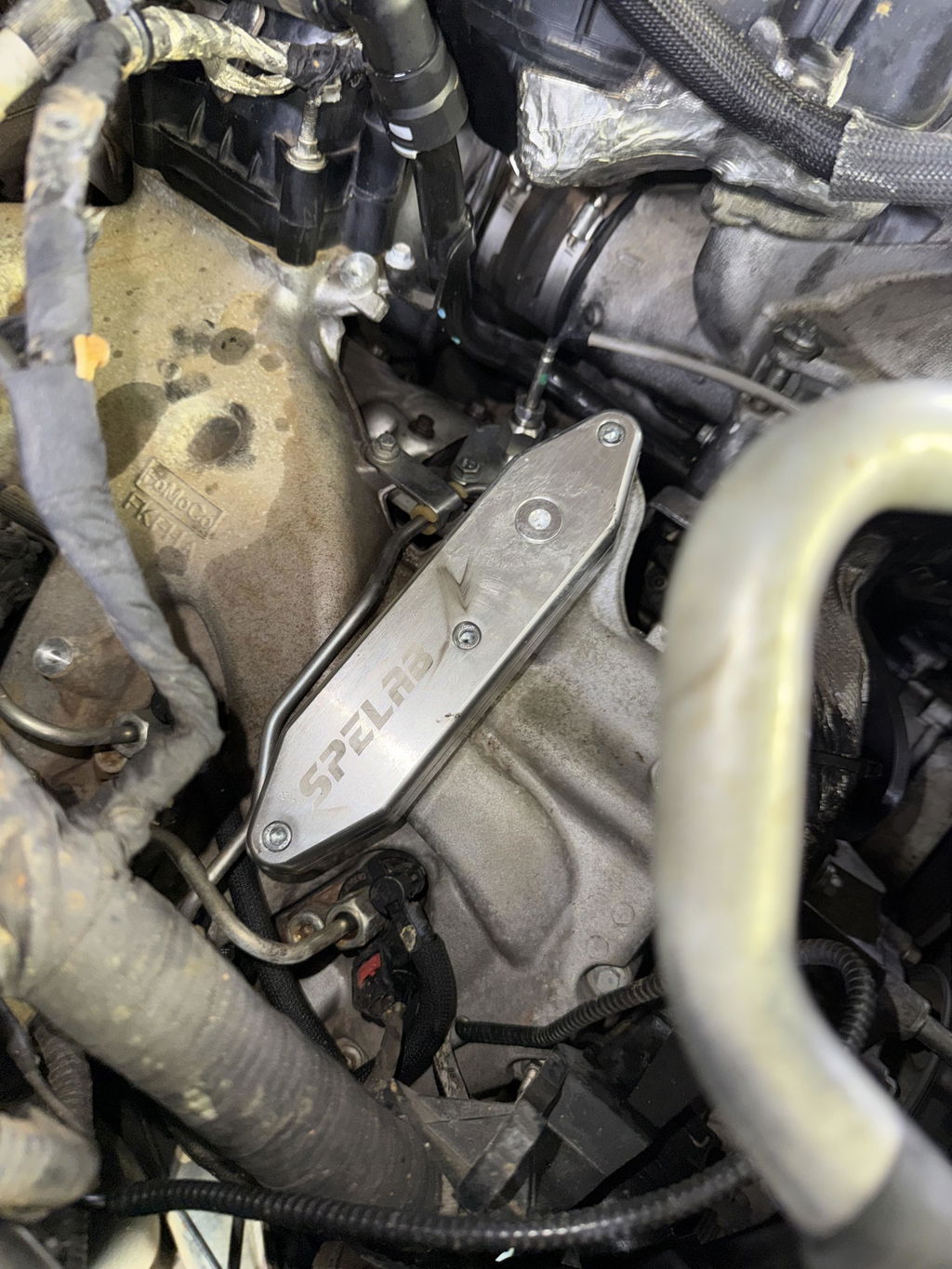
A fuel rail plug is a solid replacement for the pressure relief valve on a common-rail diesel fuel rail. That is the entire part: where the factory valve cracks open and sends fuel back to the tank once pressure passes a set point, the plug simply closes the port - no spring, no relief path, no return.
Everything else said about a fuel rail plug follows from that one difference. With the relief port blocked, the rail holds the pressure the high-pressure pump builds instead of bleeding it off, so pressure stays stable at the moment the engine is asking for the most fuel: a sustained pull, a heavy load, or a calibration that targets more rail pressure than the stock valve was specified to hold.
Why the Factory Pressure Relief Valve Is There in the First Place
A common-rail diesel runs fuel pressures high enough that the rail is a pressure vessel in its own right. The relief valve is the safety valve on that vessel - a spring-loaded seat set to open at a calibrated pressure, dumping fuel back through the return line so the rail, the lines and the injectors never see more than they were designed to hold. It is a protection device first and a fuel-system component second.
That is also why relief valves fail in a way owners actually notice. A spring that has weakened, or a seat that no longer seals properly, opens earlier than it should. Fuel goes to return, pressure sags at exactly the moment the engine wants it, and the ECU sees actual rail pressure falling below what it commanded.
Why Rail Pressure Bleeds Off Under Load
Low rail pressure has more than one cause, and a fuel rail plug only addresses one of them:
-
A weak or stuck relief valve. The classic case. The valve opens early or hangs open, and pressure drops during power enrichment.
-
A supply-side shortfall. A tired lift pump, a restricted filter or an undersized feed line means the high-pressure pump cannot keep up. From the driver's seat it feels identical, but it needs the opposite fix.
-
Excess injector return flow. Worn injectors bleed volume out of the rail continuously, and it shows up worst under demand.
-
A calibration asking for more than the hardware holds. Commanded pressure above the point the stock valve was set to relieve.
The low-rail-pressure fault codes that come with this describe a symptom rather than a cause. Blocking the relief port makes the symptom go away in all four cases - but it only genuinely fixes the first.
Fuel Rail Plug vs Shimmed Valve vs Ported Rail Fitting
Three parts get discussed as if they were interchangeable. They are not.
| Part |
What it does |
What changes |
When it is the right answer |
| Fuel rail plug |
Replaces the relief valve with a solid plug |
Relief path closed, no fuel return from the rail |
Competition and off-road use where the rail has to hold commanded pressure |
| Shimmed relief valve |
Keeps the stock valve and increases spring preload |
Opens at a higher threshold, relief function retained |
Someone who wants headroom but wants to keep an over-pressure path |
| Ported rail fitting |
Replaces the restrictive stock fitting feeding the rail |
More flow volume from the pump into the rail |
A supply-side fix, for when the rail is being starved rather than relieved |
The last one is worth separating out, because the naming gets muddled: a ported fitting is a flow part, a fuel rail plug is a pressure-holding part. They solve different problems, and they get bought for each other's problem more often than they should.
What You Give Up With a Fuel Rail Plug
This is the part worth reading before buying one. A relief valve is safety equipment, and plugging it removes that margin.
-
No over-pressure protection. If the pump or the regulator overshoots, nothing relieves it. The rail, the lines, the seals and the injectors absorb it instead.
-
Hidden faults. A relief valve that opens early is sometimes telling the truth about a weak lift pump or a blocked filter. Plug the port and that warning disappears, and the next thing to fail is usually the expensive component.
-
No extra fuel. If the pump cannot supply the volume, blocking the return will not create it. Supply problems stay supply problems.
None of that makes the part wrong - it makes it specific. A fuel rail plug belongs on an engine where the relief valve is demonstrably the problem and the rest of the fuel system has already been verified.
Choosing a Fuel Rail Plug
Judge these parts on a short list of things that actually matter:
-
Material and construction. Heat-treated stainless steel in a one-piece, weld-free body resists corrosion and, more importantly, resists cracking under heat cycling and constant pressure.
-
Correct thread and seat for the rail. These are set by the rail, not by the plug manufacturer. Confirm thread pitch and sealing style against the actual rail before ordering - "close enough" is not a fitment on a high-pressure port.
-
Fresh sealing hardware. Washers and sealing surfaces are consumables. Reusing a crushed washer on a port that holds this much pressure is how a dry install becomes a wet one.
-
Machining quality. Clean threads, a true seat and no burrs. This is a part where a rough machining mark becomes a leak path.
Installation and What to Check Afterwards
- Relieve residual rail pressure before opening anything, work clean, and keep the port covered while it is open.
- Fit new sealing washers and tighten sensibly - over-torquing a steel plug into an alloy rail is a common own goal.
- Start the engine and check the seat for weeping before putting anything back together.
- Watch actual rail pressure against commanded on a loaded pull afterwards. That single comparison tells you whether the plug solved the problem or simply hid it.
- Re-check the seat after a few heat cycles.
A note on intended use: a fuel rail plug removes a factory over-pressure protection and closes the fuel return path, which is why this category is sold for competition and off-road applications. On an emissions-controlled, road-registered truck, keep the factory relief valve in place and fix the underlying supply problem instead.
A fuel rail plug is a precise fix for one precise failure. Diagnose first, confirm the relief valve is what is actually bleeding pressure off, and it does its job well. Fit one to chase a code you have not traced, and it will cost you more than it saves.