1 Product
Powerstroke Oil Catch Can
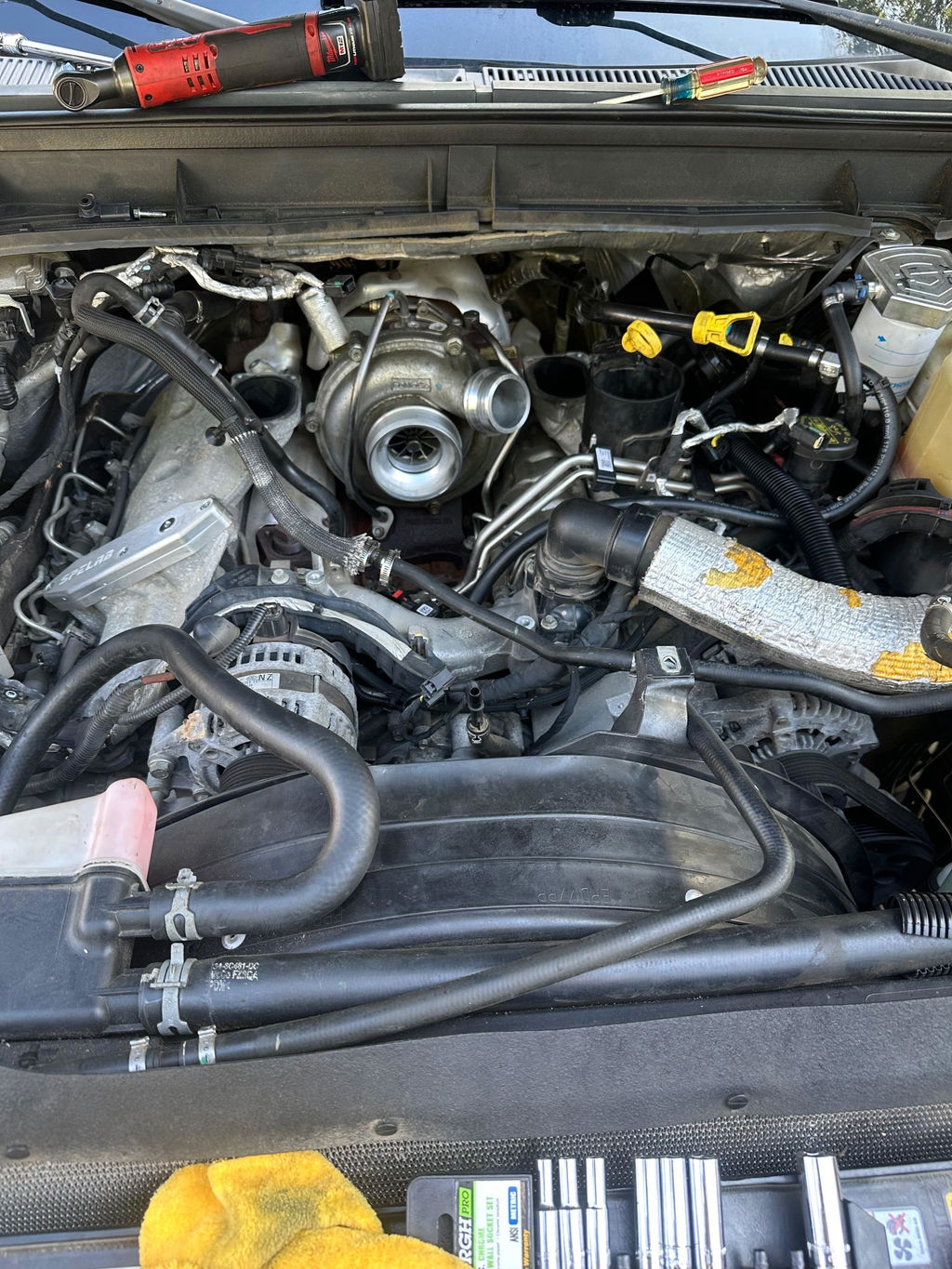
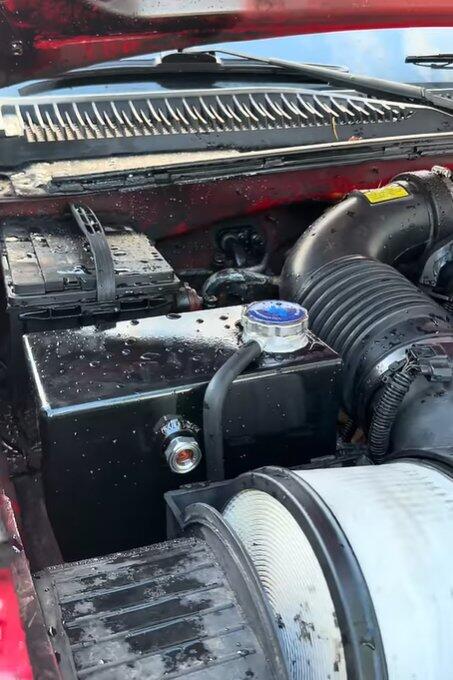
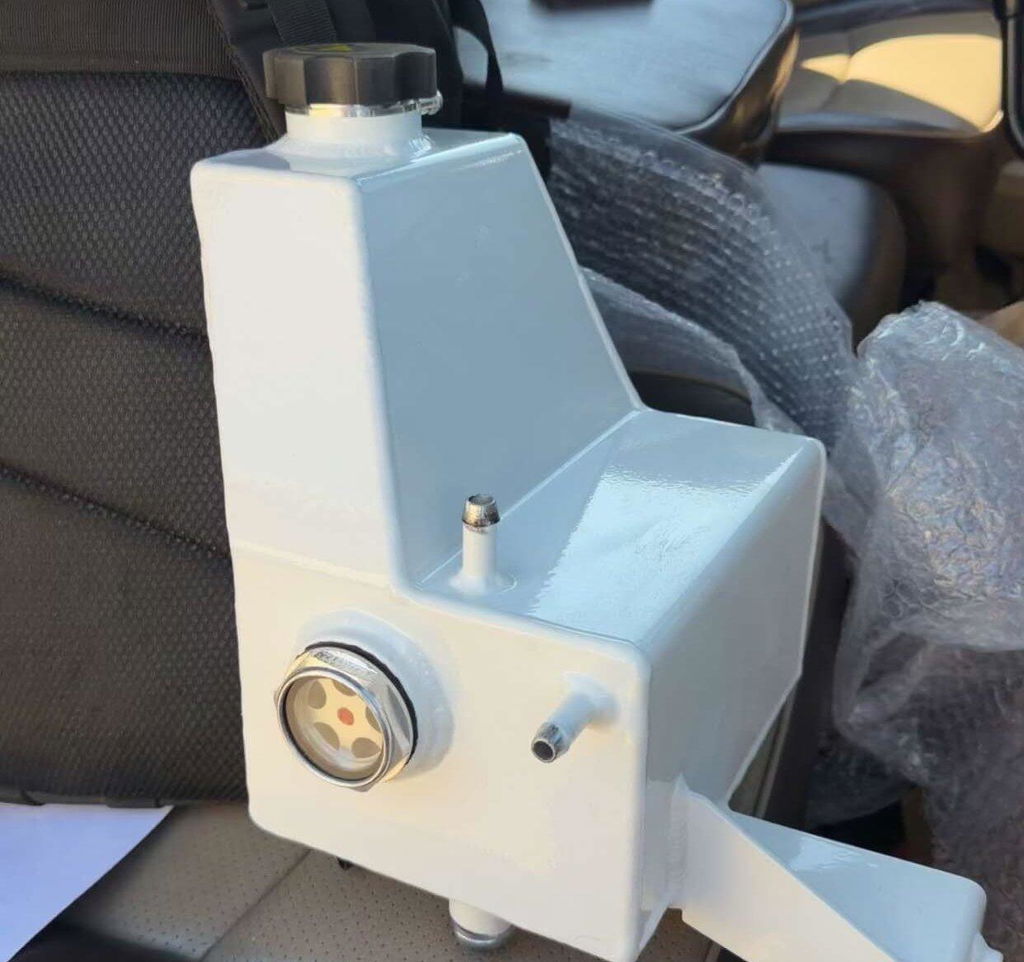
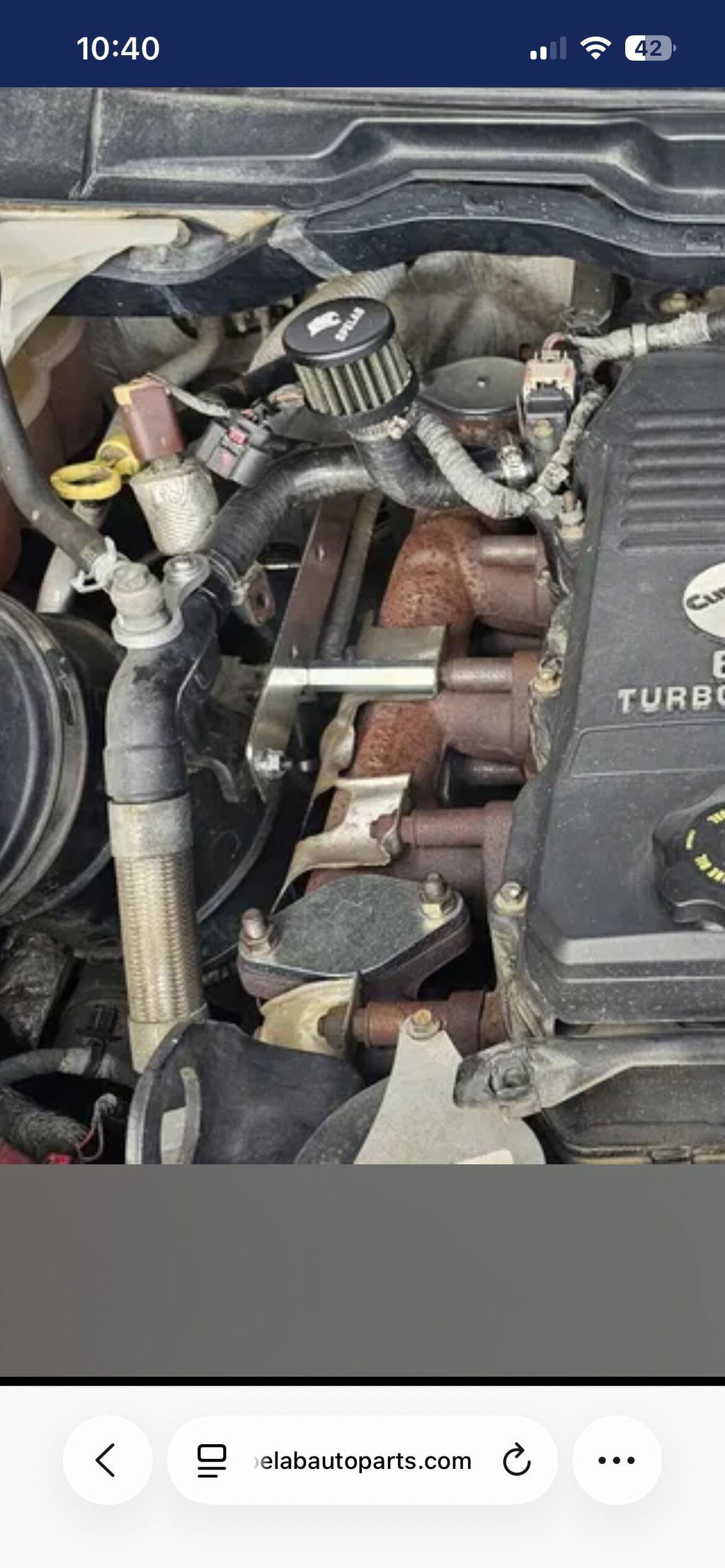
A Powerstroke oil catch can sits in the crankcase vent line on a 6.7L and separates oil mist out of the vapour before it reaches the turbo. What makes it worth fitting on these engines is not the can itself but where that oil ends up otherwise - through the compressor, into the charge air cooler, and back through the intake.
What a Powerstroke Oil Catch Can Does in the Intake Path
Every diesel engine passes some vapour from the crankcase back into the intake. On a 6.7L that vapour travels a long way, and each stage along the route does something slightly different with the oil carried in it.
- The CCV outlet at the engine. Vapour leaves the crankcase carrying oil mist, fuel residue and water vapour. The mist is fine enough to stay suspended for a long way.
- The intake pipe ahead of the turbo. The first place oil starts to wet the walls. A thin film here is normal on a diesel with any miles on it.
- The compressor. Oil that reaches it coats the wheel and the housing. This is the stage worth intercepting before.
- The charge air cooler. It is a large, cool, low-velocity volume, so anything still suspended condenses and settles. It is also the lowest point in the system, which is why it collects.
- The intake and the cylinders. What gets past the cooler ends up on intake surfaces and in the combustion chamber.
A Powerstroke oil catch can intercepts the mist ahead of the compressor, so the stages behind it stay cleaner than they would otherwise.
Signs Oil Is Getting Past the Crankcase Vent
A film is normal on a 6.7L. A puddle is not, and the difference is what usually sends owners of these trucks to this category.
- Oil weeping at the charge air cooler boot seams. The boots are the lowest joints in the system, so anything pooling inside shows up there first.
- A measurable amount in the cooler itself. Pulling a pipe off and finding oil that runs out rather than coats the inside is past what a vent system should be passing.
- A wet film at the compressor inlet. It is the closest read on how much is actually going through.
- Oil consumption with no external leak. Once the pan, the cooler housing and the turbo seals have been ruled out, the vent path is the next place to look.
Baffled, Open and Factory Separators Compared
Not every Powerstroke oil catch can separates the same way. The difference shows up in what it catches rather than in how much it holds.
| Type | How it separates | Catches well | Misses |
|---|---|---|---|
| Empty chamber | Drops the velocity so droplets fall out of suspension and hit a surface | Larger droplets | Fine mist, which is most of what leaves the engine |
| Baffled can | Forces repeated direction changes through media, which lengthens dwell time and lets fine droplets coalesce | Fine mist as well as droplets | Vapour that never condenses at all - nothing catches that |
| Factory separator element, where fitted | A filter element in the vent path ahead of the intake | A share of the mist while it is clean | Anything once the element loads up; a loaded one is a restriction, not a filter |
The third row is the one people forget. A separator element is a service item, not a permanent fix, and it is worth checking before concluding that a can is needed.
Duty Cycle: How Fast the Can Fills
Drain intervals are not a mileage figure on a Powerstroke. They follow how the truck is worked, because that is what decides how much vapour the engine makes and how much of it condenses.
| Duty cycle | What fills the can |
|---|---|
| Heavy towing or sustained boost | Oil, and quickly. This is the usage that fills a can in a single trip |
| Long idling | Oil and fuel residue, at lower boost but for longer |
| Short trips in cold weather | Mostly water. The engine never fully warms, so condensate collects faster than oil does |
| Highway commuting at steady load | The least, and mostly oil |
Check it at every fuel stop for the first few weeks, and the pattern becomes obvious quickly. Whatever the interval settles at, empty it before it is full - a can that is full stops separating.
Mounting, Draining and the Hose Runs
Placement is where most of the disappointment comes from on a Powerstroke, and it is usually a plumbing problem rather than a can problem.
- Mount it where it can be drained. A can that needs two hands and a torch to empty gets forgotten.
- Keep the hose runs short and without low points. Anything that sags collects condensate, and a low point that freezes in winter blocks the line.
- Match both ports to the line. A step down in diameter at either end restricts flow.
- Support the hoses. A kink or a hose resting against something hot is the usual reason a fault appears after fitting.
Fitment Checks Before Ordering a Powerstroke Oil Catch Can
- Engine family. A can built for the 6.7L Ford diesel does not suit a gas engine. The vent routing and the connection sizes are different systems.
- Where it goes in the CCV line. Some mount at the engine, some further along. The listing should say which, and it decides the hose lengths.
- Whether the drain is accessible once fitted. A petcock at the bottom beats extra capacity.
- What transfers over. Hose, clamps, brackets and any mount. Reusing the factory hose is where most leaks start.
- Cab and bed configuration. Under-hood room on a Ford Super Duty changes with the engine bay layout, and a can that fits one may not clear another.
What a Powerstroke Oil Catch Can Will Not Fix
- Oil consumption from the engine. Ring wear, a turbocharger seal and crankcase pressurisation all sit outside what a can can influence.
- Deposits that are already there. A can slows further accumulation. It does not clean what has already coated the cooler and the intake.
- A blocked or loaded vent path. Separation and flow are separate questions. A can added to a restricted line makes the restriction worse.
Emissions and Intended Use
Everything above happens inside the closed CCV circuit on a Powerstroke, which stays connected and monitored as built. Crankcase ventilation is part of the emissions control system, and venting it to atmosphere or rerouting it counts as tampering on a road-registered vehicle - none of the above is guidance on doing that.
Filter products
- ENGINE
-
POWERSTROKE
- DPF Delete Exhaust
- All In One Kit
- EGR Delete Kit
- CCV PCV Reroute Kit
- DPF Delete Dual Exhaust
- Tuner
- Intercooler Pipe Kit
- Up-Pipe
- Intercooler
- CP4 Bypass Kit
- CCV Recirculating Kit
- Muffler
- Downpipe
- Intake Manifold
- Air Intake Kit
- Radiator
- Oil Catch Can
- Differential Cover
- Coolant Tube
- Valve Cover
- Transmission Pan
- Coolant Expansion Tank
- Exhaust Manifold
- Turbo
- Suspension & Lift
-
DURAMAX
- Tuner
- EGR Delete Kit
- CCV Reroute/delete kit
- DPF Delete Exhaust
- DPF Delete Dual Exhaust
- All In One Kit
- Muffler
- Up-Pipe
- Downpipe
- Intake Elbow Bridge Kit
- Intercooler
- Intercooler Pipe Kit
- Air Intake Kit
- Radiator
- Differential Cover
- Valve Cover
- Oil Pan
- Cooler Line Kit
- Fuel Sump Return Kit
- Tonneau Cover
- Coolant Tube
- Suspension & Lift
-
DODGE RAM
- Tuner
- EGR Delete Kit
- CCV Reroute/delete kit
- EGT Relocation Kit
- DPF Delete Exhaust
- All In One Kit
- Muffler
- Air Intake Kit
- Intercooler
- Intercooler Pipe Kit
- Radiator
- Valve Cover
- Differential Cover
- Intake Manifold
- Coolant Bypass Kit
- Coolant Leak Repair Kit
- Fuel Rail Plug
- Fuel Tank Sump Kit
- Oil Catch Can
- Oil Pan
- Coolant Tube
- Suspension & Lift
- ALL-IN-ONE KITS
- CATEGORIES
- 🔥BFCM
Let customers speak for us
from 6357 reviews
Coolant reroute fit perfectly, install was a breeze. Everything I’ve bought exhaust, egr delete, and coolant reroute have fit perfect, 0 complaints. Ccv reroute will be next and coolant upper pipe!
Installed this on my 2012 F-150 5.0L using a LubeLocker gasket instead of RTV. Installation went smoothly, and so far everything is working great with no leaks.
One helpful note for other buyers: I couldn't find the recommended cover bolt torque specification in the documentation, so I contacted SPELAB support. Their technical team confirmed a specification of 25–30 N·m (approximately 18–22 ft-lbs). I torqued mine to 20 ft-lbs.
It would be helpful if SPELAB included this information in the installation instructions. Otherwise, very happy with the purchase so far!
The fuel line they sent with the intake horn did not fit properly and also there was a issue with the flare nut not reaching the threads
I have been having issues with the tune (hopefully not the tuner). I emailed customer service with my concerns and got a response within an hour. I didn’t even think to check my email that quick because “normal” customer service takes days. They responded both times in such a rapid manner I was not able to respond with the issues that fast. They have been great to deal with. I will continue to purchase from them because of that alone
I recently purchased the SPELAB grid heater delete plate kit and installed on my 2018 Ram 2500 with the 6.7 Cummins diesel engine
I Was not left disappointed with the ease of ordering and speed of service along with the completeness of the kit and High quality fit and finish !
I now have the piece of mind as well as the High performance that the grid heater deleate plate offers for my Ram 2500
Very Pleased with with customer service and the quality of the product
Thanks SPELAB
PHIL with
Peterson Farms Of Nashville DIY YT Channel
This kit is put together so well love the packaging it came in and how simple it is to assemble i did notice a slight drop in EGTs like it said it would and also no leaks what so ever. Only issue is not stickers
Got rid of my factory horn and went with this one for 93% more air flow and it looks sick
Great quality and fit Perfect
Great Product. Quality seems really good too.
Easy to install, beautifully crafted
That's beautiful !
beautifully crafted
It's beautiful, easy to install.
Great Product easy installation work flawlessly on my 2018 Ram 2500
As promised great product and perfect fit..Thank you SPELAB
Powerstroke Oil Catch Can FAQS
An oil catch can separates oil vapour and fuel residue from crankcase blow-by before it reaches the intake on a 6.7L Powerstroke. That slows carbon buildup on the intake valves, throttle body and turbo inlet. It does not remove deposits that are already there, and it adds no power.
Empty intervals vary by driving habits — heavy towing or short-tripping fills it faster. Check monthly under normal use; frequency increases with aggressive driving or frequent idling.
An oil catch can does not affect emissions while it stays in the closed crankcase ventilation circuit, because nothing is removed or vented. Warranty claims can be denied only if the part caused the failure. Venting the crankcase to atmosphere is tampering on a road-registered vehicle.
Yes — it bolts directly to the CCV line on 2011–2025 6.7L Powerstroke without cutting or drilling. No fabrication or custom brackets required for most configurations.
A catch can is the right choice when the truck keeps its emissions hardware and stays on the road. Signs one is needed: oil in the intake piping, oil pooling in the charge air cooler, or oil weeping at the boot seams. Rerouting the vent to atmosphere is tampering.
A catch can does not improve fuel economy on a Powerstroke. It keeps oil out of the intake tract, which slows deposit buildup. Any change in how the truck runs comes from what the can prevents, not from anything it adds. Treat it as maintenance rather than a modification.
A Powerstroke oil catch can reduces the oil reaching the intercooler, because it separates mist from the vent vapour before the turbo. It does not remove oil already pooled inside. Expect less new accumulation, not a clean charge air cooler. Cleaning one that is already full is a separate job.
A baffled oil catch can catches more than an open can on a 6.7L Powerstroke. The media forces direction changes that let fine droplets coalesce, while an empty chamber only catches droplets heavy enough to fall out unsupported. Neither captures vapour that never condenses, and the media needs cleaning too.
A Powerstroke oil catch can normally collects a small amount between oil changes, more if the truck tows or idles often. A sudden increase points at rising blow-by rather than at the can. An empty can usually means the hose connections are reversed. Check both before assuming a fault.
A Powerstroke oil catch can goes in the vent line between the crankcase vent outlet and the turbo inlet, ahead of the compressor. Mounting it there is what keeps the mist off the compressor wheel and out of the charge air cooler. Keep the hose runs short and supported.