What a Powerstroke Coolant Expansion Tank Actually Does
A Powerstroke coolant expansion tank is not a spare reservoir you top up now and then. It is the part of the cooling system that manages volume change, air and pressure - three jobs that decide whether the rest of the system can do its work at all.
-
It absorbs expansion. Coolant takes up more space as it heats, and that extra volume needs somewhere to go.
-
It keeps the pump inlet fed. It is what keeps liquid rather than air at the pump inlet. Air there means cavitation, and cavitation means no circulation.
-
It gives air somewhere to separate out. Air travels until it finds somewhere to collect, and the tank is that place - which is why air left after a repair shows up as overheating.
-
It sets the working pressure. The cap is a pressure-setting device, not a lid. Pressurising the coolant raises its boiling point, and that margin keeps an engine out of local boiling.
Take any one of those away and the symptom owners actually notice is the same one: a temperature gauge that will not behave, usually under load.
Why a Powerstroke Coolant Expansion Tank Is Usually the First Cooling Part to Go
Of everything in the cooling system, the tank tends to age fastest, and the reasons are structural rather than accidental.
-
It is built from two moulded halves joined along a seam. That seam is the load path every pressure cycle goes through, and it is where failures start.
-
It sits in engine heat without airflow. Radiators and hoses get air across them; the tank does not, so it soaks rather than sheds.
-
It cycles pressure constantly. Every drive is one full cycle, and the seam and the cap seat see all of them.
-
Plastic warns you first. A tank turning cloudy or chalky is losing the ability to flex.
The consequence people miss is what follows a tank that can no longer hold pressure. The boiling point comes down with it, the engine starts boiling locally instead of transferring heat, and the gauge climbs - on a system whose radiator and water pump are both fine.
Reading a Coolant Expansion Tank Correctly
Most confusion around these tanks comes from reading the level as if it were a fixed mark. It is not.
-
Cold level and hot level are different numbers. The tank has to have room for expansion, which means filling it to the top is wrong - it leaves the system nowhere to put the extra volume and it vents coolant out of the cap instead.
-
A sight glass is a check, not a gauge. It tells you there is coolant where there should be, at whatever temperature the engine happens to be. It is useful precisely because you can read it without opening anything.
-
Internal baffles are there for the pump. They keep the outlet covered and stop the tank from drawing air when the truck changes direction or brakes hard, which is what protects the pump from cavitation.
So the question worth asking about a level that keeps dropping is not "how much is missing" but "at what temperature was it read" - a level recorded hot and checked cold will always look low.
The Cap Is a Component, Not a Lid
The cap sets the pressure the whole system works at, and it works in both directions: it releases pressure above its setting, and it lets coolant back in as the system cools and contracts.
That second direction is the one that gets overlooked. A cap that cannot hold pressure lets the boiling point drop; a cap that cannot let fluid back in leaves the system drawing a vacuum as it cools, which collapses hoses and pulls air in at the weakest joint. Either way the symptom looks like a cooling problem rather than a cap problem.
What decides whether a cap works is its seat and how it is fitted - a damaged or dry sealing face, or one that is not fully seated, will not hold pressure regardless of the cap itself.
One Port or Two: The Detail That Decides Whether It Fits
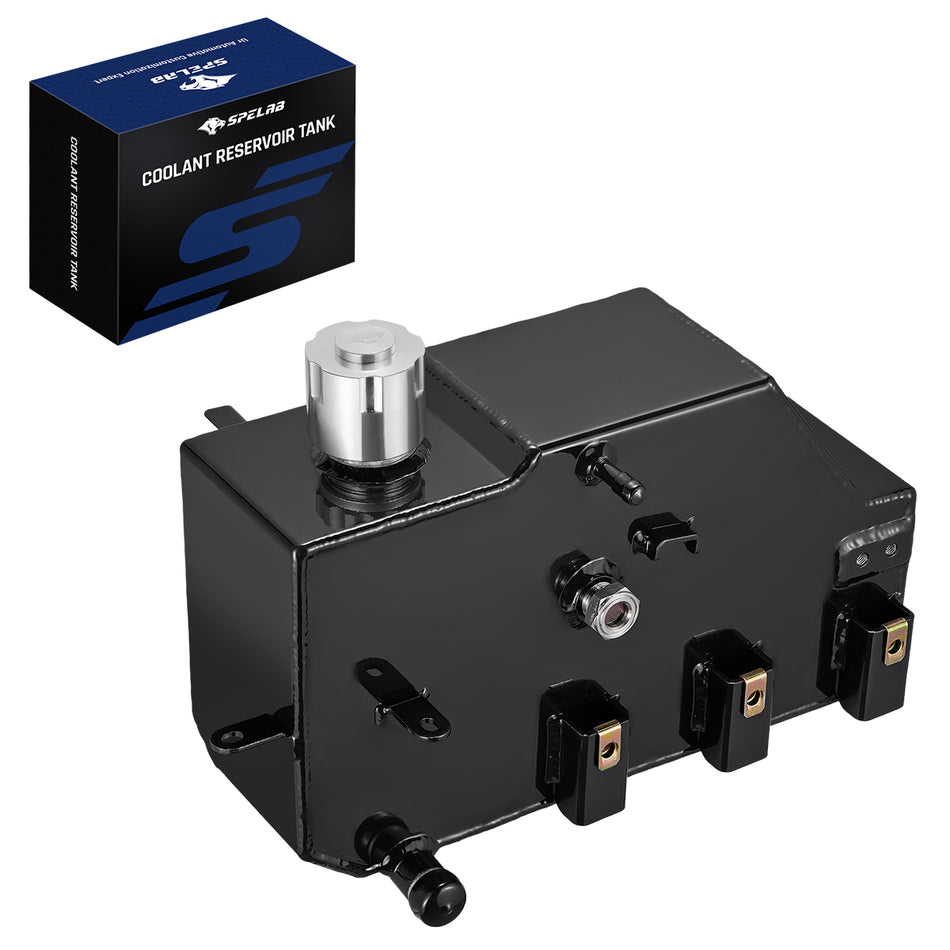
Port count is the specification most often missed, and it is the one that decides whether a tank can be fitted at all.
Some cooling circuits return more than one line to the tank. Where a second return exists, the tank has a second port for it, and that line is carrying flow back from a heat exchanger elsewhere in the system. If that circuit is still in use, the line has to stay connected - a port that is capped or left open stops the flow through that circuit rather than simply going unused.
So the check is not whether a tank looks right. It is how many return lines the truck actually has, and where they come from. Tanks with different port counts are not interchangeable, and this is the detail that most often turns a straightforward swap into a second order.
Aluminum vs Plastic for a Powerstroke Coolant Expansion Tank
The comparison that matters here is not metal against plastic in the abstract - it is one-piece welded construction against two halves joined along a seam.
-
The seam is what fails. A welded tank has no bonded joint running its length, so the usual failure point is not there.
-
Metal does not go brittle here. Heat and pressure cycling are what age plastic, and that is the practical reason for changing materials rather than appearance.
-
Level checks change. A metal tank needs a sight glass or a cap you are willing to remove - a real difference in daily use.
-
Mixed metals need thought. Where aluminium meets fittings of another metal, corrosion at that interface decides how long the assembly lasts.
Choosing a Powerstroke Coolant Expansion Tank
-
Count the ports and follow the routing. How many return lines the truck has decides which tank fits.
-
Check the cap and its pressure setting. A replacement has to be rated for the system it goes on.
-
Confirm the mounting. Bracket position and hose ends have to line up without stressing the connections.
-
Decide how you will check the level. Sight glass or not is a daily-use decision.
-
Check for internal baffling. It keeps the pump fed under braking and on uneven ground.
-
Buy the seals at the same time. A reused hardened seal is the usual reason a new tank weeps.
Fitting and First-Fill Notes
-
Fill to the cold mark, not to the top. The system needs expansion room; overfilling vents coolant out of the cap on the first hot run.
-
Treat the cap sealing face properly. Follow what the cap manufacturer specifies for the sealing face and how far it should be seated - this is where pressure-holding is won or lost.
-
Bleed the system. Air left in the circuit after a cooling repair shows up as overheating, and it usually collects at the high points rather than in the tank.
-
Re-check after one full heat cycle. Level once cold again, and every joint, before calling the job done.
Intended Use
A coolant expansion tank is a cooling system component, not an emissions device. Where a vehicle routes a return line from an emissions-related heat exchanger back to the tank, that circuit has to stay connected while it is in use. Removing or defeating emissions equipment on a road-registered vehicle is prohibited under federal law; configurations intended for vehicles without it are sold for off-road and competition use only.