1 Product
Suspension Lift Kit
What a Suspension Lift Kit Changes That a Leveling Kit Doesn't
A suspension lift kit raises the whole truck - front and rear - so the frame, the diffs and the running boards all come up together. That is what buys ground clearance you can actually use: rocks, ruts, deep snow and breakover angles that a truck sitting at stock height cannot clear.
A leveling kit does something narrower. It raises the front only, to cancel the factory rake that manufacturers build in so the truck sits level under load. It changes stance and opens room for larger front tires, and it leaves the rear - and therefore the clearance under the frame - exactly where it was. Keep the two straight before you buy: if the goal is stance and tire room up front, levelling is the cheaper, simpler job. If the goal is clearance, articulation and bigger rubber all round, a suspension lift kit is the only one of the two that delivers it.
What a Suspension Lift Kit Has to Change Underneath
Raising ride height is the easy part. Everything attached to the chassis was designed around the height the truck left the factory at, so a suspension lift kit is really a set of corrections as much as it is a set of taller parts:
- Springs and dampers. Longer or re-indexed springs set the new height; the shocks have to match the new travel or the suspension tops out and bottoms out where it should not.
- Control arms and links. Their angles change with ride height, which moves the axle fore and aft and shifts caster - the reason a lifted truck can feel vague or darty on the highway.
- The track bar or panhard rod. This is the link that locates the axle sideways. Lifting the frame makes it swing through an arc, and an arc has a horizontal component, so the axle gets pulled off-center unless the mounting point is dropped or the bar is replaced with an adjustable one.
- Brake lines. Factory hoses were cut to factory length. At full droop, a hose that is now too short is a hose that fails.
- Driveshaft and pinion angle. More height means steeper shaft angles, and the vibration that shows up on acceleration is usually this, not the tires.
- Steering linkage. The drag link and tie rod need to stay in a usable plane or the steering wheel will not return to center the way it used to.
A suspension lift kit that supplies those corrections is a system. One that only supplies spacers is a height claim with the work left to you - and the symptoms above are what shows up afterwards.
Choosing a Suspension Lift Kit: Clearance, Tire Size and Ride Quality
Three goals pull against each other in every suspension lift kit, and the honest answer is that none of them maximises all three.
- Clearance. More height means more room underneath, but it also raises the center of gravity. Expect more body roll, more sensitivity to crosswinds and longer stopping distances.
- Tire size. Larger tires are where the off-road capability actually comes from. They also add rotating mass, which costs acceleration and fuel economy, throws the speedometer out, and in some cases means a re-gear to get the revs back where the engine wants them.
- Ride quality. The spring rate and the damper decide this far more than the height does. A well-matched system can ride as well as stock; a mismatched one will be harsh on expansion joints and floaty on the highway.
Decide which of the three you are actually buying, then choose height and tire size around it rather than the other way round.
What a Suspension Lift Kit Costs You on the Road
Worth going in with your eyes open before you buy a suspension lift kit, because these are the complaints people have after the fact:
- Handling. Higher center of gravity means more roll and slower direction changes. Emergency lane changes are not the same event they were at stock height.
- Braking. Heavier, larger tires and more mass up high lengthen stopping distances.
- Fuel economy. Taller stance and bigger tires both work against you, on the highway most of all.
- Everyday practicality. Step-in height for passengers, and garage, carport and parking-structure clearance that suddenly matters.
- Towing. Lifting does not add payload, and a taller truck with a trailer on the back is more affected by crosswinds.
Bolt-On Suspension Lift Kits vs Cutting: What "No Drilling" Really Means
A bolt-on suspension lift kit uses the factory mounting points - no cutting, no welding, no permanent change to the chassis, and the truck can go back to stock. That is worth having, both for resale and for warranty arguments later.
The part to check in any suspension lift kit is what comes in the box. Look for the geometry correction hardware that goes with the height: a track bar relocation bracket or adjustable bar, control arm drop brackets where the design calls for them, brake line relocation, and the hardware to mount it all. If a kit is spacers and longer shocks and nothing else, the axle shift and the steering complaints in the list above are still yours to solve.
After the Install: The Checks People Skip
- Alignment, immediately. Any change in ride height changes alignment. Book it the same week, not at the next service - this is what prevents the tire wear people blame on the kit.
- Headlight aim. Raising the front tilts the beams up. Re-aim them or you will be flashed by oncoming traffic every night.
- Torque, then torque again. Torque to specification with a wrench, then re-check every fastener once the suspension has settled and cycled.
- Tire clearance at full lock and full compression. A tire that clears at ride height can still contact the liner or the bumper when the suspension compresses and the wheel is turned.
- Driveline vibration. Any new shudder on acceleration points at pinion angle, not at balance.
- Speedometer and shift points. Larger tires change rolling circumference; recalibrate before you trust either the speedo or the transmission's shift schedule.
- Local regulations. Several states regulate frame and bumper height. Confirm yours before lifting, not after.
Choose a suspension lift kit by what the truck actually does - how much clearance you genuinely need, how much tire you are willing to pay for at the pump, and how it has to behave on the highway in between. Height is the easy decision; the corrections underneath are what make it work.
Filter products
- ENGINE
-
POWERSTROKE
- DPF Delete Exhaust
- All In One Kit
- EGR Delete Kit
- CCV PCV Reroute Kit
- DPF Delete Dual Exhaust
- Tuner
- Intercooler Pipe Kit
- Up-Pipe
- Intercooler
- CP4 Bypass Kit
- CCV Recirculating Kit
- Muffler
- Downpipe
- Intake Manifold
- Air Intake Kit
- Radiator
- Oil Catch Can
- Differential Cover
- Coolant Tube
- Valve Cover
- Transmission Pan
- Coolant Expansion Tank
- Exhaust Manifold
- Turbo
- Suspension & Lift
-
DURAMAX
- Tuner
- EGR Delete Kit
- CCV Reroute/delete kit
- DPF Delete Exhaust
- DPF Delete Dual Exhaust
- All In One Kit
- Muffler
- Up-Pipe
- Downpipe
- Intake Elbow Bridge Kit
- Intercooler
- Intercooler Pipe Kit
- Air Intake Kit
- Radiator
- Differential Cover
- Valve Cover
- Oil Pan
- Cooler Line Kit
- Fuel Sump Return Kit
- Tonneau Cover
- Coolant Tube
- Suspension & Lift
-
DODGE RAM
- Tuner
- EGR Delete Kit
- CCV Reroute/delete kit
- EGT Relocation Kit
- DPF Delete Exhaust
- All In One Kit
- Muffler
- Air Intake Kit
- Intercooler
- Intercooler Pipe Kit
- Radiator
- Valve Cover
- Differential Cover
- Intake Manifold
- Coolant Bypass Kit
- Coolant Leak Repair Kit
- Fuel Rail Plug
- Fuel Tank Sump Kit
- Oil Catch Can
- Oil Pan
- Coolant Tube
- Suspension & Lift
- ALL-IN-ONE KITS
- CATEGORIES
- Delete Tuners
Let customers speak for us
from 6132 reviews
Fit great! If you have a short bed, you have to cut the pipe shorter but other than that it was easy! Sounds awesome as well!
Works great
took like 2 hours to do with all the right tools and has much better throttle response. would highly recommend!!
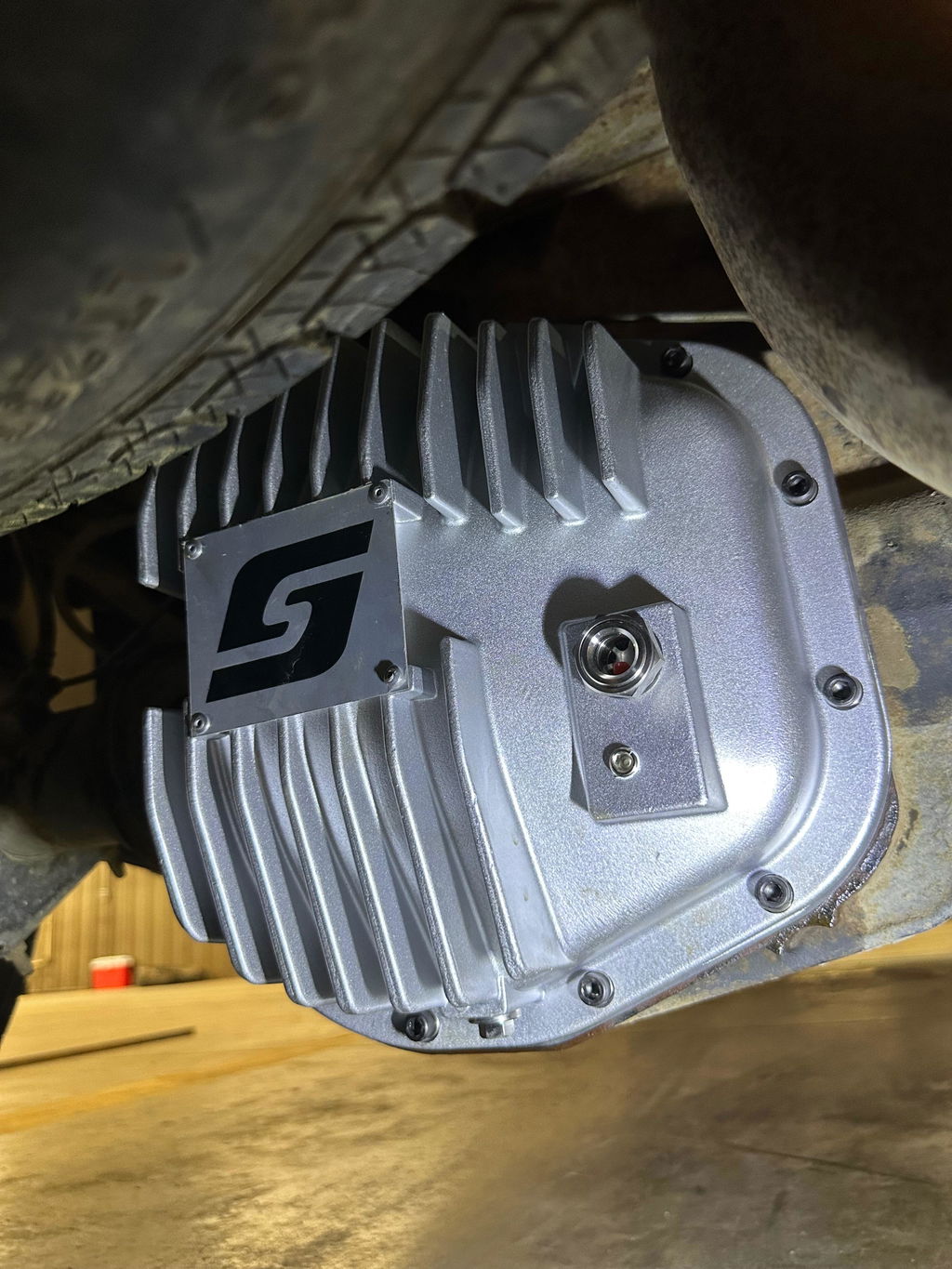
Have had the differential cover on for almost a week now and have had zero issues. The cover looks very nice and I now having the drain & fill plugs and the sight glass will make fluid changes a lot easier. Only recommendation would be to swap from Allen head bolts to regular ones as they are a bit easier to torque but other than that love it. FYI for anyone wondering I torqued all my bolts to 22 ft/lbs and have had zero leaks, couldn't find an exact torque spec but this seems to suffice!
Great for the price and pretty simple install. Did have to modify one bracket but other than that it was a slick install and great product
I got burned with a Banks manifold when their #1 proprietary fuel line split on me. This manifold takes care of that! It was an easy swap out, and worked with the banks plate.
Great Product. Quality seems really good too.
Bought a intake manifold from spelab for my 3500 6.7 cummins, and it works perfect, shipping was fast all parts included. Great company to deal with, highly recommended.
Installation was easy
Absolutely perfect fit! Super easy to install did move gasket from downpipe to DPF and reused but overall extremely pleased!
I bought the Chinese knock off because SPE Motorsports won’t sell it. As advertised. I’m sure it’ll do.
Purchased for my 2011 ram 2500 6.7 Cummins. Great product all the sensors holes lined up perfectly helped with acceleration a lot more responsive now on acceleration
Installed on a 14 3500, seamless install maybe takes 10min. Definitely opens intake up. Noticeably more sound. Not sure any performance gains other than throttle response
I’ve purchased the EGR and CCV deletes as well as the upgraded intake manifold, upper radiator hose and thermostat block, and compressed air piping. Overall I am very satisfied with the quality and fit of all of the parts. Some of the instructions could use a little more detail, but if you are in any way mechanically inclined, you’ll be able to do these yourself no problem. I did have to make a very small modification to the aluminum quick connector on the upper radiator hose in order to get it to lock in place, but other than that everything has been great!
Works amazing and easy to install
Suspension Lift Kit FAQs
A suspension lift kit raises the front and the rear, lifting the whole truck and giving you real ground clearance under the frame. A leveling kit raises the front only, cancelling the factory rake so the truck sits level and clears larger front tires. If you need clearance for rocks, ruts or deep snow, you want a lift. If you want the stance and tire room without touching ride quality, levelling is the simpler job.
That depends on the kit height and on your wheel choice - offset and backspacing move the tire within the arch just as much as lift height does, and some combinations still need minor trimming of the inner liner. Plan the wheel and tire together, check clearance at full lock and full compression rather than at ride height, and budget for a speedometer recalibration once the rolling circumference changes.
Ride quality is set mostly by spring rate and damping, not by height. A properly matched system - springs and shocks chosen to work together, with the geometry corrections fitted - can ride as well as stock. What does hurt ride and handling is a height-only kit: uncorrected control arm and track bar angles leave the axle off-center, the steering vague, and the tires wearing unevenly.
Yes, and it is not optional. Any change in ride height changes camber, caster and toe, and driving on it unaligned is what produces the rapid, uneven tire wear owners blame on the kit. Book a four-wheel alignment immediately after installation, and re-check it after the suspension has settled and been re-torqued.
Several states regulate frame and bumper height, so check your local rules before lifting - this is the part people find out about at inspection time. On warranty, a suspension modification does not void coverage across the whole vehicle; under US law a claim can only be denied where the modification is shown to have caused the failure, and suspension, steering and driveline components are where those disputes usually land.