9 Products
Fuel System
Diesel Fuel System Parts, Mapped by Station
Diesel fuel system parts are almost always bought one at a time, in response to a symptom, which is why the same truck often gets three parts before the right one. The reason is simple: a diesel fuel system is a chain of stations in series, and a failure at any one of them shows up as a symptom somewhere else entirely. Learning to name the stations is the cheapest diagnostic there is.
| Station | What it is responsible for | What it looks like when it fails |
|---|---|---|
| Tank, pickup and sump | Holding fuel and keeping it at the pump inlet at every level and attitude | Starvation, air in the fuel, hard restart, symptoms that come and go with fuel level |
| Lift pump and filtration | Moving fuel forward at volume, and removing water and particles before anything expensive sees them | Loss of power under sustained load, pump noise, filters that load up fast |
| High-pressure pump, rail and lines | Building and holding rail pressure | Low rail pressure faults, long crank, limp mode, metallic debris in the system |
| Injectors and return | Metering fuel into the cylinders and sending the remainder back to the tank | Rough idle, smoke, imbalance, excessive return flow |
Fuel only travels in one direction through those stations, and nothing downstream can compensate for a restriction upstream. That single fact decides almost every buying decision among diesel fuel system parts.
The Supply Side vs High-Pressure Side Divide
Everything before the injection pump is the supply side; everything after it is the high-pressure side. For anyone shopping diesel fuel system parts, this is the first distinction to make, because the two are built to different tolerances, fail for different reasons, and cost very different amounts to get wrong.
- Supply side - tank, pickup, lift pump, filters, supply lines. It runs at modest pressure and its only job is volume: never let the high-pressure pump run dry, and never let it see air or debris. Supply parts are sized by flow, and most of them are comparatively forgiving to specify.
- High-pressure side - injection pump, rail, pressure relief, injector lines, injectors. It runs at pressures that will cut skin, and its parts are tightly platform- and year-specific. Getting one wrong is not a return, it is usually a repair bill.
The practical consequence: when a truck feels down on power, the instinct is to suspect the expensive high-pressure hardware. In practice the majority of driveability complaints originate on the supply side, because that is where air, water, restriction and starvation live. Confirm the supply side is delivering before replacing any diesel fuel system parts downstream of it.
Why One Failed Part Becomes a Whole-System Repair
High-pressure diesel pumps are lubricated by the fuel they pump. That design is why diesel fuel system parts have to be thought about as a chain rather than as a list - and it is the reason a single component failure can turn into a five-figure repair.
When a high-pressure pump wears or fails internally, the debris it generates does not stay inside the pump. It leaves through the outlet and travels to the rail, the injector lines and the injectors, and it also leaves through the return and goes back toward the tank. In practice that means rails, lines, injectors and often the tank all have to be dealt with, not just the pump that failed. Replacing only the pump is the most expensive way to do the job twice, because whatever debris remains finishes what the failure started.
That is also why filtration and return routing are system-level decisions rather than accessories. A filter placed correctly on the return path protects every component downstream of it, and it costs a fraction of any one of them.
Where Filtration Sits Among Diesel Fuel System Parts
Among diesel fuel system parts, filtration is the cheapest station and it protects the most expensive ones. Three things are worth knowing about it:
- Rating is a number, not a marketing word. Filters are specified by micron rating and efficiency. Comparing those two numbers is the only meaningful way to compare filters, and a finer filter on the return side is common practice precisely because the components it protects are the costly ones.
- Housing material matters more than most buyers expect. Factory filter housings are frequently plastic, and after years of heat cycles they become brittle - hairline cracks, fuel leaks and broken return connectors. Metal housings exist for exactly this reason.
- Location is a maintainability decision. A filter buried in the engine valley turns a ten-minute service into a mess. Relocating filtration to an accessible point on the chassis makes the job clean enough that it actually gets done on schedule, and a filter changed late protects nothing.
One boundary worth stating: filtration does not fix a supply problem. A filter cannot create flow that the pickup or the lift pump is not delivering.
Choosing Diesel Fuel System Parts in the Right Order
Most disappointment with diesel fuel system parts comes from buying in the wrong order rather than buying the wrong part. The chain only works in one direction, so the sequence should follow it:
- Supply first. Pickup depth, tank venting and lift pump capacity. Nothing downstream can make up for a shortfall here.
- Filtration second. Water separation and particle protection, before the high-pressure hardware.
- High-pressure delivery next. Pump, rail, lines and relief - specified by platform and year, not by brand preference.
- Monitoring. A rail pressure sensor port turns a guess into a number, and it is the cheapest way to confirm the previous three steps worked.
- Calibration last. A tune multiplies what the hardware already delivers. Adding it before the supply side can keep up turns a flow deficit into lean operation, high exhaust temperatures and accelerated pump wear.
Budget the path, not the part. The cheapest line item on that list is the one that decides whether the expensive ones survive.
Fitment Checks That Apply Across Diesel Fuel System Parts
Across the whole category, the same handful of details account for most of the returns:
- Year windows inside one engine family. The same engine across a decade is not one part. Housing designs, filter layouts and pump configurations change mid-run, so order by the exact year range rather than by displacement.
- Port and thread specification. Rail ports and fittings are not universal - thread pitch differs between platforms and even between generations of the same engine. Measure or confirm before ordering.
- Connection style. Where an OE-style quick-connect exists, prefer it over cutting a factory line. Every cut joint is another potential leak and another contamination path.
- Pressure rating. Hoses and fittings need a working rating comfortably above what the system will see, with burst pressure above that.
- Seal material. Anything sealing fuel has to be rated for diesel, and rated for gasoline too if it will ever see it.
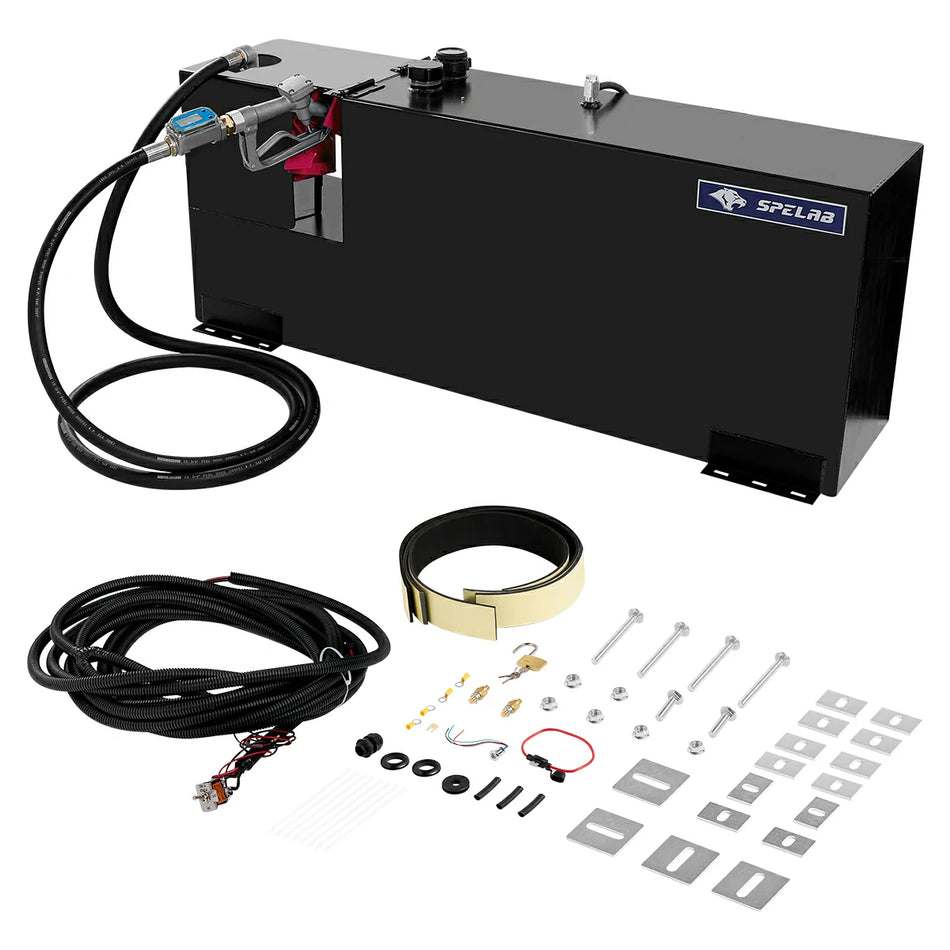
- Physical space. Anything mounted to the tank needs a flat, unribbed area to seal against, and anything relocated needs a route that stays clear of the exhaust and anything that moves.
Find the station, confirm the supply side, then buy in order. That sequence is what turns diesel fuel system parts from a list of guesses into a single repair that holds.
Filter products
- ENGINE
-
POWERSTROKE
- DPF Delete Exhaust
- All In One Kit
- EGR Delete Kit
- CCV PCV Reroute Kit
- DPF Delete Dual Exhaust
- Tuner
- Intercooler Pipe Kit
- Up-Pipe
- Intercooler
- CP4 Bypass Kit
- CCV Recirculating Kit
- Muffler
- Downpipe
- Intake Manifold
- Air Intake Kit
- Radiator
- Oil Catch Can
- Differential Cover
- Coolant Tube
- Valve Cover
- Transmission Pan
- Coolant Expansion Tank
- Exhaust Manifold
- Turbo
- Suspension & Lift
-
DURAMAX
- Tuner
- EGR Delete Kit
- CCV Reroute/delete kit
- DPF Delete Exhaust
- DPF Delete Dual Exhaust
- All In One Kit
- Muffler
- Up-Pipe
- Downpipe
- Intake Elbow Bridge Kit
- Intercooler
- Intercooler Pipe Kit
- Air Intake Kit
- Radiator
- Differential Cover
- Valve Cover
- Oil Pan
- Cooler Line Kit
- Fuel Sump Return Kit
- Tonneau Cover
- Coolant Tube
- Suspension & Lift
-
DODGE RAM
- Tuner
- EGR Delete Kit
- CCV Reroute/delete kit
- EGT Relocation Kit
- DPF Delete Exhaust
- All In One Kit
- Muffler
- Air Intake Kit
- Intercooler
- Intercooler Pipe Kit
- Radiator
- Valve Cover
- Differential Cover
- Intake Manifold
- Coolant Bypass Kit
- Coolant Leak Repair Kit
- Fuel Rail Plug
- Fuel Tank Sump Kit
- Oil Catch Can
- Oil Pan
- Coolant Tube
- Suspension & Lift
- ALL-IN-ONE KITS
- CATEGORIES
- Delete Tuners
Let customers speak for us
from 6161 reviews
Was simple and straight forward on how to installl
I had an issue with my truck throwing a code due to the throttle valve going out for the price this fixed it. I’ve never had the problem since it was very easy to put on. I highly recommend putting this on your truck.
Install was quick and easy. It sounds absolutely amazing on my truck. The hose clamp could’ve been a little better and the screw hole for one of the sensors was slightly off, but nothing that wasn’t manageable. Other than that it’s a great product very easy to install and it sounds great.
Fit great! If you have a short bed, you have to cut the pipe shorter but other than that it was easy! Sounds awesome as well!
Works great
took like 2 hours to do with all the right tools and has much better throttle response. would highly recommend!!
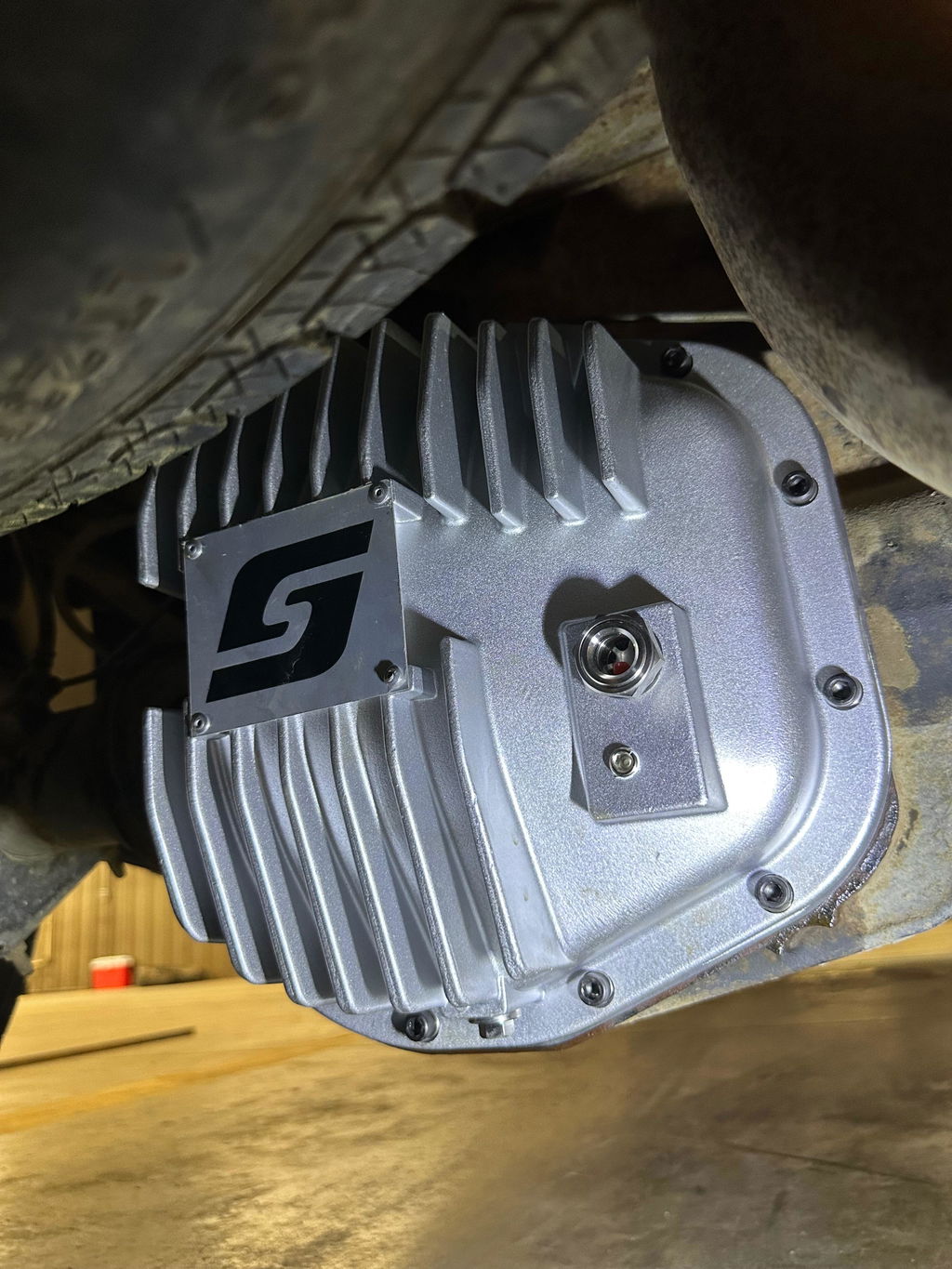
Have had the differential cover on for almost a week now and have had zero issues. The cover looks very nice and I now having the drain & fill plugs and the sight glass will make fluid changes a lot easier. Only recommendation would be to swap from Allen head bolts to regular ones as they are a bit easier to torque but other than that love it. FYI for anyone wondering I torqued all my bolts to 22 ft/lbs and have had zero leaks, couldn't find an exact torque spec but this seems to suffice!
Great for the price and pretty simple install. Did have to modify one bracket but other than that it was a slick install and great product
I got burned with a Banks manifold when their #1 proprietary fuel line split on me. This manifold takes care of that! It was an easy swap out, and worked with the banks plate.
Great Product. Quality seems really good too.
Bought a intake manifold from spelab for my 3500 6.7 cummins, and it works perfect, shipping was fast all parts included. Great company to deal with, highly recommended.
Installation was easy
Absolutely perfect fit! Super easy to install did move gasket from downpipe to DPF and reused but overall extremely pleased!
I bought the Chinese knock off because SPE Motorsports won’t sell it. As advertised. I’m sure it’ll do.
Purchased for my 2011 ram 2500 6.7 Cummins. Great product all the sensors holes lined up perfectly helped with acceleration a lot more responsive now on acceleration
Fuel System FAQS
The factory tank suction can't reliably feed a high-pressure injection pump. An upgraded sump prevents fuel starvation during hard cornering, towing, and low tank levels — protecting your CP3/CP4 from costly damage.
CP3 produces 1,800 bar pressure and is standard on Cummins; CP4 (2,500 bar) is on newer Duramax and Ram. CP4 is more prone to failure on low-quality fuel — a CP4 bypass kit mitigates this risk.
Yes. Consistent rail pressure from a lift pump or sump kit eliminates fuel-lag hesitation, giving crisper throttle response especially under load or when accelerating from low RPM.
Absolutely. High-performance tunes and upgraded injectors demand more fuel flow. A weak supply side starves the injection pump, causing lean conditions that void warranties and damage engines.
Most sump kits are designed for in-tank installation through the fuel tank sender hole — no tank drop required. Confirm your tank material (steel or plastic) before ordering as some kits are tank-type specific.