A downpipe is the first major section of exhaust piping after the turbocharger. Because turbo outlets, engine codes, sensor locations and downstream exhaust connections vary between vehicles, the correct downpipe must be selected by the complete year, make, model and engine—not by pipe diameter alone.
SPELAB offers aftermarket turbo downpipes, diesel downpipes, performance downpipes, front pipes and related exhaust components for selected GM Duramax, Ford Powerstroke, BMW, Audi, Volkswagen, Nissan, Infiniti, Subaru, Jeep and other applications.
Use this collection to compare direct-fit and vehicle-specific downpipe options, including catted downpipes, catless downpipes and different pipe-diameter or flange configurations. Always review the individual product page for exact fitment, catalyst configuration, sensor ports, included hardware and installation requirements.
Start With Fitment, Not Downpipe Diameter
Searches such as “3-inch downpipe,” “3.5-inch diesel downpipe” or “stainless steel turbo downpipe” describe only part of the product. Diameter and material matter, but they do not confirm whether the turbo flange, sensor ports and downstream connection will fit your vehicle.
For the best chance of a direct-fit installation, begin with the exact vehicle and engine application. Then compare the pipe diameter, material, catalyst type and included hardware between compatible products.
Downpipe, Front Pipe, Y-Pipe or Downpipe-Back Exhaust?
These exhaust terms are sometimes used interchangeably, but they may describe different components. Review the product photos and connection points instead of relying on the product name alone.
Component
Typical Location
What to Confirm
Turbo downpipe
Immediately after the turbocharger
Turbo flange, sensors, catalyst configuration and downstream connection
Front pipe
Front section of the exhaust, sometimes after the downpipe
Vehicle-specific layout and connection to the center or rear exhaust
Y-pipe
Combines two exhaust paths into one or separates one path into two
Number of inlets, outlet diameter, flange type and chassis clearance
Downpipe-back exhaust
Starts behind the downpipe and continues farther downstream
Compatibility with the existing downpipe and total exhaust layout
Catted vs. Catless Downpipes: What Should You Consider?
One of the most common downpipe questions is whether to choose a catted or catless design. A catted downpipe contains a catalytic converter, while a catless downpipe does not. This choice can affect exhaust odor, sound, warning lights, emissions compliance and daily drivability.
Consideration
Catted Downpipe
Catless Downpipe
Catalytic converter
Includes an integrated factory-style or high-flow catalyst
Does not contain a catalytic converter
Exhaust odor
Generally offers better exhaust-gas treatment, depending on catalyst design and operating temperature
May produce a stronger raw-exhaust smell, especially during idle or cold starts
Sound
Usually provides a more controlled increase in exhaust volume
May produce a louder and sharper exhaust tone
Highway drone
Depends on the complete exhaust system, resonators and mufflers
May become more noticeable when combined with other exhaust modifications
Check-engine light
A warning light or catalyst-efficiency code may still occur on some vehicles
The likelihood of catalyst-related fault codes may be higher
ECU calibration
Requirements vary by vehicle and product
Requirements vary, but software should not be used merely to conceal an emissions-system fault
Emissions inspection
Having a catalyst does not automatically make the product street legal or inspection compliant
Generally unsuitable where the original catalytic converter is required
Daily driving
Often the more practical option when odor, noise and emissions requirements matter
Requires careful consideration of odor, noise, warning lights and legal restrictions
Do not assume every “high-flow catted downpipe” is approved for public-road use. Catalyst construction, certification and local inspection rules vary. Review the individual product documentation before purchasing.
What Can Change After Installing a Performance Downpipe?
A less restrictive turbo downpipe may change exhaust flow, turbo sound, exhaust tone and under-hood heat behavior. The result depends on the original exhaust restriction, catalyst design, turbocharger, engine calibration and the rest of the exhaust system.
There is no universal horsepower gain for every aftermarket downpipe. Treat any performance figure as product- and vehicle-specific. The most useful evidence is testing performed on the same vehicle, engine, supporting hardware and calibration.
For daily-driven vehicles, also consider changes in cold-start volume, exhaust smell and highway drone. A downpipe that works well for a track-oriented build may not provide the same experience for a commuter or tow vehicle.
Stainless Steel Downpipes, Coatings and Heat Protection
Many aftermarket downpipes use stainless steel because it offers useful corrosion resistance and durability in a high-temperature exhaust environment. Material grade, wall thickness, weld quality and flange construction can be as important as the “stainless steel” description itself.
Some products may include ceramic coatings, heat shields or other heat-management features. These features do not eliminate the need for proper clearance. The installed pipe must remain safely separated from wiring, hoses, fuel-system components, body panels and heat-sensitive surfaces.
Direct-Fit Downpipe Installation Considerations
A direct-fit downpipe is designed around a specified vehicle application, but installation difficulty still varies. Turbo location, corrosion, limited working space, heat shields and sensor wiring can make removal of the original pipe difficult.
Before installation:
Compare the new part with the original downpipe before removing protective packaging.
Confirm that all flanges, brackets and sensor ports are in the correct locations.
Inspect the supplied clamps, gaskets, bolts and plugs.
Check whether any factory hardware must be reused or replaced.
Protect oxygen sensors and other wiring from twisting, heat and impact.
Verify clearance around hoses, wiring, heat shields and the vehicle body.
Inspect every connection for exhaust leaks after installation.
If the installation requires lifting the vehicle, removing seized hardware or working near hot exhaust and fuel-system components, use appropriate safety equipment or have the work completed by a qualified technician.
Shop Downpipes by Vehicle and Engine
Downpipe fitment varies by model year, engine code, turbo connection and downstream exhaust layout. Use the vehicle groups below as a starting point, then confirm the complete fitment and connection details on the individual product page.
Model-year split, 3-inch or 3.5-inch diameter, V-band or bolt flange, sensor ports and factory exhaust connection
Ford Powerstroke
2015–2019 Ford F-250, F-350, F-450 and F-550 with the 6.7L Powerstroke
Exact truck year, turbo outlet, pipe diameter, downstream flange and existing exhaust system
BMW
Selected N54, S55, M57 diesel and N63 applications
Engine code, chassis, production year, single- or dual-pipe layout, oxygen sensor locations and catalyst configuration
Audi and Volkswagen
Selected 1.8T, 2.0T and 2.7T applications
Vehicle generation, FWD or AWD, transmission, turbo flange, catalyst configuration and cat-back adapter
Nissan and Infiniti
Selected Nissan 350Z and 370Z, plus Infiniti G35 and G37 applications
Whether the product is a downpipe, front pipe or Y-pipe; inlet count, outlet diameter and downstream connection
Subaru, Jeep and Other Applications
Selected Subaru WRX/STI, Jeep Wrangler and additional performance applications
Engine and chassis, turbo setup, pipe position, flange style and compatibility with the remaining exhaust system
A vehicle name alone is not enough to confirm downpipe fitment. Two vehicles from the same model family may use different engines, flanges, sensors or exhaust layouts. Always match the product to the complete year, make, model and engine combination before ordering.
How to Choose the Correct Downpipe
Before purchasing a performance downpipe, compare the product specifications with your vehicle and existing exhaust system. Important fitment checks include:
Year, make, model and engine: Confirm the complete application, including engine code and production-year split where applicable.
Turbo outlet connection: Check whether the turbo uses a V-band clamp, bolted flange or another connection type.
Downstream connection: Verify compatibility with the factory exhaust, aftermarket cat-back exhaust or required adapter.
Pipe diameter: Do not assume a larger diameter will fit. Confirm both inlet and outlet measurements.
Sensor ports: Compare the number and position of oxygen, temperature and pressure-sensor ports.
Catalyst configuration: Identify whether the product is catted, high-flow catted or catless before ordering.
Included hardware: Check whether clamps, gaskets, bolts, plugs or heat-protection components are included.
Emissions requirements: Confirm whether the product is permitted for your intended use and location.
If you are uncertain about fitment, send your VIN, complete vehicle details and information about the current exhaust system to SPELAB customer service before placing the order.
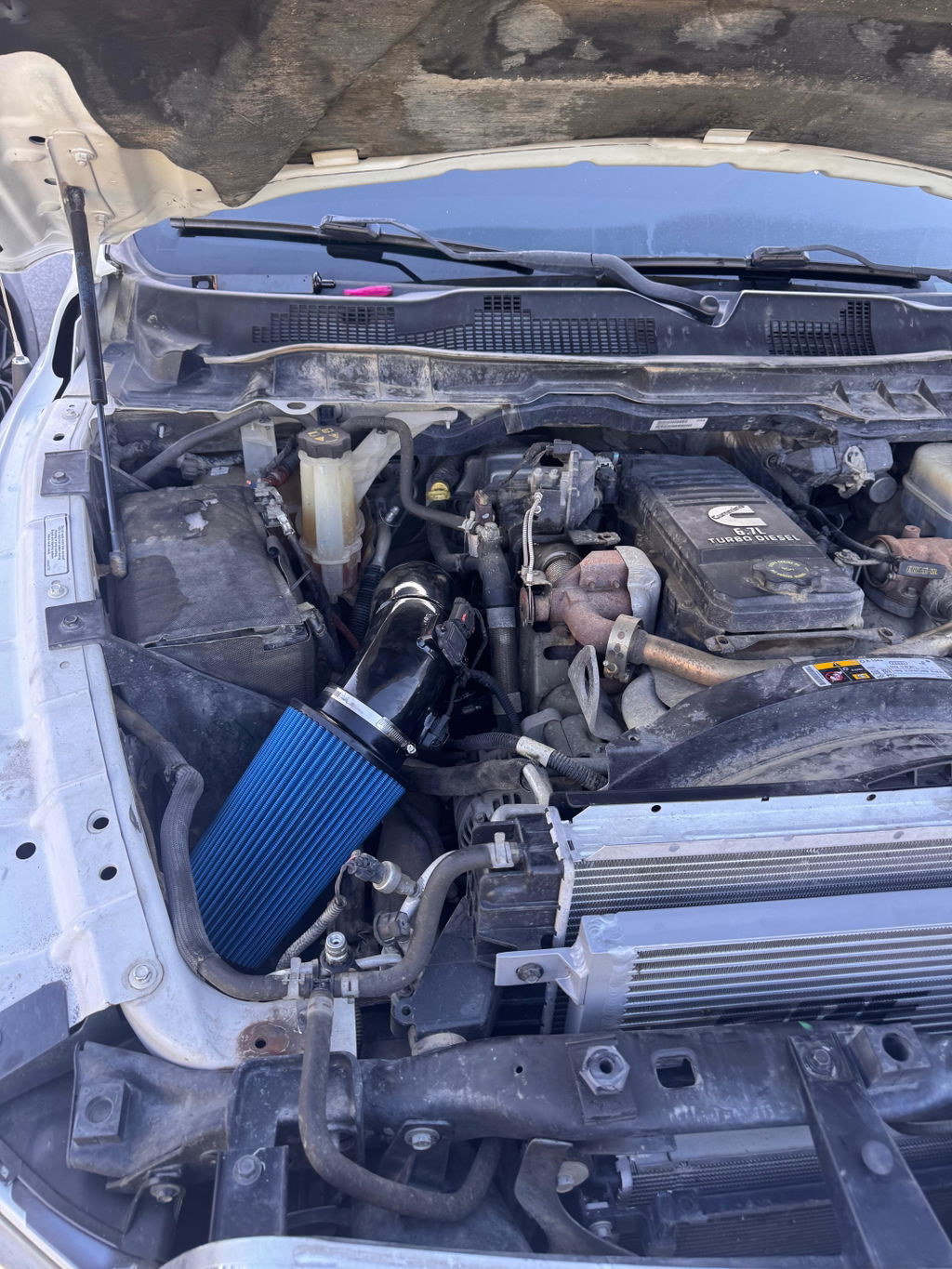
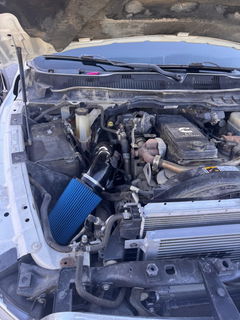
Installed on a 14 3500, seamless install maybe takes 10min. Definitely opens intake up. Noticeably more sound. Not sure any performance gains other than throttle response
SPELAB Cold Air Intake Kit For 2007.5-2012 Dodge Ram 6.7L Diesel Ram 2500 3500 4500 5500
09/14/2026
Dennison Collard
Full delete
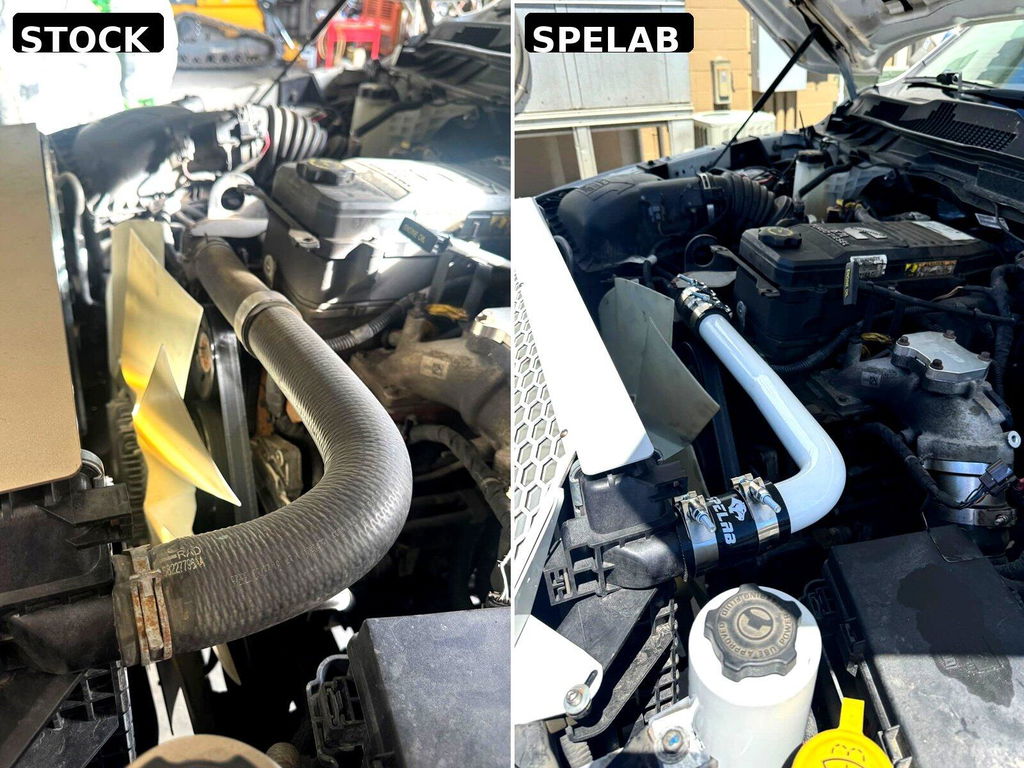
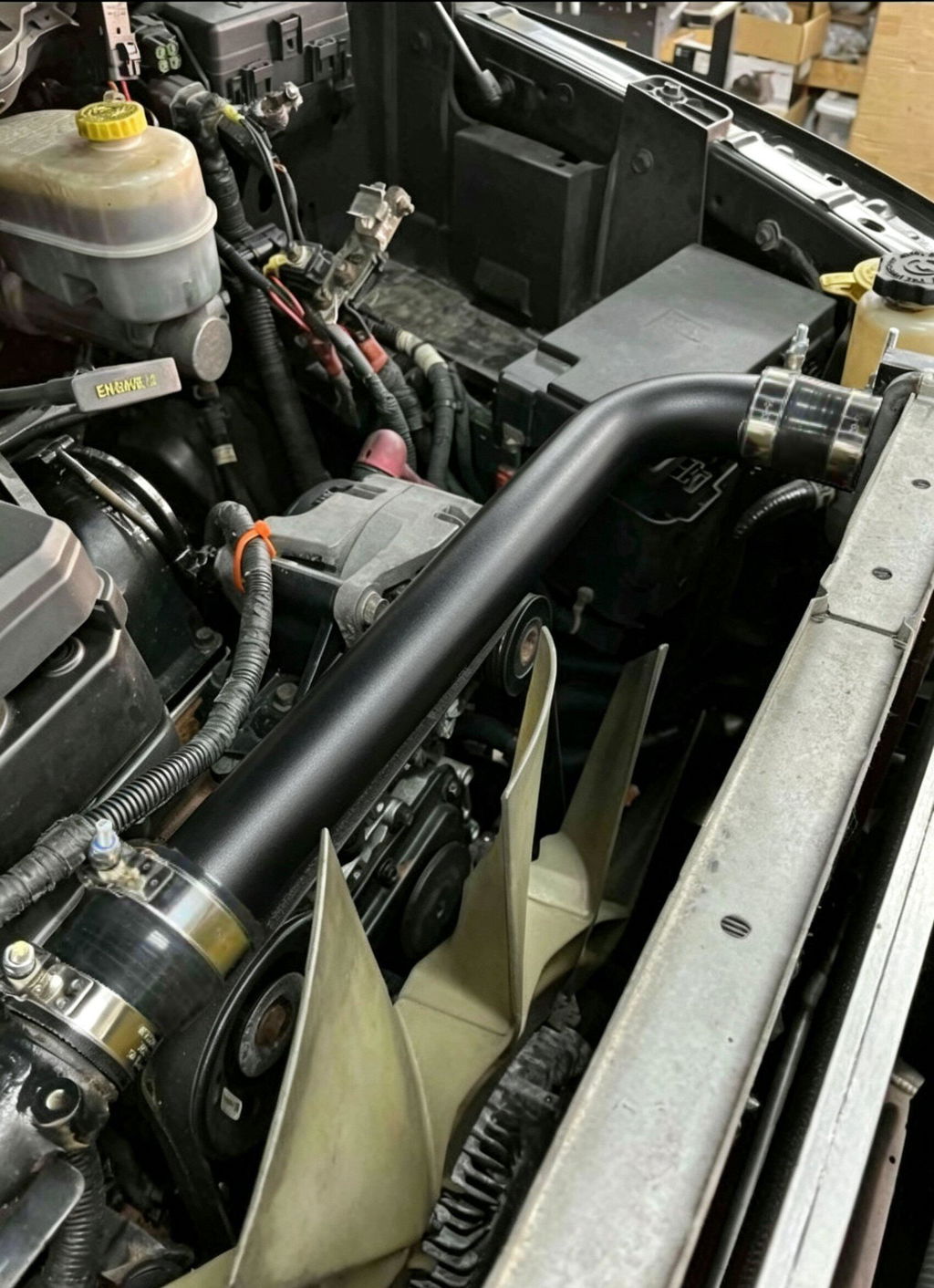
I’ve purchased the EGR and CCV deletes as well as the upgraded intake manifold, upper radiator hose and thermostat block, and compressed air piping. Overall I am very satisfied with the quality and fit of all of the parts. Some of the instructions could use a little more detail, but if you are in any way mechanically inclined, you’ll be able to do these yourself no problem. I did have to make a very small modification to the aluminum quick connector on the upper radiator hose in order to get it to lock in place, but other than that everything has been great!
Intake Manifold for 2011–2019 Ford F250 F350 F450 F550 6.7L Powerstroke | SPELAB
Coolant Reservoir for 2001-2007 LB7 / LLY / LBZ DURAMAX Coolant Overflow Tank | SPELAB
09/07/2026
Anonymous
“Sleeper” certified
I put these on a ugly farm truck with a cammed LS swap and to keep the ugly “sleeper” feel we had these installed and they worked great for us 👍🏽👍🏽👍🏽
SPELAB 2.0/2.25/2.5/3.0 Inch Remote Electric Exhaust Cutout Kit
09/05/2026
Anonymous
Fast delivery and nice finish on parts
Fast delivery and nice finish on parts
CCV Reroute/Delete Kit 2011-2025 Ford 6.7 Powerstroke F250 F350 F450 F550 w/Catch Can | SPELAB
09/05/2026
chase
Best DPF back I've ever had
I really do think this is the best DPF back I've ever had. I said it in the video, but the fitment here is MUCH better than MBRP or AFE. I have had both and this one installed so much easier, and much higher quality metal
5'' DPF Back Exhaust Single Side Exit for 2013-2025 Dodge Ram 2500/3500 6.7L Diesel Filter-Back Exhaust
09/04/2026
James Steele
Made wrong didn't
Made wrong didn't fit
Cold Air Intake for 2011-2016 Ford F250 F350 F450 6.7L Powerstroke | SPELAB
09/01/2026
Timothy Iberg jr
Easy install
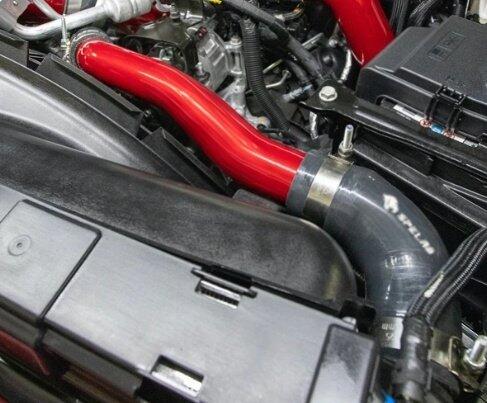
Hi yooo sharing some tips to make everybody's life easier! Slip the rubber boots on before fitting the pipe, leave plenty of rubber past each clamp. It's an easy installation.
EGR Delete Kit For 2011-2025 Ford 6.7L Powerstroke Diesel F250 F350 F450 F550 | SPELAB
08/30/2026
Jordan Sidney
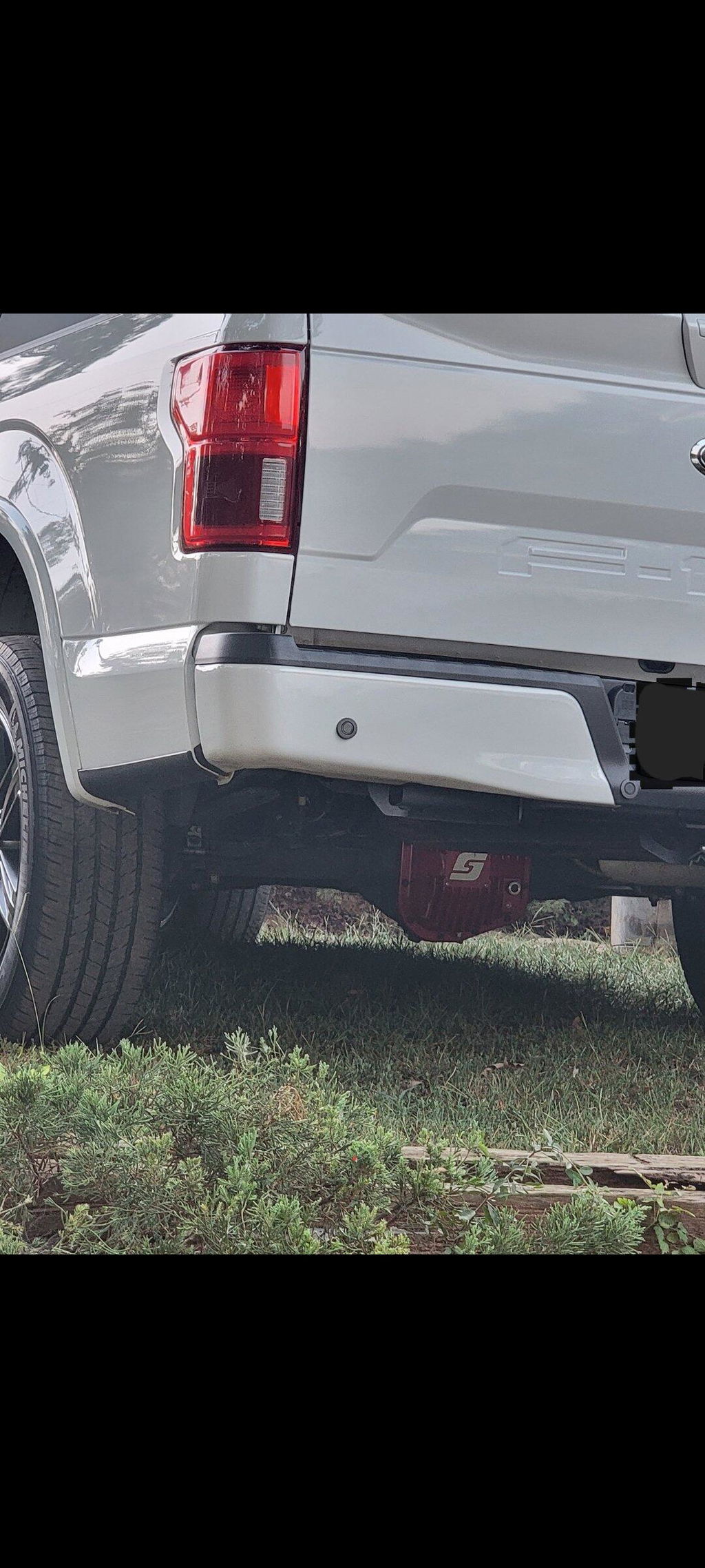
Rear diff cover.
The product was delivered sooner than expected and the product is very well made and added a nice touch to my truck.
Differential Cover For Ford 9.75″ 12 Bolts Rear Axle | SPELAB
08/29/2026
Chase Lee
Chase
Surprisingly fast shipping and decent quality with half of big brands price... will come back!
Cooling System Refresh Kit For 2011-2016 LML Chevrolet/GMC 2500HD 3500HD 6.6L Duramax | SPELAB
08/26/2026
Johnatan Ruiz
Good Quality and Great Value
I was already planning to replace the radiator and coolant tube, so getting the reservoir included made this a great value. Parts arrived well packaged and everything looked good out of the box.
Cooling System Refresh Kit For 2013-2018 6.7L Dodge Ram 2500/3500 | SPELAB
08/26/2026
FAQS
Match the product to the exact year, make, model and engine. Also confirm the turbo flange, downstream connection, sensor ports, drivetrain and pipe diameter. If the vehicle has an aftermarket cat-back exhaust, verify whether the two systems connect directly or require an adapter.
A turbo downpipe is the first exhaust section after the turbocharger. A downpipe-back exhaust starts farther downstream and replaces more of the remaining exhaust system. These components are not interchangeable, so check the inlet and outlet locations before ordering.
A catted downpipe contains a catalytic converter, while a catless downpipe does not. The choice can affect exhaust odor, sound, highway drone, check-engine lights and emissions compliance. Daily-driven vehicles should consider these factors before comparing potential performance differences.
It depends on the vehicle, catalyst design, sensors and engine-management strategy. Either configuration may trigger a catalyst-efficiency or sensor-related fault, although the risk may be higher with a catless downpipe. Software should not be used merely to conceal an emissions-system fault.
Not automatically. A product may require vehicle-specific certification or approval, and inspection requirements vary by location. Confirm the product’s documented emissions status and the applicable federal, state and local rules before purchasing.
It may. The result depends on the catalyst, resonator, muffler, engine and complete exhaust configuration. Reduced catalyst capacity may increase exhaust odor, while a freer-flowing downpipe combined with other exhaust modifications may increase volume or highway drone.
There is no universal horsepower gain. Results depend on the restriction of the original pipe, catalyst design, turbocharger, supporting hardware and engine calibration. Use documented testing from the same vehicle and product configuration when evaluating performance claims.
Installation difficulty varies with turbo access, corrosion, heat shields and sensor wiring. Review the product’s “What’s Included” information for clamps, gaskets, bolts, plugs and heat-protection components. Use a qualified technician when safe access or specialized tools are required.
Check the flange alignment, gaskets, clamps, sensor ports and clearance around heat shields and the vehicle body. Stop using the vehicle and inspect the installation if exhaust fumes enter the cabin or the pipe contacts wiring, hoses or fuel-system components.
Confirm the part number, vehicle fitment, flange type, sensor locations, supplied hardware, emissions status, warranty and return conditions. Compare the new pipe with the original component before installation, retain the packaging and do not install the product if the connections do not match.
Caleb
Installed on a 14 3500, seamless install
Installed on a 14 3500, seamless install maybe takes 10min. Definitely opens intake up. Noticeably more sound. Not sure any performance gains other than throttle response
SPELAB Cold Air Intake Kit For 2007.5-2012 Dodge Ram 6.7L Diesel Ram 2500 3500 4500 5500
Dennison Collard
Full delete
I’ve purchased the EGR and CCV deletes as well as the upgraded intake manifold, upper radiator hose and thermostat block, and compressed air piping. Overall I am very satisfied with the quality and fit of all of the parts. Some of the instructions could use a little more detail, but if you are in any way mechanically inclined, you’ll be able to do these yourself no problem. I did have to make a very small modification to the aluminum quick connector on the upper radiator hose in order to get it to lock in place, but other than that everything has been great!
Intake Manifold for 2011–2019 Ford F250 F350 F450 F550 6.7L Powerstroke | SPELAB