2 Products
Cummins Radiator
The 6.7L Cummins Dodge Ram 2500/3500 has two direct-fit radiator fits, one for the fourth generation frame and one for the fifth. They do not interchange, and the difference sits outside the core itself: core support brackets, grille opening, and where the intercooler sits relative to the radiator.
One radiator answers to two names. Buyers searching by engine look for a Cummins radiator. Buyers searching by truck look for a Dodge Ram radiator. Both names land on the same hardware. A Cummins radiator listed for the 6.7L and a Dodge Ram radiator listed for the 2500 or 3500 describe the same aluminum core, and neither name tells you which generation it fits. The useful distinction is not between those two words. It is where each one stops being correct, and whether a bad radiator is even the right diagnosis.
The failure mode that follows is expensive and common: a Cummins radiator ordered by engine name alone arrives from a seller who lists by Dodge Ram radiator fitment, and the buyer assumes the core is wrong. It usually is not wrong. It is the other generation.
Why the Two Dodge Ram Radiator Fits Are Not Interchangeable
A direct-fit radiator still has to meet the air cleaner, the core support, and the sheet metal around it. When the front fascia changed between the fourth-generation and fifth-generation Ram 2500/3500, every one of those mating points moved. A Cummins radiator built for the earlier frame will bolt up loosely at best. A Cummins radiator built for the later frame will not reach its mounting points at all. A Dodge Ram radiator carries the same split, because both names describe the same two parts.
| Mating point | Fourth-generation Ram 6.7L | Fifth-generation Ram 6.7L |
|---|---|---|
| Core support bracket holes | Brackets sit inboard, with the radiator hung from two upper mounts | Brackets relocated outward to clear the redesigned front fascia |
| Grille opening shape | Narrower opening, fewer airflow paths around the core face | Wider opening with more open area in front of the core |
| Intercooler relationship | Radiator stands alone behind the grille | Intercooler stacks directly ahead of the radiator, front to back |
| Inlet and outlet routing | Hose paths run around the core tank edges | Hose paths cross the upper tank area at a different angle |
| Fan shroud and sensor | Shroud transfers directly, sensor ports sit high on the tank | Shroud transfer required, sensor ports moved to a lower boss |
Every row above is a reason a return happens. The core looks close enough to be tempting, and that is exactly the trap. Confirming the mounting pattern before ordering costs nothing. Guessing costs a second shipping cycle.
Overheating Symptoms That Point at One Generation
The two generations do not fail the same way. The earlier frame tends to complain at low idle and in slow traffic, where airflow is worst and engine heat output is constant. The later frame carries a stacked intercooler in front of the radiator, so anything that obstructs that front face — packed grille debris, a bent or missing plastic shield, aftermarket grille mesh with too little open area — hits cooling capacity on both components at once. That stacked layout is why the Dodge Ram radiator for the later generation is sold as a core plus a fan shroud, while the Cummins radiator for the earlier generation is a core on its own.
Where the complaint shows up tells you where to look. Loss of heat rejection that only appears above road speed points at airflow through the grille and radiator face. A gauge that climbs at idle and then settles once the fan spins up fast points at fan clutch engagement. Trouble that arrives only under sustained towing load points at the coolant side, where heat rejection is working but capacity is already spent.
None of these shapes identify a radiator on their own. They identify which half of the system to test first.
An Overheating Truck Is Not Always a Bad Radiator
A radiator does one job: it moves heat from coolant to passing air. It cannot compensate for air that never arrives. Before replacing a core, run the symptom through this list.
| Symptom | Likely cause | Quick check |
|---|---|---|
| Warning at idle and low speed only | Fan clutch slipping or thermostat stuck closed | Observe fan speed from cold start; feel both radiator hoses for an even split |
| Temperature climbs only at highway speed | Restricted airflow through grille or radiator face | Inspect grille and intercooler face for debris and shield damage |
| Sudden loss of coolant, no visible external leak | Internal core leak or collapsing hose | Pressure test the system before pulling the radiator |
| Overheat after a core swap, coolant level fine | Air still trapped in the block, or fan clutch never replaced | Bleed thoroughly at the upper hose; recheck fan engagement |
| Foamy coolant, recurring after fill | Combustion gas entering the coolant | Pressure test the cap and the pressure side before blaming the core |
Replacing the radiator solves the problem when the radiator is the problem. On any row above where the answer points elsewhere, a new core puts new hardware behind the same fault and the symptom returns. Fitting a Cummins radiator against an airflow fault on a Dodge Ram radiator position in the engine bay is the same mistake in either direction.
What the All-Aluminum Core Actually Changes
The factory unit on these trucks uses thin-wall copper and brass construction. An aluminum replacement changes three things you can verify.
Wall thickness and row count: thicker tube walls and additional cooling rows add core surface area, which is the part that turns coolant temperature into air temperature. Wider spacing between rows also resists the debris buildup that chokes a copper core over time.
Weight: an aluminum core weighs less than the copper-brass unit it replaces. The difference is modest and it does not change how the engine makes power. It removes a small amount of mass from the front of the truck.
Interface geometry: the side tanks, neck, and hose seats are reproduced so the existing upper and lower hoses, the expansion tank line, and the fan shroud all land on their factory connections. This is the detail that separates a direct-fit part from a universal one that needs modifying.
Core capacity is only one term in the heat balance. Airflow, coolant level, thermostat operation, and fan speed all sit on the same side of the equation. A larger Cummins radiator raises capacity. It cannot raise airflow past a clogged grille or a slipping fan clutch.
Removing the Radiator on the Fifth-Generation Ram 6.7L
On the later frame, the intercooler stands in front of the radiator. The two come out as one stack, which changes the job order. Drain coolant first, since the radiator and intercooler are in the same loop. Disconnect the coolant hoses and any wiring at the radiator and intercooler faces, then unbolt and lift the stack as a unit. Separating them first adds steps and puts the face of the intercooler at risk of contact.
Three groups of items move to the new core or get replaced in the process. The fan shroud transfers over. Any temperature sensor or harness clipped to the old tank transfers with the harness and re-seats on the new boss. The hose clamps at both connections get replaced, not reused; a reused clamp is the most common source of a slow air pocket after reassembly.
Take the coolant condition while it is out. Dark, metallic coolant means the old unit was eating the water, and the new core will do the same job faster.
Three Checks Before Ordering a Cummins Radiator
Truck class: 2500 and 3500 share the radiator fit within a generation, but the surrounding hardware and cooling demands do not match. Order for the truck you have, not the one you wanted.
Transmission: an automatic transmission sends hot oil through a cooler line routed near the radiator. Confirm the cooler line routing on your specific truck so the new hoses clear it and the line reseats on the correct fitting.
Coolant: confirm the coolant specification your truck was built to before adding anything. Mixing specifications after the swap is a slower failure than the original overheating, and it does not show up until the next cold start.
If any of the three cannot be confirmed, ask before ordering. A radiator is a large, heavy part that ships one way, and a Dodge Ram radiator ordered for the wrong generation is a return the seller may not cover.
What Still Needs Watching After the Swap
Coolant level and condition: check the expansion tank cold, before the first drive and again after the first full heat cycle.
Actual fan speed: with the new core in place, watch the fan at a cold start. A clutch that never engages now shows up as a slow idle warm-up instead of an overheat, which is an easier symptom to catch.
Open area ahead of the core: on the fifth generation, keep the grille and the intercooler face clear. Debris, a damaged shield, or a restrictive aftermarket grille takes capacity away from the new core before the coolant ever reaches it.
A radiator is an ordinary cooling system replacement part. It sits outside the emissions hardware and changes nothing about how the engine controls emissions.
Filter products
- ENGINE
-
POWERSTROKE
- DPF Delete Exhaust
- All In One Kit
- EGR Delete Kit
- CCV PCV Reroute Kit
- DPF Delete Dual Exhaust
- Tuner
- Intercooler Pipe Kit
- Up-Pipe
- Intercooler
- CP4 Bypass Kit
- CCV Recirculating Kit
- Muffler
- Downpipe
- Intake Manifold
- Air Intake Kit
- Radiator
- Oil Catch Can
- Differential Cover
- Coolant Tube
- Valve Cover
- Transmission Pan
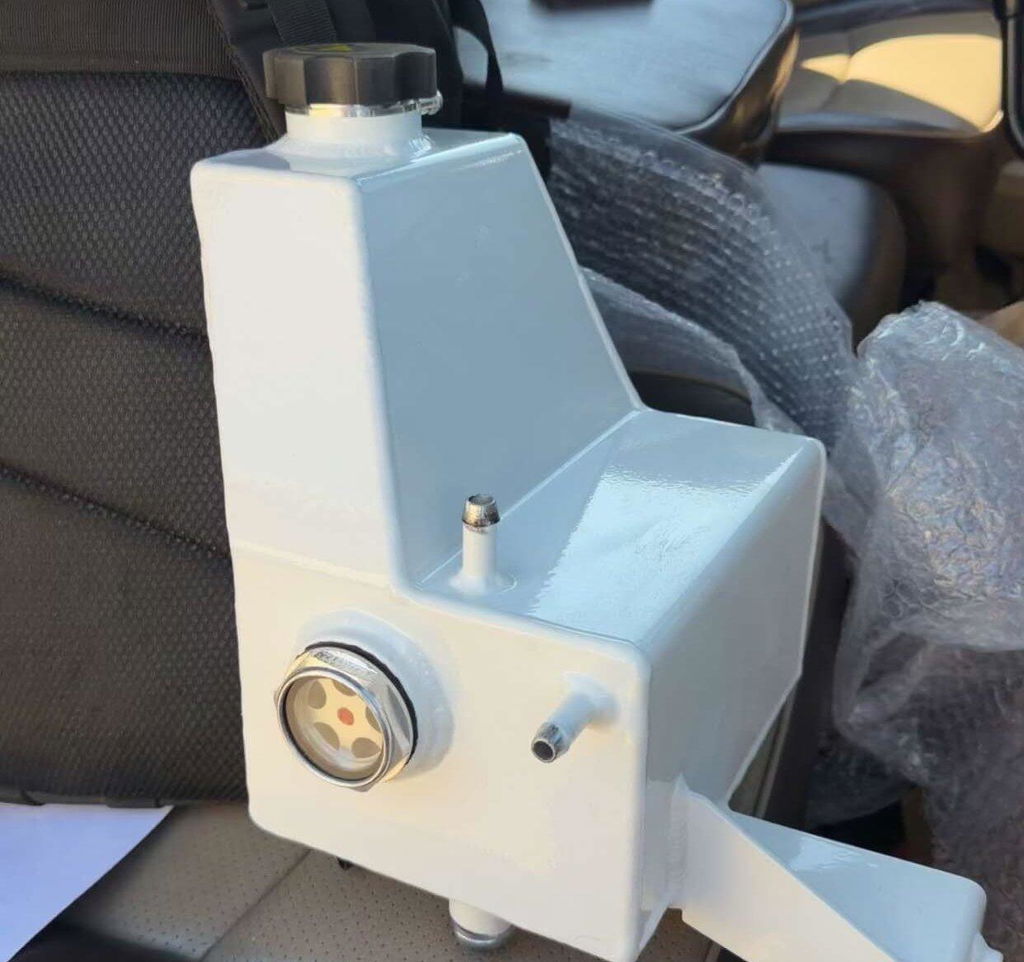
- Coolant Expansion Tank
- Exhaust Manifold
- Turbo
- Suspension & Lift
-
DURAMAX
- Tuner
- EGR Delete Kit
- CCV Reroute/delete kit
- DPF Delete Exhaust
- DPF Delete Dual Exhaust
- All In One Kit
- Muffler
- Up-Pipe
- Downpipe
- Intake Elbow Bridge Kit
- Intercooler
- Intercooler Pipe Kit
- Air Intake Kit
- Radiator
- Differential Cover
- Valve Cover
- Oil Pan
- Cooler Line Kit
- Fuel Sump Return Kit
- Tonneau Cover
- Coolant Tube
- Suspension & Lift
-
DODGE RAM
- Tuner
- EGR Delete Kit
- CCV Reroute/delete kit
- EGT Relocation Kit
- DPF Delete Exhaust
- All In One Kit
- Muffler
- Air Intake Kit
- Intercooler
- Intercooler Pipe Kit
- Radiator
- Valve Cover
- Differential Cover
- Intake Manifold
- Coolant Bypass Kit
- Coolant Leak Repair Kit
- Fuel Rail Plug
- Fuel Tank Sump Kit
- Oil Catch Can
- Oil Pan
- Coolant Tube
- Suspension & Lift
- ALL-IN-ONE KITS
- CATEGORIES
- 🔥BFCM
Let customers speak for us
from 6360 reviews
Only positives to leave here! Amazing product, amazing ship time, amazing price!! I got a 10 percent discount!! I got fast shipping! It says between 3-7 working business days, I ordered Friday and got it Tuesday afternoon! The welds are solid and the metal is strong! Will be ordering from you guys again! Shipping box was beat up a bit but the products themselves were mint!
Coolant reroute fit perfectly, install was a breeze. Everything I’ve bought exhaust, egr delete, and coolant reroute have fit perfect, 0 complaints. Ccv reroute will be next and coolant upper pipe!
Installed this on my 2012 F-150 5.0L using a LubeLocker gasket instead of RTV. Installation went smoothly, and so far everything is working great with no leaks.
One helpful note for other buyers: I couldn't find the recommended cover bolt torque specification in the documentation, so I contacted SPELAB support. Their technical team confirmed a specification of 25–30 N·m (approximately 18–22 ft-lbs). I torqued mine to 20 ft-lbs.
It would be helpful if SPELAB included this information in the installation instructions. Otherwise, very happy with the purchase so far!
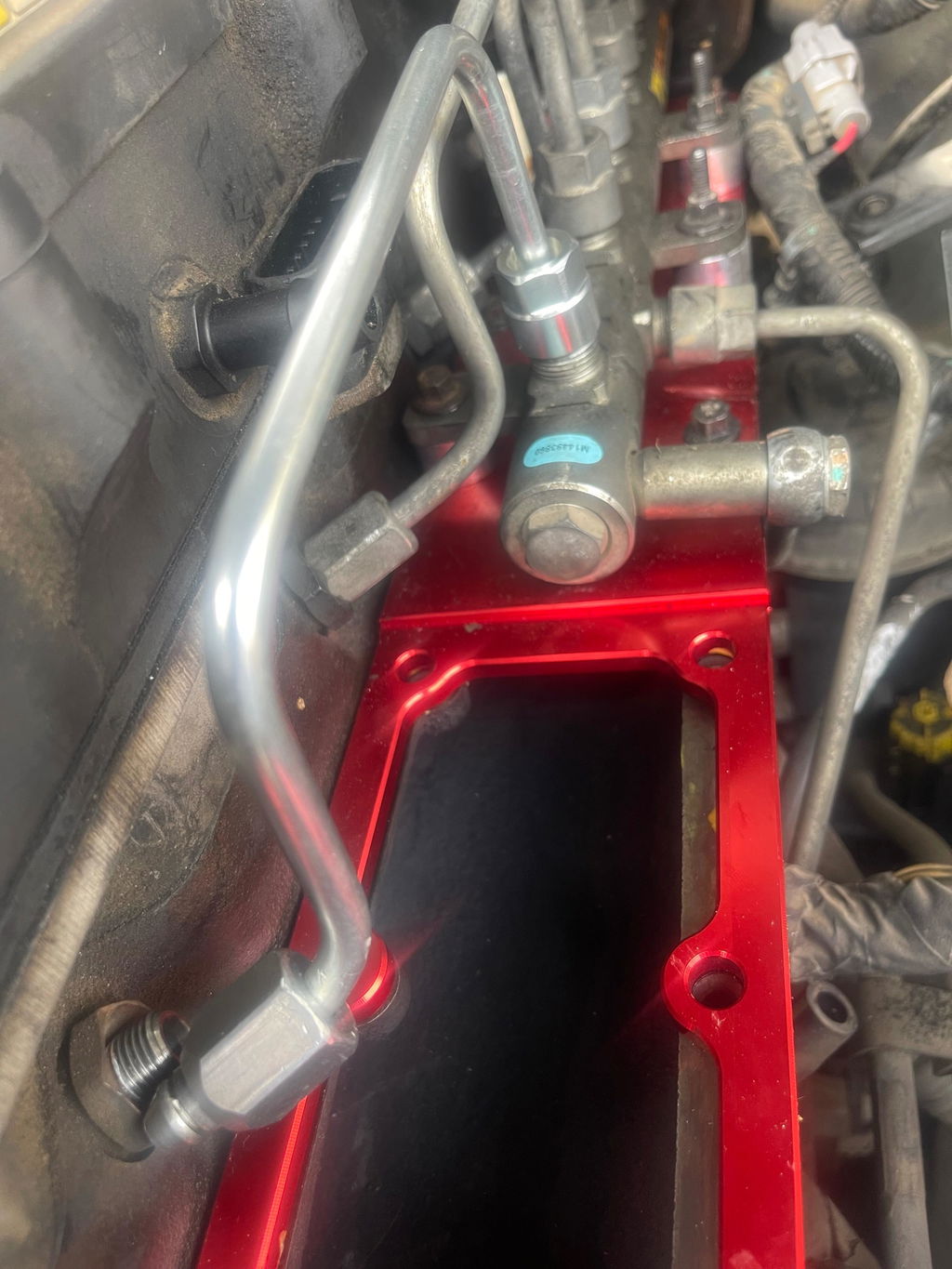
The fuel line they sent with the intake horn did not fit properly and also there was a issue with the flare nut not reaching the threads
I have been having issues with the tune (hopefully not the tuner). I emailed customer service with my concerns and got a response within an hour. I didn’t even think to check my email that quick because “normal” customer service takes days. They responded both times in such a rapid manner I was not able to respond with the issues that fast. They have been great to deal with. I will continue to purchase from them because of that alone
I recently purchased the SPELAB grid heater delete plate kit and installed on my 2018 Ram 2500 with the 6.7 Cummins diesel engine
I Was not left disappointed with the ease of ordering and speed of service along with the completeness of the kit and High quality fit and finish !
I now have the piece of mind as well as the High performance that the grid heater deleate plate offers for my Ram 2500
Very Pleased with with customer service and the quality of the product
Thanks SPELAB
PHIL with
Peterson Farms Of Nashville DIY YT Channel
This kit is put together so well love the packaging it came in and how simple it is to assemble i did notice a slight drop in EGTs like it said it would and also no leaks what so ever. Only issue is not stickers
Got rid of my factory horn and went with this one for 93% more air flow and it looks sick
Great quality and fit Perfect
Great Product. Quality seems really good too.
Easy to install, beautifully crafted
That's beautiful !
beautifully crafted
It's beautiful, easy to install.
Great Product easy installation work flawlessly on my 2018 Ram 2500
Cummins Radiator FAQS
Yes. SPELAB's direct-fit aluminum radiators replace thin-wall copper/brass factory units with thicker aluminum construction and more rows of cooling tubes. On the 2013–2018 6.7L Cummins, the factory radiator struggles under the heat loads generated by tuned horsepower and sustained towing. SPELAB's $309.99 unit drops operating temps measurably in summer heat, especially when paired with an upgraded fan clutch and auxiliary transmission cooler.
The 2010–2012 Ram 6.7L uses a different grille opening and mounting bracket configuration than the 2013–2018 trucks due to the front fascia redesign. SPELAB's radiators are model-year specific: $267.77 for 2010–2012 and $309.99 for 2013–2018. The two are not interchangeable. Verify your exact model year before ordering—if you have the older 2010–2012 style, the mounting points are in different locations on the core support.
An upgraded radiator helps with heat dissipation, but overheating has multiple causes. Before buying a new radiator, check: coolant level and condition, thermostat operation, fan clutch engagement, radiator airflow (clogged grille or debris), and transmission cooler line routing. On the 6.7L Cummins, a failing water pump or collapsed hose can mimic overheating symptoms. Diagnose the root cause first—if the radiator itself is the culprit, SPELAB's direct-fit replacement resolves it.
Installation is straightforward for experienced DIYers but takes 2–4 hours. Drain the coolant, disconnect the upper/lower hoses and fan shroud, remove the old radiator, and transfer the fan shroud and any sensor hardware to the new unit. Use new hose clamps and coolant at reassembly. On the 2013–2018 trucks, the intercooler is mounted in front of the radiator—handle both as one assembly. Professional install typically runs $150–$250.
Yes—if you're already in the engine bay for a radiator swap, it's the ideal time to upgrade related cooling components. Consider: new coolant (use Ford/Mopar spec), new thermostat and housing, coolant reservoir inspection, and fan clutch check on 2010–2012 trucks. SPELAB also offers coolant reservoirs and hose kits for the 6.7L Cummins that pair well with the radiator upgrade. Tackling all cooling components at once prevents repeat labor costs.
No. The two generations use different core support brackets, a different grille opening, and different hose routing. A fourth-generation core will not reach the mounting points on a fifth-generation core support, and a fifth-generation core will not fit an earlier bracket pattern. Confirm the generation before ordering, because the core looks similar enough from a distance to invite a wrong purchase.
Usually yes, because the fan clutch mounts to the fan assembly and bolts through the shroud rather than to the radiator itself. The shroud transfers to the new core. Check the clutch behavior during the swap, though. A clutch that was near failing when the original radiator failed will still fail after the new core goes in.
The automatic transmission cooler line runs near the radiator on these trucks, and its routing differs between the two generations. Confirm where the line sits on your specific truck before the swap so the hoses do not cross it and the line reseats on the correct fitting. This is one of the checks worth doing before a Cummins radiator or Dodge Ram radiator is ordered.
Both the radiator and the intercooler hold coolant on the fifth-generation truck, so the drain and refill covers more than the core alone. The exact volume depends on the truck, so confirm it in your owner's manual rather than estimating. A refill done short of the full amount will leave an air pocket, which shows up as a slow idle warm-up or a temperature that climbs then falls.