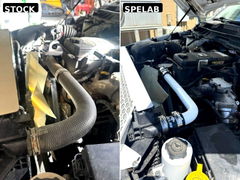
Powerstroke Intercooler Pipe

Select Your Vehicle
Select Your Vehicle

6 Products

Powerstroke Intercooler Pipe Kit FAQs

It depends on where the leak or damage is located. If only one pipe, boot, or connection has failed, a hot side or cold side replacement may be enough. If multiple parts are old, loose, or oil-soaked, replacing more of the system may be a better long-term repair.

It can help if the code is caused by a boost leak in the charge pipe, boot, clamp, or coupler. However, low boost can also come from turbo, sensor, exhaust, intake, or tuning issues, so inspect the full charge air system before assuming the pipe is the only cause.

Yes, it is often a good idea if the original boots are swollen, oily, cracked, or slipping off under boost. A new pipe will not seal properly if the couplers or clamps are already worn out.

Many experienced DIY owners can install these kits with basic hand tools and safe access to the engine bay. Rusted clamps, tight engine bay space, lifted trucks, or hard-to-reach connections may make professional installation easier.

Usually no. An intercooler pipe is a hardware replacement or airflow reliability upgrade, not a calibration change. If the truck is already tuned or running higher boost, confirm that the pipe, boots, and clamps are suitable for the setup.

Not always. Many kits cover multiple Super Duty models, but fitment still depends on engine, model year, and pipe routing. Always check the product fitment notes before ordering.

Heavy-duty aluminum or steel charge pipes are commonly used to replace weaker factory pipes, especially when the original pipe cracks, flexes, or fails to hold boost. The best choice depends on fitment, included boots, clamps, and how the truck is used.

If the truck is tuned, tows often, or already shows signs of boost leaks, upgrading the intercooler pipe and connections can help improve charge air reliability before adding more load or boost pressure.