A solid Power Stroke build starts with the truck in your driveway, not the parts stacked in somebody else’s YouTube thumbnail. Confirm the engine, model year, transmission, emissions equipment, previous mods, workload, and current faults before you spend a dollar on a tuner, turbo, intake, exhaust, or lift pump.
Key Takeaways
A beginner should repair and measure a Power Stroke before adding power because each engine generation has different failure patterns, supporting-system limits, and fitment splits.
- Treat 7.3L, 6.0L, 6.4L, and 6.7L Power Stroke engines as separate platforms; a mod that makes sense on one can waste money or create trouble on another.
- Save diagnostic trouble codes, complete overdue maintenance, check fuel delivery, pressure-test the charge-air system when symptoms justify it, and log the truck under its real workload.
- Build a daily driver, tow rig, jobsite truck, and street-performance truck around different heat, torque, payload, and downtime limits.
- Upgrade fuel, cooling, charge-air, transmission, or turbo hardware only after data shows that the stock system or a worn part is the limitation.
- Use emissions-compliant parts and calibration on a street-driven truck, and never treat added power or suspension helpers as a higher certified payload or tow rating.
1. Define What the Truck Has to Do
The right first mod depends on whether the Power Stroke spends its life commuting, pulling a fifth-wheel, idling at a jobsite, plowing snow, or chasing a higher dyno number.
- Daily driver: prioritize clean starts, stable voltage, leak-free operation, correct fluids and filters, stock-like drivability, and a low maintenance burden.
- Work truck: prioritize uptime, cold-weather starting, idle-hour maintenance, fuel quality, charging capacity, cooling, and easy-to-source service parts.
- Tow rig: prioritize loaded weights, trailer brakes, tire and hitch ratings, cooling, charge-air sealing, exhaust braking where equipped, and repeatable transmission temperature.
- Mild street build: define the desired response and usable torque instead of buying parts around a peak horsepower claim.
- High-power build: price the transmission, torque converter, fuel system, turbo, engine sealing, driveline, traction, and brakes before ordering the first power adder.
A grocery-run F-250 and an F-350 pulling a 15,000-pound fifth-wheel do not ask the same thing from an intercooler, transmission, or calibration. Write down the truck’s normal trailer weight, terrain, altitude, ambient temperature, annual mileage, idle hours, tire size, and acceptable downtime. Those facts are the build sheet.
Check the VIN, underhood emissions label, engine displacement, transmission, cab, bed, wheelbase, single-rear-wheel or dual-rear-wheel configuration, and existing hardware before ordering. The 2003 model year sits near the 7.3L-to-6.0L changeover, and “fits 6.7L Power Stroke” is too broad for a platform that has run from 2011 to the present.

2. Build a Healthy Stock Baseline Before Adding Power
A Power Stroke with unresolved codes, weak batteries, restricted filters, boost leaks, contaminated fuel, unstable temperatures, or transmission slip is not ready for a Ford performance part.
- Scan every available module. Save active, pending, and history codes plus freeze-frame data before clearing anything.
- Verify the service record. Match engine oil, coolant, fuel-filter, transmission, transfer-case, and axle service to the exact model year and the truck’s normal or special operating schedule.
- Test both batteries and the charging system. A diesel with two marginal batteries can crank while voltage falls low enough to create misleading injector-control, communication, or starting symptoms.
- Inspect the fuel path. Check the tank, water separator, filters, low-pressure supply, leaks, aeration, contamination, and the generation-specific high-pressure system.
- Inspect cooling under the actual job. Check coolant level and specification, degas bottle, cap, hoses, radiator stack, fan operation, oil temperature, coolant temperature, and unexplained pressure or coolant loss.
- Check the charge-air system. Look for oily tracks, split boots, loose clamps, cracked plastic tubes, intercooler damage, slow spool, and underboost codes. Use regulated test pressure and the service procedure for the exact platform instead of feeding full shop air into the system.
- Evaluate the transmission. Record shift quality, commanded gear, torque-converter lockup, ratio or slip codes, fluid condition, leaks, and temperature during the truck’s real duty cycle.
- Log a repeatable drive. Use the same route, load, ambient conditions, and fuel when practical. One hard pull and one hand-calculated tank are not a trend.
Ford separates normal and special service because towing, extended idling, severe dust, extreme temperatures, and other hard use can shorten maintenance intervals. Check the diesel supplement for the exact truck rather than copying an interval from a different Power Stroke generation; Ford’s published Power Stroke maintenance guidance shows how service schedules differ by engine and duty cycle.[1]

3. 7.3L Power Stroke Upgrade Roadmap: Restore Before You Modify
A 1994.5–2003 7.3L Power Stroke usually gains more from fixing age, oil-side injection faults, fuel-supply problems, exhaust leaks, and transmission wear than from an aggressive tune.
The 7.3L uses a HEUI injection system, so engine oil condition and high-pressure oil control directly affect injector operation. Slow cranking, long starts, rough cold operation, weak power, or intermittent shutoff call for battery, cranking-speed, injector-driver, sensor, fuel, and high-pressure oil diagnosis before injector shopping.
Inspect the turbo inlet, compressor wheel, up-pipes, exhaust backpressure sensor tube, charge-air boots, clamps, intercooler, fuel bowl, under-valve-cover connections, and engine wiring. A soot trail at an up-pipe joint or an oily track around a CAC boot can explain slow spool without proving that the turbo is worn out.
Match the transmission to the truck before adding torque. Early trucks may use an E4OD and later Super Duty applications commonly use a 4R100; axle ratio, tire diameter, converter behavior, fluid temperature, and maintenance history change how much additional torque the combination can tolerate.
Start With These 7.3L Actions
A beginner should service the truck, repair leaks, verify fuel and high-pressure oil operation, monitor exhaust gas and transmission temperature where useful, and add only a mild vehicle-specific calibration after the baseline is stable.
- Load-test both batteries and verify cranking speed.
- Confirm correct oil level, viscosity, filter, and change interval for the climate and duty cycle.
- Inspect fuel supply, fuel-bowl leakage, injector data, and high-pressure oil control.
- Repair exhaust and charge-air leaks before evaluating turbo size.
- Service and log the transmission before adding low-rpm torque.
A 7.3L reputation for being tough does not make a 25-year-old rubber boot, torque converter, sensor connector, or cooling system new again. Age is part of the build.
4. 6.0L Power Stroke Upgrade Roadmap: Diagnose Before You “Bulletproof”
A 2003–2007 Super Duty with a 6.0L Power Stroke needs voltage, FICM, ICP/IPR, fuel-pressure, EOT/ECT, EGR, oil-cooler, turbo-control, and cooling-system data before anyone writes a “bulletproof” parts list.
Start complaints split into two useful groups: cold-only and hot-only. Weak batteries, charging faults, FICM power problems, glow-system faults, fuel-pressure loss, injector stiction, ICP sensor faults, IPR control problems, and high-pressure oil leaks can overlap, so a parts cannon gets expensive fast.
Use engine oil temperature and engine coolant temperature as a diagnostic pair, not two random gauge numbers. Ford TSB 09-8-3 used a controlled road-test procedure and a 15°F EOT-to-ECT difference as one branch of its cooling-system diagnosis; the test conditions matter, and the number is not a universal alarm for every speed, load, or ambient temperature. Review the Ford 6.0L cooling-system bulletin before treating a dashboard snapshot as a failed oil cooler.[2]
Check fuel pressure under load because low supply pressure can hurt injector life and create weak-power complaints. Check the 6.0L coolant reservoir, cap, coolant level, thermostat operation, oil cooler, EGR cooler, fan, radiator stack, and combustion-gas evidence as a system. Coolant residue around the bottle does not automatically prove failed head gaskets, and head studs do not repair a plugged oil cooler or a leaking EGR cooler.
What “Bulletproof” Should Mean on a 6.0L
A sensible 6.0L reliability plan fixes verified weak points and supports the intended load; it does not replace every popular component because a forum checklist said so.
- Stock daily driver: healthy electrical, fuel, high-pressure oil, cooling, and turbo-control systems may be enough.
- Tow rig: stable EOT/ECT behavior, dependable fuel pressure, clean radiator airflow, sound charge-air plumbing, and transmission health matter before added torque.
- Higher-cylinder-pressure build: head sealing, fastener choice, machine work, calibration, turbo, fuel, and transmission support must be planned together.
Our fitment work as a parts manufacturer keeps showing the same shop-floor problem: owners order the visible hard part before checking the clamp, connector, hose, sensor reading, or mating surface that made the original system fail. The stronger part still needs a clean diagnosis and a correct install.
5. 6.4L Power Stroke Upgrade Roadmap: Set a Budget Before a Power Goal
A 2008–2010 6.4L Power Stroke beginner should establish an engine-condition and repair-budget gate before pursuing the large power gains this platform can produce.
The 6.4L combines high-pressure common-rail injection, sequential turbocharging, EGR, and a diesel particulate filter. That package can deliver strong response, but an unknown service history, repeated short trips, frequent regeneration, rising oil level, fuel-system damage, cooling trouble, or turbo issues can turn a cheap power plan into a five-figure repair.
Check engine oil level and smell, coolant level and pressure behavior, relative compression or other appropriate engine-health data, crankcase pressure, rail-pressure performance, fuel quality, injector correction data where supported, DPF soot and regeneration history, turbo operation, and 5R110 transmission behavior. Ford material submitted in a NHTSA investigation specifically identified required DPF regeneration as an increased fuel-in-oil dilution concern for the 6.4L, which makes an unexplained rising oil level a diagnostic signal rather than a curiosity.[3]
Set the Stop-Loss Before Buying 6.4L Mods
A 6.4L owner should decide the maximum repair cost and downtime the truck can justify before adding power or opening major systems.
- Price a professional baseline inspection before pricing a tuner.
- Verify that the truck can complete its normal drive cycle and regeneration strategy without recurring codes.
- Send a contaminated-fuel or metal-in-fuel concern to a qualified diesel shop before running the engine again.
- Treat cooling-system pressure, unexplained coolant loss, rising oil level, and abnormal crankcase pressure as stop signs.
- Keep the truck stock when the engine condition, vehicle value, or downtime exposure does not support the risk.
The 6.4L can make power easily compared with the money required to contain a serious failure. Easy power is not the same thing as low-risk power.
6. 6.7L Power Stroke Upgrade Roadmap: Model-Year Splits Matter
A 2011-and-later 6.7L Power Stroke needs year-specific fuel, turbo, charge-air, emissions, calibration, and transmission planning because “fits 6.7L” does not mean “fits every 6.7L.”
The 6.7L uses high-pressure common-rail injection, a variable-geometry turbocharger, cooled EGR, a DPF, and SCR/DEF aftertreatment in Super Duty pickup applications. Clean fuel, water separation, correct filters, intact charge-air plumbing, complete emissions diagnostics, and stable transmission behavior belong ahead of extra torque.
Drain and service the water separator according to the exact diesel supplement, and respond to a water-in-fuel warning instead of resetting it. Fuel contamination can affect the tank, low-pressure side, high-pressure pump, rails, lines, and injectors; a lift pump does not make dirty fuel safe and does not guarantee that a high-pressure pump cannot fail.
2011–2014 6.7L Power Stroke
An early 6.7L build should begin with fuel-system history, turbo operation, cooling, 6.7L coolant reservoir condition, CAC tube condition, emissions readiness, and 6R140 shift data.
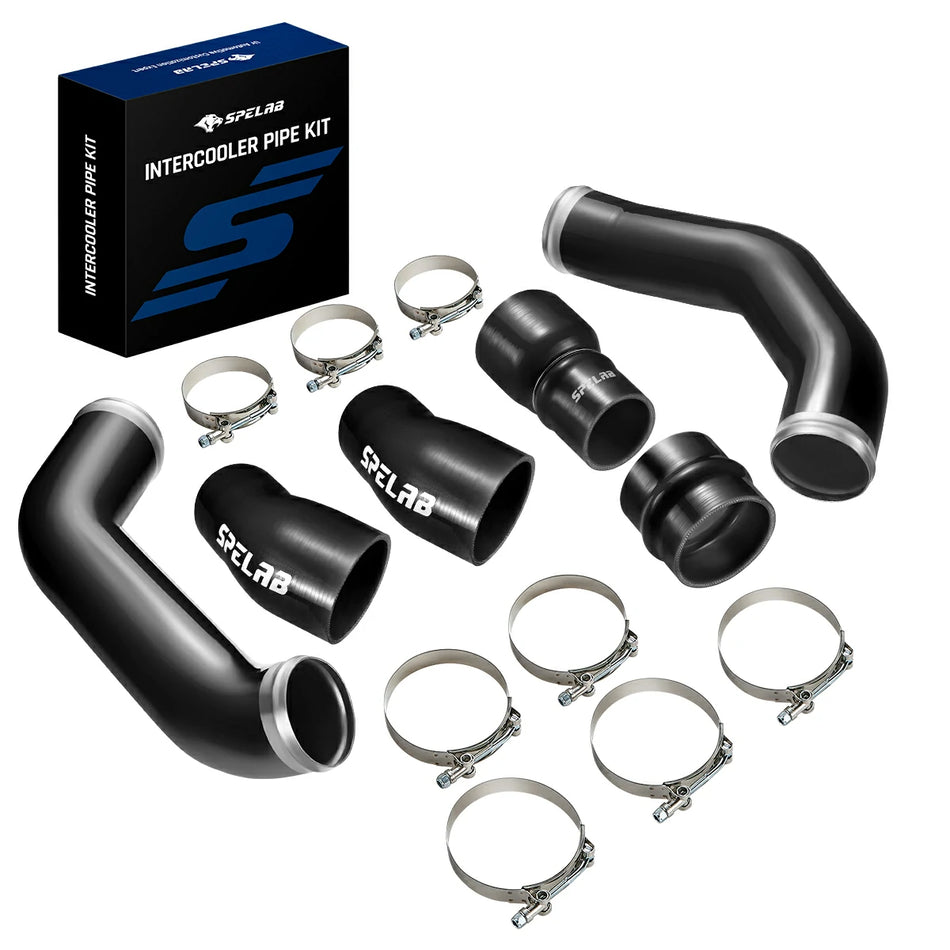
Inspect for hard starts and rail-pressure codes, metal or water contamination, charge-air oil tracks, underboost, abnormal turbo noise, coolant loss, repeated regeneration, and transmission slip. Confirm every turbo, intake, 6.7L hot-side intercooler pipe kit, fuel-system, and calibration part against the VIN and build date.
2015–2019 6.7L Power Stroke
A 2015–2019 6.7L build still requires exact-year fitment because later turbo and supporting-hardware changes do not make all 2011–2019 parts interchangeable.
Log boost command versus actual response, rail pressure, coolant and oil temperatures, regeneration status, and 6R140 behavior under the intended trailer or payload. Check CAC tubes and connections before condemning the turbo: Ford TSB 19-2143 identifies CAC outlet-tube separation as one possible cause of P0299 and low power on certain 2011–2016 trucks. The Ford underboost bulletin hosted by NHTSA is a good example of why leak inspection comes before turbo replacement.[4]
2020–Present 6.7L Power Stroke
A 2020-and-later 6.7L build must account for the third-generation engine hardware, 10-speed TorqShift transmission, software strategy, and later standard-output or High Output configuration.
Ford introduced a 36,000-psi injection system with the third-generation 6.7L for 2020. Current 2026 Super Duty ratings reach 475 hp and 1,050 lb-ft for the standard 6.7L or 500 hp and 1,200 lb-ft for the High Output version, so many tow and work owners already have more factory torque than the chassis can use in every condition. Ford publishes the current Super Duty engine specifications for comparison.[5]
Watch gear command, converter behavior, shift timing, fluid temperature, tire-size calibration, and software status before changing engine output. Diagnose VGT actuator codes by the model-year service procedure; a 2025 Ford service message for certain 2020–2022 trucks notes that a released actuator can be serviced without replacing the full turbo when workshop diagnostics lead to that component.[6]

7. Use This Beginner Power Stroke Upgrade Order
The safest Power Stroke upgrade order is identify, repair, measure, support, add compliant power, and validate before moving to the next part.
| Stage | Action | Evidence Needed to Move On | Do Not Buy Yet |
|---|---|---|---|
| 0. Confirm | Verify engine, model year, build date, transmission, emissions equipment, tire size, axle ratio, and prior mods. | The VIN, labels, scan data, and installed hardware agree. | Year-sensitive hard parts or calibration. |
| 1. Repair | Resolve codes, leaks, weak batteries, poor grounds, restricted filters, contaminated fuel, cooling faults, and overdue service. | The stock truck starts, drives, shifts, and completes its normal duty without recurring faults. | Tuner, turbo, injectors, or a bigger intercooler. |
| 2. Measure | Log generation-specific temperatures, pressures, boost response, regeneration status, and transmission behavior. | Repeatable data identifies what is normal and what changes under load. | A monitor marketed as if it repairs the problem. |
| 3. Support | Address proven fuel-supply, charge-air, cooling, braking, traction, or transmission limitations. | The planned torque and duty cycle fit within the demonstrated capacity of the supporting systems. | Peak-power parts without a system plan. |
| 4. Add Power | Choose emissions-compliant intake, exhaust, and calibration changes matched to the exact truck and job. | The truck remains legal for its use, diagnosable, smoke-controlled, and stable through repeated tests. | Aggressive files with unknown ECM/TCM compatibility. |
| 5. Build the System | Plan turbo, injectors, high-pressure fuel, transmission, engine, driveline, and brakes as one package. | The owner accepts the budget, downtime, maintenance, validation, and reduced factory margin. | Any single “magic” bolt-on. |
8. Know What Common Power Stroke Mods Actually Do
A useful mod corrects a measured limitation or supports a defined goal; a part that cannot be tied to either one is usually noise, appearance, or money spent out of order.
| Mod | What It Can Do | When It Makes Sense | What It Does Not Fix |
|---|---|---|---|
| Monitor or scan tool | Displays generation-specific temperatures, pressures, commands, and fault data. | Towing, diagnosis, post-repair validation, or a tuned truck. | Bad sensors, leaks, low fuel pressure, overheating, or transmission wear. |
| Lift pump | Can improve low-pressure supply, filtration, and water separation when correctly designed and installed. | Measured supply limitation, added filtration goal, or a fuel-demand plan that requires it. | Contaminated fuel, a failed injector, regulator fault, or every high-pressure pump failure mode. |
| Cold-air intake | Can reduce inlet restriction at airflow levels that exceed the stock system’s useful capacity and can change sound. | A verified restriction, planned airflow increase, or a sealed direct-fit replacement need. | Boost leaks, VGT faults, poor calibration, or hot charge air by itself. |
| Charge pipe or intercooler | Can improve sealing, durability, temperature control, or pressure drop when the stock assembly is damaged or out of capacity. | Cracked plastic, separating crimps, leaking boots, repeatable heat soak, or higher planned mass airflow. | A worn turbo, exhaust leak, sensor bias, restricted air filter, or unrelated P0299 cause. |
| Exhaust | Can change sound, corrosion resistance, packaging, and restriction when a compliant system is available. | A damaged system, measured restriction, or a legal sound and material goal. | Certified payload, a failing aftertreatment system, or legal permission to remove emissions controls. |
| Tuner or calibration | Changes torque delivery, fueling, boost control, throttle response, shifting, and sometimes tire-size or speedometer settings. | A healthy truck, exact ECM/TCM support, a clear power goal, and a legal emissions configuration. | Low fuel pressure, weak head sealing, a plugged cooler, worn clutches, or bad maintenance. |
| Larger turbo | Changes airflow capacity, response, drive pressure, heat behavior, and the useful power range. | Logs and the full fuel/transmission plan show the stock turbo is the restriction. | Loose clamps, cracked CAC tubes, vane-control faults, exhaust leaks, or poor tuning. |
| Head studs | Provide a different clamping strategy when the engine build, cylinder pressure, machine work, and gasket plan require it. | A verified sealing repair or a planned higher-cylinder-pressure build. | A failed oil cooler, EGR cooler, injector, turbo, thermostat, or fuel-supply fault. |
| Transmission build | Adds clutch, converter, hydraulic, thermal, and hard-part capacity when correctly matched. | Measured slip, known wear, heavy repeated towing, large tires, or a torque target beyond the stock unit’s condition. | Bad engine calibration, driveline vibration, incorrect tire loading, or neglected cooling. |
Check Material and Fitment, Not Just the Product Name
A durable bolt-on needs the correct alloy, wall thickness, joint design, seal material, clamp range, sensor provisions, coating, and clearance for the exact truck.
Cast aluminum, formed aluminum, mandrel-bent stainless steel, reinforced silicone, molded plastic, and coated mild steel each suit different heat, pressure, vibration, corrosion, weight, and cost targets. A thicker or larger part is not automatically better: poor bead geometry can let a boot walk off, excessive pipe diameter can hurt packaging or response, and a hard-mounted rigid tube can transfer vibration into a flange or sensor boss.
Our bench and vehicle fitment checks focus on bead engagement, clamp position, O-ring compression, bracket alignment, sensor clocking, hood and fan clearance, heat shielding, and whether the part installs without forcing neighboring components out of position. New hardware still needs clean sealing surfaces and the specified torque sequence.
9. Match the First Move to the Symptom
A symptom should choose the diagnostic path; it should not choose an expensive part before the system is tested.
| Truck or Symptom | Start Here | Useful Data | Do Not Assume |
|---|---|---|---|
| Stock truck with no symptoms | Records, fluids, filters, full scan, leak inspection, battery test, and loaded baseline. | Temperatures, fuel or rail pressure where supported, boost response, regeneration status, and shift behavior. | It needs a tuner, lift pump, intake, or turbo. |
| Hard cold or hot start | Batteries, cranking speed, glow strategy, fuel supply, generation-specific injection control, and oil-side control on HEUI engines. | FICM/ICP/IPR-related PIDs on a 6.0L; rail pressure command versus actual on common-rail engines. | All injectors are bad. |
| P0299 or weak boost | Air filter, snow or debris, CAC boots and tubes, clamps, intercooler, exhaust leaks, sensors, and VGT control. | Commanded versus actual boost, exhaust pressure, vane command where supported, and a regulated leak test. | The turbo must be replaced. |
| Runs hot while towing | Loaded weight, gear, road speed, ambient temperature, radiator stack, fan, coolant, oil cooler, charge-air leaks, and transmission. | ECT, EOT, transmission temperature, boost behavior, regeneration status, grade, load, and duration. | A larger radiator or turbo alone will solve it. |
| Low fuel or rail pressure | Fuel quality, water, filters, aeration, low-side supply, regulator/control, and high-pressure-system diagnosis. | Commanded versus actual pressure under the same load and a contamination inspection. | A lift pump or tune is the repair. |
| Frequent regeneration or DPF warning | Trip length, idle time, codes, exhaust leaks, sensors, thermostats, injector condition, and service regeneration criteria. | Soot load, exhaust temperatures, differential pressure, regeneration history, and related DTCs where supported. | Deleting the DPF is the only answer. |
| Transmission flare or slip | Codes, fluid level and condition, temperature, tire size, converter lockup, commanded gear, and calibration history. | Input speed, output speed, commanded gear, slip, temperature, and line-pressure data where available. | More line pressure or a different tune will repair worn parts. |
10. Use These Three Beginner Build Examples
A beginner build works when every dollar supports the truck’s actual job instead of copying a universal mod list.
High-Mileage 7.3L Daily Driver
A high-mileage 7.3L daily driver should spend its first budget on starting health, fluid leaks, fuel delivery, up-pipes, charge-air boots, cooling, and transmission service.
Keep the stock airbox if restriction is acceptable and sealing is sound. Add monitoring that answers a real question, then consider a mild calibration only after the truck repeats clean cold starts, hot starts, highway pulls, and shifts.
6.0L Tow Rig
A 6.0L tow rig should prove electrical, fuel-pressure, high-pressure-oil, EOT/ECT, cooling, boost-control, head-sealing, and transmission health before towing with added torque.
Run the truck at operating temperature on a repeatable route before hitching the trailer, then log it at the actual loaded combination weight. Fix the system that leaves its normal trend first; do not call a box of unrelated parts a reliability package.
6.7L Mild Street and Tow Build
A mild 6.7L street and tow build should preserve clean fuel, intact aftertreatment, sealed charge-air plumbing, stable transmission behavior, and exact-year software compatibility.
A direct-fit CAC tube or intercooler makes sense when the original part leaks or logged temperature and pressure behavior justify more capacity. A compliant calibration comes later, and the loaded validation route should check smoke, rail pressure, boost control, temperatures, regeneration behavior, shifting, and diagnostic readiness.
11. Avoid These Power Stroke Beginner Mistakes
Most expensive beginner mistakes come from skipping identification, diagnosis, supporting systems, or validation.
- Buying by “Power Stroke” alone: displacement, year, build date, transmission, emissions hardware, and chassis configuration control fitment.
- Clearing codes before saving data: erased freeze-frame and history information can hide the conditions that created an intermittent failure.
- Calling every repair an upgrade: replacing a failed boot or cooler restores function; it does not prove the truck is ready for more torque.
- Blindly bulletproofing a 6.0L: a generic kit can miss the actual electrical, fuel, oil-side, cooling, turbo, or transmission fault.
- Tuning a questionable 6.4L: easy power can expose an expensive engine, fuel, turbo, cooling, or transmission problem.
- Treating every 6.7L as interchangeable: early, middle, and third-generation trucks have meaningful hardware and control differences.
- Replacing a turbo before leak and control tests: tubes, boots, clamps, exhaust leaks, sensors, air restriction, and VGT control can produce similar symptoms.
- Adding torque to a slipping transmission: calibration cannot put friction material back on worn clutches.
- Using one tank to claim an MPG gain: regeneration, idle time, fill level, wind, speed, load, tires, and weather can bury a small change.
- Treating helper springs as payload: leveling the rear suspension does not rewrite the door-jamb ratings.

12. Keep Emissions, Warranty, and Towing Limits in the Build
A street-driven Power Stroke build must retain compliant emissions operation, respect vehicle-specific weight ratings, and document modifications well enough to support future diagnosis and warranty questions.
Federal law prohibits tampering with certified emissions controls and prohibits manufacturing, selling, or installing aftermarket defeat devices. Hardware or software that disables EGR, DPF, SCR, sensors, diagnostic monitoring, or other certified controls can fall within that enforcement area; the EPA defeat-device and tampering fact sheet provides the federal enforcement context.[7]
An aftermarket part does not automatically erase the entire vehicle warranty, but a claim can be denied when an aftermarket part or improper installation caused the damage at issue. Keep invoices, maintenance records, stock calibration files, part numbers, installation instructions, and before-and-after logs; FTC auto-warranty guidance explains the general distinction.[8]
Added horsepower, an exhaust brake, air springs, helper springs, or upgraded shocks do not raise the certified GVWR, GAWR, GCWR, tire rating, hitch rating, or payload shown for the truck. Weigh the truck and trailer in loaded travel condition, including passengers, fuel, tools, hitch hardware, and cargo, then use the exact model-year guide and door-jamb labels. Ford’s official towing guidance explains that towing and payload depend on configuration and loaded weight.[9]
Bottom Line
The correct Power Stroke upgrade is the next part or repair supported by the truck’s exact generation, actual job, measured data, and supporting-system capacity.
Restore a 7.3L before leaning on its age, diagnose a 6.0L before buying a “bulletproof” box, set a hard risk limit on a 6.4L, and split every 6.7L decision by model year and hardware. Make one change, repeat the same test, and keep the result only when the truck becomes more dependable or better suited to its job.
Frequently Asked Questions
A new Power Stroke owner should start with engine identification, maintenance records, a full scan, a physical inspection, and loaded baseline data before choosing a performance part.
Q: What should I upgrade first on a Power Stroke?
A: The first Power Stroke upgrade should be a verified mechanical and diagnostic baseline. Repair codes, leaks, voltage problems, restricted filters, contaminated fuel, cooling faults, boost leaks, and transmission issues before adding power.
Q: Does every 6.0L Power Stroke need to be bulletproofed?
A: No, every 6.0L does not need the same “bulletproof” package. Test FICM power, ICP/IPR behavior, fuel pressure, EOT/ECT response, EGR and oil-cooler condition, cooling-system pressure, head sealing, turbo control, and transmission health before selecting repairs.
Q: Is a tuner a good first Power Stroke mod?
A: A tuner is usually a poor first mod because added torque can expose weak fuel delivery, cooling, head sealing, turbo control, transmission clutches, or driveline parts. Establish a clean stock baseline first, then use only an emissions-compliant calibration built for the exact ECM, TCM, engine, transmission, tire size, and workload.
Q: Does a stock 6.7L Power Stroke need a lift pump?
A: A healthy stock 6.7L does not automatically need an aftermarket lift pump. Added low-side supply, filtration, or water separation may support a defined need, but the kit cannot make contaminated fuel safe or prevent every high-pressure fuel-system failure.
Q: Is the 6.4L Power Stroke a good beginner performance platform?
A: A 6.4L can produce large power gains, but it is not a low-risk beginner platform when service history or engine condition is unknown. Set a repair budget, inspect fuel dilution, cooling, fuel, turbo, DPF, engine, and 5R110 condition, and be willing to keep the truck stock.
Q: Does a P0299 code mean the Power Stroke turbo is bad?
A: No, P0299 does not prove turbo failure. Intake restriction, snow packing, CAC tube separation, split boots, loose clamps, intercooler leaks, exhaust leaks, sensor errors, calibration, or VGT-control faults can all require testing before turbo replacement.
Q: Do air bags or helper springs increase Super Duty payload?
A: No, air bags and helper springs can change ride height and load control, but they do not increase the truck’s certified GVWR, GAWR, GCWR, axle, wheel, tire, hitch, or payload ratings.
Related Articles
- The Duramax Upgrade Roadmap: How to Build It Right, Not Just Fast
- What Should You Upgrade First on a Cummins? A Year-by-Year 5.9L and 6.7L Guide
Sources
The numbered references below support the maintenance, diagnostic, engine-output, emissions, warranty, and towing claims cited in the article.
- Ford Power Stroke Diesel Maintenance Intervals
- Ford TSB 09-8-3: 6.0L Cooling-System Diagnosis
- Ford Diesel Fuel and Regeneration Technical Material Hosted by NHTSA
- Ford TSB 19-2143: 6.7L P0299 and CAC Outlet-Tube Diagnosis
- Ford Super Duty Engine Specifications
- Ford Service Message 53328: 6.7L VGT Actuator
- EPA Fact Sheet on Aftermarket Defeat Devices and Tampering
- FTC Auto Warranties and Auto Service Contracts
- Ford Towing and Trailering Guidance

About the Author
John Lee
Mechanical Engineer | 10+ Years Experience
John has spent the last decade engineering and testing high-performance automotive components. Specializing in drivetrain durability and thermal management across Powerstroke, Cummins, and Duramax applications, he bridges the gap between OEM limitations and aftermarket performance. His philosophy: "Factory parts are just a starting point."