A good Duramax build does not start with the biggest tuner, turbo, or exhaust. It starts with the truck you actually own: its engine code, condition, workload, emissions configuration, and the weakest system shown by inspection or data.
This 6.6L Duramax upgrade roadmap covers Chevrolet Silverado HD and GMC Sierra HD pickups. The roadmap is intended for owners building a dependable daily driver, tow rig, or street-performance truck while keeping safety, emissions compliance, and total cost in view.
Quick Answer
The first upgrade for any 6.6L Duramax should be a verified mechanical and diagnostic baseline, not a performance part. The owner should confirm the engine code and truck configuration, repair existing faults, service overdue fluids and filters, pressure-test the charge-air and cooling systems when symptoms justify it, and record scan data under the truck's normal load. Before adding power to a tow vehicle, the owner should also verify payload, axle, tire, hitch, trailer-brake, GVWR, GCWR, and tongue or pin-weight limits.
A healthy, stock 6.6L Duramax may not need any power modification. Fuel, cooling, airflow, transmission, or turbo hardware becomes appropriate only when the truck's intended use and measured data identify a limitation.

1. Identify Your Duramax Before Ordering Parts
"Duramax" is not one interchangeable platform. Model-year listings can overlap, and a previous owner may have changed major hardware. Verify the VIN, RPO label or build information, underhood equipment, transmission, cab and bed configuration, and emissions label before buying anything.
| Engine | Typical model years | First checks that commonly matter |
|---|---|---|
| LB7 | 2001-early 2004 | Injector history and balance data, fuel filter condition, cooling-system health, charge-air leaks, transmission condition |
| LLY | Mid-2004-2005; some 2006 applications | Cooling performance under load, fan-clutch operation, intake restriction, injector harness concerns, boost leaks |
| LBZ | 2006-2007 Classic | Transmission history, cooling and charge-air condition, injector data, modifications left by previous owners |
| LMM | 2007.5-2010 | EGR and DPF condition, regeneration history, cooling, charge-air leaks, transmission temperatures under load |
| LML | 2011-2016 | Fuel quality and filtration, CP4 system risk, DEF/SCR and DPF faults, cooling, transmission condition |
| L5P | 2017-2019 | Emissions-system diagnostics, charge-air sealing, cooling and transmission data, calibration and warranty status |
| L5P | 2020-present | 10L1000-specific service and calibration needs, emissions diagnostics, thermal management, software and warranty status |
The model-year ranges in this table are a practical identification guide, not a substitute for vehicle-specific verification. The LMM uses EGR and a DPF but does not use the later LML/L5P DEF and SCR arrangement. Recognizing the LMM's lack of DEF and SCR can prevent an expensive wrong-parts order.
2. Define the Truck's Real Mission
Write down what the truck must do before choosing an upgrade path. A 12,000-pound fifth-wheel tow rig, a lightly loaded commuter, and a weekend performance truck need different parts and different margins.
- Daily driving: prioritize cold-start behavior, drivability, filtration, leak-free operation, emissions readiness, and low maintenance burden.
- Heavy towing: prioritize verified weights, brakes, tires, cooling, charge-air integrity, transmission behavior, and repeatable temperature control.
- Highway travel: prioritize reliability, range, fuel quality, spare filters, cooling-system condition, and conservative calibration.
- Street performance: define a realistic power goal, fuel availability, traction, transmission capacity, and budget for supporting hardware.
- Off-road or competition: verify the event rules, land-use rules, registration status, transport requirements, and applicable emissions laws before planning hardware.
3. Towing Has a Safety Gate Before the Upgrade Roadmap
Adding engine power does not increase a Duramax truck's certified payload, GVWR, GAWR, GCWR, tire ratings, hitch rating, or legal tow rating. Air springs may level the loaded truck, but air springs do not increase any of those ratings.
Use the vehicle-specific labels, owner's manual, and the correct model-year trailering guide. Depending on the truck, the driver-side labels may list some or all of the vehicle-specific limits. Weigh the truck and trailer in loaded travel condition, including passengers, fuel, tools, hitch hardware, and cargo. Chevrolet's trailering guidance states that conventional trailer tongue weight is generally 10%-15% of loaded trailer weight, while fifth-wheel or gooseneck pin weight is generally 15%-25%; the vehicle-specific guide remains controlling. See the official Chevrolet Trailering and Towing Guide.
Before a heavy trip, inspect truck and trailer tires, brakes, wheel bearings, breakaway system, hitch fasteners, lights, fluids, and cooling-system level. Use Tow/Haul mode and an exhaust brake when the truck is equipped with one and the owner's manual calls for it. A useful companion is the diesel towing, regeneration, EGT and DPF warning guide.

4. Build a Baseline Before Stage 1
Do not evaluate a new part against a truck with unknown faults. Establish a repeatable baseline first:
- Scan every module. Save active, pending, and history codes instead of clearing them immediately. Record freeze-frame data where available.
- Review service history. Confirm engine oil, fuel filter, air filter, coolant, transmission fluid, transfer-case fluid, and axle-fluid intervals for the exact truck.
- Inspect fuel delivery. Check for water contamination, restricted filters, aeration, leaks, hard-start symptoms, and commanded-versus-actual rail-pressure behavior with appropriate diagnostic equipment.
- Inspect cooling. Check coolant level and condition, hoses, reservoir, cap, radiator stack, fan operation, water-pump leakage, and unexplained pressure or coolant loss.
- Test charge-air integrity. Look for split boots, loose clamps, oily leak tracks, cracked pipes, intercooler damage, underboost codes, or slower-than-normal spool response. Pressure- or smoke-test when symptoms support it.
- Evaluate the transmission. Note shift quality, converter lockup, slip or ratio codes, fluid condition, leaks, and temperatures during the actual duty cycle.
- Log a controlled drive. Record relevant temperatures, boost, rail pressure, regeneration status on equipped trucks, and transmission behavior on a repeatable route.
When a Duramax shows low rail pressure, diagnose the fuel system before installing a lift pump or tune. This diesel fuel-filter diagnostic guide covers common restriction and water-in-fuel clues. When boost falls in hot weather or under load, complete the hot-weather boost-loss checklist before concluding that the turbo is undersized.
5. The Duramax Upgrade Order
| Stage | What to do | Move on when |
|---|---|---|
| 0. Identify | Confirm engine, transmission, emissions hardware, truck configuration, use case, limits, and budget. | The parts list matches the exact truck and a defined goal. |
| 1. Repair and maintain | Resolve codes, leaks, fuel restriction, cooling faults, charge-air leaks, weak batteries, poor grounds, and overdue service. | The truck is healthy and repeatable under its normal load. |
| 2. Load safety and monitoring | Verify weights, tires, brakes, hitch and trailer systems; add useful monitoring only where factory information is insufficient. | Critical limits can be measured and the loaded combination is within rating. |
| 3. Supporting systems | Address proven fuel-supply, cooling, charge-air, transmission, suspension-control, or braking needs. | The planned power or duty cycle no longer exceeds the supporting system's demonstrated capacity. |
| 4. Compliant airflow and calibration | Choose emissions-compliant intake, exhaust, or calibration changes based on restriction, temperature, drivability, and a specific goal. | The truck remains diagnosable, legal for its use, and stable through repeated validation. |
| 5. Advanced power | Plan turbo, injector, high-pressure fuel, transmission, engine, traction, and driveline changes as one system. | The owner accepts the cost, downtime, maintenance, testing, and reduced factory margin. |
Stage 1: Repair and Maintenance
Stage 1 repairs and maintenance recover more reliability than most bolt-on performance parts. Replace worn or contaminated service items with parts and fluids that meet the applicable specification. Repair coolant, oil, fuel, exhaust, and boost leaks. Clean debris from the radiator and charge-air-cooler stack without damaging fins. Verify batteries, charging voltage, grounds, sensors, and harnesses before blaming a control module.
A used-oil analysis can be useful on a high-mileage truck, an engine with unknown history, or a fleet where trends are compared over several consistent samples. One sample is not a verdict, and an upgraded oil cooler is not a universal first modification. Investigate verified oil-temperature or oil-pressure problems in the context of load, ambient temperature, coolant temperature, oil specification, and sensor accuracy. For background, see how a diesel-truck oil cooler works.
Stage 2: Load Safety and Useful Monitoring
A Duramax tow build should address tires, truck brakes, hitch setup, trailer brakes, steering, and suspension condition before adding horsepower. Correctly selected helper springs or air springs may improve ride height and control, but these suspension aids do not change the truck's certified weight ratings.
Use the factory display, a capable scan tool, or a dedicated monitor to track the parameters relevant to the generation and job. No single EGT or transmission-temperature limit applies to every Duramax because probe location, sensor strategy, ambient conditions, gear, load, duration, and transmission generation change how the reading should be interpreted. Establish a normal temperature trend for the specific truck, then use its owner's manual, service information, component supplier guidance, or a qualified Duramax shop to set action limits.
Stage 3: Supporting Systems Only When the Evidence Points There
Low-pressure fuel supply: a quality lift-pump system can improve filtration, water separation, and low-pressure fuel supply when the application needs those functions. A lift pump cannot prevent a high-pressure fuel pump from failing, and it should not be used to mask a restriction, air leak, contaminated tank, failing regulator, or high-pressure fault.
LML CP4 choices: clean fuel and correct filtration form the basic risk-management strategy for an LML fuel system. A CP4 bypass or disaster-prevention kit is designed to limit how far debris may spread after certain pump failures; the kit does not prevent the CP4 itself from failing. A CP3 conversion replaces or reconfigures major parts of the high-pressure fuel system and therefore requires exact fitment, installation, calibration, warranty, and emissions review. A CP4 bypass kit and a CP3 conversion solve different problems and are not interchangeable upgrades.
Cooling: upgrade a radiator, coolant pipe, reservoir, fan system, transmission cooler, or intercooler after identifying a heat-rejection, leakage, durability, or pressure-drop problem. A larger component can introduce fitment, airflow, warm-up, or pressure-drop tradeoffs, so compare data before and after.
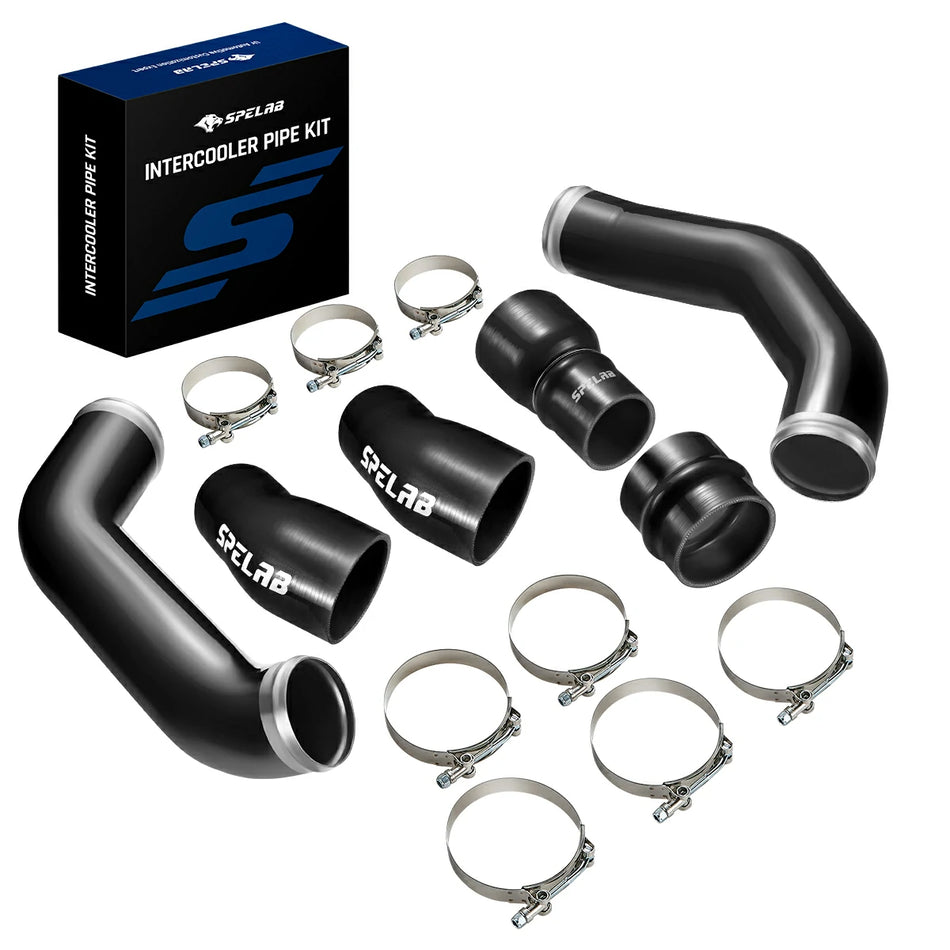
Charge air: repair failed boots, clamps, seals, and pipes before replacing the intercooler. A larger intercooler becomes justified when repeatable logs show heat soak, excessive intake-air temperature, unacceptable pressure drop, or a planned airflow level beyond the stock system's capacity. The Duramax intercooler guide compares symptoms and generation-specific fitment.

Stage 4: Compliant Airflow and Calibration
The factory intake and exhaust can provide adequate airflow for a stock or mildly modified Duramax. Replace either system only when inspection, measurements, fitment needs, sound goals, or the planned power level justify the change.
For an intake, verify filter condition, restriction, enclosure sealing, sensor compatibility, water or snow exposure, and underhood heat. Oiled filters can create service or sensor concerns when over-oiled. This guide to cold-air-intake gains and limitations helps separate measurable needs from sound and appearance.
For exhaust work, choose only hardware legal for the vehicle's intended use and confirm cab, bed, wheelbase, emissions configuration, hanger, sensor, material, and diameter fitment. No single 3-inch, 4-inch, or 5-inch exhaust diameter is best for every Duramax. The correct diameter depends on sound, drone, corrosion resistance, packaging, emissions equipment, power target, and measured backpressure.
A tuner is an optional later-stage Duramax modification, not the first upgrade. The factory calibration provides the clearest baseline for diagnosing the stock truck. If the build later requires a legal calibration, choose a reputable provider that supports the exact ECM, TCM, engine, transmission, tire size, emissions configuration, and workload. Start conservatively and validate rail pressure, boost control, temperatures, shifting, smoke, diagnostic readiness, and repeatability. A Duramax tune does not guarantee better fuel economy; hand-calculate several comparable tanks before claiming an improvement.
Stage 5: Turbo, Transmission, Fueling, and Engine Hardware
A larger turbo does not automatically improve a Duramax tow build. Compressor and turbine sizing, housing, response, drive pressure, altitude, converter behavior, exhaust braking, fueling, and calibration determine how the turbo performs at real towing engine speeds. For most tow-focused builds, predictable response and controlled heat matter more than a higher peak-power number.
No single horsepower limit is safe for every LB7 injector set, stock Allison transmission, L5P turbo, or factory Duramax bottom end. Component condition, torque delivery, vehicle mass, tire size, calibration, duty cycle, and measurement method determine the available margin. When the power target exceeds the stock system's demonstrated capacity, the build plan should address the transmission, converter, high-pressure fuel system, injectors, turbo, head sealing, engine internals, driveline, traction, and brakes as one system. L5P owners can continue with the L5P performance and reliability guide.
6. Match the Roadmap to the Symptom
| Owner situation | Start here | Do not assume |
|---|---|---|
| Stock daily driver with no symptoms | Maintenance records, filters, fluids, scan, leak inspection | That it needs a tune, lift pump, intake, or exhaust |
| Tow rig runs hot on grades | Actual weights, gear and speed, radiator stack, fan operation, coolant system, charge-air leaks, transmission data | That a bigger radiator or turbo alone will solve it |
| P0299 or weak boost | Boots, clamps, pipes, intercooler, sensors, exhaust leaks, vane control and commanded-versus-actual data | That the turbo has failed |
| Hard start or low rail pressure | Fuel quality, filters, water, air leaks, low-side supply, regulator and high-pressure diagnosis | That a lift pump or tune is the repair |
| Frequent regeneration or DPF warning | Duty cycle, codes, exhaust leaks, sensors, thermostat behavior, injector condition and service diagnostics | That deleting emissions hardware is the only option |
| Performance goal beyond mild street use | Written power goal, budget, fuel and transmission plan, data logging, traction, brakes and professional calibration | That one bolt-on part creates a complete build |

7. Common Duramax Build Mistakes
- Buying by model year alone: overlapping engine years, classic body styles, transmission changes, and modified trucks make VIN and hardware verification essential.
- Clearing codes before saving data: this removes clues and can make an intermittent problem harder to reproduce.
- Adding power to a weak transmission: more torque exposes existing converter, clutch, cooling, and control problems.
- Replacing a turbo before leak testing: a loose clamp, cracked pipe, exhaust leak, sensor error, or vane-control issue can produce similar symptoms.
- Treating leveling as added payload: suspension aids do not change GVWR, GAWR, tire, hitch, or GCWR limits.
- Believing one MPG tank: idle time, regeneration, weather, speed, load, tire pressure, and fill level can overwhelm a small change.
- Using universal temperature or horsepower numbers: measurement location, generation, configuration, condition, and duration determine what the number means.
Frequently Asked Questions
Q: What should I upgrade first on a Duramax?
A: The first Duramax upgrade should establish a healthy mechanical and diagnostic baseline. Confirm the engine and truck configuration, repair faults, complete overdue maintenance, and collect data under the truck's real workload. Buy a part only when that part addresses a verified limitation.
Q: Does a stock Duramax need a lift pump?
A: Not automatically. A lift-pump system may add filtration, water separation, or low-side supply support, but a healthy stock truck can remain stock. Diagnose fuel restriction, contamination, air leaks, regulator issues, and high-pressure faults before choosing one.
Q: Does a CP4 bypass kit prevent LML pump failure?
A: No. A CP4 bypass or disaster-prevention kit may limit debris spread after certain failures, but the kit does not prevent the CP4 pump itself from failing. A CP3 conversion is a separate, more extensive high-pressure fuel-system modification.
Q: Is a tuner alone a good first Duramax modification?
A: Usually no. A tuner can increase load on fuel, cooling, transmission, turbo, and driveline systems and can hide the value of a clean stock baseline. Repair and measure first, then use only a legal, vehicle-specific calibration if it serves a defined goal.
Q: Does a tow rig need a bigger turbo?
A: Not unless data and the power goal show the stock turbo is the limitation. A larger unit may change response, heat, drive pressure, exhaust braking, and converter behavior. Fix leaks and cooling problems before resizing the turbo.
Q: Is an EGR, DPF, or SCR delete legal on a street-driven Duramax?
A: No. Removing or disabling federally certified emissions controls on a vehicle used on public roads is prohibited under U.S. federal law. Check state rules and choose properly certified, emissions-compliant parts and repairs.
Q: Will aftermarket parts void my whole warranty?
A: No, an aftermarket part does not automatically void the truck's entire warranty. A manufacturer or dealer may deny a specific claim when it can show that a defective aftermarket part or improper installation caused the damage. Documentation and a clear diagnostic record matter.
Q: Do airbags or helper springs increase payload capacity?
A: No. They may improve ride height or handling when properly used, but they do not change GVWR, GAWR, GCWR, tire, wheel, axle, or hitch ratings.
Q: Is the L5P upgrade order the same as LB7, LLY, LBZ, LMM, or LML?
A: The diagnostic-first principle is the same, but the hardware, controls, emissions system, fuel system, transmission, calibration access, and safe operating strategy differ. Buy and tune by verified engine code and vehicle configuration.
Bottom Line
The correct Duramax upgrade order is: identify the exact truck, define its job, verify towing and safety limits, establish a healthy baseline, and use measured data to select the next part. Depending on the measured limitation, the correct next step may be a fuel-supply improvement, cooling repair, intercooler pipe, transmission work, compliant intake, calibration, or no modification at all.
When the evidence does point to airflow or temperature control, compare parts by exact fitment and measured need in the Duramax air-intake collection, Duramax intercooler-pipe collection, and Duramax intercooler collection. Verify engine code, model year, cab, bed, transmission, emissions configuration, and included hardware on the individual product page before ordering.
Related Articles
- The Power Stroke Upgrade Roadmap: A Beginner’s Guide to Building It Right
- What Should You Upgrade First on a Cummins? A Year-by-Year 5.9L and 6.7L Guide

About the Author
John Lee
Mechanical Engineer | 10+ Years Experience
John has spent the last decade engineering and testing high-performance automotive components. Specializing in drivetrain durability and thermal management across Powerstroke, Cummins, and Duramax applications, he bridges the gap between OEM limitations and aftermarket performance. His philosophy: "Factory parts are just a starting point."