Updated July 13, 2026.
Regen while towing can be normal when the truck is healthy, but it becomes a warning sign when it comes with high DPF pressure, reduced power, rising EGT, low boost, or active fault codes. A steady trailer load can help a diesel truck build the exhaust heat needed for passive cleaning. A sick engine under load does the opposite: it makes soot faster, pushes temperature higher, and turns a normal tow into a derate problem.
A fifth-wheel, horse trailer, skid steer, enclosed race trailer, or hotshot load does not create most DPF problems by itself. It exposes them. A weak airflow path, lazy EGT sensor, overfueling injector, poor DEF/SCR data, weak thermostat, or aggressive tune may feel livable when the truck is empty, then show up hard the first time the trailer is hooked.
This is why the smartest tow-rig owner does not ask, "Is regen bad?" The better question is, "What does my scan data say before I put 14,000 lb behind this truck?"
Key Takeaway: Regen during towing is not automatically bad. It is usually acceptable when power feels normal, DPF pressure is believable, EGT trend is controlled, and no derate or stacked aftertreatment codes are present. If regen comes with low boost, high soot load, repeated failed burns, P2463, P242F, P2002, P2453, P20EE, P2201, or reduced power, stop treating the trailer as a cleaning tool and diagnose the truck first.

Is Regen Normal While Towing?
Yes, regen can be normal while towing. A steady highway pull raises exhaust heat, engine load, turbo work, and fuel demand, which can give the DPF a better chance to burn soot than short city trips or long idle time. Some owners even see the DPF gauge drop during a clean interstate tow.
That does not mean towing is a repair plan. If the truck already has a DPF full warning, high differential pressure, reduced power, or a failed regen history, do not hook up the camper and try to "burn it out." Pull codes and live data first.
The owner mistake I see most often is simple: the truck is already unhappy on Monday, then the driver waits until Friday afternoon with the trailer loaded to decide whether it is "probably fine." That is how a manageable DPF complaint becomes a tow bill with a trailer attached.
Why Towing Changes DPF Regen Behavior
Towing changes regen behavior because trailer load raises exhaust heat and soot production at the same time. When combustion is clean and airflow is healthy, that extra heat can help passive cleaning. When the truck has low boost, dirty air, overfueling, thermostat issues, or wrong sensor data, the same load can make soot faster than the DPF can clean it.
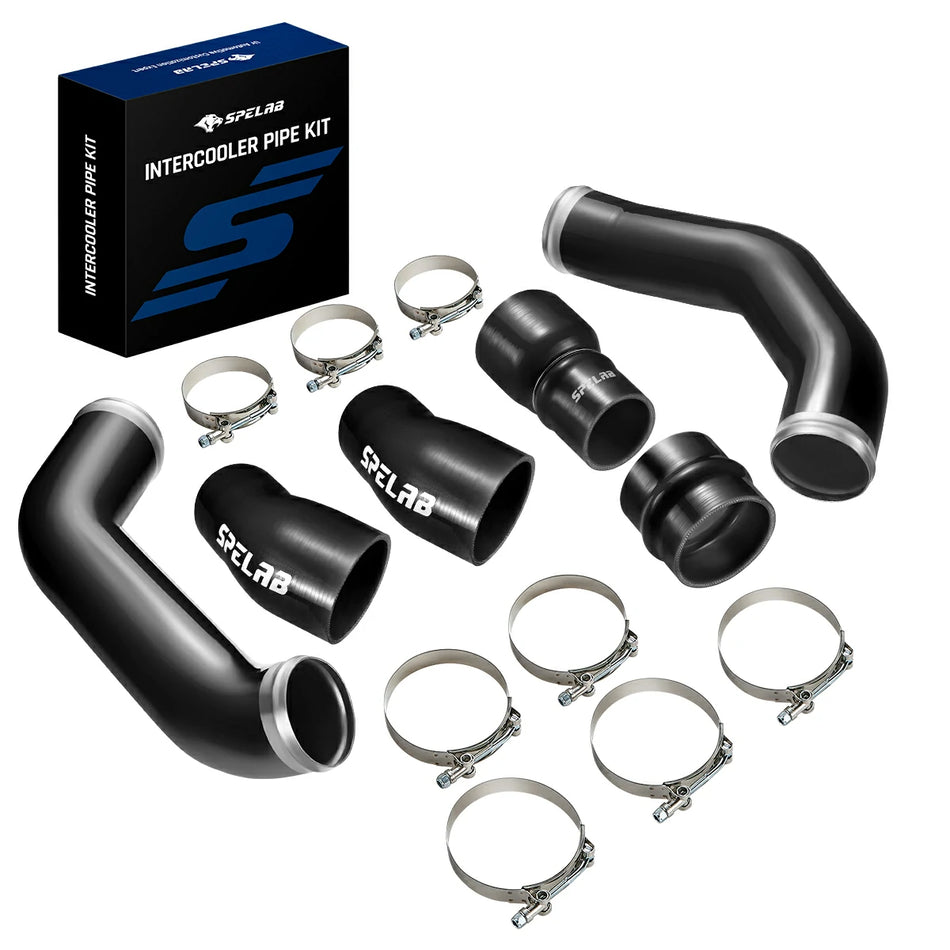
Think of the DPF as the part that reports the problem, not always the part that caused it. When Desired Boost and Actual Boost split under trailer load, the engine loses clean air, fueling no longer matches airflow, smoke rises, and DPF backpressure can climb fast. If you hear a loud pop followed by sudden black smoke or lazy throttle, inspect the boots, clamps, MAP sensor area, VGT command, and charge-air pipes before blaming the filter. On trucks known for split factory plastic boots, a heavy-duty 6.7 Powerstroke intercooler pipe kit may be the more permanent repair after the boost leak is confirmed.
Short-trip trucks and idle-heavy work trucks are different from clean highway tow rigs. A farm pickup that idles through winter, a utility truck that crawls around jobsites, and a Super Duty pulling a fifth-wheel across summer grades do not load the DPF the same way.
What EGT Means While Towing
EGT only means something when you know sensor location, regen state, trailer weight, grade, gear, RPM, ambient temperature, and tune. Pre-turbo EGT, post-turbo temperature, DPF inlet temperature, DPF outlet temperature, and SCR-side temperature are different readings. Comparing one driver's gauge number to another truck without that context is a good way to scare yourself for no reason.
If you run an aftermarket pre-turbo pyrometer or pyro probe, many diesel tow owners treat roughly 1,300°F as the point to start paying close attention, 1,350°F as back-out territory under sustained load, and 1,400°F as a short-spike zone only unless your engine builder or tuner says otherwise. Do not apply those numbers blindly to OEM post-turbo, DPF inlet, or regen temperature readings; those sensors live in a different part of the exhaust stream and can read high during commanded cleaning.
Watch the trend more than one flash number. A short rise during active regen may be normal. A steady climb on a grade with low boost, falling speed, black smoke, or poor throttle response is a different problem. A truck that needs more fuel than the air charge can support will run hot and dirty under trailer load.
| EGT Pattern While Towing | Likely Meaning | First Check | Driver Move |
|---|---|---|---|
| Steady moderate EGT under load | Normal towing heat pattern | Coolant temp, transmission temp, DPF pressure | Keep monitoring |
| EGT rises during active regen | Regeneration heat is being commanded | Regen status, soot load, pressure trend | Continue only if power and temps stay controlled |
| EGT high on grades without regen | Load, gear, tune, airflow, or cooling stress | Gear, RPM, boost, fan behavior, coolant temp, heat soak | Downshift to raise RPM and airflow; if a pre-turbo pyrometer holds above about 1,350°F, back out of the pedal |
| High EGT with low boost | Possible boost leak, charge pipe issue, turbo control issue, or air restriction | Boots, clamps, cold-side pipe, air filter, MAP data, VGT/wastegate behavior | Stop hard towing until airflow is verified |
| High EGT with smoke or poor MPG | Fueling, injector, EGR, or air/fuel mismatch | Injector balance, fuel pressure, air filter, EGR behavior | Diagnose before the next heavy pull |
Warning Signs You Should Not Ignore While Towing
"Cleaning Exhaust Filter" during a normal highway pull may not be a problem. "DPF Full See Dealer," "Exhaust Filter Full," "Power Reduced," repeated failed regen, or a truck that keeps burning every 50-100 miles needs real diagnosis. Guessing gets expensive here.
- DPF differential pressure climbs faster than normal under load.
- Soot load returns quickly after a completed regen.
- Regen starts unusually often, especially during the same route and trailer weight.
- EGT stays high with no active cleaning event.
- Boost target and actual boost do not match under throttle.
- DEF/SCR or NOx codes sit beside DPF complaints.
- The truck reduces power, limits speed, or threatens a restart countdown.
Owners fighting a repeated burn-off cycle should read the frequent regen pattern before blaming the filter alone. A pressure sensor tube, thermostat, injector, or boost leak can make a healthy DPF look guilty.
John Lee's Roadside Rule: If the truck is already derated, shows high DPF pressure, or has a warning that says dealer service is required, do not let pride or a delivery deadline make the decision. Unhook if you can, scan the truck, and find the cause. The most expensive DPF decision usually starts with "it is only one more grade."
Should You Finish Regen Before Hooking Up a Trailer?
If the truck is already in a normal active regen, drives normally, and has no severe warnings, letting it finish before hooking heavy is usually the cleanest situation. No trailer heat, no payload stress, no customer load waiting behind you.
Do not force regen blindly just because a long tow is coming. A forced regen needs correct sensor data, enough fuel, safe surroundings, stable coolant temperature, believable EGT readings, and a DPF that is not cracked, melted, oil-soaked, or heavily ash-loaded. Repeated forced regen on a damaged or ash-packed filter is not a repair. It is a heat event with a scan tool attached.
Use this practical rule before a fifth-wheel, hotshot load, horse trailer, or equipment trailer: if the truck is asking for a normal cleaning cycle and everything else looks healthy, give it a fair chance before the trailer is hooked. If the truck says DPF Full, See Dealer, or Reduced Power, scan it before you haul.
What Scan Data Should You Check Before a Long Tow?

Before a long tow, check soot load, ash load, DPF differential pressure, last completed regen, EGT sensor behavior, NOx data, DEF/SCR status, boost target vs actual, coolant temperature, transmission temperature, fuel data, and idle hours.
| Data Point | Why It Matters Under Trailer Load | What Bad Data Can Hide |
|---|---|---|
| DPF differential pressure | Shows restriction trend across the filter | Plugged pressure tubes, bad sensor, ash loading, soot loading |
| Soot load and ash load | Separates burnable soot from long-term ash capacity | Failed regen, high-mileage filter, wrong driving cycle |
| EGT sensors | Shows whether heat is commanded, believable, or abnormal | Lazy probe, wiring fault, overheated filter, incomplete regen |
| Boost target vs actual | Confirms whether the engine has enough air under load | Boost leak, turbo control issue, intake restriction |
| NOx and DEF/SCR status | Keeps SCR problems from being misread as DPF restriction | DEF quality issue, NOx sensor fault, SCR efficiency fault |
| Coolant and transmission temperature | Shows whether the whole tow package is stable | Weak thermostat, fan clutch logic, cooler issue, overloading |
If you are comparing delete-related options after a confirmed off-road-only use case, remember that the tuner, sensor strategy, and return-to-stock path matter as much as the pipe. A truck with missing hardware and bad calibration can still ask for DEF, still derate, or still leave readiness monitors incomplete. That is why the DEF countdown problem deserves its own diagnosis.
Powerstroke, Cummins, and Duramax Towing Notes
Ford 6.7L Powerstroke Towing Notes
Ford 6.7L Powerstroke tow rigs need DPF pressure, EGT, boost, charge-air hardware, and regen status checked together. 2011-2016 F-250 and F-350 trucks often show age-related boot, sensor, and pressure-tube issues. 2017-2024 F-250, F-350, F-450, and F-550 trucks add newer aftertreatment logic, so SCR and NOx data should be separated from true DPF restriction.
A 2017-2024 F-350 pulling a fifth-wheel through summer grades should be watched for boost target vs actual, EGT trend, fan behavior, coolant temperature, transmission temperature, and DPF pressure. A cracked cold-side pipe or torn boot can make a Super Duty feel fine empty and dirty under trailer load.
In documented closed-course race-only use where the configuration is legally allowed, a 2011-2024 Ford 6.7 Powerstroke DPF delete race pipe still needs exact year, cab, bed, wheelbase, sensor-bung layout, hanger position, and calibration requirements confirmed before parts are ordered.
Ram 6.7L Cummins Towing Notes
Ram 6.7L Cummins tow rigs need idle hours, DPF gauge behavior, EGR soot, thermostat health, DPF pressure, transmission behavior, and DEF/SCR status checked before heavy pulls. 2007.5-2012 trucks often live hard farm, snow, and jobsite lives. 2013-2024 Ram 2500, 3500, 4500, and 5500 trucks add SCR logic that can make a driver blame the filter when the SCR side is part of the fault path.
A Ram 3500 hotshot truck with a 68RFE or Aisin setup needs more than engine power watched. Converter lockup, EGT trend, DPF gauge movement, coolant temperature, and idle-hour percentage all matter when the load changes every week.
For legally allowed non-public-road builds, a 2013-2018 Dodge Ram 6.7L DPF delete race pipe still requires exhaust diameter, wheelbase, hanger location, sensor-bung placement, and tuner compatibility checks before any hardware decision.
Duramax LMM, LML, and L5P Towing Notes
Duramax trucks need year-specific diagnosis. LMM trucks can show older DPF and EGR wear patterns. LML trucks add DEF/SCR logic and 9th-injector regeneration concerns. L5P trucks are powerful tow rigs, but newer electronics mean NOx, DEF quality, and SCR efficiency faults must be separated from actual DPF restriction.
A Silverado or Sierra HD that tows clean on the interstate may regen less often than the same truck doing cold short trips all week. But if a Duramax shows frequent regen, high EGT, or reduced power while towing, check boost, injector behavior, thermostat operation, DPF pressure, and SCR data before calling the filter dead.
Where a documented off-road-only configuration is legally allowed, a Duramax DPF delete pipe still needs generation, wheelbase, exhaust diameter, sensor layout, and calibration support confirmed first.
Tow Tune, Race Tune, and Delete Tune: What Changes Under Load?
A tow tune and a race tune are not the same thing. A calibration that feels strong empty can be a bad setup under 14,000 lb of trailer if it drives EGT too high, shifts too aggressively, smokes under load, or ignores transmission heat.
A tow-safe calibration should control torque, smoke, shift behavior, boost, and heat under real load. It should not just feel punchy leaving a stoplight. The phrase "delete tune" also needs caution: hardware is the easy part, while reliable calibration, sensor strategy, and legal-use status are the hard parts. A truck with removed hardware and poor calibration can become a limp-mode brick instead of a better tow rig.
If the truck is being used in a documented off-road, race-only, or legally allowed non-public-road setting, diesel delete tuners must be matched to the engine, model year, emissions layout, transmission strategy, and sensor configuration. Do not mix random hardware with a mystery file from a forum and expect clean tow manners.
Clean, Repair, Tune, or Delete: Which Path Fits a Tow Rig?

| Path | Best Fit | Check First | Bad Move |
|---|---|---|---|
| DPF cleaning | Serviceable filter with soot or ash restriction | Ash load, pressure trend, soot source, filter condition | Cleaning without fixing overfueling or boost leaks |
| Engine or sensor repair | Bad boost data, EGT faults, injector issues, EGR faults, thermostat problems | Live data, freeze-frame data, pressure tubes, wiring, airflow | Replacing the DPF when the engine is feeding it soot |
| DPF replacement | Melted, cracked, oil-soaked, or unrecoverable substrate | Root cause, EGT history, oil use, turbo and injector condition | Installing a new filter without fixing the failure cause |
| Tow-safe calibration | Truck needs controlled torque and clean behavior under trailer load | EGT trend, trans temp, boost, smoke, shift behavior, legal status | Using a race tune for heavy towing |
| DPF-back exhaust | Owner wants sound or rear exhaust refresh while keeping emissions hardware in place | Fitment, diameter, hanger layout, existing rust or leaks | Confusing DPF-back parts with emissions delete parts |
| Delete-related hardware | Documented closed-course race-only or legally allowed non-public-road use | Fitment, tune support, sensor layout, inspection risk, return-to-stock cost | Presenting delete as a public-road towing repair |
For a public-road tow rig, a DPF-back exhaust pipe is a different conversation from emissions removal because it keeps the DPF system in place. For off-road-only fitment research, broader DPF delete kits should be treated as race-use hardware that depends on legality, tuning, sensor layout, and exact truck configuration.
Before a Long Tow: 10-Minute Diesel Check
- Check engine oil, coolant, DEF, fuel, and transmission fluid condition where applicable.
- Scan for active and pending codes before the trailer is loaded.
- Look at soot load, ash load, last regen, and DPF differential pressure.
- Compare boost target vs actual under a controlled pull.
- Inspect charge-air boots, clamps, cold-side pipe, air filter, and MAP sensor area.
- Watch coolant and transmission temperature during a short local test drive.
- Confirm trailer weight, tire pressure, brake controller behavior, and gear strategy.
- Do not start a heavy tow with a DPF full warning, reduced power message, or DEF countdown active.
If the truck has a confirmed off-road-only parts path, price the full job before ordering one shiny pipe. Hardware, tuner support, labor, fluids, gaskets, clamps, sensor handling, and return-to-stock planning all add up. The cost and labor reality is often bigger than the first product page makes it look.
FAQ
Is regen normal while towing?
Yes. Regen can be normal while towing when the truck has stable power, controlled temperature, believable DPF pressure, and no severe warnings. It becomes suspicious when it repeats too often or comes with derate, low boost, high EGT, or active fault codes.
Does towing help clean the DPF?
Sometimes. A steady highway tow can support passive cleaning because exhaust temperature stays higher. But towing will not fix a cracked DPF, ash-loaded filter, bad pressure sensor, boost leak, injector issue, weak thermostat, or SCR/DEF fault.
Can I tow during active regen?
You can usually continue during a normal active regen if the truck drives normally and temperatures stay controlled. Do not keep hauling if the truck shows reduced power, DPF Full See Dealer, abnormal EGT, low boost, or a DEF/SCR countdown.
What EGT is normal while towing?
There is no single number that applies to every truck because sensor location, tune, load, grade, RPM, ambient temperature, and regen state change the reading. Trend and context matter more than one screenshot from another owner's gauge.
Why does my truck regen more when I am not towing?
Short trips, long idle time, cold operation, weak thermostats, dirty air filters, boost leaks, overfueling injectors, and poor drive cycles can all lower exhaust heat or increase soot. That can make a truck regenerate more during unloaded daily use than during steady highway towing.
Should I force regen before towing heavy?
Only when the truck meets the proper conditions and the data supports it. A forced regen is not a cure for a damaged, melted, oil-soaked, or ash-packed DPF. If the scan data looks wrong, diagnose before adding heat.
Is DPF delete better for towing?
Not for a public-road tow rig. Removing emissions equipment creates legal, inspection, warranty, tuning, and resale risk. Delete-related hardware belongs only in documented closed-course race-only or legally allowed non-public-road use, and even then it requires correct fitment and calibration.
What should I check first if EGT is high while towing?
Start with load, gear, RPM, boost target vs actual, air filter, charge-air boots, clamps, MAP data, coolant temperature, fan behavior, transmission temperature, and regen status. High EGT is often an airflow, load, or calibration problem before it is a DPF hardware problem.
The Tow Rig Takeaway
A healthy diesel can regen while towing and keep working. An unhealthy diesel can use the trailer to reveal every weak part in the system. Before a long pull, let scan data guide the decision: DPF pressure, soot and ash load, EGT trend, boost, coolant temperature, transmission temperature, DEF/SCR status, and fault history tell you more than forum guesses.
If the truck is clean, tow it smart and keep watching the trend. If it is warning, derating, or regening constantly, diagnose before the trailer is loaded. That is the difference between a controlled repair and a bad day on the shoulder.