DPF Full See Dealer: Clean, Replace, or Delete?

Don't get left behind! Catch up on the latest product information, installation explanations, news, events, new technologies, and more exciting content through Spelab's blogs.

Direct Answer: What DPF Full See Dealer Means

“DPF Full See Dealer” or “Exhaust Filter Full See Dealer” means the truck believes the diesel particulate filter is too loaded with soot or ash, or the aftertreatment system has a fault that will not let the filter clean itself. The next move is not automatically delete, replace, or force regen. The right call depends on warning level, reduced-power status, soot load, ash load, DPF differential pressure, EGT readings, completed regen history, and related DTCs like P2002, P242F, or P2463.

Key Takeaways

A DPF full warning is a decision point, not a parts order.

  • “Drive to clean” and “See dealer” are not the same warning. A drive-to-clean message may need a proper drive cycle; a power-reduced see-dealer message means the truck is already protecting the aftertreatment system.
  • Cleaning works only when the DPF is still physically serviceable. Soot can burn during regen, but ash buildup, melted substrate, cracked substrate, or oil contamination can push the truck toward professional cleaning or replacement.
  • DTCs point the direction, but live data proves the fix. Codes like P2002, P242F, P2463, P244A, P2453, P20EE, and P2201 should be matched against pressure, temperature, soot, ash, and DEF/SCR data.
  • Engine problems can make a good DPF look bad. Boost leaks, overfueling injectors, low coolant temperature, dirty air filters, EGR faults, and idle-heavy use can load the filter again after cleaning.
  • DPF delete is not a legal public-road repair path in the United States. It may stop DPF-related regen on a documented off-road-use build, but it brings legal, inspection, resale, warranty, and return-to-stock risk.

Can You Keep Driving With a DPF Full Warning?

You may be able to keep driving if the message tells you to continue driving or safely drive at highway speed, but you should not tow heavy or ignore the truck if it says power reduced, service required, or see dealer.

Diesel dashboard warning levels for drive to clean see dealer and power reduced DPF messages

Read the exact message before you make a move. “Cleaning Exhaust Filter Continue Driving” or “Drive to Clean Exhaust Filter” usually means the truck is asking for the right conditions to finish regen. “Exhaust Filter Full — Power Reduced See Dealer” is a different animal. That message means the system is already limiting power or protecting the aftertreatment hardware.

If the truck is already saying “Power Reduced,” this is not the time to prove it can still pull the trailer home. A fifth-wheel, skid steer, horse trailer, or hotshot load makes heat and backpressure harder to control when the system is already upset. Park safely, scan the truck, record the codes, and look at live data before you keep pushing it.

Use common sense with heat. Regen and failed aftertreatment events can make exhaust parts extremely hot. Keep dry grass, shop rags, cardboard, plastic splash shields, and jobsite trash away from the exhaust path.

First 10-Minute Check Before You Drive or Pay

The first 10-minute check should confirm the warning level, save every DTC, read live DPF data, and separate a real restriction from a sensor or engine-side soot problem.

  • Write down the exact dash message: “Drive to clean” is not the same as “Power Reduced See Dealer.”
  • Do not clear codes yet: save active, pending, permanent, and history DTCs before the evidence disappears.
  • Check fuel level and coolant temperature: low fuel or low operating temperature can block or interrupt normal regen behavior.
  • Read DPF differential pressure: compare pressure at idle, light throttle, and under load before blaming the filter.
  • Look at soot load and ash load: soot can burn during regen; ash is a capacity problem and needs a different decision.
  • Check EGT and NOx data: bad temperature or NOx data can push the truck into bad regen or DEF/SCR logic.
  • Inspect the easy stuff: air filter, charge pipes, boost boots, pressure tubes, wiring, exhaust leaks, and loose clamps.

Technician checking DPF pressure soot load ash load and temperature data with a scan tool

Do not use a forced regen as a guess. A forced regen needs correct sensor data, safe surroundings, enough fuel, stable temperature, and a filter that is not physically damaged or heavily ash-loaded.

What Warning Messages Mean on Ford, Ram, and Duramax Trucks

Ford, Ram, and Duramax trucks use different wording, but the decision comes down to three levels: drive-to-clean, service-required, or power-reduced.

DPF Warning Message Decision Guide
Message Style What It Usually Means Driver Move Common Platforms
Drive to Clean / Continue Driving The filter is loaded enough that the truck wants a proper regen drive cycle. Drive safely at steady road speed if conditions allow, then verify the message clears and regen completes. Ford Powerstroke, GM Duramax, Ram Cummins
Cleaning Exhaust Filter Active regen is in progress and the truck is raising exhaust temperature to burn soot. Keep driving if safe. Avoid shutting down halfway through the cycle if you can safely continue. Ford Super Duty, Silverado HD, Sierra HD, Ram HD
Service Exhaust / See Dealer The system sees a fault or condition that may block normal regen. Scan for DTCs, check freeze-frame data, and do not clear codes before saving them. Later Powerstroke, Cummins, Duramax trucks with DEF/SCR logic
DPF Full / Power Reduced The truck has derated or is close to derating because the system believes aftertreatment damage risk is high. Stop towing heavy, pull live data, and diagnose before forcing more miles through it. Ram 2500/3500/4500/5500, Ford F-250/F-350/F-450/F-550, Chevy/GMC HD

Ford Super Duty manuals commonly describe DPF cleaning messages tied to driving conditions. Ram diesel manuals list messages such as “Exhaust Filter Full Safely Drive at Highway Speeds To Remedy” and “Exhaust Filter Full — Power Reduced See Dealer.” GM Duramax diesel supplements also describe DPF self-cleaning and manual regeneration logic on supported vehicles. The wording changes by model year, but the action still starts with the message level.

What Causes a DPF Full See Dealer Message?

A DPF full see-dealer message is usually caused by soot overload, ash capacity loss, failed regen, bad pressure data, bad temperature data, DEF/SCR faults, or engine-side soot production.

Common causes of a DPF Full See Dealer warning including soot load ash buildup sensors and engine issues

Start with how the truck is used. Short trips, idle hours, PTO time, cold starts, snow-plow work, farm runs, and jobsite crawling can keep the exhaust too cool or the drive cycle too short. That stacks soot faster than the truck can clean it.

Move next to engine health. A boost leak, dirty air filter, sticking EGR valve, weak thermostat, overfueling injector, poor fuel quality, or wrong engine oil can make the filter load again after a successful regen or cleaning. Cleaning the DPF without fixing the soot source is how owners pay twice.

Check the filter and sensor side. The DPF uses a ceramic substrate inside a steel can, with pressure and temperature feedback helping the ECM decide when and how to regen. Cracked pressure tubes, plugged sensor lines, lazy EGT sensors, bad NOx sensors, or damaged wiring can make the ECM think the filter is full even when the root problem is data. A deeper DPF pressure sensor symptoms guide can help when the numbers do not match the truck’s behavior.

Which OBD-II Codes Matter Most?

The most useful DPF-related DTCs point toward efficiency, soot load, ash load, differential pressure, EGT behavior, DEF/SCR function, NOx sensor data, or EGR flow.

Common DTCs Behind DPF Full, See Dealer, and Power Reduced Warnings
Code Priority / Severity Common Meaning What It Points Toward First Check
P2002 Red / Orange: verify before regen DPF efficiency below threshold Filter efficiency issue, exhaust leak, pressure data fault, temperature data fault, or damaged substrate Check DPF pressure, EGT readings, exhaust leaks, soot load, and filter condition before forcing another regen
P242F Red: ash capacity warning DPF ash accumulation / restriction Reduced filter capacity from non-burnable ash or high restriction Do not keep forcing regen. Check ash load, oil consumption, service history, mileage, and professional cleaning or replacement options
P2463 Orange: regen may be possible after checks DPF soot accumulation Excess soot, incomplete regen, short trips, overfueling, boost leak, or low temperature Check regen history, soot load, injectors, boost system, thermostat, DPF pressure, EGT data, and safe regen conditions
P244A / P244B Orange: pressure data first DPF differential pressure too low / too high Pressure sensor issue, plugged tube, cracked tube, wiring fault, or real restriction Inspect tubes, fittings, wiring, connectors, and pressure trend at idle and under load
P2452 / P2453 Orange: sensor circuit first DPF pressure sensor circuit / range performance Sensor signal problem, wiring issue, connector issue, water in tube, or blocked sensor line Test the sensor circuit and pressure tubes before condemning the DPF
P0544 / P2033 Orange: regen control risk Exhaust gas temperature sensor circuit faults Bad EGT signal that can disrupt active regen strategy Compare EGT readings cold, warm, cruising, and during regen before commanding service regen
P20EE Orange / Red: SCR side, not DPF-only SCR NOx catalyst efficiency below threshold DEF quality, SCR dosing, NOx conversion, or catalyst efficiency issue Separate DEF/SCR faults from DPF restriction before buying a filter
P2201 Orange: NOx data first NOx sensor range/performance NOx sensor data fault that can affect SCR/DEF logic and derate behavior Check NOx sensor data, wiring, connector condition, and related SCR codes
P0401 / P0402 Yellow / Orange: soot-source check EGR flow insufficient / excessive EGR flow problem that can change combustion quality and soot output Check EGR valve movement, intake soot, cooler condition, MAP data, and airflow readings

Do not treat one DTC as the whole diagnosis. P2002 does not automatically mean “replace the DPF.” P242F does not automatically mean “delete it.” P2453 may be a tube, connector, or sensor issue. Codes point the bay door; live data tells you which truck to pull in.

Clean vs Forced Regen vs Replace vs Delete: Which Path Fits Your Truck?

The best path depends on whether the DPF is loaded with soot, packed with ash, physically damaged, blocked by bad data, or being blamed for an engine-side soot problem.

Clean, Forced Regen, Replace, or Delete Decision Table
Option Best Fit What Must Be Checked First Bad Use Case
Drive Cycle Regen Drive-to-clean message with no severe codes, no derate, and safe road conditions Warning wording, coolant temperature, fuel level, road speed, and completed regen history Power-reduced truck, trailer load, high pressure, or stacked DTCs
Forced Regen Soot-loaded filter where conditions allow a service regen and sensors read correctly DPF pressure, EGT sensors, fuel level, oil level, coolant temp, safety area, and scan tool permissions High ash load, damaged substrate, fuel leak, oil leak, failed EGT sensor, or unknown pressure data
Professional DPF Cleaning Serviceable DPF with ash or soot restriction but no melted or cracked substrate Ash load, pressure trend, mileage, oil consumption, and engine-side soot cause Cleaning without fixing overfueling, boost leaks, EGR faults, or thermostat problems
DPF Replacement Cracked, melted, oil-soaked, internally damaged, or non-serviceable filter Root cause, EGT history, injector condition, turbo/boost health, and sensor data Replacing the filter while the engine still makes excess soot
DPF Delete Documented closed-course race-only use or legally allowed non-public-road use where emissions compliance is not represented for public-road operation Legal use case, tune requirements, exhaust fitment, sensor layout, return-to-stock cost, and inspection risk Street-driven truck, emissions inspection area, dealer service needs, resale-sensitive truck

Diesel DPF canister sensors and scan tool showing repair decision paths for cleaning regeneration replacement or off-road use

When Does DPF Cleaning Work?

DPF cleaning works when the filter is restricted but still physically healthy, the ash or soot load can be removed, and the engine-side cause has been corrected.

Use cleaning when scan data and inspection point to restriction, not melted substrate. A good cleaning shop can weigh the filter, flow-test it, clean it with the right equipment, and confirm improvement. That matters more than spraying chemicals into the exhaust and hoping the warning disappears.

Fix soot makers first. A clean DPF behind a leaking charge pipe, overfueling injector, stuck EGR valve, dirty air filter, or low-temp thermostat will load again. Read a dedicated DPF cleaning steps guide before paying for replacement.

Watch oil consumption. Ash comes from non-combustible material, including oil-related residue, and it does not burn off like soot during normal regen. High-mileage work trucks, idle-heavy trucks, and trucks with long oil-service neglect can lose filter capacity even if the truck still runs strong.

When Does the DPF Need Replacement?

The DPF needs replacement when the substrate is cracked, melted, oil-soaked, contaminated, structurally damaged, or too ash-loaded to restore with proper cleaning.

Look for more than one clue. High differential pressure, repeated failed regen, P242F, P2002, power reduction, and visible damage together carry more weight than one code alone. A filter that cannot flow after professional cleaning, or one with internal failure, is not a good candidate for another forced regen.

Find the reason it failed. A melted DPF may point to fuel, injector, turbo, EGT, or regen-control problems. An oil-soaked DPF may point to engine wear, turbo seal failure, or crankcase ventilation issues. A cracked substrate can create efficiency faults even when the truck is not heavily restricted.

Replace sensors and tubes only when they fail testing. Pressure sensors, EGT probes, NOx sensors, and pressure tubes sit in harsh heat, soot, salt, and water. Bad readings can mimic a failed filter, so testing beats guessing.

When Do Sensor, EGR, Injector, or Boost Problems Mimic a Bad DPF?

Sensor, EGR, injector, thermostat, and boost problems mimic a bad DPF by making extra soot, blocking regen, or feeding the ECM false pressure and temperature data.

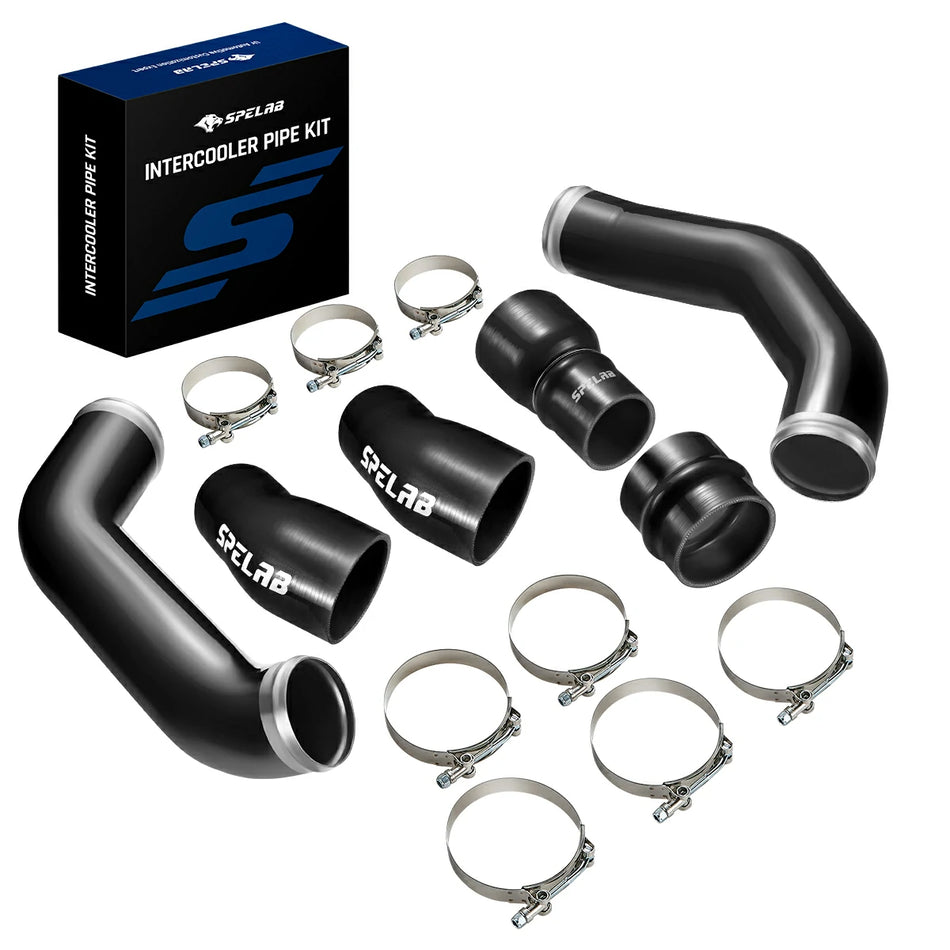
Boost leaks make a diesel dirty. A cracked cold-side pipe, torn boot, weak clamp, or bad MAP signal can make the engine fuel harder than the air charge can support. That loads soot under towing, payload, and long grades. If the leak is in the charge-air path, fitment-correct Intercooler Pipe Kits belong in the repair conversation after the leak is confirmed.

Injectors can ruin the filter quietly. Rough idle, fuel smell, hard starts, poor MPG, haze under load, and high correction rates should push the diagnosis toward fuel before the DPF gets replaced.

EGR faults can change soot output. A stuck-open valve, restricted cooler, or heavy intake soot can change combustion quality and airflow readings. That matters on 6.7L Cummins, 6.7L Powerstroke, Duramax LML, and later L5P trucks because the engine side and aftertreatment side work as one system.

DEF/SCR faults can confuse the owner. P20EE, P2201, DEF quality messages, NOx sensor faults, and inducement warnings may show up near the same time as DPF complaints. Separate the SCR side from the filter side before you buy a DPF.

Powerstroke, Cummins, and Duramax Platform Notes

Ford Powerstroke, Ram Cummins, and GM Duramax trucks all show DPF full warnings, but each platform has its own pattern of messages, sensors, usage problems, and fitment concerns.

2008-2010 Ford 6.4L Powerstroke

2008–2010 Ford 6.4L Powerstroke trucks are older DPF-equipped Super Duty rigs where fuel dilution concerns, frequent regen history, EGT sensor faults, and tired exhaust hardware can stack up fast. Check boost health, fuel quality, DPF pressure, and completed regen history before calling the filter dead.

2011-2016 Ford 6.7L Powerstroke

2011–2016 Ford 6.7L Powerstroke trucks often show DPF full complaints on tow rigs and jobsite trucks with long idle hours. Check cracked boots, EGT sensors, DPF pressure tubes, fuel-system behavior, coolant temperature, and whether the truck actually completes regen under normal load.

2017-2024 Ford 6.7L Powerstroke

2017–2024 Ford 6.7L Powerstroke trucks add newer aftertreatment logic, so DEF/SCR, NOx sensor, EGT, and pressure data need to be checked together. In documented closed-course race-only use where the configuration is legally allowed, a Ford Powerstroke DPF Delete Pipe still needs model year, cab, bed, wheelbase, sensor layout, and calibration requirements confirmed before parts are ordered.

2007.5-2012 Ram 6.7L Cummins

2007.5–2012 Ram 2500 and Ram 3500 6.7L Cummins trucks often run into DPF full warnings from idle-heavy use, EGR soot, weak thermostat behavior, and high-mileage pressure sensors. Snow-plow work, farm use, and long warm-up idle can load the filter faster than a clean highway tow rig.

2013-2018 and 2019-2024 Ram 6.7L Cummins

2013–2018 and 2019–2024 Ram 2500, 3500, 4500, and 5500 Cummins trucks need DEF/SCR faults separated from DPF restriction before money gets spent. In legally allowed non-public-road use where the truck’s configuration and local rules support it, 6.7L Cummins DPF Delete Pipes still need exhaust diameter, wheelbase, sensor-bung, hanger, and tuner checks.

2007.5-2010 Duramax LMM

2007.5–2010 Duramax LMM trucks are older DPF-era Silverado HD and Sierra HD platforms where mileage, ash load, sensor age, and towing history matter. Check differential pressure, EGT response, injector health, turbo/boost condition, and whether the filter has ever been professionally cleaned.

2011-2016 Duramax LML

2011–2016 Duramax LML trucks add DEF/SCR complexity, so a DPF full warning can sit beside NOx sensor, DEF quality, SCR efficiency, and filter restriction problems. P20EE or P2201 is not the same as a plugged DPF, and LML owners should verify the SCR side before replacing the filter.

2017-2024 Duramax L5P and 3.0L Duramax LM2/LZ0

2017–2024 Duramax L5P and newer 3.0L Duramax LM2/LZ0 trucks rely on sensor-heavy emissions logic, so clean scan data matters more than old-school guessing. A Duramax DPF Delete Pipe belongs only in a documented off-road-use or closed-course race-only discussion after the real fault path is known.

What Should You Check Before Spending Money?

Before spending money, save the codes, read live data, verify the warning level, inspect the pressure tubes, and confirm whether the DPF is truly restricted or just being blamed.

  • Write down the exact message: “Drive to clean” is different from “Power reduced see dealer.”
  • Save every DTC: record active, pending, permanent, and history codes before clearing anything.
  • Check freeze-frame data: note engine load, coolant temperature, exhaust temperature, vehicle speed, and mileage when the fault set.
  • Read live aftertreatment data: soot load, ash load if available, DPF differential pressure, EGT sensors, NOx sensors, DEF/SCR status, and regen state.
  • Inspect physical hardware: pressure tubes, sensor wiring, exhaust leaks, clamps, flanges, hangers, and damaged heat shields.
  • Check engine-side soot sources: air filter, charge pipes, boost boots, turbo response, injector balance, EGR behavior, fuel filter, and thermostat performance.
  • Match the repair to the use case: daily driver, tow rig, service truck, snow-plow truck, farm truck, off-road project, or race-only build.

Use repair-cost content with a clear head. A guide to repair costs and inspection risk can help frame the bill, but it should not replace a scan-data diagnosis.

FAQ

These FAQ answers cover the short questions diesel owners usually ask after a DPF full or exhaust filter full warning appears.

Q: Can I drive with DPF Full See Dealer?

A: You should not treat “See Dealer” or “Power Reduced” like a normal drive-to-clean message. Save the codes, check live data, and avoid towing heavy until the warning level and pressure data are understood.

Q: Will highway driving clear a DPF full warning?

A: Highway driving can help if the truck is only asking for a normal cleaning drive cycle and no severe faults are present. It will not fix high ash load, failed sensors, damaged substrate, DEF/SCR faults, or engine-side soot problems.

Q: Will a forced regen fix DPF Full See Dealer?

A: A forced regen can help a soot-loaded filter when the sensors and safety conditions are right. It is the wrong move if the DPF is ash-loaded, physically damaged, oil-soaked, or blocked by bad EGT or pressure data.

Q: Should I clean or replace the DPF?

A: Clean the DPF when the filter is serviceable and restriction can be restored. Replace it when the substrate is cracked, melted, contaminated, oil-soaked, or too ash-loaded to recover with proper cleaning.

Q: What codes usually show up with DPF full warnings?

A: Common codes include P2002, P242F, P2463, P244A, P244B, P2452, P2453, P0544, P2033, P20EE, P2201, P0401, and P0402. Codes guide the diagnosis, but live pressure, temperature, soot, and ash data prove the repair.

Q: Will DPF delete fix a DPF full warning?

A: DPF delete can stop DPF-related regen because the system is removed or disabled, but it is not a legal public-road repair path in the United States and should not replace proper diagnosis.

Q: Can I tow with an exhaust filter full warning?

A: Do not tow heavy if the truck is in reduced power, has high DPF pressure, failed regen, stacked aftertreatment codes, or a see-dealer message. Pull data first, then decide whether the truck is safe to move.

References

These references support the warning-message, drive-cycle, and emissions-compliance sections of this guide.


John Lee - Mechanical Engineer

About the Author

John Lee

Mechanical Engineer | 10+ Years Experience

John has spent the last decade engineering and testing high-performance automotive components. Specializing in drivetrain durability and thermal management across Powerstroke, Cummins, and Duramax applications, he bridges the gap between OEM limitations and aftermarket performance. His philosophy: "Factory parts are just a starting point."

Leave a comment

Please note, comments need to be approved before they are published.

Buy one, get one free Buy one, get one free

Why customers trust us

  • 50

    Years of experience
    with helpful advice & lifetime support

  • 4.8

    Rating on trust pilot
    from 18k+ reviews

  • 24

    Years in a row
    Bizrate insights Circle of Excellence

  • A+

    Rating and accreditation
    by the better Business Bureau