Direct Answer: Why Your Diesel Regens So Often
A diesel truck that keeps regenerating every 50–100 miles is usually making too much soot, failing to complete regen, reading bad sensor data, or running with a restricted or ash-loaded DPF. A normal highway-driven truck should not feel like it is cleaning the exhaust filter every other fuel stop. Short trips, long idle time, towing, bad injectors, boost leaks, weak thermostats, failed EGT sensors, bad differential-pressure data, and DEF/SCR faults can all make the truck act like the DPF is the only problem.
A diesel truck that spends most of its time at steady highway speed gives the DPF a fair shot at finishing regen. Exhaust temperature stays up, engine load stays consistent, and soot has time to burn off. That same truck can act completely different when it spends the week idling on a jobsite, crawling through town, starting cold, or shutting down halfway through an active regen cycle.
A sudden pattern change is the real warning sign. If a Powerstroke, Cummins, or Duramax used to regen every few hundred miles and now lights off every 75 miles, pull live data first. Look at soot load, DPF pressure, EGT behavior, regen history, and any DEF/SCR or NOx codes before throwing parts at it.
Key Takeaways
Frequent regen should be diagnosed with scan data before a diesel owner pays for cleaning, sensors, injectors, DPF replacement, or any off-road-use mod.
- Regen every 50–100 miles is not automatically normal. Repeated short intervals usually mean excess soot, failed regen, bad data, or reduced DPF capacity.
- Driving style can cause the problem. Short trips, long idle hours, cold weather, and low-speed jobsite use can stop the exhaust from staying hot enough.
- Engine problems can load the DPF fast. Bad injectors, boost leaks, dirty air filters, low coolant temperature, and EGR faults can increase soot production.
- Sensors can lie. DPF pressure tubes, differential-pressure sensors, EGT sensors, NOx sensors, wiring, and software logic can trigger bad regen decisions.
- Repair beats guessing. Pull codes, save freeze-frame data, check soot load, ash load, regen history, pressure data, EGT readings, and duty cycle before replacing parts.
Is Regen Every 50-100 Miles Normal?
Regen every 50–100 miles can happen under rough duty cycles, but repeated regen at that interval is suspicious when the truck used to go much longer between cycles.
Use the truck’s old pattern as the baseline. A sudden drop from “every few hundred miles” to “every 75 miles” matters more than the badge on the grille. That change usually means the truck is either making soot faster, failing to finish regen, reading pressure or temperature data wrong, or running out of usable DPF capacity.
Short-trip trucks and idle-heavy work rigs can regen more often without having a physically failed filter. That does not mean the warning should be ignored. It means the first repair step should be data, not a parts cannon.
What Should I Check First If My Truck Regens Every 50-100 Miles?

Start with completed regen history, coolant temperature, DPF pressure data, soot load, ash load, boost leaks, air filter condition, injector data, and DEF/SCR codes.
- Check if the last regen completed: a regen that keeps getting interrupted will shorten the next interval.
- Check coolant temperature: a weak thermostat can keep the engine too cool for clean regen behavior.
- Check DPF differential pressure: compare idle, cruise, and loaded readings instead of trusting one warning message.
- Check soot load vs ash load: soot can burn during regen; ash does not burn off the same way.
- Inspect pressure tubes: cracked, plugged, wet, or rusted tubes can fake a restriction problem.
- Check air and boost: dirty air filters, loose boots, cracked pipes, and boost leaks can make the engine run sooty.
- Review injector balance: overfueling can load the DPF fast, especially under towing or payload.
- Separate DEF/SCR from DPF: DEF quality warnings, NOx sensor codes, and SCR dosing faults can get mistaken for a DPF-only problem.
What Data Looks Normal, Suspicious, or Severe?
Normal data shows completed regen and stable pressure trends; suspicious data shows shortened intervals or fast soot return; severe data shows failed regen, high pressure, derate, or high ash load.
| Data Pattern | What It Usually Means | Next Move |
|---|---|---|
| Normal | Regen completes, interval is stable, pressure does not spike under light load, and no related codes return. | Keep records and watch whether the pattern changes with towing, cold weather, or idle time. |
| Suspicious | Regen interval suddenly shortens, soot returns fast, pressure rises sooner than expected, or fuel economy drops hard. | Check air filter, fuel filter, injectors, boost system, thermostat, EGT readings, and pressure tubes. |
| Severe | Regen will not complete, reduced power appears, pressure stays high, ash load is high, or DPF/SCR faults stack together. | Stop guessing. Run a full aftertreatment diagnosis before towing heavy or replacing parts. |
What Causes Frequent DPF Regen?
Frequent DPF regen is usually caused by excess soot production, incomplete regen, false pressure or temperature data, ash-loaded filter capacity, or DEF/SCR-related derate logic.
| Cause | What It Does | What to Check First | Common Truck Scenario |
|---|---|---|---|
| Short trips | Stops active regen before the DPF gets clean | Trip length, regen history, exhaust temperature | Daily commute, school runs, grocery trips |
| Long idle time | Creates soot at low exhaust temperature | Idle hours, PTO use, warm-up habits | Jobsite truck, service truck, snow work |
| Bad injector or overfueling | Loads the DPF with extra soot | Injector balance, correction rates, fuel trim, smoke | High-mileage tow rig with rough idle |
| Boost leak | Runs the air-fuel mix dirty and sooty | Charge pipes, boots, clamps, MAP data, boost target | Heavy-duty truck under trailer load or payload |
| Weak thermostat | Keeps engine and exhaust temperatures too low | Coolant temperature, warm-up time, fan behavior | Cold-weather Ram or Duramax short-trip use |
| Bad DPF pressure data | Tricks the ECM into seeing restriction | Differential-pressure sensor, tubes, wiring, fittings | Rust belt truck with clogged or cracked tubes |
| Ash-loaded DPF | Reduces filter capacity even after soot burns off | Ash load, mileage, oil consumption, service history | High-mileage diesel pickup with original DPF |
| DEF/SCR or NOx fault | Creates derate logic that owners confuse with DPF failure | DEF quality, NOx sensors, SCR dosing, inducement codes | LML Duramax, L5P Duramax, newer Powerstroke trucks |

How Do Short Trips, Idling, and Towing Affect Regen?
Short trips and idling usually make regen more frequent, while towing can either help or hurt depending on exhaust temperature, fueling, boost control, and engine health.
Short trips beat up a DPF because the truck starts regen, never finishes it, and then tries again on the next drive. A truck that runs 8 miles to work and shuts down mid-cycle may keep stacking soot even when the filter itself is still serviceable.
Idle time is worse than most owners think. The truck burns fuel, makes soot, and does not move enough air or heat through the exhaust. A plow truck, utility bed truck, service truck, or farm pickup can show frequent regen with low mileage because idle hours are doing the damage.
Towing adds load, heat, and fuel. A healthy truck pulling a camper at highway speed may complete regen cleanly because exhaust temperature stays up. A truck with a weak injector, leaking charge pipe, dirty air filter, or tired turbo can make more soot under the same trailer. Payload does not hide a bad engine condition. It exposes it.
Which Parts and Sensors Can Trigger Frequent Regen?
The parts most likely to trigger frequent regen are injectors, turbo/boost plumbing, thermostats, EGR components, DPF pressure sensors, EGT sensors, NOx sensors, and dirty air or fuel filters.
Check air first. A torn charge boot, loose clamp, cracked cold-side pipe, dirty filter, or bad MAP reading can make a truck fuel like it has clean airflow when it does not. That creates soot. Owners chasing repeat soot load should inspect the intake tract before replacing the filter, and a fitment-correct Diesel Cold Air Intake Kit only makes sense after the restriction and sealing problem are actually found.
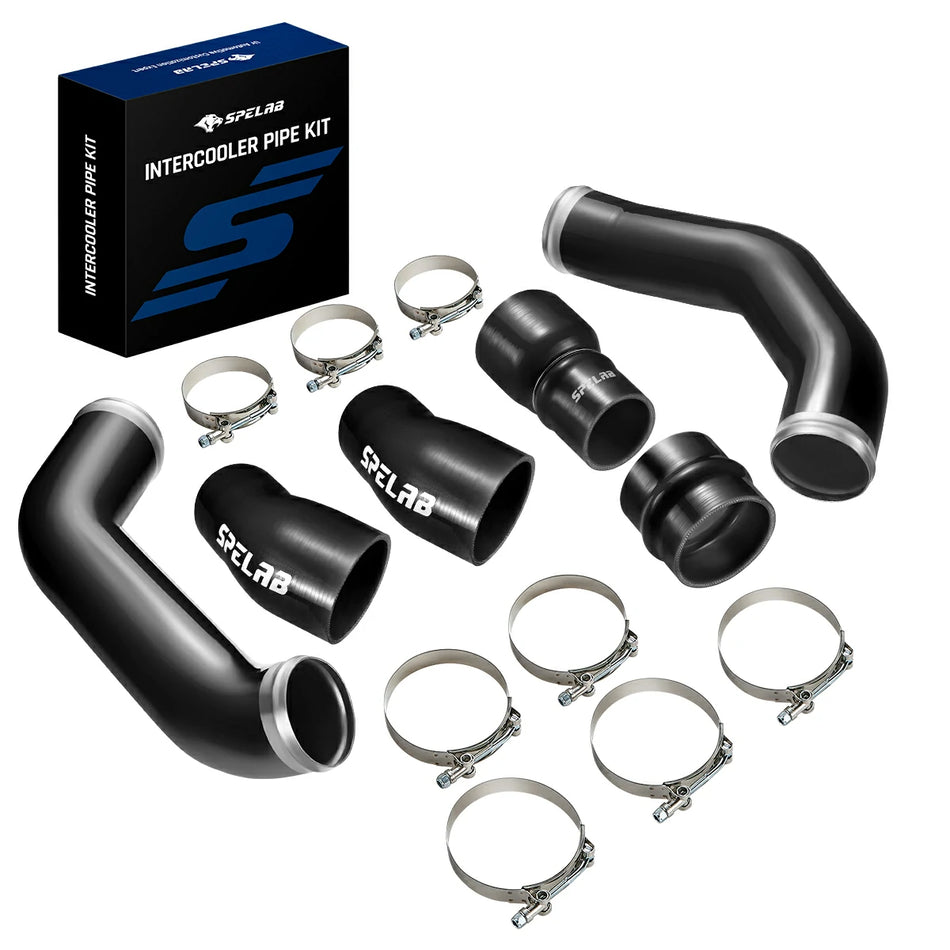
Check boost next. Cracked boots, weak clamps, and leaking charge pipes can make the engine run rich and hot under load. Trucks that tow heavy, run larger tires, or work in dust often show the problem faster. If the failure is in the charge-air path, Intercooler Pipe Kits can be part of the fix, but diagnosis still comes first.
Check fuel and sensors before calling the DPF dead. Overfueling injectors can load a filter fast. EGT sensors tell the ECM whether regen heat is where it should be. Differential-pressure sensors and tubes tell the ECM how restricted the filter looks. If the readings do not match the truck’s behavior, review DPF pressure sensor symptoms before buying parts.
Which OBD-II Codes Are Common With Frequent DPF Regen?
Common OBD-II codes tied to frequent regen usually point toward DPF efficiency, ash accumulation, soot restriction, pressure-sensor data, EGT sensor behavior, NOx/SCR faults, or EGR flow problems.
| Code | Common Meaning | What It Usually Points Toward | First Check |
|---|---|---|---|
| P2002 | DPF efficiency below threshold | DPF not trapping soot as expected, exhaust leak, bad pressure/temperature data, or damaged filter | Check DPF pressure data, exhaust leaks, soot load, EGT readings, and filter condition |
| P242F | DPF restriction due to ash accumulation | High ash load or reduced DPF capacity | Check ash load, service history, oil consumption, and whether professional DPF cleaning is still possible |
| P2463 | DPF soot accumulation | Excess soot load or incomplete regen | Check regen history, soot load, injectors, boost leaks, thermostat, and drive cycle |
| P244A / P244B | DPF differential pressure too low / too high | Bad pressure sensor data, plugged or cracked tubes, wiring issue, or real restriction | Inspect pressure tubes, fittings, sensor wiring, and pressure readings at idle and under load |
| P2452 / P2453 | DPF pressure sensor circuit / range performance | Sensor circuit fault, bad signal, wiring issue, or pressure tube problem | Check connector, wiring, sensor signal, and tube condition before blaming the DPF |
| P0544 / P2033 | Exhaust gas temperature sensor circuit faults | Bad EGT sensor signal that can disrupt regen strategy | Compare EGT sensor readings during cold start, warm-up, cruise, and regen |
| P20EE | SCR NOx catalyst efficiency below threshold | DEF/SCR problem often confused with DPF failure | Check DEF quality, NOx sensors, SCR dosing, and related inducement codes |
| P2201 | NOx sensor circuit range/performance | NOx sensor data problem that can affect SCR/DEF logic | Check NOx sensor data, wiring, connector condition, and related SCR codes |
| P0401 / P0402 | EGR flow insufficient / excessive | EGR flow problem that can change combustion quality and soot output | Check EGR valve behavior, intake soot, cooler condition, and airflow data |
Do not treat a DTC as a final verdict. A P2002 does not automatically mean the truck needs a new DPF. A P242F does not mean a delete is the answer. A P2453 may be a sensor or tube problem. Codes point the diagnosis; live data proves the repair path.
How Do You Diagnose Frequent Regen Before Replacing Parts?
You diagnose frequent regen by reading fault codes, saving freeze-frame data, checking live soot and pressure data, verifying temperatures, and matching the numbers to the truck’s real duty cycle.
- Pull codes first: record DPF, EGT, NOx, DEF/SCR, EGR, boost, fuel, and temperature faults before clearing anything.
- Save freeze-frame data: note mileage, coolant temperature, exhaust temperature, speed, load, and fault conditions when the code set.
- Check soot load: compare calculated soot load, measured pressure, and regen history instead of trusting one warning message.
- Check ash load when available: ash does not burn off like soot, and high ash load can shorten regen intervals.
- Watch differential pressure: compare idle, cruise, and loaded readings; inspect tubes for cracks, soot blockage, water, and rust.
- Verify EGT sensors: look for lazy, stuck, or impossible temperature readings during warm-up, cruise, and regen.
- Check engine basics: air filter, fuel filters, boost leaks, charge pipes, coolant temperature, injector balance, and EGR behavior.
- Write down the use case: towing weight, payload, idle hours, trip length, off-road time, cold-weather use, and city vs highway miles.
A scan tool is not optional here. A parts-store code reader gives clues, but diesel aftertreatment work needs live data. The right call depends on soot load, ash load, pressure, temperature, regen history, and whether the truck actually completed the last cycle.
Powerstroke, Cummins, and Duramax Regen Patterns
Powerstroke, Cummins, and Duramax trucks can all suffer frequent regen, but the best diagnostic path depends on engine family, model year, emissions layout, and how the truck is used.
2011-2016 Ford 6.7L Powerstroke
2011–2016 Ford 6.7L Powerstroke trucks often need boost-leak, EGT, DPF pressure, and fuel-system checks before the filter gets blamed. F-250 and F-350 trucks from this era are common tow rigs and jobsite trucks, so regen complaints often show up after long idle time, neglected filters, cracked boots, or sensor issues.
2017-2019 and 2020-2024 Ford 6.7L Powerstroke
2017–2019 and 2020–2024 Ford 6.7L Powerstroke trucks need fitment-aware diagnosis because later trucks use newer aftertreatment logic and different packaging. F-250, F-350, and F-450 owners should check regen history, NOx sensor data, DEF/SCR warnings, EGT readings, and wheelbase-specific exhaust layout. If the truck is a documented off-road-use build, a Ford Powerstroke DPF Delete Pipe still needs exact year, cab, bed, and sensor-layout confirmation.
2007.5-2012 Ram 6.7L Cummins
2007.5–2012 Ram 2500 and Ram 3500 6.7L Cummins trucks often show frequent regen complaints tied to idle-heavy use, EGR soot, boost leaks, thermostat behavior, and high-mileage sensor issues. These trucks are workhorses, but a truck that idles through winter, runs oversized tires, and sees short drives can build soot faster than a clean highway-use rig.
2013-2018 and 2019-2024 Ram 6.7L Cummins
2013–2018 and 2019–2024 Ram 6.7L Cummins trucks add more DEF/SCR logic to the diagnosis, so DEF warnings must be separated from DPF restriction. A Ram 2500 or 3500 that keeps derating may have DPF pressure issues, NOx sensor faults, SCR dosing issues, or engine-side soot production problems. Off-road-use shoppers comparing 6.7L Cummins DPF Delete Pipes should confirm model year, wheelbase, exhaust diameter, sensor bungs, and tune requirements before ordering.
2007.5-2010 Duramax LMM and 2011-2016 Duramax LML
2007.5–2010 Duramax LMM and 2011–2016 Duramax LML trucks need careful separation between DPF, EGR, DEF/SCR, NOx sensor, and injector-related soot problems. Silverado 2500HD, Silverado 3500HD, GMC Sierra 2500HD, and GMC Sierra 3500HD owners often see frequent regen tied to mixed highway/towing use, sensor faults, and high-mileage aftertreatment wear.
2017-2024 Duramax L5P
2017–2024 Duramax L5P trucks need scan-data discipline because later emissions systems are sensor-heavy and can stack warnings quickly. A Duramax L5P that regens every 50–100 miles should be checked for soot load, ash load, DPF pressure, NOx readings, DEF/SCR data, EGT readings, and engine-side fuel or boost problems. A Duramax DPF Delete Pipe belongs only in a clearly defined off-road-use conversation after the real fault path is known.
Should You Clean, Repair, Replace, or Delete the DPF?

The right fix depends on whether frequent regen is caused by driving habits, excess soot production, bad sensor data, ash-loaded filter capacity, or a failed DPF.
| What the Data Shows | Likely Problem | Best First Move | Avoid This Mistake |
|---|---|---|---|
| Regen starts but never completes | Short trips, shutdowns, low exhaust temperature | Change drive cycle, verify regen completion, check coolant temp | Replacing the DPF without fixing duty cycle |
| High soot load returns fast | Overfueling, boost leak, dirty air filter, EGR issue | Check injectors, boost system, air supply, EGR behavior | Cleaning the DPF without fixing soot source |
| Pressure reading looks wrong | Bad sensor, cracked tube, plugged tube, wiring fault | Inspect pressure tubes, wiring, sensor response | Calling the DPF plugged from one pressure code |
| Ash load is high | Reduced filter capacity from non-burnable ash | Professional DPF cleaning or legal replacement | Expecting forced regen to remove ash |
| DPF substrate is damaged | Physical filter failure or melting | Legal DPF replacement and root-cause check | Installing new parts without checking injectors or EGT data |
| Owner asks about delete | Frustration, high repair quote, repeated faults | Diagnose first, confirm legal use case, understand inspection risk | Treating delete as a public-road repair shortcut |
DPF cleaning can help when ash load or restriction is real and the filter is still physically sound. Read a dedicated DPF cleaning guide before paying for replacement. Sensor repair can fix false restriction readings. Injector, thermostat, air, and boost repairs can stop soot from coming back. DPF replacement makes sense when the filter is damaged, melted, cracked, or beyond serviceable capacity.
DPF delete stops DPF regeneration because the DPF system is removed or disabled, but that does not make it the right fix for a street-driven truck. Public-road diesel trucks in the United States still face emissions, inspection, registration, resale, and warranty risk when required emissions equipment is removed or defeated. Off-road-use buyers comparing DPF Delete Kits & Straight Pipe Exhaust should treat fitment, tuning, legal use case, and return-to-stock cost as part of the real bill.
What Are the Legal Alternatives to DPF Delete?
Legal alternatives to DPF delete include duty-cycle correction, forced regen when appropriate, professional DPF cleaning, sensor repair, injector repair, boost repair, thermostat repair, DEF/SCR diagnosis, and legal DPF replacement.
Fix the root cause before touching the filter. A thermostat that keeps coolant temperature low can stop clean regen. A boost leak can make soot. A lazy EGT sensor can throw the regen strategy off. A clogged DPF pressure tube can lie to the ECM. A DEF or NOx fault can make a driver think the DPF is failing when the SCR side is the real complaint.
The EPA says tampering with vehicle emissions controls is illegal under the Clean Air Act, and EPA enforcement pages also discuss aftermarket defeat devices and civil enforcement. Read the EPA page here: EPA: Stopping Aftermarket Defeat Devices.
EPA also issued 2026 DEF sensor guidance addressing certain DEF system failures and sensor strategies. That guidance does not make DPF delete legal, but it matters because some DEF/SCR derates are misread as DPF problems. Read the EPA DEF page here: EPA: Diesel Exhaust Fluid.
What Should You Check Before Spending Money on Frequent Regen?
Before spending money on frequent regen, write down the truck configuration, driving use, scan data, repair history, and whether the complaint started suddenly or has always been part of the duty cycle.
- Truck data: year, make, model, engine, cab, bed, wheelbase, GVWR class, mileage, tire size, and tune status.
- Use case: towing weight, payload, idle hours, trip length, jobsite use, winter use, city driving, highway driving, and off-road use.
- Scan data: codes, freeze-frame data, soot load, ash load, differential pressure, regen history, EGT readings, NOx readings, DEF/SCR status, and coolant temperature.
- Engine basics: air filter, fuel filter, boost boots, charge pipes, turbo response, MAP data, injector balance, thermostat, EGR behavior, and coolant level.
- Repair path: drive-cycle correction, sensor repair, forced regen, DPF cleaning, injector repair, boost repair, thermostat repair, legal DPF replacement, or documented off-road-use planning.
Use cost content carefully. If the owner is already comparing delete, cleaning, replacement, and repair, a DPF delete cost breakdown can help frame the full bill, but it should never replace a proper diagnosis or public-road legal check.
FAQ
These answers cover the questions diesel owners usually ask when their truck keeps regenerating every 50–100 miles.
Q: Is regen every 100 miles normal on a diesel truck?
A: Regen every 100 miles can happen with short trips, idling, towing, or cold weather, but repeated regen at that interval should be diagnosed with soot load, pressure data, temperature data, and regen history.
Q: Is regen every 50 miles bad?
A: Regen every 50 miles is a red flag if it happens repeatedly. Check for incomplete regen, excess soot production, bad injectors, boost leaks, weak thermostat, false DPF pressure data, or ash-loaded filter capacity.
Q: Can short trips cause frequent DPF regen?
A: Yes. Short trips can stop active regen before the DPF gets clean, which makes the truck try again later and can shorten the interval between regen cycles.
Q: Does idling make a diesel regen more often?
A: Yes. Long idle time creates soot at low exhaust temperature, especially on jobsite trucks, snow-work trucks, service trucks, and pickups that warm up for long periods in cold weather.
Q: Can a bad DPF pressure sensor cause frequent regen?
A: Yes. A bad differential-pressure sensor, cracked pressure tube, plugged tube, wiring problem, or water-contaminated line can make the ECM think the DPF is more restricted than it really is.
Q: What codes show up when a diesel keeps regening?
A: Common codes include P2002, P242F, P2463, P244A, P244B, P2452, P2453, P0544, P2033, P20EE, P2201, P0401, and P0402. Codes point the diagnosis, but live data proves the repair.
Q: Should I clean or replace my DPF if regen happens too often?
A: Clean the DPF only after proving ash load or restriction, and replace it only if the filter is damaged, melted, cracked, or beyond serviceable capacity. Fix the root cause first or the problem can return.
Q: Will DPF delete stop frequent regen?
A: DPF delete stops DPF regeneration because the filter system is removed or disabled, but it is not a legal public-road repair path in the United States and should not replace proper diagnosis.
References
These references support the emissions-control and legal-risk sections of this frequent regen guide.

About the Author
John Lee
Mechanical Engineer | 10+ Years Experience
John has spent the last decade engineering and testing high-performance automotive components. Specializing in drivetrain durability and thermal management across Powerstroke, Cummins, and Duramax applications, he bridges the gap between OEM limitations and aftermarket performance. His philosophy: "Factory parts are just a starting point."