Last reviewed: October 8, 2026
A 6.7L Power Stroke with repeated low-rail-pressure faults, longer-than-normal cranking, or reduced power under load needs prompt diagnosis, but those symptoms do not identify a failed high-pressure pump by themselves. Confirm low-side fuel supply, compare commanded and actual rail pressure, check pressure-control data, and treat verified metallic debris at the pump metering valve as stop-driving evidence rather than an early warning.
Key Takeaways
The safest CP4 diagnosis separates early drivability complaints from confirmed mechanical contamination.
- P0087 means measured fuel-rail pressure is too low for the commanded condition; it does not identify the CP4 as the failed component.
- P0088, P0093, and P0191 describe different faults and should not be grouped together as proof of pump failure.
- Metal found on the CP4 volume-control valve screen is evidence that internal wear may already be occurring, not a symptom to monitor while towing.
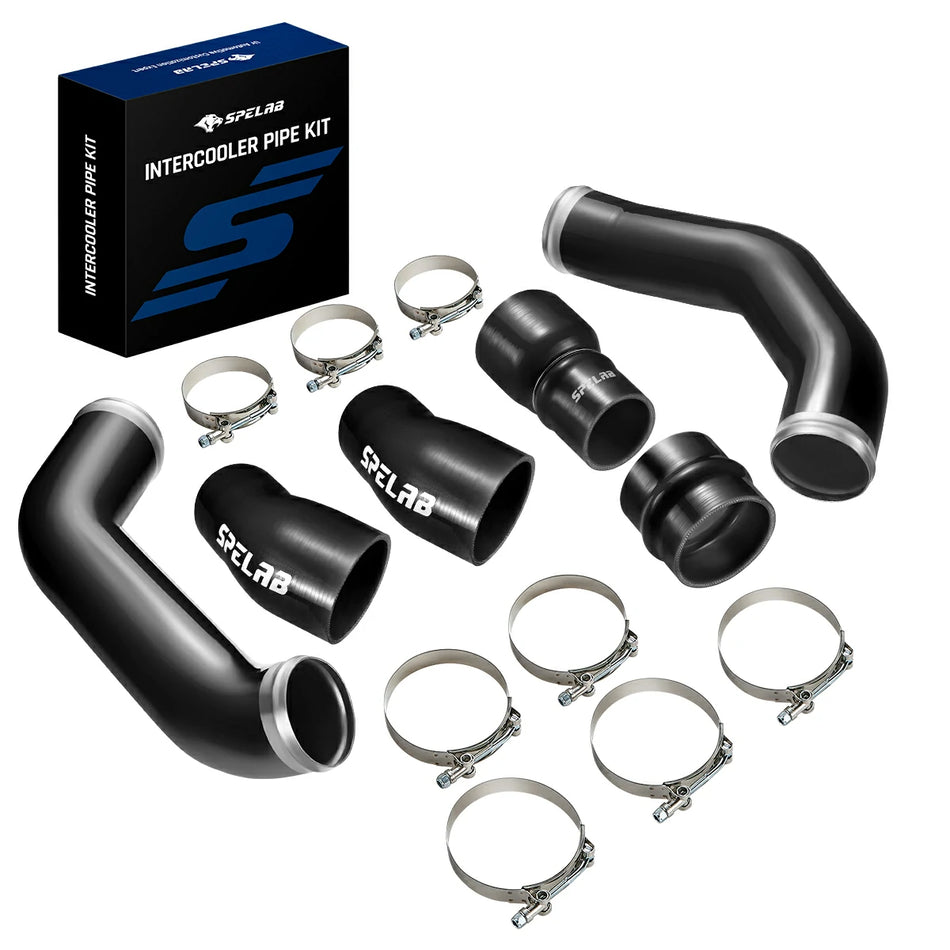
- A bypass or disaster-prevention kit is intended to limit downstream contamination during certain pump failures; it does not repair the pump or prevent every failure mode.
- Ford used different high-pressure pump configurations across 6.7L Power Stroke generations, so the truck's VIN, production date, and installed pump must confirm parts fitment.
Early Symptoms vs. Stop-Driving Evidence
Long crank and pressure loss justify testing, while confirmed metal contamination or a stall with no restart justifies shutting the truck down and arranging professional inspection.
| Observation | Severity | What it can mean | Next action |
|---|---|---|---|
| Longer cranking with no metal found | Diagnostic warning | Low-side restriction, air intrusion, injector leak-off, pressure-control fault, sensor error, or weakening high-pressure pump | Record cranking rail pressure and test supply pressure before ordering a pump |
| P0087 or actual rail pressure falling behind commanded pressure under load | Diagnostic warning | Insufficient fuel delivery or excessive high-pressure-system leakage | Reduce load and diagnose the low- and high-pressure sides in sequence |
| Repeated reduced-power events while towing | Urgent diagnostic warning | The PCM may be reacting to pressure, temperature, air-management, or emissions faults | Save codes and freeze-frame data instead of assuming the CP4 caused the derate |
| New mechanical noise from the engine valley | Unconfirmed warning | Pump wear is possible, but belt-driven accessories, the vacuum pump, and other components can transmit similar noise | Isolate the sound and compare it with rail-pressure data |
| Shiny metallic debris on the VCV/MProp screen | Stop-driving evidence | Internal high-pressure-pump wear may already be releasing contamination | Do not restart the engine until the contamination path has been assessed |
| Engine stalls and will not restart | Stop-driving condition | Rail pressure may be unavailable because of pump, control, supply, leakage, electrical, or sensor faults | Tow the truck and perform controlled diagnosis |
Check the Model Year and Installed Pump First
A 2011 truck and a 2022 truck should not receive the same pump diagnosis or prevention-kit recommendation solely because both use a 6.7L Power Stroke engine.
Ford's 2011–2019 6.7L applications are commonly associated with the Bosch CP4.2, while later trucks use revised high-pressure-pump configurations. Ford recall 24S78 covers certain 2020–2022 Super Duty and medium-duty trucks equipped with the Bosch CP4 RP7 pump; the recall does not mean that every truck from those years is affected.1
| Truck group | Fitment rule | Relevant SPELAB listing |
|---|---|---|
| 2011–2014 6.7L Power Stroke | Confirm pickup versus cab-and-chassis application and the installed CP4 configuration | 2011–2014 CP4 bypass kit |
| 2011–2016 6.7L Power Stroke | Verify the exact model, pump, hose routing, and included fittings before ordering | 2011–2016 CP4 disaster-prevention kit |
| 2020–2022 affected vehicles | Run the VIN through Ford's recall lookup and identify the installed pump before buying an aftermarket kit | Do not rely on a broad model-year title alone |
| Other 2020+ applications | Confirm VIN, production date, pump design, and manufacturer instructions | Seller-listed fitment requires vehicle-level verification |

Why a 6.7L Power Stroke High-Pressure Pump Can Fail
High-pressure-pump damage can follow inadequate lubrication at the pumping surfaces, water or incorrect fluid in the fuel, restricted supply, air intrusion, repeated fuel starvation, internal component wear, or a pump-specific defect.
The CP4 is lubricated by the diesel fuel passing through it, so fuel condition matters. Lower lubricity can reduce the protective film between loaded metal surfaces, but it is not accurate to claim that all U.S. ultra-low-sulfur diesel is automatically unsuitable: ASTM D975 includes a lubricity requirement, and properly supplied retail diesel should meet the applicable specification.
| Risk factor | Why it matters | Owner action |
|---|---|---|
| Water in fuel | Water can reduce lubricating protection, promote corrosion, and damage precision pump and injector surfaces | Drain the separator when the warning appears and investigate repeated water accumulation |
| Restricted filters or weak low-side supply | Reduced inlet flow can starve the high-pressure pump, especially under heavy demand | Use the correct filters, replace them on schedule, and test supply pressure under load |
| Air intrusion or running the system dry | Air can interrupt the fuel film that lubricates loaded internal surfaces | Repair leaks, follow the correct priming procedure, and avoid repeated dry cranking |
| Gasoline, DEF, dirt, or another contaminant in the diesel tank | Incorrect fluid can destroy lubricity, cause corrosion, or damage close-tolerance components | Do not start the engine after a suspected misfueling; arrange tank and system service |
| Age, internal wear, or a pump-specific defect | A properly maintained fuel system cannot eliminate every mechanical failure mode | Use pressure data, contamination inspection, recall status, and pump identification to guide the repair |
Ford states that aftermarket fuel additives normally are not necessary when high-quality diesel meeting ASTM specifications is used, and Ford warns that unsuitable additives can damage the injection system. Use only an additive that meets the applicable Ford requirements for the truck and the specific operating problem; do not treat a lubricity additive as a repair for confirmed pump wear.4
Five Signs That Justify CP4-System Diagnosis
The five useful warning categories are pressure mismatch, delayed pressure during cranking, repeated derate under demand, new mechanical noise, and verified metallic contamination.
1. Actual Rail Pressure Falls Behind Commanded Pressure
P0087 is set when fuel-rail pressure is too low, but the PCM cannot use that code to tell whether the restriction or leakage is before, inside, or after the high-pressure pump. Ford's 2013 OBD documentation describes one calibration strategy that can set P0087 when commanded pressure exceeds measured pressure by about 250 bar for approximately 1.4 seconds or measured pressure falls below about 140 bar for 0.3 second; thresholds can differ by model year and calibration.2
A restricted filter, weak supply pump, aerated fuel, excessive injector return, pressure-control problem, or high-pressure-pump wear can all produce a low-pressure result. A towing event that triggers P0087 is evidence to reduce load and test the system, not proof that the CP4 has failed.
2. Rail Pressure Builds Too Slowly During Cranking
P2291 on a 6.7L common-rail engine indicates that fuel pressure remained too low during cranking; describing P2291 as low HEUI-style injection-control pressure is not appropriate for the 6.7L system.
Record actual and desired rail pressure during both hot and cold starts. Low supply pressure, air entering the fuel system, excessive injector leak-off, pressure-control leakage, an inaccurate sensor, or a worn high-pressure pump can each extend cranking time.
3. Reduced Power Returns Under Heavy Fuel Demand
A truck that drives normally unloaded but derates while towing, passing, or climbing may be exposing a fuel-delivery limit that is not obvious at light load.
Save every code and the associated freeze-frame data. A LOW FUEL PRESSURE message can also result from cold fuel, low fuel level, restricted filters, or inadequate low-side supply, so the correct next step is to inspect low-pressure fuel-delivery faults before condemning the CP4.
4. A New Whine, Scrape, or Grinding Noise Appears
Mechanical noise from the engine valley raises concern only when the source is isolated and the sound agrees with pressure data or contamination evidence.
A chassis ear or mechanic's stethoscope can help separate high-pressure-pump noise from vacuum-pump, idler, alternator, belt, and other transmitted sounds. Do not place tools, hands, or loose clothing near rotating components on a running engine.
5. Metal Appears on the VCV/MProp Screen
Visible metallic debris at the high-pressure pump's volume-control valve is not an early symptom; it is evidence that internal wear may already be releasing material into the fuel circuit.
Removing the valve requires a clean work area and the correct service procedure. Dirt introduced during inspection can damage common-rail components, and the system can operate above 30,000 psi under some conditions, so high-pressure lines must never be loosened on a running engine or before residual pressure is safely addressed.
Fresh CP4 debris normally originates downstream of the truck's low-pressure filters. Metal later found in the tank or low-side filter can indicate that contaminated return fuel has already circulated through a wider part of the system.
What the Common Fuel-Pressure Codes Actually Mean
P0087, P0088, P0093, and P0191 identify different control or sensor conditions, and none of the four codes independently proves CP4 mechanical failure.
| Code | Basic meaning | Diagnostic direction |
|---|---|---|
| P0087 | Fuel rail/system pressure too low | Compare commanded and actual pressure; test low-side supply, restrictions, leakage, and pump output |
| P0088 | Fuel rail/system pressure too high | Check pressure-control operation, valve command, sensor accuracy, wiring, and calibration-specific conditions |
| P0093 | Fuel-system large-leak or excessive-flow condition | Check for external leakage, excessive return flow, control errors, and pressure loss; do not assume the code describes a visible puddle |
| P0191 | Fuel-rail-pressure sensor range/performance fault | Test sensor rationality, connector and wiring condition, pressure-control behavior, and mechanical pressure faults |
| P2291 | Fuel pressure too low during engine cranking | Record cranking pressure and test supply, leak-off, controls, sensor data, and high-pressure-pump output |
When pressure overshoots, fluctuates, or reacts poorly to commanded changes, the diagnostic path should include rail-pressure control faults rather than treating every pressure code as a worn pump.
A Shop-Level Diagnostic Sequence
The most efficient workflow proves low-side supply and internal leakage before authorizing a high-pressure pump or complete fuel-system replacement.
- Save evidence. Record every DTC, pending code, freeze-frame value, fuel level, fuel temperature, engine temperature, load, and whether the complaint occurred during cranking or acceleration.
- Inspect fuel quality. Check for water, gasoline, DEF, visible contamination, and a recent misfueling event. Do not restart an engine suspected of receiving DEF or gasoline.
- Verify service items. Confirm the correct filters, installation date, housing seals, and water-separator condition.
- Test the low-pressure side. Measure supply pressure and check for restriction or air intrusion under the same operating condition that produced the complaint.
- Compare commanded and actual rail pressure. Review cranking, idle, and controlled-load data instead of relying on a single snapshot.
- Check high-pressure leakage and control. Evaluate injector return, pressure-control valves, sensor rationality, connectors, and wiring using model-year-specific Ford procedures.
- Inspect for metal only when justified. Keep the work surgically clean and stop if contamination is confirmed.
If contamination requires pump removal, rail and injector inspection, line replacement, or tank cleaning, a model-specific complete CP4 pump replacement process is more relevant than a pump-only swap.
Repair Decision: What Changes When Metal Is Found?
A truck with a pressure complaint but no confirmed contamination may need diagnosis or a localized repair, while a truck with verified pump debris may require system-wide contamination control.
A full CP4 failure becomes expensive when return flow and high-pressure delivery carry metal through all eight injectors, both rails, high-pressure lines, return components, and eventually the fuel tank. Once that contamination boundary expands, replacing only the pump leaves abrasive debris available to damage the replacement parts.
| Finding | Likely scope | Typical planning range |
|---|---|---|
| Restricted filter, low-side leak, sensor, or wiring fault | Diagnosis plus the failed low-side or electrical component | Often roughly $200–$1,500, depending on parts, access, and labor rate |
| High-pressure pump fault found before widespread metal contamination | Pump, required seals and lines, cleaning, programming or relearn work, and root-cause correction | Often roughly $2,500–$5,500, depending on model year and parts strategy |
| Metal has reached rails, injectors, return circuit, or tank | Pump, injectors, rails, high-pressure lines, flushing or replacement of contaminated components, filters, and tank service | Often roughly $8,000–$15,000 or more, depending on contamination extent and dealer or independent-shop pricing |
These figures are conservative planning ranges, not Ford warranty times or guaranteed quotes. Regional labor rates, cab configuration, OEM versus remanufactured components, and the amount of reusable hardware can move the final invoice substantially.
What a CP4 Disaster-Prevention Kit Can and Cannot Do
A compatible disaster-prevention kit is designed to redirect or capture contamination from specified CP4 failure paths before debris reaches more downstream components, but the kit does not strengthen the pump's internal cam, restore lost pressure, or replace fuel maintenance.
| A properly matched kit is intended to... | A kit cannot... |
|---|---|
| Limit downstream contamination during covered pump failure paths | Guarantee that every failure will remain pump-only |
| Create a serviceable containment or rerouting point, depending on design | Repair a worn pump, injector leak-off, weak supply pump, or damaged sensor circuit |
| Reduce potential repair scope when installed before contamination occurs | Make an already contaminated truck safe to drive |
The seller-listed 2011–2025 6.7L Power Stroke CP4 disaster-prevention kit should be ordered only after the buyer confirms the truck's VIN, installed pump, line routing, and current manufacturer fitment instructions.

Frequently Asked Questions
These answers separate common 6.7L Power Stroke fuel-pressure complaints from evidence of CP4 mechanical failure.
Can a 6.7L Power Stroke high-pressure pump fail without warning?
Yes. Some failures can progress quickly, although other trucks first show longer cranking, pressure mismatch under load, repeated derate, or new mechanical noise. None of those symptoms guarantees that enough time remains to drive or tow safely.
Does P0087 mean the CP4 pump is bad?
No. P0087 means measured fuel-rail pressure is too low for the commanded operating condition. Restricted filters, weak low-side supply, air intrusion, excessive injector return, pressure-control faults, sensor errors, and pump wear can all contribute.
How do you check a 6.7L Power Stroke CP4 pump for metal?
A trained technician can shut the engine down, follow the model-year-specific pressure-relief procedure, clean the work area, remove the pump's VCV/MProp without introducing dirt, and inspect its fine screen under bright light for reflective particles. Confirmed metal should be photographed and retained as evidence; do not wipe the screen clean, reinstall it, and restart the truck merely to see whether the symptom returns.
Can I keep driving if the truck only has P0087?
A single stored code without metal or severe drivability symptoms still requires timely diagnosis. Avoid heavy towing or repeated full-load testing until low-side pressure, filter condition, rail-pressure data, and high-pressure leakage have been checked.
What is the difference between a CP4 bypass kit and a disaster-prevention kit?
The names are not controlled industry standards and sellers sometimes use them interchangeably. A bypass kit usually describes the physical rerouting or filtration method, while “disaster-prevention kit” describes the intended result of limiting downstream contamination. Compare the actual flow diagram, filter rating, supported pump, included hardware, and installation instructions instead of choosing by the product name alone. Install a compatible kit before metal appears; once debris is present, the truck needs contamination diagnosis and repair.
How much can a contaminated 6.7L fuel-system repair cost?
A system-wide repair often falls roughly between $8,000 and $15,000 or more, depending on which injectors, rails, lines, return components, filters, and tank parts require replacement or cleaning. A written inspection should define the contamination boundary before the repair is approved.
Official Sources
Ford and NHTSA documents support the code definitions, low-pressure-system context, and model-year recall distinction used in this guide.
Protect the Fuel System Before Contamination Starts
A correctly matched CP4 bypass system can reduce the potential downstream repair scope, but fitment must be confirmed before purchase and installation.
The financial case is risk containment, not a guaranteed savings claim: installing a compatible system before metal appears may limit exposure to a contaminated-system repair that can often reach roughly $8,000–$15,000 or more. A bypass system is not insurance against every failure and cannot rescue parts that already contain debris.
The CP4 bypass and disaster-prevention kit collection includes year-specific options for supported diesel applications.
About the Author
John Lee writes about diesel drivetrain durability, thermal management, and diagnostic decision-making across Power Stroke, Cummins, and Duramax applications.

John Lee
Mechanical Engineer | 10+ Years Experience