
Last reviewed: September 23, 2026.
A larger intake horn can make sense on a modified 6.7L Cummins, but the right choice depends on model year, truck configuration, cold-start needs, and the restriction that testing actually finds. A stock Ram that starts cleanly, holds commanded boost, and tows without abnormal exhaust temperature or derate symptoms may not need an intake-manifold upgrade at all.
Key Takeaways
The best 6.7L Cummins intake horn is the one that fits the truck's exact hardware and supports its real airflow demand without creating a cold-start, sensor, or emissions problem.
- Verify the model year, Ram pickup or chassis-cab configuration, sensor provisions, fuel-line routing, heater strategy, and emissions hardware before ordering.
- Check the air filter, charge-air boots, intercooler plumbing, MAP sensor passage, turbocharger control, and exhaust restriction before blaming the intake manifold.
- A larger inlet may reduce restriction at high airflow, but CFM alone does not prove a horsepower, fuel-economy, or towing gain.
- Cold-climate trucks need a deliberate intake-heating plan; an intake-manifold upgrade and a grid-heater delete are separate decisions.
- Test-fit every larger horn around the dipstick tube, high-pressure fuel plumbing, wiring, and intake throttle valve before final tightening.

What Does a 6.7L Cummins Intake Horn Actually Change?
A less restrictive intake horn can reduce pressure loss between the charge-air plumbing and the cylinder-head inlet when the engine is moving enough air for the original path to become a meaningful restriction.
The factory elbow has a tight turn and localized clearance geometry around nearby fuel-system hardware. Aftermarket designs try to create a larger, smoother-radius path, but the useful change is reduced pressure loss through the complete elbow, throttle, heater, and manifold path rather than diameter by itself. Claims that a factory dimple removes a fixed percentage of area should include the exact model year and a documented measurement method.
The practical effect depends on turbocharger airflow, calibration, engine speed, boost pressure, charge-air temperature, exhaust restriction, and the rest of the intake tract. A larger inlet cannot repair a torn intercooler cold-side pipe or boot, sticking turbo actuator, plugged MAP passage, dirty air filter, or fuel-delivery problem.
That distinction matters on a tow rig. A driver may describe weak pull on a grade as an intake problem, but logged boost, commanded versus actual vane position, and charge-air leak testing can point to a completely different fault.
How Should You Read CFM and Mass-Airflow Claims?
CFM and pounds per minute are not interchangeable proof of vehicle performance because volumetric flow changes with air temperature, pressure, density, and the test pressure used on the bench.
A credible comparison identifies the same test fixture, pressure differential, temperature correction, part configuration, and measurement method for every sample. Without those conditions, a percentage increase describes an isolated bench result at best; it does not establish a matching increase in wheel horsepower, fuel economy, or trailer-pulling capacity.
The original comparison graphics are preserved throughout this article because they show the product concepts discussed in the earlier version. Use the graphics as visual comparisons, not as controlled vehicle-test reports, unless the image or accompanying source states the test vehicle, baseline hardware, procedure, conditions, and repeatable results.

What Should You Diagnose Before Replacing the Intake Horn?
A 6.7L Cummins owner should approve an intake-manifold purchase only after basic inspection rules out the more common causes of low boost, smoke, poor response, and towing power loss.
- Inspect the filter and inlet tract. A loaded filter, collapsed duct, or loose clamp can limit airflow before the compressor.
- Pressure-test the charge-air system. Oil mist around a boot or clamp can mark a leak, but a regulated pressure or smoke test is more useful than appearance alone. Stay within the service procedure and component pressure limits.
- Compare commanded and actual data. Review boost or manifold pressure, intake-air temperature, turbo actuator behavior, and relevant freeze-frame data under the load that produces the complaint.
- Inspect the MAP sensor and its pressure passage. Carbon and oil residue can block the small sampling path even when the exposed face of the sensor has been wiped clean. Use a non-metallic tool and sensor-safe cleaner; do not enlarge the passage.
- Check the exhaust side. Exhaust restriction, aftertreatment faults, or an exhaust leak ahead of the turbocharger can mimic an intake-side airflow problem.
A truck with persistent underboost should be tested for boost leaks before a larger manifold is treated as the cure.
Which 6.7L Cummins Intake Manifold Fits Your Ram?
Model year is only the first fitment filter because Ram 2500 and 3500 pickups can use different surrounding hardware from Ram 3500, 4500, and 5500 chassis-cab trucks.
| Truck group | What to verify | Why it matters |
|---|---|---|
| 2007.5-2012 Ram 2500/3500 | Exact build year, sensor ports, fuel-line routing, heater parts, and emissions equipment | Early 6.7L hardware should not be assumed to match later engine-bay routing. |
| 2013-2018 Ram 2500/3500 | Pickup fitment, dual-alternator clearance where equipped, heater configuration, and included fittings | Accessory layout and selected kit contents can change the installation. |
| 2019-2024 Ram 2500/3500 | Newer-generation fitment, electrical connectors, sensors, fuel system clearance, and heater strategy | A listing that covers earlier trucks does not automatically cover 2019-and-newer hardware. |
| Ram 3500/4500/5500 chassis cab | Chassis-cab-specific configuration rather than pickup fitment | Commercial chassis-cab packaging can differ even when the engine displacement is the same. |
Use the truck's VIN and under-hood configuration to confirm model-year compatibility; do not order from “6.7 Cummins” in the title alone.
Grid-Heater Bolt Risk Versus Cold-Start Support
A loose 12-volt grid-heater power post can warn that hardware beneath the factory heater is deteriorating; if hardware separates, it can travel through the rear intake path toward cylinder #6 and cause severe piston, valve, cylinder-head, or cylinder-wall damage.
The failure is serious, but it is not proof that every 2007.5-2024 Ram 6.7L Cummins has a loose fastener. If the power post moves during a proper inspection, or the truck stores intake-heater performance codes such as P2609 or P0542, stop driving and have the heater assembly inspected before the engine is run again.
A 6.7L Cummins used in freezing weather still needs a dependable cold-start strategy. Battery condition, fuel quality, oil viscosity, ambient temperature, engine condition, and heater capacity all affect cold starts, so replacing the factory layout with a non-heated plate can create a different problem on a snow-plow or northern work truck.
Diagnose the grid-heater bolt risk, then choose a heater-retaining, alternative-heater, or non-heated configuration that matches the truck's climate and use.
Which Intake Option Matches the Way You Use the Truck?
Stock replacement, budget stainless tubing, a heated T304 assembly, and a cast-aluminum manifold solve different ownership problems, so the cheapest or largest inlet is not automatically the best buy.
| Owner or truck condition | Practical choice | Reason |
|---|---|---|
| Healthy, mostly stock daily driver | Keep the stock intake and inspect it during routine service | An airflow upgrade may offer little value when no meaningful restriction or failure is present. |
| 2007-2018 budget build with verified fitment | Raw stainless tubular option | A simple 3.5-inch stainless intake manifold can suit a price-sensitive build when its ports and surrounding hardware match the truck. |
| Daily driver or tow truck that needs intake heating | Heated stainless assembly | A 3.5-inch T304 stainless steel intake manifold with heating element keeps cold-start function in the buying decision. |
| Modified truck needing multiple accessory ports and a direct-fit cast body | Cast-aluminum manifold selected by year and truck type | The current SPELAB listing specifies a 3-3/8-inch inlet, four 1/8-inch NPT ports, and separate configurations that must be chosen correctly. |
| Owner still comparing layouts and kit contents | Review the category before choosing a single SKU | The 6.7 Cummins intake manifold collection shows the available construction and heater approaches without forcing one design onto every build. |

What Do the Current SPELAB Configurations Include?
The current SPELAB cast-aluminum listing separates the manifold, manifold-plus-grid-heater-delete, and grid-heater-delete-only packages, so the displayed price depends on the selected configuration.
- Cast-aluminum intake manifold only: listed at $539 when reviewed on September 23, 2026.
- Cast-aluminum manifold plus grid-heater-delete hardware: listed at $617 when reviewed on September 23, 2026.
- Grid-heater-delete hardware only: listed at $169 when reviewed on September 23, 2026.
- Current manifold specifications: roughly 9.26 lb, a 3-3/8-inch inlet, and four 1/8-inch NPT accessory ports, according to the current listing.
Prices, inventory, colors, and package contents can change. Match the selected variant to the truck before checkout, especially when choosing between Ram 2500/3500 pickup and Ram 3500/4500/5500 chassis-cab applications.
What Should You Check Before Installation?
A direct-fit intake manifold still requires a clean sealing surface, correct hardware, verified port plugs, safe fuel-line clearance, proper connector routing, and torque values taken from the instructions for the exact kit and model year.
- Disconnect both batteries and allow the engine to cool before working around intake-heater electrical connections.
- Cap open intake passages immediately; one dropped fastener can turn a bolt-on job into an engine repair.
- Check dipstick-tube clearance: some larger assemblies require the dipstick support to be released and repositioned during test-fitting. Move only the bracket or tube as directed by the kit instructions, maintain a smooth tube path, and leave enough clearance to prevent vibration contact.
- Protect high-pressure fuel plumbing: some kits require a supplied replacement line or controlled repositioning of an existing line. Never pry, hand-bend, or preload a common-rail hard line to make an intake horn fit; follow the kit procedure, keep every open fitting surgically clean, and replace any line the service procedure marks as single-use.
- Verify the intake throttle valve interface: confirm whether the selected assembly retains and transfers the factory intake throttle valve, along with its gasket, connector, heat shield, and calibration-related functions. Do not remove the valve merely because another product uses a different layout.
- Compare every sensor, fitting, bracket, fuel-line clearance point, and heater connection before removing the original assembly.
- Use new seals supplied or specified for the application, and follow the correct tightening sequence and torque specification. A published 18 ft-lb value for one brand or fastener location must not be applied to a different manifold, throttle-valve flange, or cylinder-head fastener.
- After assembly, inspect for air leaks, fuel leaks, wiring tension, stored codes, and plausible MAP and intake-temperature data before road testing under load.
Installation time can range from roughly two to five hours for an experienced technician, depending on model year, corrosion, accessory layout, selected kit, and whether seized hardware or rerouting work is found. That range is a planning estimate, not a flat-rate labor promise.

How Should You Compare Intake-Manifold Brands?
A useful brand comparison checks fitment, heater strategy, test disclosure, included hardware, port layout, warranty, replacement-part availability, and current price instead of ranking parts from one headline airflow number.
Prices and product designs change too quickly for a static “winner” table to stay reliable. Compare the exact SKU for the exact truck on the day of purchase, and ask whether published flow data identifies test pressure, temperature, equipment, and the stock part used as the baseline.

Related Intake-Manifold Option
The cast-aluminum option makes the most sense when inspection supports an airflow upgrade and the buyer has confirmed the correct year, pickup or chassis-cab configuration, heater choice, and surrounding hardware.
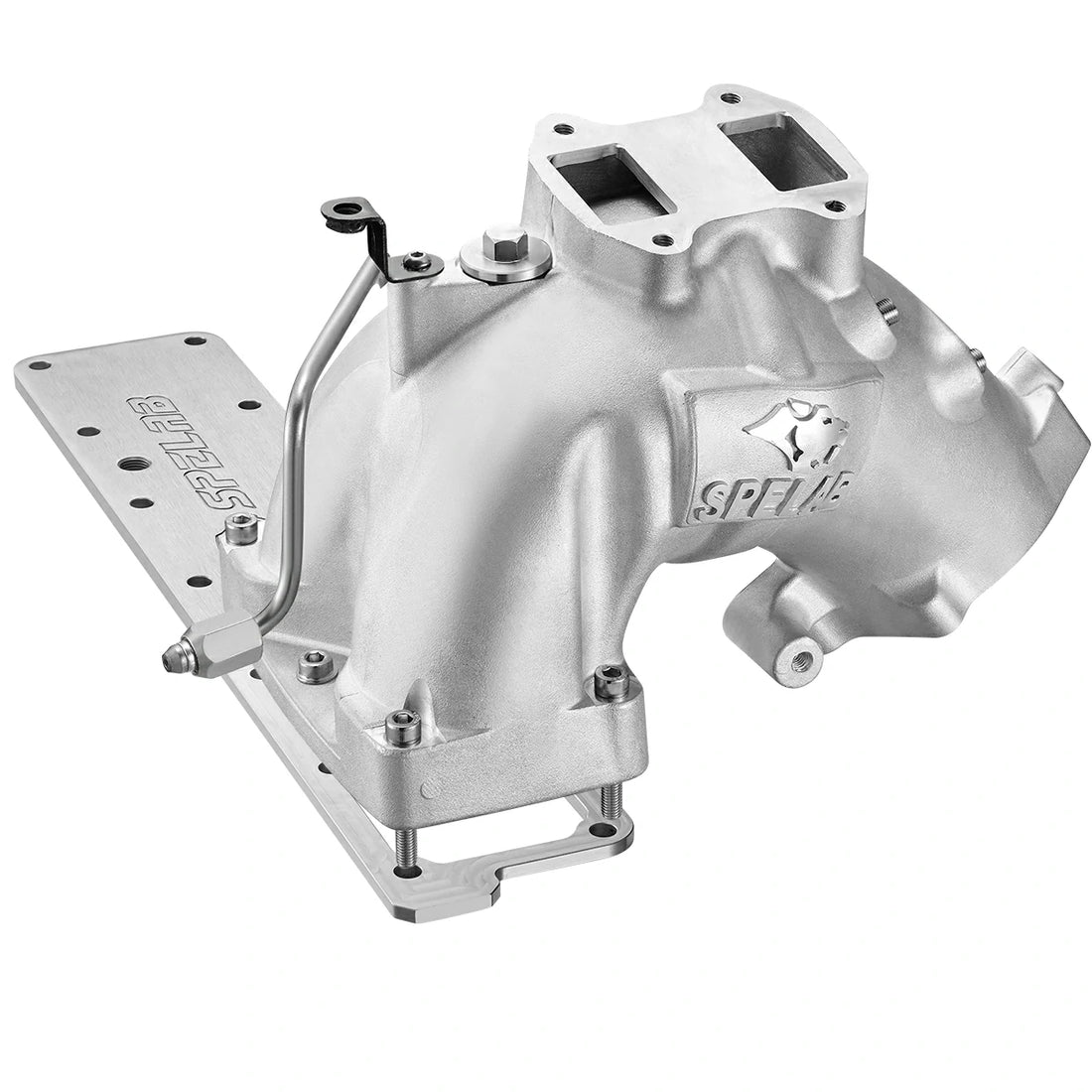
Intake Horn/Manifold Grid Heater for 2007-2024 Dodge Ram 2500/3500/4500/5500 6.7 Diesel
- Cast-aluminum body with a listed 3-3/8-inch inlet.
- Four listed 1/8-inch NPT ports for compatible accessories or sensors.
- Separate manifold-only, manifold-plus-delete, and delete-only selections.
- Year and truck-style selections require confirmation before ordering.
Emissions, Warranty, and Road-Use Note
An intake-manifold replacement does not automatically require removal of EGR or other emissions equipment, and a grid-heater change is a separate mechanical and electrical decision. Vehicle fitment, cold-start behavior, diagnostic functions, emissions compliance, warranty impact, and road-use legality vary by configuration and location; confirm the truck's requirements before modifying any system.
Frequently Asked Questions
These answers separate realistic upgrade conditions from claims that cannot be guaranteed across every 6.7L Cummins build.
Q: Does an intake horn add horsepower to a 6.7L Cummins?
A: A larger intake horn can reduce inlet restriction when the original path is limiting a high-airflow combination, but no universal horsepower gain applies to every truck. Wheel-power change depends on calibration, turbocharger airflow, boost, exhaust restriction, fuel delivery, test conditions, and whether the stock horn was a measurable bottleneck.
Q: Will a larger intake manifold improve towing?
A: A larger manifold may improve response on a modified tow rig when intake restriction is part of the problem, but the part will not repair underboost, a charge-air leak, a plugged filter, turbo-control trouble, or excessive exhaust restriction. Log the truck under the same load before and after installation if the goal is to measure a real change.
Q: Does a 6.7L Cummins intake horn lower exhaust gas temperature?
A: A less restrictive intake path may reduce sustained towing EGT when intake pressure loss was materially limiting airflow, especially on a tuned or higher-airflow combination, but no universal temperature drop can be promised. Compare pre-turbo EGT, boost, engine speed, vehicle speed, ambient temperature, trailer weight, grade, and calibration over the same route before and after the change. Without matched data, a 50–100°F claim is only an estimate.
Q: Does a 6.7L Cummins intake manifold require tuning?
A: The current standard SPELAB manifold listing does not state that tuning is mandatory, but changes to emissions equipment, heater hardware, sensors, or airflow-related calibration can create different requirements. Confirm the exact selected kit and the truck's current calibration before installation.
Q: Is a larger inlet always better?
A: No. An inlet must fit the surrounding plumbing and support the engine's operating range; size alone does not prove lower exhaust temperature, better fuel economy, or more usable torque. Abrupt transitions, poor sealing, mismatched pipes, and incorrect sensor placement can erase the value of a larger opening.
Q: Should a cold-climate truck use a grid-heater delete?
A: A cold-climate daily driver should retain a dependable intake-heating strategy unless a qualified plan replaces the original function. Deleting heat can increase cold-start difficulty depending on ambient temperature, battery condition, oil viscosity, fuel quality, engine condition, and the replacement hardware.
Q: Can different intake-brand components be mixed?
A: Do not assume cross-brand compatibility from nominal diameter alone. Verify flange geometry, bolt pattern, sensor and heater locations, fuel-line clearance, pipe alignment, clamps, and every included adapter with both manufacturers before combining parts.
Q: Which model years does the 6.7L Cummins intake manifold cover?
A: Available products cover different portions of the 2007.5–2024 Ram 6.7L Cummins range, and pickup fitment can differ from chassis-cab fitment. The correct answer comes from the exact SKU, VIN, build configuration, and selected heater hardware rather than engine displacement alone.

About the Author
John Lee
Mechanical Engineer | 10+ Years Experience
John has spent the last decade engineering and testing high-performance automotive components. Specializing in drivetrain durability and thermal management across Powerstroke, Cummins, and Duramax applications, he bridges the gap between OEM limitations and aftermarket performance. His philosophy: "Factory parts are just a starting point."





1 comment
Whats the differences between Spelab & Banks air intake for the cummins 6.7. Why woukd I buy or not buy one or the other mfg. Spelab’s price us less but is tge qualty, testing and performance the same as Banks or better.