Updated on July 17, 2026.
Installing an EGR delete kit on a 2004.5-2005 LLY Duramax is not just a bolt-on afternoon job; it is a fitment, coolant, intake routing, calibration, and legal-use decision that needs to be checked before the first fastener comes loose.
Key Takeaways
The cleanest LLY EGR delete install starts with legal-use confirmation, exact 2004.5-2005 Duramax fitment, coolant testing, intake mouthpiece awareness, and a post-install heat cycle.
- Confirm the truck is a 2004.5-2005 LLY, not an LB7, LBZ, LMM, LML, or L5P, because EGR hardware, Duramax LLY intake routing, and sensor layout do not cross over cleanly.
- An LLY EGR delete will not automatically fix overheating, weak cooling capacity, a restricted radiator, bad fan clutch, charge-air leaks, poor tuning, or factory intake mouthpiece limits.
- Plan for coolant handling, brittle hoses, EGR cooler studs, M8-M10 hardware, soot-packed intake parts, and tight access around the turbo mouthpiece and cooler.
- Do not blame the EGR system first for every low-power, coolant-loss, black-smoke, or limp-mode complaint; scan data, boost checks, and a coolant pressure test still matter.
- After installation, recheck coolant level, exhaust sealing, boost leaks, harness clearance, DTCs, and clamp position after the first post-install heat cycle.
Legal and Fitment Boundary Before the Install
An LLY EGR delete should only be considered for lawful off-road, competition, or non-highway use, and the truck's exact model year must be verified before buying parts.
For a public-road truck, emissions equipment should be diagnosed and repaired in a compliant configuration. If you are not clear on what the factory valve does before any modification, review the emissions-system basics before turning wrenches. That single step saves a lot of bad orders and awkward inspection problems.
The LLY Duramax used in 2004.5-2005 Chevy Silverado HD and GMC Sierra HD trucks has its own EGR cooler, LLY intake mouthpiece, coolant routing, intake horn access, and harness-clearance problems. A kit meant for LB7, LBZ, LMM, LML, or L5P trucks is not the same deal just because the badge says 6.6L Duramax.
If the truck is already tuned, deleted, bought used, or throwing readiness faults, read the risk-and-effort checklist and document what hardware is actually on the truck before stacking more changes on top.
Pre-Install Diagnosis: Do Not Blame the EGR First
A dirty EGR cooler or intake horn can be part of the problem, but low power, coolant loss, high EGT, smoke, or overheating still needs diagnosis before the parts order.
Use this table like a shop bay checklist. It keeps the job from turning into a guessing game, especially on salt-belt trucks, tow rigs, jobsite trucks, and high-mileage pickups that already have old hoses, crusty studs, and disturbed wiring.
| Owner Complaint | Possible EGR-Related Cause | First Garage Check | Do Not Assume |
|---|---|---|---|
| Coolant smell, slow coolant loss, white steam under load | EGR cooler leak may be possible on some trucks. | Run a coolant pressure test cold and hot; inspect EGR cooler area, hoses, radiator, water pump, cap, and external leaks. | Do not assume every coolant loss is the EGR cooler; head gasket and cooling-system leaks still need checking. |
| Overheating while towing or climbing hot grades | EGR heat load may be part of the discussion on some modified trucks. | Check radiator condition, fan clutch, shroud, coolant mix, charge-air leaks, intake restriction, towing weight, and tune history. | Do not expect an LLY EGR delete by itself to fix cooling capacity, airflow, radiator, fan, or calibration problems. |
| Lazy boost, black smoke, poor towing pull | Soot restriction or intake path issue may contribute. | Scan boost command vs actual; inspect boots, MAF/MAP data, turbo vane behavior, fuel filter condition, and intercooler piping. | Do not install parts before checking boost leaks, fuel supply, and the factory intake mouthpiece area. |
| High intake soot and oil paste | EGR soot mixing with crankcase oil mist can build sludge in the intake tract. | Inspect intake mouthpiece, MAP sensor area, charge-air boots, and crankcase ventilation routing. | Do not scrape hard chunks into the intake ports. |
| Oil smell or wetness near the rear engine area | Oil may be discovered while access is opened near the turbo area. | Check the turbo pedestal, rear engine valley, feed/return areas, and nearby hot surfaces while the intake side is apart. | Do not call a turbo pedestal oil leak an EGR failure; it is a separate inspection point. |
| Check-engine light or readiness issue | EGR flow, sensor, or calibration logic may be involved. | Record DTCs and freeze-frame data before clearing codes. | Do not clear codes and call the truck fixed. |
Parts, Tools, and Truck Setup
A solid parts plan for an LLY install includes the right EGR delete kit, fresh sealing surfaces, coolant supplies, normal hand tools, a scan tool, and extra time for rusted or heat-cycled hardware.
For this specific 2004.5-2005 platform, the LLY EGR delete kit with high flow intake makes the most sense when the factory intake mouthpiece, turbo airflow path, and intake elbow clearance are part of the plan. If the truck only needs the simpler emissions-hardware package for the same LLY application, compare it with the 2004-2005 Duramax LLY EGR delete kit.
At minimum, have metric sockets, extensions, universal joints, wrenches, pliers, a torque wrench, drain pan, coolant, hose clamps, shop towels, penetrating oil, a small pick set, gasket scraper, light, mirror, and a diesel-capable scan tool. On a salt-belt truck, start penetrant soak cycles on EGR cooler studs and M8-M10 hardware about 24 hours ahead if the truck is available, and have extraction tools ready. That does not mean every stud will snap, but budgeting extra time is smart shop math.

LLY Overheating and Intake Routing Reality Check
An LLY EGR delete can change the hardware around the cooler and intake path, but it does not automatically solve the known LLY concerns around intake mouthpiece restriction, charge-air leaks, cooling capacity, or tune-related heat.
LLY owners often bring up overheating while towing, climbing hot grades, or pulling payload in summer weather. That complaint needs a full cooling and airflow check. Look at radiator condition, coolant mix, fan clutch engagement, shroud condition, intercooler boots, boost leaks, EGT trend, and the Duramax LLY intake routing before treating the EGR cooler as the whole story.
A matching LLY Duramax cold air intake belongs in this same airflow planning zone, but sensor location, clamp clearance, intake tube routing, and mouthpiece fitment still need to be checked before you call the airflow side handled.
LLY Duramax EGR Delete Installation Path
The right install order is cool engine, safe coolant handling, careful access work, clean sealing surfaces, correct hose routing, and a controlled restart with scan data.
- Confirm legal-use category, product fitment, and calibration plan. If the truck will stay on public roads, emissions-compliant repair is the right path. For lawful off-road or competition use, make sure the ECM strategy and hardware plan match before the teardown.
- Cool the engine, disconnect both batteries, and drain enough coolant to work cleanly. Keep coolant away from belts, connectors, and the shop floor.
- Remove intake access parts. Remove the resonator box, intake tube, and turbo mouthpiece area as needed, then label hoses and connectors before moving the harness.
- Remove the EGR cooler hardware patiently. Expect tight angles at the top studs and rear hardware. Use penetrant cycles and controlled force; broken hardware adds time fast.
- Inspect while access is open. Check the LLY intake mouthpiece area, MAP sensor area, charge-air boots, coolant hoses, rear engine oil traces, and turbo pedestal area before reassembly.
- Clean sealing surfaces without dropping debris. Gasket surfaces need to be clean and flat, but scraped carbon or gasket material should not fall into the intake tract.
- Install the block-off parts, tube, hose, or intake elbow per the kit instructions. Follow the supplied hardware order and torque guidance instead of guessing from forum memory.
- Refill coolant and route hoses away from heat and rub points. Check fan shroud clearance, belt clearance, turbo heat, wiring, and clamp positions before startup.
- Start, scan, inspect, and heat-cycle. Watch coolant temperature, check for exhaust leaks, monitor boost behavior, scan for codes, then recheck fasteners and coolant level after cooling down.
System Planning Beyond the Cooler
A good LLY install is built around the whole intake, exhaust, coolant, crankcase ventilation, and calibration package, not just the EGR cooler by itself.
If the intake is packed with oily soot, look at the source. EGR soot plus CCV oil mist can make a thick paste around the intake horn and MAP sensor area. A 2004-2010 Duramax CCV reroute kit is not an EGR delete, but it can be part of an oil-mist control plan on an off-road build when used appropriately.
For broader platform browsing, use the Duramax EGR delete kits collection only after the year and engine code are nailed down. Buying by engine family first and exact fitment second is how trucks end up apart with the wrong parts on the bench.
The LLY did not use the later DEF/SCR layout found on newer Duramax trucks, but cooling-system symptoms still matter because a leaking cooler can look like several other failures. If coolant loss is part of the complaint, start with coolant leak diagnosis before carrying LML or L5P assumptions back onto an LLY.
Common Installation Problems
Most LLY EGR delete install headaches come from old hardware, poor access, dirty sealing surfaces, bad hose routing, oil leaks found during access work, or skipping the post-install scan.
| Problem | Why It Happens | Practical Fix | Shop Warning |
|---|---|---|---|
| Stuck or broken EGR cooler studs | Heat cycles, corrosion, salt-belt rust, and tight access around the cooler. | Use 24-hour penetrant soak cycles when possible, correct socket engagement, patience, and extraction tools if needed. | Do not turn a rounded M8 or M10 fastener into a bigger job with the wrong socket. |
| Coolant drip after startup | Clamp not seated, hose cut too short, old hose end damaged, trapped coolant from disassembly, or an unrelated cooling leak. | Pressure-test when possible, dry the area, restart, and find the real source. | Do not assume a small drip will fix itself after towing. |
| Exhaust tick or soot mark | Block-off plate, up-pipe area, gasket, or sealing surface not seated cleanly. | Inspect with a light after a heat cycle and retorque only if the kit instructions allow it. | Do not smear random sealant on hot exhaust parts unless the manufacturer calls for it. |
| Boost leak or lazy throttle response | Intake boot, clamp, mouthpiece, or charge-air connection moved during the job. | Smoke-test or pressure-test the charge-air system and verify MAF/MAP readings. | Do not blame the tune before checking clamps, boots, and the LLY intake mouthpiece area. |
| Oil smell after reassembly | Old turbo pedestal, rear valley, feed, or return oil leak may have been disturbed or newly noticed. | Clean the area, inspect after warm-up, and separate oil-leak diagnosis from the EGR hardware work. | Do not sell an EGR delete as a fix for a turbo pedestal oil leak. |
| Returning codes after install | Unmatched calibration, unplugged connector, old stored code, readiness logic, or unrelated sensor fault. | Scan all modules, save codes, verify connectors, and confirm the calibration path. | Do not clear codes repeatedly without saving data. |

Post-Install Checks Before You Call It Done
The install is not finished until the truck has been heat-cycled, scanned, checked for leaks, and inspected for hose rub, wiring contact, and temperature behavior.
- Coolant level: Check cold fill, warm-up level, and level again after the truck cools. Air pockets can move after the first drive.
- Exhaust sealing: Look for soot tracks, ticking, exhaust smell, and heat marks around block-off areas.
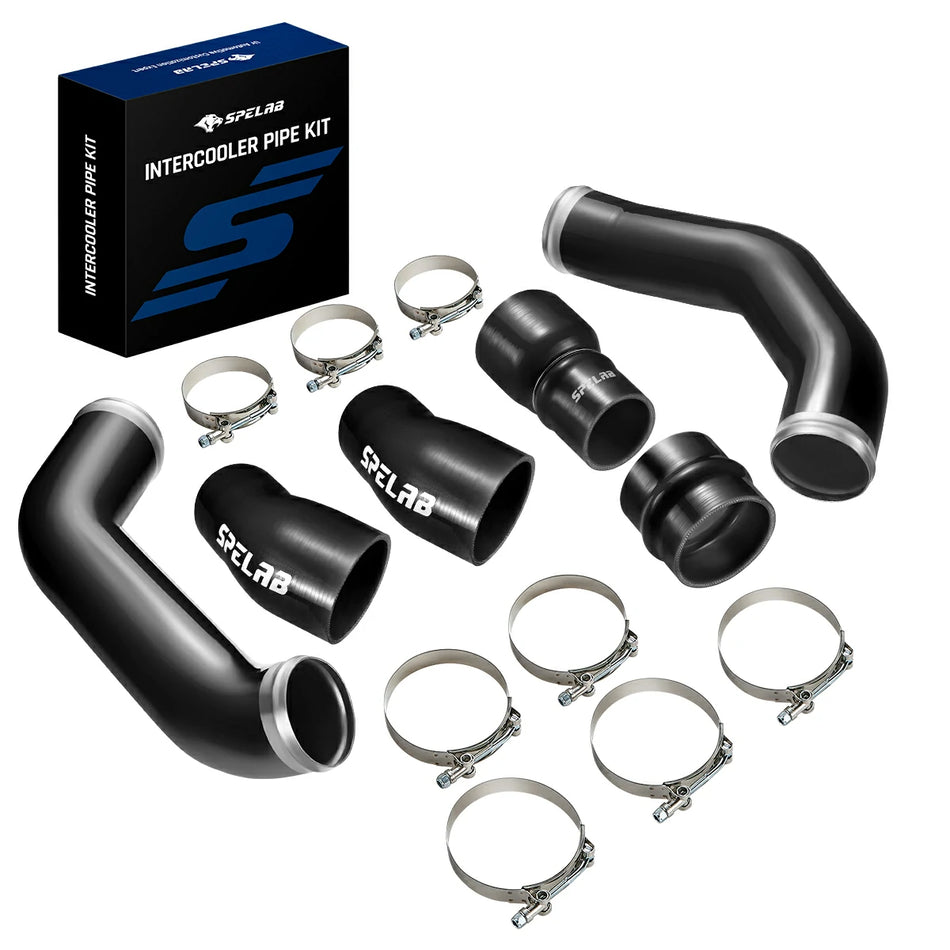
- Charge-air system: Inspect boots, clamps, intercooler pipe joints, intake tube alignment, LLY intake mouthpiece clearance, and MAF/MAP data.
- Harness clearance: Make sure wiring is not resting against hot metal, sharp brackets, or belt-driven parts.
- Scan data: Record active and pending codes, coolant temperature, commanded vs actual boost, and any EGR-related status the ECM still reports.
- Oil-leak check: Look at the turbo pedestal and rear engine area after warm-up if oil residue was present during teardown.
- Use-case check: A tow rig, jobsite truck, or off-road truck should get a short shakedown before payload, trailer weight, hot grades, or remote miles.
We as parts manufacturers have seen a lot of good hardware blamed for simple finish-work problems: one loose clamp, one rubbed hose, one forgotten connector, or one old coolant hose that split after being disturbed. Slow down at the end. That is where the comeback usually gets built.
FAQ
Most LLY Duramax EGR delete questions come down to fitment, legality, calibration, overheating expectations, coolant handling, and post-install diagnosis.
Q: What years does an LLY Duramax EGR delete kit fit?
A: Most LLY Duramax EGR delete kits are built for 2004.5-2005 Chevy Silverado HD and GMC Sierra HD 6.6L Duramax trucks, but you still need to verify exact year, engine code, and product fitment before ordering.
Q: Is an LLY EGR delete legal on a street truck?
A: Removing or disabling emissions equipment on a public-road truck can create legal, inspection, warranty, registration, and resale problems. Street-driven trucks should be repaired in an emissions-compliant configuration.
Q: Will an LLY EGR delete throw codes or need calibration?
A: It can if the hardware, ECM logic, readiness status, existing tune history, and legal-use category do not match. Save codes before clearing, verify the current calibration path, and do not flash unknown files or bypass compliance requirements.
Q: Will an LLY EGR delete fix overheating?
A: Not by itself. Overheating on an LLY Duramax can involve radiator condition, fan clutch, shroud, coolant mix, charge-air leaks, intake routing, towing load, and tuning, so diagnose the whole cooling and airflow system first.
Q: How long does an LLY EGR delete install take?
A: A clean truck with good access may be a half-day job for an experienced mechanic, but rusted hardware, broken studs, coolant hose trouble, oil leaks found during access work, or unknown previous modifications can stretch the job longer.
Q: What should I check after the first heat cycle?
A: Check coolant level, coolant leaks, exhaust soot marks, boost leaks, intake mouthpiece clearance, harness clearance, hose rub, clamp position, active codes, oil residue, and temperature behavior before towing or hauling payload.