Updated on July 9, 2026.
If you are asking “how much is a muffler delete?”, the real-world answer is usually simple: most basic muffler deletes cost $100 to $200 at a local exhaust shop. A DIY kit usually runs about $50 to $150, while stainless steel work, exhaust tips, larger diesel pipe, rust repair, or custom fabrication can push the bill to $250 to $500+.
From an engineering standpoint, a muffler delete is not a complicated modification, but it still deserves more attention than simply cutting out a can and welding in pipe. Exhaust fitment, resonance, corrosion resistance, hanger alignment, leak control, and local noise rules all matter—especially on trucks that tow, idle for long periods, or live in winter road salt.
Quick Answer: Muffler Delete Cost
A muffler delete usually costs $100 to $200 at a shop. A DIY muffler delete kit typically costs around $50 to $150, while custom stainless steel work, exhaust tips, or larger diesel truck exhaust jobs can raise the total to $250 to $500+.
For most drivers, a muffler delete is one of the most affordable exhaust modifications because it removes the muffler and replaces it with straight piping, usually without changing emissions equipment. The key word is “usually.” If the job touches catalytic converters, DPFs, EGR/DEF hardware, sensors, or emissions calibrations, it is no longer just a simple muffler delete.
How Much Does a Muffler Delete Cost?
The typical muffler delete cost falls between $100 and $200, but the quote changes fast once you add diesel pipe diameter, stainless material, tips, welding, rust repair, or hanger correction. A small car, a Dodge Charger mid muffler delete, and a 5-inch diesel truck exhaust job are not the same amount of work.
| Job Type | Typical Cost | Typical Labor Time | Best For | What Raises the Price |
|---|---|---|---|---|
| Basic shop muffler delete | $100–$200 | 30–60 minutes | Most cars and light trucks | Pipe length, welding, local labor rate, hanger condition |
| DIY muffler delete kit | $50–$150 | 1–2 hours for a prepared DIYer | Clean bolt-on or clamp-on setups | Tools, jack stands, clamps, rusted hardware, poor fitment |
| Muffler + resonator delete | $150–$300 | 60–90 minutes | Drivers wanting a louder, sharper sound | More cutting, more welding, more drone risk |
| Dodge Charger / Challenger mid muffler delete | $100–$220 | 45–90 minutes | HEMI owners seeking more sound | Tips, dual pipes, shop rate, weld finish |
| Stainless steel custom work | $200–$400 | 1–2 hours | Snowy, salty, or coastal climates | 304 stainless, custom bends, welding, finish quality |
| Diesel truck muffler delete | $120–$300 | 60–120+ minutes | RAM, Silverado, Duramax, Cummins, and Powerstroke trucks | 4-inch/5-inch pipe, over-axle routing, seized clamps, tailpipe alignment |
| Heavy-duty diesel exhaust upgrade | $250–$500+ | 1–2+ hours | Large trucks or custom exhaust layouts | Rust, crushed pipe, larger sections, stainless pipe, extra hangers |
Shops in lower-cost areas such as parts of Texas or Georgia may quote around $60 to $120. In higher-cost regions such as California or parts of Canada, the same work may cost $250 to $300, especially if welding, stainless steel, exhaust tips, or rust repair are included.
Engineer’s Field Note: I have seen a 2021 RAM 2500 come in with what looked like a simple muffler delete quote on paper. Once the truck was on the lift, the real cost came from seized clamps, oversized pipe, and the need to realign the rear hanger so the tailpipe would not rattle against the frame. That is why two “muffler deletes” can be $120 apart even when the parts look similar online.
What Is a Muffler Delete and Why Do People Choose It?
A muffler delete is an exhaust modification where the vehicle’s muffler is removed and replaced with a straight pipe. The goal is to reduce restriction at the muffler section and create a louder, more direct exhaust note.
Many car and truck owners choose a muffler delete as their first exhaust upgrade before moving to larger systems such as a cat-back exhaust, downpipe-back exhaust, DPF-back diesel exhaust, or turbo-back system. It is especially popular among performance cars, Dodge Charger and Challenger owners, 2020+ RAM trucks, Silverados, Duramax diesel trucks, Cummins builds, and Powerstroke owners who want more sound without a full exhaust overhaul.
The biggest practical change is sound. A muffler delete can make throttle input feel more direct because the exhaust note is sharper and more responsive. However, the actual horsepower gain is usually modest unless the stock muffler was highly restrictive or the delete is part of a larger exhaust system.
For diesel owners who specifically want a straight replacement tube, a muffler delete pipe is the cleanest category to compare before paying a shop for custom fabrication.

What Affects Muffler Delete Cost?
The price of a muffler delete depends on more than the missing muffler. Labor, materials, pipe size, vehicle layout, rust, hanger placement, welding quality, tailpipe alignment, and local shop rates all change the final number.
Vehicle Type and Pipe Diameter
A small car is usually cheaper than a heavy-duty diesel truck. Larger trucks may require bigger pipe diameter, stronger clamps, stainless steel components, or more custom fitting. A 3-inch gas-truck exhaust and a 5-inch diesel exhaust are not the same job from a fabrication standpoint.
Labor Rate, Location, and Rust
A simple muffler delete may be inexpensive in smaller towns, while the same job can cost much more in high-cost metro areas. Shops also charge more when the exhaust has rusted fasteners, damaged hangers, crushed pipe, or poor previous welds.
Exhaust Material
Aluminized steel is usually cheaper and works well for many vehicles. 304 stainless steel costs more but offers better corrosion resistance, making it a strong choice for snowy areas, coastal regions, or diesel trucks exposed to road salt.
Welding vs Clamp-On Installation
A clamp-on kit can reduce labor costs and make DIY installation easier. A welded muffler delete often looks cleaner and seals well, but it usually costs more because it requires shop labor. The key is not just whether the pipe is welded or clamped—it is whether the joint is straight, sealed, and properly supported.
Exhaust Tips and Custom Work
Premium exhaust tips, glasspacks, custom bends, or larger tailpipes can raise the total cost. Always ask what is included in the quote before approving the job.
Engineer’s Field Note: I have seen a muffler delete pipe fit perfectly on the bench but sit slightly twisted once installed under the truck. The issue was not the pipe diameter—it was hanger preload. If the exhaust is forced into position, it can transmit vibration into the cab and create a drone that sounds worse than the original muffler.
What Should You Ask the Exhaust Shop Before Paying?
If you are calling around for a muffler delete quote, do not ask only for the lowest price. Ask what the price includes. That is how you avoid a cheap job that rattles, leaks, drones, or sits crooked under the bumper.
| Question to Ask | Why It Matters |
|---|---|
| Does the quote include pipe material? | Some low quotes only cover labor and cheap mild-steel pipe. |
| Is it welded or clamp-on? | Welding can seal cleanly but costs more; clamps can be easier to service. |
| Are hangers and tailpipe alignment included? | Poor alignment can cause rattles, bumper contact, or cab drone. |
| Does the price include exhaust tips? | Tips can add $30–$150+ depending on size and finish. |
| Will the shop check for leaks after installation? | A small leak at the joint can make the vehicle sound cheap instead of clean. |
| Will the setup be too loud for local noise rules? | A good shop should warn you if the modification could create ticket or inspection problems. |
If the shop is vague about leaks, tailpipe alignment, or drone, keep calling. A clean muffler delete should not buzz, hang under tension, or leave exhaust soot marks around a fresh joint. For related diagnosis, read more about exhaust leak symptoms and repair cost before you blame the sound on the muffler delete itself.
Shop Muffler Delete vs DIY Muffler Delete Kit
You can either pay a local exhaust shop or buy a muffler delete kit and install it yourself. Each option has advantages depending on your tools, experience, vehicle age, and whether the factory exhaust hardware is still in good shape.
For DIY work, plan on basic exhaust tools: penetrating oil, jack stands or a lift, exhaust hanger pliers, a pipe cutter or saw, clamps, safety glasses, gloves, and enough time to deal with rusted hardware. The kit price is only part of the job.
For a bolt-on diesel setup, compare the 4''/5'' Stainless Steel Muffler Delete Pipe. For drivers who want tone control instead of a raw straight-pipe sound, the 4''/5'' Stainless Steel Diesel Muffler is the better comparison.
Recommended Muffler Delete and Diesel Exhaust Options
If you want to keep costs predictable, buying the right part can be easier than paying for custom fabrication. For many diesel owners, the better move is not always “no muffler.” Sometimes the smarter setup is a straight-through stainless diesel muffler that controls tone and drone while still improving the exhaust sound.
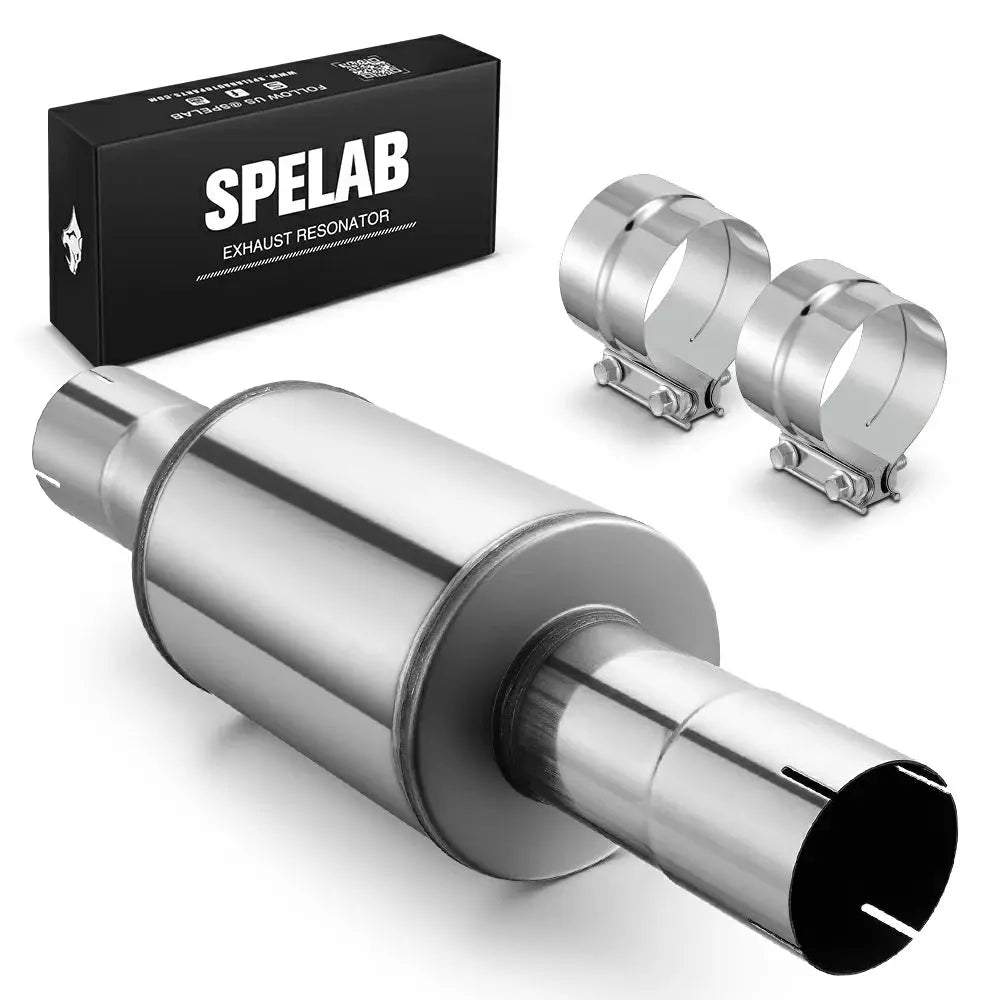
4''/5'' Stainless Steel Diesel Muffler SPELAB
Brand: SPELAB
Material: Stainless steel
Inlet / Outlet Diameter: 4'' / 5'' options
Best For: Cummins, Duramax, and Powerstroke diesel owners who want stronger tone without turning the truck into a raw straight-pipe tow rig.
A stainless diesel muffler is a better fit for owners who want improved tone control rather than a completely raw straight-pipe sound. It is especially useful when drone control and corrosion resistance matter.
$125
Buy NowMuffler Delete vs Resonator Delete, Cat-Back, DPF-Back, and Turbo-Back
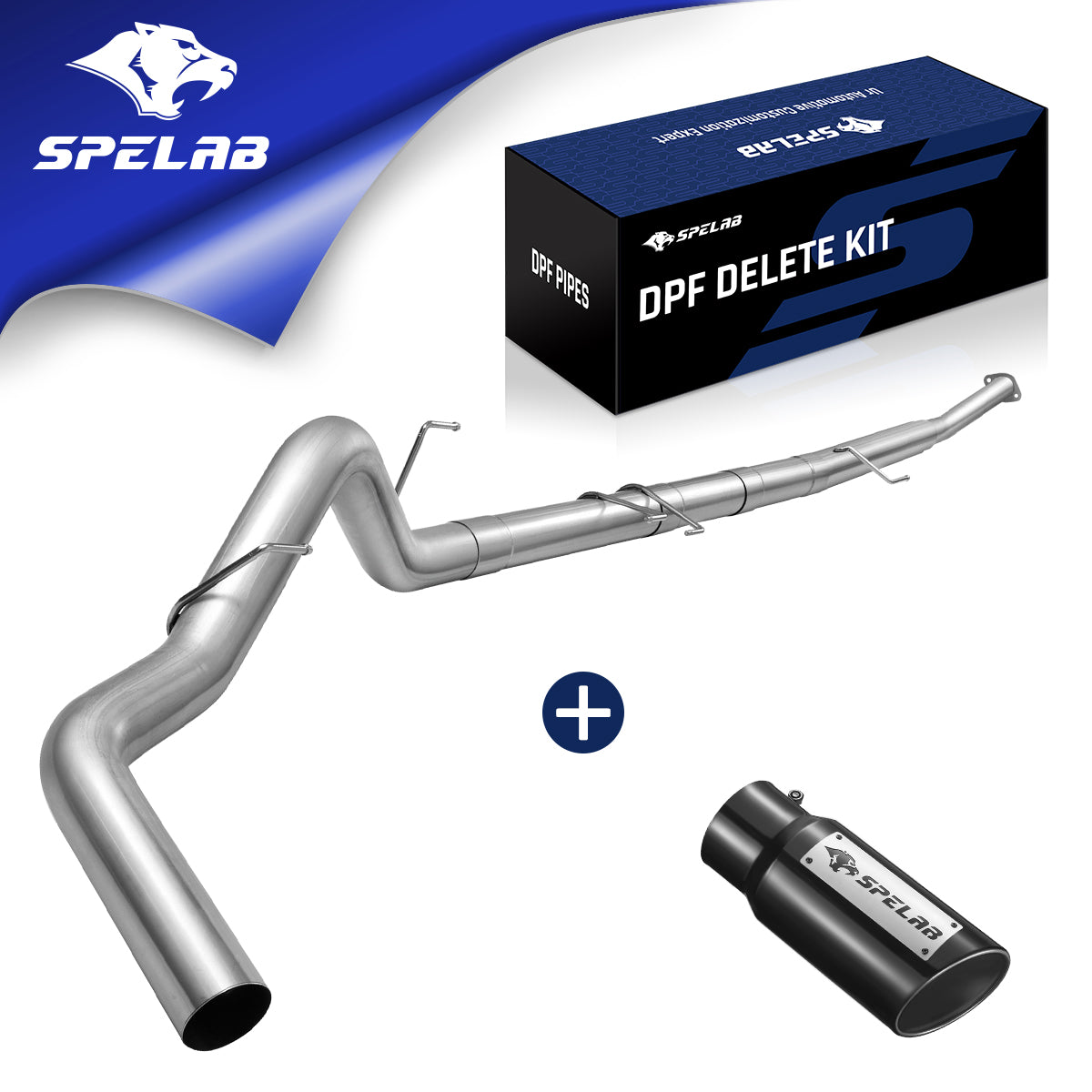
A muffler delete improves exhaust sound and may slightly improve exhaust flow, but it is only one type of exhaust modification. Drivers looking for a more complete system may compare it with a resonator delete, Cat-Back Exhaust, DPF-back diesel exhaust, downpipe-back setup, or turbo-back system.
| Exhaust Mod | What It Changes | Sound Change | Typical Cost | Main Risk |
|---|---|---|---|---|
| Muffler delete | Removes muffler | Louder, more aggressive | $100–$200 | Drone or local noise issue |
| Resonator delete | Removes resonator | More rasp and tone change | $80–$200 | More rasp or cabin drone |
| Muffler + resonator delete | Removes both muffler and resonator | Much louder | $150–$300 | Too loud for daily driving |
| Cat-back exhaust | Exhaust after catalytic converter | More complete tone change | $300–$1,200+ | Higher parts cost |
| DPF-back / downpipe-back diesel exhaust | Rear exhaust sections depending on platform | Stronger diesel tone | $300–$800+ | Fitment and compliance must be checked |
| Turbo-back system | Exhaust from turbo outlet back | Major flow and sound change | $500–$1,500+ | May involve emissions-related components on some diesel platforms |
A cat-back system is usually the better comparison for gas vehicles. A DPF-back or downpipe-back setup is more common in diesel conversations, but the exact meaning depends on where the emissions equipment sits on that truck. A turbo-back system replaces much more of the exhaust path and should not be confused with a basic muffler delete. For a deeper comparison, read what a cat-back exhaust changes.
Will a Muffler Delete Cause Drone?
A muffler delete can cause cabin drone, especially at steady highway speed. Drone usually happens when exhaust frequency matches the cabin or exhaust-system resonance. On some trucks, it shows up around steady cruising RPM, where the exhaust note becomes a low, booming sound inside the cab.
Drone risk increases when you remove both the muffler and resonator, use a large straight pipe, tow at steady RPM, or force the exhaust into position with hanger preload. A straight-through performance muffler or resonator can be the better choice if the truck is a daily driver or tow rig.
For a low-cost sound-control route, some drivers compare a muffler delete with performance exhaust mufflers or adjustable Exhaust Cutout Kits. Adjustable sound control can be useful for track or off-road contexts, but street legality still depends on where and how the vehicle is used.
Muffler Delete Pros and Cons
| Pros | Cons |
|---|---|
| Louder and more aggressive exhaust sound | May create drone at highway speeds |
| Lower cost than a full exhaust system | May violate local noise rules |
| Simple installation compared with larger exhaust upgrades | Sound may be too loud for daily driving |
| Can improve the driving feel for some owners | May reduce resale appeal for some buyers |
| Good first step before a full exhaust upgrade | Not a major horsepower upgrade by itself |
From a mechanical perspective, the biggest tradeoff is not usually power—it is sound quality. A clean muffler delete should not buzz, leak, or hang under tension. If the exhaust drones badly inside the cab, the issue may be pipe length, resonator removal, hanger preload, or the natural frequency of the system.
Is a Muffler Delete Worth the Cost?
For many drivers, yes—a muffler delete is worth it if your main goal is a louder exhaust note at a low price. It is one of the most cost-effective exhaust mods available, especially compared with a full cat-back, downpipe-back, DPF-back, or turbo-back system.
A muffler delete is best for drivers who want more sound, a more aggressive appearance, and a simple upgrade. It may not be the best choice if you want a quiet daily driver, dislike exhaust drone, tow long distances, or live in an area with strict noise inspections.
For diesel trucks, think hard before removing all sound control. A tow rig with a straight pipe can sound fun for ten minutes and get old after three hours at highway speed. A straight-through stainless diesel muffler often gives a cleaner balance between tone, flow, and daily-driver comfort.
Owners comparing this job with a full straight pipe should also understand straight-pipe cost, tuning risk, noise risk, and inspection consequences before choosing the louder path.
Legal, Noise, Smog, and Warranty Considerations
A muffler delete is not the same as removing emissions equipment. In many cases, a simple muffler delete does not directly change tailpipe emissions if the catalytic converter, DPF, sensors, and other emissions control devices remain intact. However, rules vary by location, and some inspections may include noise limits, visual checks, or exhaust system requirements.
The bigger street-use risk for a simple muffler delete is often noise, not emissions. Some states and local areas require an adequate muffler, prohibit excessive or unusual noise, or prohibit cutouts, bypasses, and similar devices. That means a muffler delete can still create ticket, inspection, or fix-it problems even when emissions hardware remains untouched.
If your modification involves a DPF delete, catalytic converter removal, EGR removal, DEF changes, sensor changes, or emissions-related tuning, it may not be legal for public-road use. Always check your local laws before modifying your exhaust system.
A muffler delete also does not automatically void your entire vehicle warranty. However, if the modification or installation causes a failure, the manufacturer or dealer may deny coverage for that related repair. If warranty coverage matters to you, consult your dealer before making changes.
For a deeper legal discussion, read the legal side of muffler deletes before cutting the factory muffler off a street-driven vehicle.
FAQ
Q: How much is a muffler delete?
A: A basic muffler delete usually costs $100 to $200 at a local exhaust shop. A DIY kit may cost around $50 to $150, while stainless steel, exhaust tips, custom welding, or diesel truck setups can cost more.
Q: How much does a muffler delete usually cost at a shop?
A: Most simple shop muffler deletes cost $100 to $200. Rust, larger pipe, stainless steel, tips, custom bends, or hanger repair can raise the price to $250–$500+.
Q: How long does a muffler delete take?
A: A clean basic muffler delete may take 30–90 minutes. Rusty exhaust systems, diesel trucks, custom stainless work, tips, or hanger repair can take 1–2+ hours.
Q: How much is a muffler and resonator delete?
A: A muffler and resonator delete usually costs $150 to $300. The price depends on your vehicle, labor rate, pipe material, and whether you add exhaust tips or custom welding.
Q: How much is a mid muffler delete for a Dodge Charger?
A: Most Dodge Charger owners report paying between $100 and $200 for a mid muffler delete. Upgraded tips, extra welding, or adding a performance muffler can increase the price.
Q: How much is a mid muffler delete for a Dodge Challenger?
A: The cost is similar to the Charger, usually around $120 to $220. On a 2020 Challenger R/T 5.7L HEMI, custom exhaust work may raise the total cost.
Q: Can you get a ticket for a muffler delete?
A: Yes, depending on local noise and equipment laws. A muffler delete may create excessive noise or violate rules requiring an adequate muffler. Check your state and city rules before modifying the exhaust.
Q: Is a muffler delete cheaper than a cat-back exhaust?
A: Yes. A muffler delete is usually much cheaper than a cat-back exhaust. Most muffler deletes cost around $100 to $200, while cat-back systems often cost several hundred dollars or more.
Q: Will a muffler delete pass smog?
A: A simple muffler delete may not directly affect emissions if all emissions control equipment remains intact. However, inspection rules vary by state or region and may include noise or visual checks. Always confirm local laws before modifying your exhaust.
Q: Will a muffler delete void my vehicle’s warranty?
A: A muffler delete does not automatically void your entire warranty. However, if the modification or installation causes a related failure, warranty coverage for that repair may be denied.
Q: Is a muffler delete worth it?
A: It is worth it if you want a louder exhaust sound at a low price. It may not be ideal if you dislike highway drone, need a quiet daily driver, tow long distances, or live in an area with strict noise regulations.
References

John Lee
Mechanical Engineer | 10+ Years Experience
John has spent the last decade engineering and testing high-performance automotive components. Specializing in drivetrain durability and thermal management across Powerstroke, Cummins, and Duramax applications, he bridges the gap between OEM limitations and aftermarket performance. His philosophy: "Factory parts are just a starting point."