If your Ram 2500 or 3500 is approaching a CCV service deadline, start with three things: the truck's model year, the last replacement record and the filter fitted to the engine. A low-mileage truck can reach its time limit first, while a fresh oil leak calls for inspection before the next loaded trip.
The closed crankcase ventilation (CCV) system routes crankcase gases through an oil-separation filter and back into the intake. The filter separates oil mist; the complete system also needs an unobstructed ventilation path.
Key takeaway: Verified 2012 and 2018 Ram diesel schedules list CCV filter service at 67,500 miles or 54 months. Verified 2019 and 2024 schedules list 75,000 miles or 60 months. Use the first applicable limit in your truck's maintenance plan, select the replacement by vehicle identification number (VIN), and investigate new leaks or unusual oil consumption before waiting for scheduled service.
How Often Should You Change a 6.7 Cummins CCV Filter?
Use both mileage and elapsed time when checking whether CCV filter service is due. The official examples below show why one mileage figure should not cover every 6.7L Cummins pickup or cab-chassis truck.
| Verified application | Mileage | Time | Official reference |
|---|---|---|---|
| 2012 Ram 6.7L Cummins diesel | 67,500 miles / 108,000 km | 54 months | 2012 Ram Diesel Supplement, printed page 149; Ram Truck EGR cleaning items also appear at this service point, subject to the schedule notes. |
| 2018 Ram 6.7L Cummins diesel, covered by the cited supplement | 67,500 miles / 108,000 km | 54 months | 2018 Ram Diesel Supplement, maintenance plan, printed page 169 |
| 2019 Ram 6.7L Cummins diesel | 75,000 miles / 120,000 km | 60 months | 2019 Ram Diesel Supplement, maintenance plan, printed page 97 |
| 2024 Ram 2500/3500 with 6.7L Cummins diesel | 75,000 miles / 120,000 km | 60 months | 2024 Ram 2500/3500 Owner Handbook, diesel maintenance plan, printed page 68 |
| Other model years, markets or configurations | Check the applicable mileage-or-time schedule | Owner's manual, diesel supplement and current vehicle-specific service information | |
Use whichever limit comes first. These model-year examples document both schedules; they do not extend the same specification to every market, cab-chassis configuration or 2025-and-newer engine.
Check the last replacement invoice, not just the odometer. For example, a hypothetical 2018 truck with only 30,000 miles on its filter but more than 54 months since replacement has already reached the time limit in the cited schedule.
For an engine swap or aftermarket valve cover, use the installed ventilation system's service requirements alongside the vehicle's other maintenance obligations.
Where Is the 6.7 Cummins CCV Filter?
On the original serviceable-filter arrangement discussed here, the 6.7L Cummins CCV element sits in the breather housing at the top of the engine, above the valve-cover area. The element is enclosed by a cover, rather than exposed like a small external breather filter.
Before lifting the cover, clean loose dirt from the surrounding area and check access at the rear of the engine. Choose a socket that seats fully on the actual fastener head, keep removed hardware in a tray, and avoid levering the cover against nearby hoses or wiring. Confirm tool size and tightening torque from the procedure for the installed housing.
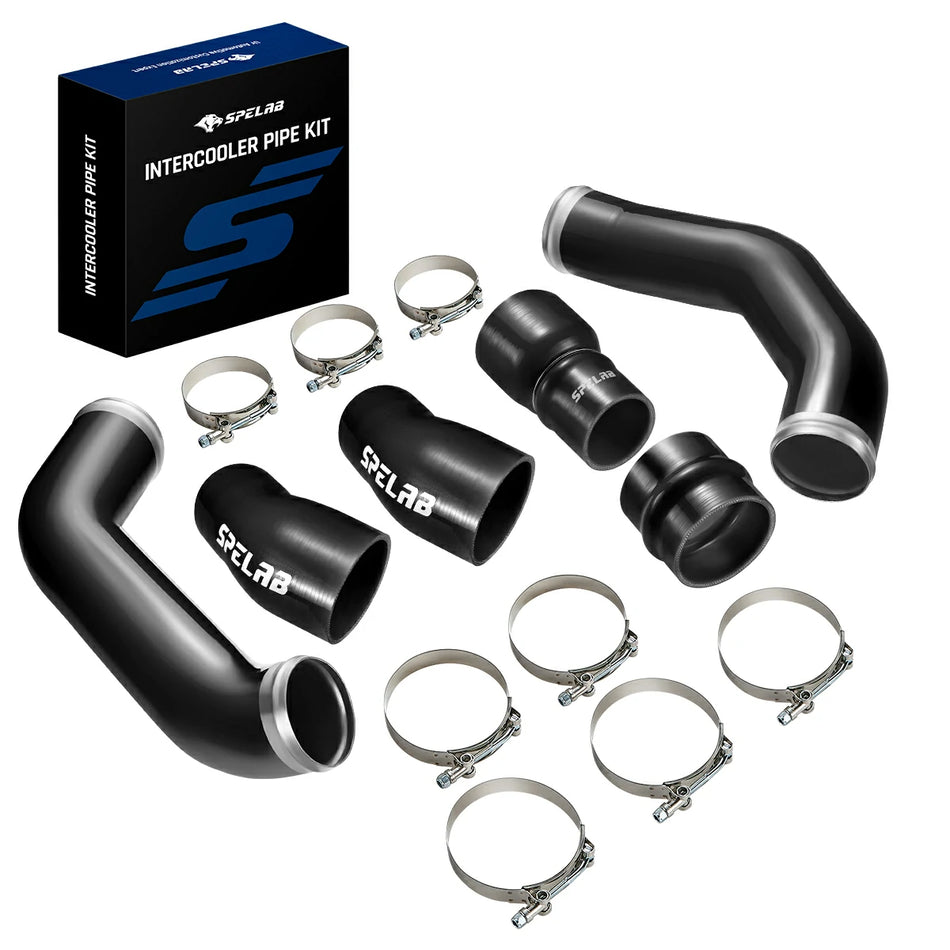
The original illustrations below show aftermarket catch-can components, not the factory filter location. Use the truck's component diagram when identifying the housing.
Which CCV Filter Part Number Should You Order?
Mopar 68002433AC is a published crankcase breather-filter reference for Ram 6.7L diesel applications. Confirm the current part and any supersession against the VIN before ordering, especially if the engine or valve cover has changed.
| Reference | What the source identifies | How to use it |
|---|---|---|
| Mopar 68002433AC | Mopar's wholesale product guide lists a 6.7L diesel crankcase breather filter. | Request a VIN-based parts lookup; confirm the current suffix rather than assuming older AB and current AC numbers are interchangeable. |
| Fleetguard CV52001 | Fleetguard application literature includes this reference for earlier ISB 6.7 Dodge Ram entries and other 6.7L engine applications. | Match the engine application and current manufacturer cross-reference, not just the words “6.7 Cummins.” |
| Fleetguard CV54003 | Fleetguard literature also lists this reference for B6.7 Dodge Ram applications. | Ask the supplier to confirm the exact engine and housing; the presence of another catalog number is not a universal interchange statement. |
Check the number on the old component, the sealing arrangement and whether the replacement includes the required seals. Packaging that lists many unrelated vehicles is not a substitute for a manufacturer application match. An open breather or reroute assembly is a different product from the original filter element.
Does Towing Mean You Should Replace the Filter Earlier?
Use the truck's applicable severe-use instructions for towing and idle-heavy work. Ahead of a long tow, review the service record and inspect fresh oil residue, damaged hoses or an unexplained increase in oil use.
A fresh oil spot after a towing trip deserves attention before the next loaded journey. A truck with complete records and no symptoms can remain on its applicable schedule unless manufacturer guidance calls for earlier work.
- Unknown service history: Confirm the installed filter and whether its mileage or time limit has passed.
- New leaks or rising oil consumption: Inspect the ventilation path and identify the oil source instead of assuming the filter is responsible.
- Freezing-weather concerns: Check hoses and outlets for obstruction, moisture accumulation or damage when ventilation symptoms develop.
- Long idling or short-trip use: Record engine use and check the applicable maintenance instructions rather than applying a guessed mileage conversion.
What Happens When Crankcase Ventilation Becomes Restricted?
The filter is one part of how crankcase gases leave the engine. A blocked hose or outlet can restrict ventilation even after a new filter has been installed.
A restricted ventilation system can increase crankcase pressure and contribute to oil leaks at vulnerable seals or gaskets. Replacing a restricted filter may correct that restriction, but a damaged seal can still require repair.
The possible consequences of delayed maintenance depend on the actual restriction and engine condition. Service history helps establish what is due; inspection establishes what else needs repair.
Don't Blame the CCV Filter Too Fast
Start with the oil source, its amount and whether it returns after cleaning. A light intake film needs different attention from repeated liquid-oil accumulation or a measurable increase in oil consumption.
| What you notice | Inspection focus | Useful next check |
|---|---|---|
| Fresh oil around the upper engine | Housing, hose connections and surrounding seals | With the engine off and cool, locate where fresh oil first appears. |
| Oil near the engine-to-transmission joint | Oil tracking from above versus a rear crankshaft seal leak | Trace the leak before authorizing major disassembly; include ventilation checks if pressure symptoms accompany it. |
| Oil inside intake or charge-air plumbing | Quantity, recurrence and oil-consumption trend | Inspect the ventilation system and turbocharger as indicated by the findings. |
| Rough idle or reduced power | Stored codes and operating conditions | Record diagnostic trouble codes and follow the applicable fuel, air and boost-system diagnostic procedures. |
| Repeated dipstick lifting or oil spray | Potentially serious pressure or oil-loss concern | Stop operating the truck if oil is spraying or escaping rapidly, and arrange ventilation and engine-condition inspection. |
If you have already noticed oil-cap movement or visible vapor, record any accompanying oil spray, dipstick movement and oil-consumption change for the technician. The useful next step is a pressure test under the engine manufacturer's specified conditions, rather than judging ring wear by how far a loose cap moves.
After correcting a confirmed ventilation restriction, recheck any abnormal pressure. Persistent excess pressure calls for investigation of blow-by and engine condition.
What Does Perform Service Mean on a Ram 6.7 Cummins?
Perform Service is a scheduled emissions-maintenance reminder, not a measured filter-blockage warning. The 2018 Ram diesel supplement includes CCV filter replacement among the possible maintenance items.
For older trucks, check the complete emissions service list. The 2012 Ram diesel schedule also lists exhaust gas recirculation (EGR) valve and cooler cleaning for Ram Truck applications at the 67,500-mile / 54-month service point, subject to its notes. Replacing only the CCV filter may leave other scheduled work outstanding.
A diagnostic trouble code is a separate finding. Record the complete code and use the diagnostic information for the truck's model year, configuration and software calibration; do not apply a generic P1507 or P1508 description to every 6.7L Cummins.
How Do You Reset the Perform Service Reminder?
After completing the required maintenance, use the Perform Service reset procedure specified for the truck's instrument cluster and model year. Ram's cited supplements direct owners to vehicle-specific service information for that procedure.
Before trying a pedal sequence found online, confirm that it resets Perform Service rather than the oil-life or fuel-filter counter. Ask the shop to identify the counter it reset, then check whether the original message returns at the next normal start. If it returns, verify the completed work and the correct reset routine before replacing more parts.
How to Check Whether Your 6.7 Cummins CCV Filter Needs Service
This is a pre-service inspection, not a cover-removal or replacement procedure. Leave the housing assembled during these checks.
- Identify the truck and installed system. Confirm the VIN, model year, engine and pickup or cab-chassis configuration. Note any aftermarket valve cover or ventilation hardware.
- Check the replacement record. Compare elapsed mileage and time with the applicable maintenance plan. Record any other emissions service due at the same point.
- Inspect accessible components. Park securely, switch the engine off and let it cool. Look for damaged hoses, loose connections, fresh leaks and obvious obstruction without opening the filter housing.
- Record symptoms and messages. Note oil-consumption changes, leak locations and the exact dashboard message. Record diagnostic trouble codes with a compatible scanner if a warning light is present.
- Choose the next service action. Arrange the specified filter service if it is due. Request leak-source diagnosis and the applicable pressure test when leaks or pressure symptoms are present, and confirm the replacement part by VIN before disassembly.
Keep debris out of open ventilation passages and reconnect every hose according to the applicable service information. After service, check for fresh leaks and record the date, mileage and installed part number.
What Goes Into a CCV Filter Replacement Quote?
A useful CCV service quote separates the replacement filter, any required seals, installation labor and diagnostic charges. An aftermarket reroute-kit price is not a valid estimate for factory-filter replacement.
- For routine service: Ask for the exact filter part number, parts price and labor charge.
- For an oil leak: Ask whether leak-source inspection and any pressure testing are included or billed separately.
- For an already modified truck: Identify the installed components before requesting replacement parts or a service estimate.
No single parts-and-labor figure covers all model years, locations and repair conditions. A written quote for the identified truck is more useful than a low advertised kit price that excludes diagnosis and installation.
Factory Filter, Catch Can or Reroute: Which Decision Are You Making?
For an unmodified road-driven Ram with scheduled service due, a correctly matched factory-style replacement filter is the straightforward maintenance choice. A higher odometer reading does not, by itself, justify changing the ventilation design.
Cummins CCV reroute kits change the ventilation arrangement rather than simply renewing the original filter. Before considering a design change, confirm the outlet routing, oil-separation method, service requirements and emissions compliance for the actual vehicle.
| Option | When it fits the decision | What still needs confirmation |
|---|---|---|
| Factory-style filter replacement | Scheduled service on an original ventilation system | Correct filter and seals, service procedure and vehicle-specific interval |
| Wider system diagnosis | Leaks, unusual oil consumption or pressure symptoms | Leak source, hose restriction, measured pressure and engine condition |
| A Cummins oil catch can | Oil-separation planning for a compatible aftermarket valve-cover setup | The linked product requires an aftermarket valve-cover arrangement and excludes dual-alternator trucks; verify all connections, drainage and compliance. |
| Reroute arrangement | A separate modification decision, not routine filter service | Fitment, discharge location, monitoring requirements and legality; “off-road” labeling alone is not approval. |


Frequently Asked Questions
Is 67,500 miles the correct CCV interval for every 6.7 Cummins?
No. The 2018 Ram diesel schedule lists 67,500 miles or 54 months, while the 2024 Ram 2500/3500 diesel schedule lists 75,000 miles or 60 months. Follow the exact vehicle's schedule and the first applicable limit.
Should I wait for symptoms before replacing the CCV filter?
No. Scheduled CCV filter replacement is due at the applicable mileage or time limit even if the truck runs normally. Symptoms before that deadline require inspection rather than waiting for the next service point.
Does heavy towing automatically require a shorter interval?
Heavy towing does not establish one shorter interval for every 6.7L Cummins. Check the truck's severe-use instructions, maintenance history and symptoms before deciding whether additional inspection or replacement is needed.
Does oil in the intake prove the CCV filter is clogged?
No. Oil in the intake does not identify a blocked CCV filter on its own. Consider the amount, recurrence, oil consumption, ventilation condition and possible turbocharger-related causes.
Where is the factory CCV filter on a 6.7 Cummins?
On the original serviceable-filter arrangement discussed here, the CCV element is enclosed in the breather housing at the top of the engine, above the valve-cover area. Identify the installed housing before removing a cover.
Is Fleetguard CV52001 the correct filter for every Ram 6.7 Cummins?
Do not use CV52001 as a universal order number. Fleetguard literature lists CV52001 for some applications and CV54003 for B6.7 Dodge Ram entries. Confirm the current replacement against the VIN, engine application and installed housing.
How do I clear Perform Service after CCV maintenance?
Complete all required maintenance, then use the Perform Service reset routine for the truck's model year and instrument cluster. Confirm the original message stays cleared after the next normal start; resetting oil life or fuel-filter life may leave a different reminder unchanged.
Does Perform Service confirm a bad filter?
No. Ram describes Perform Service as a scheduled emissions-maintenance reminder in the cited 2018 diesel supplement. Check the required maintenance and service records; the message does not measure filter blockage.
Can I clean the original filter instead of replacing it?
Do not assume the original CCV filter is washable. Use the specified replacement element unless the manufacturer identifies that exact component as serviceable and provides a cleaning procedure.
Does a catch can eliminate CCV maintenance?
No. A catch can introduces its own inspection, filtration and drainage requirements. The installed system's instructions determine service needs; a catch can does not automatically cancel maintenance of any original components that remain fitted.