Updated on August 06, 2026.
A cold air intake can make a diesel truck sound sharper and reduce restriction when the stock system is actually the bottleneck. It cannot repair a boost leak, weak turbo, dirty charge-air cooler, bad sensor, dragging brake, or poor tune. On a working truck, the right question is not whether the pipe looks better; it is whether the complete intake stays sealed, filters well, reads airflow correctly, and fits the truck's real duty cycle.
A daily-driven F-250, a Ram 3500 pulling a fifth-wheel, and an LML Duramax working in quarry dust need different filter protection and heat control. Open-element systems favor access and sound. Sealed airboxes and effective heat shields usually make more sense around Jobsite dust, standing heat, splash, snow, or slow Off-roading.
Key Takeaway: Buy by exact year, engine, sensor layout, filter design, and operating environment. Confirm the intake pipe does not change MAF housing geometry beyond what the calibration can support. If the truck already reaches commanded boost with a clean, sealed stock intake, expect sound and serviceability to be more noticeable than a universal horsepower or MPG gain.
Cold Air Intake, Intake Pipe, and Intake Manifold Are Not the Same Part
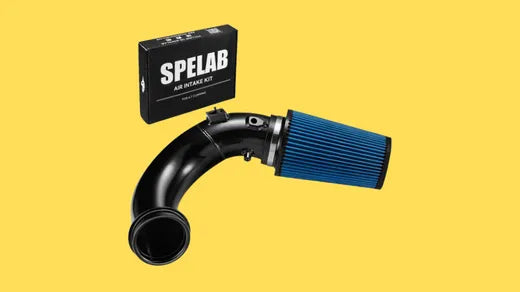
A cold air intake normally includes the filter, airbox or heat shield, inlet tube, couplers, clamps, and sensor provisions upstream of the turbocharger or throttle body. The intake manifold distributes air from the charge-air path or throttle body into the cylinders. An intercooler pipe carries compressed air between the turbocharger, charge-air cooler, and intake manifold.
Those parts affect different pressure zones and fail in different ways. Replacing an inlet tube will not fix a cracked intake manifold or split intercooler boot. Owners comparing complete diesel cold air intake kits should first identify which section of the air path is causing the restriction, leak, heat soak, or service problem.
On a 6.7L Cummins, downstream intake-horn hardware changes across Ram generations. Check the year-by-year intake horn fitment differences before assuming a cold-air tube, intake horn, grid-heater provision, sensor layout, or fuel-line clearance carries over from one model year to another.
What Actually Changes Airflow?
Airflow is controlled by the smallest effective area, bends, surface transitions, filter restriction, sensor housing, turbo inlet, and pressure drop across the complete path. A larger tube can reduce velocity and restriction at high flow, but an abrupt diameter change or poorly shaped sensor boss can create turbulence and bad readings.
| Physical parameter | Why it matters | What to verify |
|---|---|---|
| Inside diameter | A 3.5-inch round tube has about 9.62 square inches of area; a 4-inch tube has about 12.57 square inches, roughly 30.6% more | Turbo inlet, coupler, sensor housing, and calibration must still match |
| Filter surface and restriction | A larger filter may hold more dust before restriction rises | Published efficiency, dust capacity, rated airflow, and service method |
| MAF housing diameter and sensor clocking | Changing local air speed can alter calculated airflow and fueling | Exact housing geometry, sensor seal, arrow direction, and tune requirement |
| Heat shield or sealed airbox | Low-speed engine-bay heat can erase the benefit of an open filter | Fender-air access, hood seal, gaps, and clearance from hot-side parts |
| Tube material and finish | Wall thickness, weld quality, coating, bead shape, and corrosion resistance affect durability | Actual alloy, joint finish, bracket stiffness, and clamp landing |
Material names need a hard look. T304 is a stainless-steel grade, while 6061 is an aluminum alloy. A listing that calls a tube "T304 aluminum" mixes two different material systems. Ask the seller to confirm the actual alloy before using material as a buying reason.
Do Not Expect One Horsepower Number
No honest mechanic can promise the same percentage gain on a stock 7.3L Power Stroke, tuned 6.7L Cummins, and emissions-intact LML Duramax. Baseline restriction, turbo demand, calibration, elevation, temperature, dyno method, and supporting Mods all change the result.
Use before-and-after data under the same conditions. Record ambient temperature, intake-air temperature, commanded and actual boost, mass airflow where supported, engine speed, load, EGT, and vehicle speed. A chassis dyno or repeatable loaded road test is more useful than a loud turbo whistle. The deeper discussion of measured horsepower expectations explains why vehicle-specific evidence matters.
MPG claims need the same discipline. Hand-calculate at least three tanks with the same route, tire size, Payload, trailer, and driving style. Intake sound often makes a driver use more throttle, which can wipe out a small efficiency change. Review the real-world fuel economy limits before treating an intake as a payback Mod.
Diagnose the Stock Intake Before Buying Parts
- Inspect the filter: Look for excessive dirt, collapsed media, bad sealing, water tracks, or a filter that is wrong for the airbox.
- Check every joint: Flex the ducting and inspect clamps, resonators, boots, sensor seals, and the turbo inlet for splits or witness marks.
- Read stored and pending codes: Save freeze-frame data before clearing anything.
- Compare commanded and actual data: Watch boost, MAF, MAP, IAT, EGT, and exhaust backpressure where the platform reports them.
- Test under the complaint: A truck that feels fine empty may show restriction or a leak only while Towing uphill.
- Separate intake from downstream faults: Pressure-test the charge-air system when boost is low or oil mist marks a boot connection.
| Symptom or code | Likely checks | Do not assume |
|---|---|---|
| P0101 MAF range/performance | Filter condition, sensor orientation, housing diameter, intake leaks, contamination, wiring | The MAF sensor itself is automatically bad |
| P0102 or P0103 MAF signal fault | Connector seating, bent pins, harness tension, key-on sensor signal | A larger filter will correct an electrical problem |
| P0113 IAT circuit high | Unplugged or damaged IAT sensor, shared MAF/IAT connector, open circuit | Hot intake air is the only cause |
| P0299 or low boost under load | Inlet restriction, charge-air leaks, exhaust leaks, turbo control, exhaust backpressure | The cold air intake or turbo is the sole cause |
| Black smoke or lazy response | Air restriction, boost leak, sensor plausibility, injector balance, tune, DPF status | More intake diameter will fix a fueling or aftertreatment fault |
A trouble code identifies a circuit or operating condition, not a parts order. If the complaint started immediately after installation, return to the last work performed: sensor seal, connector, coupler engagement, clamp position, and tube clearance.
Dry, Oiled, Open, or Enclosed Filter?
| Design | Strength | Tradeoff | Best-fit use |
|---|---|---|---|
| OEM-style dry panel in a sealed box | Predictable filtration, quiet operation, strong splash protection | May be less serviceable or more restrictive on a heavily modified build | Daily driving, winter roads, dusty work, stock-power Towing |
| Dry cone with heat shield | Easy inspection and no filter oil near the sensor | Needs a good hood or fender seal to limit heat soak | Mixed street and work use |
| Oiled reusable cone with enclosure | Reusable and potentially high dust capacity | Over-oiling can contaminate the intake tract or MAF element | Owners willing to follow the exact cleaning and oiling procedure |
| Open-element cone | Access, sound, and low surrounding restriction | More exposure to engine-bay heat, dust, mud, snow, and splash | Controlled conditions where sound and access matter more than enclosure |
For a ranch truck or Off-roading rig, filter protection matters more than polished tubing. Check the sealing flange after every dusty trip, clean according to the filter maker, and inspect the clean side for dust trails. A pre-filter can catch large debris and splash, but it does not replace proper filter media or a sealed joint.
Fitment Decisions for Power Stroke, Cummins, and Duramax
| Platform and verified product range | Configuration to inspect | Practical decision |
|---|---|---|
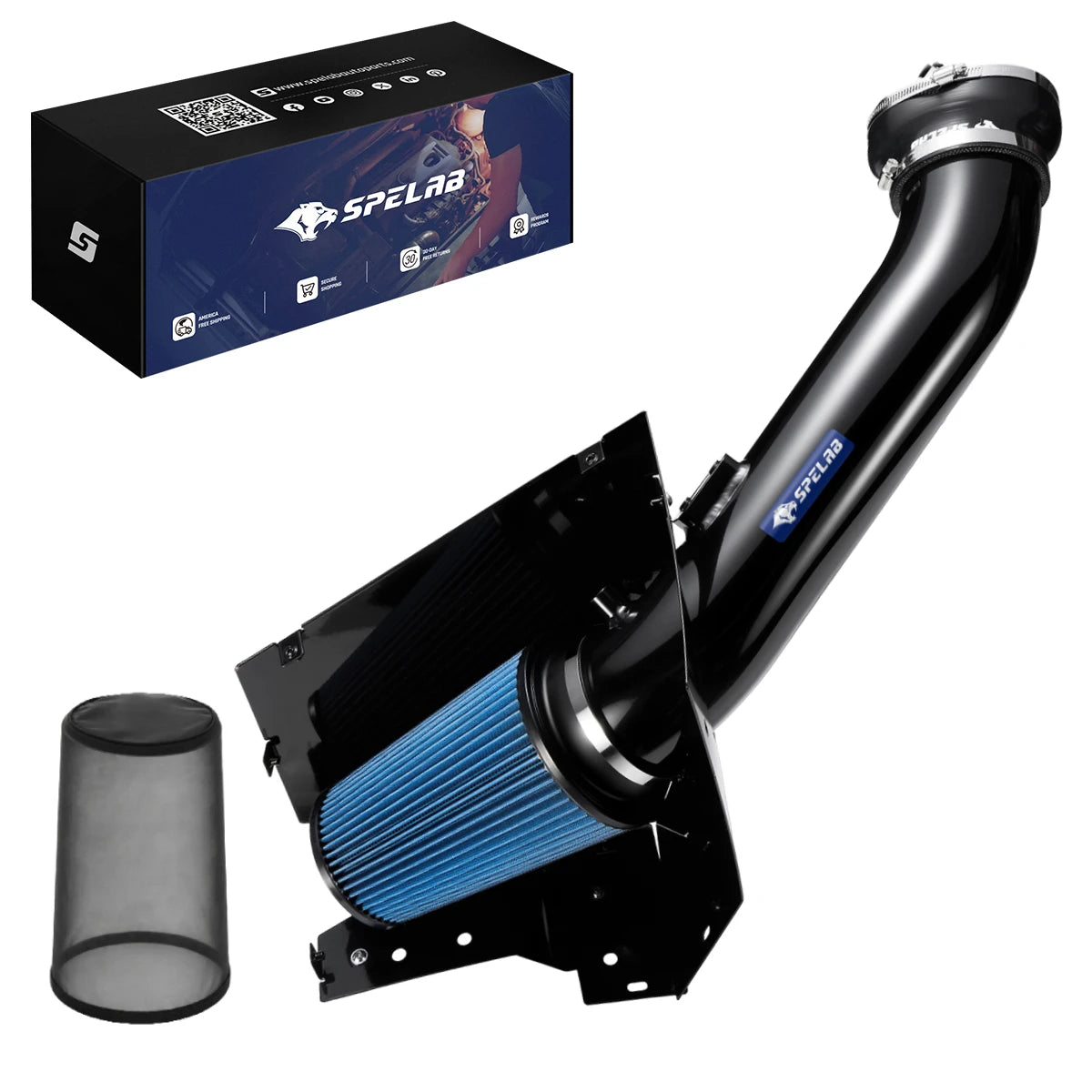
| 2011-2016 Ford F-250/F-350/F-450 6.7L Power Stroke | MAF/IAT provisions, turbo-inlet connection, heat shield, oiled filter, pre-filter, underhood clearance | Good candidate when Fitment is exact and the truck needs a shielded, serviceable intake for loaded use |
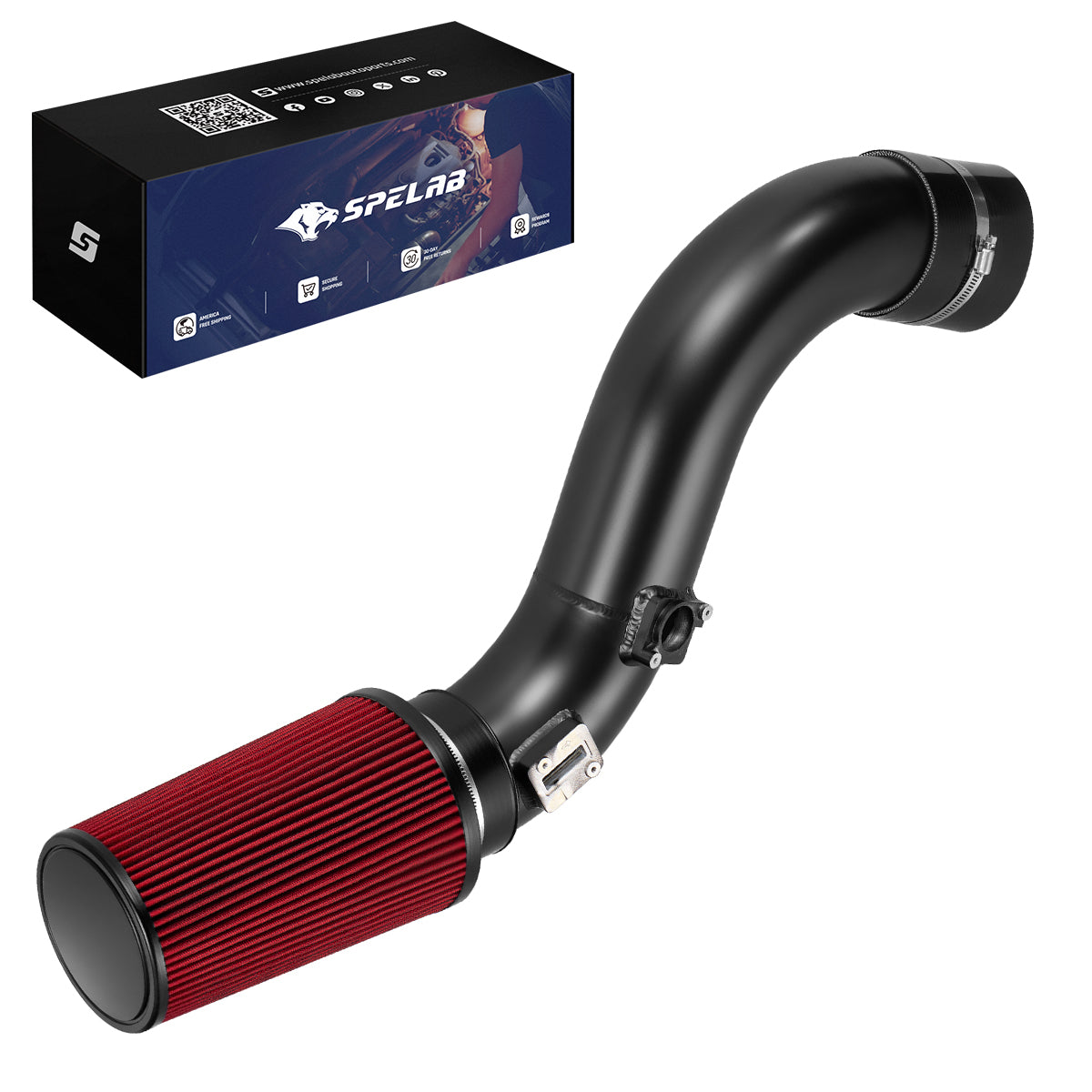
| 2007.5-2012 Ram 2500/3500/4500/5500 6.7L Cummins | Sensor bungs, bracket alignment, filter exposure, tube material, coupler engagement | Confirm the actual tube alloy and protect the open filter from Jobsite dust, mud, and water |
| 2013-2016 Chevrolet Silverado/GMC Sierra 2500HD/3500HD 6.6L LML Duramax | MAF housing, sensor seal, open-element filter location, no-heat-shield layout, turbo-inlet fit | Prioritizes sound and access; underhood heat and environmental exposure deserve extra scrutiny |
A similar engine badge does not make parts interchangeable. The 2011-2016 Power Stroke intake, 2007.5-2012 Cummins system, and 2013-2016 LML Duramax option use different tubes, mounts, sensor provisions, and filter layouts.
Ram owners who want a platform-specific follow-up can use the 6.7 Cummins intake diagnostic checklist to compare sensor issues, boost leaks, filter choice, and Towing heat before ordering.
Which Trucks Benefit Most?
- Towing: A truck operating near high airflow demand may benefit when testing confirms inlet restriction. A sealed cold-air path is more useful on a slow grade than an open filter soaking in underhood heat.
- Payload and fleet work: Service access and filter capacity matter, but downtime from a loose clamp or unfiltered leak costs more than extra turbo sound is worth.
- Off-roading: Favor filtration, pre-filter protection, Rigid brackets, and splash control. Inspect the clean side after dusty runs.
- Jobsite idling: An open element sits in hot air while the truck is stationary. Watch IAT and filter exposure before calling it a cold-air system.
- Extreme weather: Snow, slush, road salt, and standing water change the decision. Keep the inlet high and protected, and never drive through water deep enough to reach the filter.
- Modified builds: Larger turbochargers and revised calibration can increase airflow demand, but tube diameter, MAF scaling, and tune support must be planned together.
Installation Checks That Prevent Comebacks
- Inventory the tube, filter, shield, couplers, clamps, brackets, grommets, and sensor hardware before removing the stock system.
- Photograph sensor orientation and wire routing. Transfer each sensor with the correct seal and without touching the sensing element.
- Seat couplers fully and place clamps behind the tube bead. Identify the clamp before tightening: worm-drive and T-bolt clamps do not share one safe torque value.
- The three kits referenced here do not publish a clamp manufacturer, band series, or torque specification. Request the kit-specific value. If none is available, tighten each clamp evenly only until the coupler cannot rotate or pull off; stop if the coupler extrudes or a plastic sensor neck begins to distort.
- Keep the tube, filter, and shield clear of wiring, A/C lines, brake components, the fan, hot-side piping, and normal engine movement.
- Make sure no bracket puts side load on the turbo inlet or plastic sensor housing.
- After the first heat cycle, recheck every clamp for lost tension, coupler movement, dust tracks, and polished contact marks.
- If a code or drivability problem appears, smoke-test the intake path and compare scan data before changing the tune.
Not every cold air intake requires tuning, and not every larger tube is calibration-safe. The answer depends on whether the kit changes the metered housing, sensor position, airflow range, or other certified operating parameters.
Official Sources
- U.S. EPA vehicle and engine tampering enforcement policy
- California Air Resources Board aftermarket performance and add-on parts program
- Mopar owner manuals and vehicle information
- GM vehicle manuals and guides
FAQ
Q: Does a cold air intake add horsepower to every diesel truck?
A: No. Gains depend on stock restriction, airflow demand, turbo setup, calibration, temperature, and supporting Mods. A stock truck with a clean, well-sized factory intake may mainly gain sound and easier filter access.
Q: Does a diesel cold air intake improve MPG?
A: It may help only if it reduces a real restriction without causing heat soak, sensor error, or heavier throttle use. Verify with three hand-calculated tanks under comparable route, load, speed, and weather conditions.
Q: Can a cold air intake cause a P0101 code?
A: Yes. Air leaks, changed MAF housing geometry, incorrect sensor orientation, contamination, or wiring strain can trigger a MAF range/performance fault. Test the installation before replacing the sensor.
Q: Is an oiled or dry filter better for a work truck?
A: A dry filter is simpler around MAF sensors and dusty service. An oiled reusable filter can work well when cleaned, dried, and oiled exactly as specified. Over-oiling creates avoidable contamination risk.
Q: Is a 4-inch intake always better than a 3.5-inch intake?
A: No. The 4-inch tube has more area, but the turbo inlet, sensor housing, bends, filter, and calibration still control the system. Oversizing without matching those parts can create poor sensor behavior without a useful gain.
Q: Should an Off-roading truck use an open-element intake?
A: Only with careful dust, mud, and splash protection. A sealed airbox or properly fitted heat shield and pre-filter is usually the lower-risk choice for harsh environments.
Q: Does installing a cold air intake require tuning?
A: Not always. A direct-fit system that preserves sensor housing geometry may work with the stock calibration. A larger metered housing, relocated sensor, or high-flow modified build may require vehicle-specific calibration and emissions-compliant documentation.