Updated on July 17, 2026.
A cold air intake on a 6.7L Cummins is worth considering when the factory air path is restrictive, the filter box is tired, or the truck needs cleaner airflow support for towing, payload, jobsite use, or a mild bolt-on setup. It is not magic horsepower in a box; the real value comes from fitment, filter area, tube shape, heat control, sensor stability, and how the rest of the turbo diesel system is set up.
Key Takeaways
- A 6.7 Cummins intake upgrade can improve airflow and throttle feel, but gains depend on tune, turbo demand, filter condition, intake temperature, and exhaust restriction.
- Do not treat percentage horsepower claims as guaranteed. Use them as a reason to inspect the whole air path, not as a promise for every Ram 2500, 3500, 4500, or 5500.
- MAF, MAP, IAT, and boost data can affect fueling and diagnostics on equipped trucks, so sensor housing geometry and filter service matter.
- Dusty jobsite and farm-road trucks usually need filter sealing and clean service habits more than extra intake sound.
- Before buying parts, rule out boost leaks, collapsed boots, plugged filters, sensor contamination, VGT problems, and DPF restriction where applicable.
What a Cold Air Intake Does on a 6.7 Cummins
A cold air intake gives the turbocharger a less restrictive path to pull filtered air, but it only helps when the setup keeps heat, dirt, vibration, and sensor problems under control.

On a turbo diesel, air demand rises when the truck is pulling a trailer up a grade, hauling payload through summer heat, or working slow around a dusty site. A better intake path can reduce restriction before the compressor, but it cannot fix a weak turbo, bad sensor data, clogged intercooler, soot-loaded intake tract, plugged DPF, or boost leak.
The practical question is not just whether a 6.7 Cummins cold air intake kit can move more air. The better question is whether the truck's actual use gives that airflow a place to matter.
If you want the simple airflow theory before getting into this Ram-specific guide, the article on airflow basics for diesel trucks lays out how restriction, sound, temperature, and drivability fit together.
Realistic Gains and Buying Decisions
Cold air intake gains on a 6.7 Cummins are conditional: a restrictive or neglected stock system leaves more room for improvement than a clean, healthy, already well-fed truck.
Some intake product pages cite numbers like 7-10% horsepower or 6-8% torque improvement. Treat those as test-context claims, not guaranteed results. A stock daily, tuned tow rig, high-mileage ranch truck, and off-road-only build do not pull air through the same restriction window.
| Use Case | When an Intake Helps Most | Watch Before Buying | Practical Call |
|---|---|---|---|
| Stock daily driver | Old filter box, poor service access, cracked inlet parts | Do not expect a big power jump by itself | Worth it for serviceability, sound, and a fresh sealed air path |
| Towing or payload truck | Restriction shows up under sustained load | IAT, EGT, boost, trans temp, and tune quality | Judge it loaded, not just around town |
| Dusty jobsite or farm truck | Filter is easy to inspect and seals cleanly | Dust tracks past the filter, poor clamp seating | Choose the filter and housing by environment first |
| Tuned or airflow-supported truck | Turbo demand and intake restriction are already higher | Charge-air leaks, exhaust restriction, sensor data | Intake makes more sense as part of a system plan |
| High-mileage truck with weak power | Only after the old intake is proven restricted or damaged | VGT actuator, plugged DPF, boost leaks, fuel-side issues | Diagnose first, then upgrade |
For broader number expectations, this guide to real horsepower expectations is more useful than chasing one headline percentage.
Sensor and Diagnostic Checks
On equipped 6.7 Cummins trucks, airflow-related sensors and diagnostic logic can care about clean air, stable flow, correct housing shape, and accurate temperature or pressure readings.
Depending on year and calibration, MAF information can be tied into EGR flow monitoring or diagnostic checks, while MAP, IAT, and boost data can affect fueling decisions and fault tracing. That does not mean every larger tube or aftermarket housing will trigger a check engine light. It means air turbulence, sensor placement, filter oil contamination, and poor sealing can make diagnosis messy.
- P0101-style airflow faults should be diagnosed with live data, wiring checks, sensor condition, and intake sealing, not guessed from the part name.
- Oiled filters should be serviced exactly as instructed: light oil, proper dry time, and no over-oiling near sensitive sensors.
- Dry filters are often cleaner to service for dusty jobsite or farm-road use, and they reduce the chance of oil-related sensor contamination.
- Where equipped, active air box doors, winter fronts, or air control hardware should be checked before blaming the intake tube.
- If the tube or boot collapses under load, fix that mechanical restriction before chasing tuning.
Do Not Blame the Stock Intake Too Fast
A stock intake can be restrictive, but weak power, smoke, turbo lag, and heat complaints often come from problems elsewhere in the diesel airflow, exhaust, or fuel system.
I would not tell a shop or DIY owner to throw parts at a 6.7 Cummins just because it feels soft pulling a grade. Start with the ugly stuff: loose clamps, oily residue around intercooler boots, split charge pipes, plugged filters, damaged sensors, and exhaust restriction.
| Symptom | Do This First | If That Checks Out |
|---|---|---|
| Lazy throttle response | Inspect filter, inlet boot, clamps, and sensor data | Check VGT actuator behavior and fuel-side data |
| Higher EGT under load | Compare IAT, boost, EGT, and load on the same route | Look at tune quality, DPF restriction where applicable, and cooling health |
| Whoosh, whistle, or oil mist | Pressure-test charge-air plumbing and inspect intercooler boots | Move to turbo, manifold, and exhaust-side checks |
| Dust inside the tube | Stop driving hard and inspect filter seal, housing fit, and clamp footprint | Replace damaged sealing parts before performance testing |
| Weak hot-weather power | Check filter heat exposure and charge-air cooling | Use loaded data logs instead of guessing from sound |
Fitment and Filter Choice
The right intake choice depends on the Ram year range, engine bay layout, emissions equipment, sensor provisions, filter service needs, and how dirty the truck's real work environment is.
For the 2007.5-2012 Ram 2500, 3500, 4500, and 5500 6.7L Cummins, verify the product fitment before judging price or claims. A kit that looks close in photos can still miss on brackets, couplers, sensor ports, battery/washer tank clearance, or hood-seal layout.
Dry and oiled filters both have their place. A dusty farm road truck usually leans toward a dry filter because service is cleaner and sensor contamination risk is lower. An oiled filter can work well, but only if it is cleaned, lightly oiled, dried, and reinstalled by the book.
If the truck already has intake-side support, such as a 6.7 Cummins intake manifold, the filter and tube choice should match the whole airflow plan. For owners comparing platforms and year ranges, Dodge Ram diesel truck parts pages help separate model-specific parts from universal-looking upgrades.
Towing Heat and Charge-Air Support
For a working 6.7 Cummins, intake air, charge-air piping, intercooler efficiency, exhaust restriction, and calibration all show up together when the truck is loaded.
If the rig spends summer weekends pulling a fifth-wheel through long grades, judge the intake by loaded data and post-install inspection. Sound at idle tells you almost nothing about IAT, EGT, boost consistency, or whether the filter is staying sealed after heat cycles.
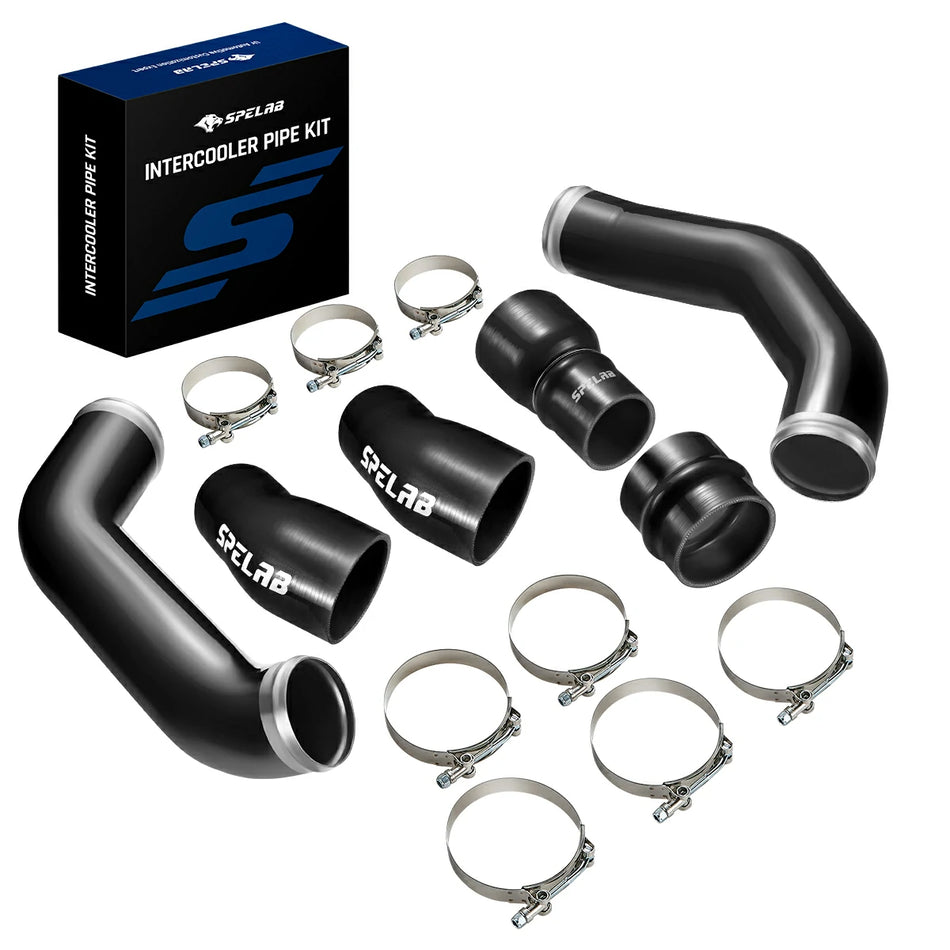
When the truck is already pushing hard on long grades, Cummins intercooler pipe kits and charge pipe sealing may matter as much as the pre-turbo air path. For broader heat-load context, use this diesel maintenance guide for towing heat checks before blaming one part for every hot-weather power complaint.
Installation Checks That Prevent Problems
A clean intake install should end with a sealed, supported, sensor-safe air path that does not rub, collapse, whistle from leaks, or pull unfiltered dust.

- Compare every coupler, clamp, bracket, tube, and sensor provision against the truck before removing the stock parts.
- Inspect intercooler boots for oil tracks, swelling, cracks, or loose clamp marks.
- Clean sensor areas carefully and keep filter oil, dust, and shop debris away from electronics.
- Seat the filter fully and check for a clean clamp footprint around the inlet.
- Verify tube clearance near the hood, battery area, washer reservoir, fender, and hot-side components.
- Start the engine, listen for leaks, then recheck clamps after the first heat cycle.
- Road-test under the truck's real use: empty cruise, loaded acceleration, towing grade, or jobsite crawl.
If crankcase oil mist is already coating the intake tract, a 6.7 Cummins CCV reroute kit may be part of the broader cleanup plan, but it should be chosen with road-use rules and truck configuration in mind.
Road-Use and Emissions Note
Air intake changes can affect inspection, emissions-related equipment, warranty decisions, and sensor behavior depending on the truck and location.
If the truck is street-driven, keep emissions equipment, sensor placement, and local rules in mind before combining intake parts with tuning, delete parts, or off-road-only hardware.
FAQ
Q: Does a cold air intake add horsepower to a 6.7 Cummins?
A: Sometimes, but not by a fixed number. Gains depend on restriction, tune, turbo demand, temperature, and supporting parts.
Q: Is it worth it for towing?
A: It can be if the kit seals well, controls heat, and reduces restriction under load. Watch loaded IAT, EGT, boost, and filter sealing.
Q: Can an oiled filter cause sensor problems?
A: It can if over-oiled or installed wet. Service it lightly, let it dry, and keep oil away from sensors and housings.
Q: What should I check before installing one?
A: Check year fitment, sensor ports, filter seal, boot condition, clamp quality, charge-air leaks, and engine bay clearance.
Q: Can a bad intake install hurt the truck?
A: Yes. Poor sealing can pass dust, bad routing can rub parts, and unstable sensor flow can complicate diagnostics.

About the Author
John Lee
Mechanical Engineer | 10+ Years Experience
John has spent the last decade engineering and testing high-performance automotive components. Specializing in drivetrain durability and thermal management across Powerstroke, Cummins, and Duramax applications, he bridges the gap between OEM limitations and aftermarket performance. His philosophy: "Factory parts are just a starting point."