Updated July 15, 2026.
An ATV and a side-by-side can reach the same trailhead, but they solve different problems once the pavement ends. An ATV is compact, rider-active, and usually built around one person. A UTV or SxS uses a steering wheel, side-by-side seating, occupant restraints, and often a cargo bed.
The right choice depends less on engine size than on who is riding, how much gear must move, how narrow the route is, and how the machine will get home. A full-size diesel pickup may have plenty of pulling power, but that does not mean every ATV fits safely in its bed or every loaded UTV trailer stays within the truck's ratings.

ATV vs. UTV vs. SxS: What Is the Actual Difference?
ATV stands for all-terrain vehicle. UTV commonly means utility task vehicle, while SxS describes the side-by-side seating arrangement. In everyday shopping, UTV and SxS are often used interchangeably. The safety industry may also call many recreational side-by-sides ROVs, or recreational off-highway vehicles.
| Decision Point | ATV | UTV or SxS |
|---|---|---|
| Riding position | Straddle seat; the rider shifts body weight | Bucket or bench seat with occupants seated beside each other |
| Controls | Handlebars, hand controls, and foot controls depending on model | Steering wheel and automotive-style pedals |
| Passengers | Usually one rider; a passenger only on a manufacturer-designated two-person model | Two or more designated seating positions, depending on model |
| Occupant equipment | No enclosed occupant structure; protective riding gear is essential | Seat belts and an occupant protective structure; helmets are still recommended |
| Cargo | Front or rear racks on many utility models | Often a fixed or tilting cargo bed |
| Width and access | Generally narrower and easier through gates or tight timber | Usually wider; route limits must be checked before the trip |
| Typical strength | Solo mobility and compact transport | Passengers, gear, work accessories, and weather options |
Those are category-level differences, not ratings. Width, curb weight, payload, towing capacity, seat count, and cargo volume vary widely. The data plate and owner manual for the exact model outrank any general comparison chart.
What Is an ATV Best At?
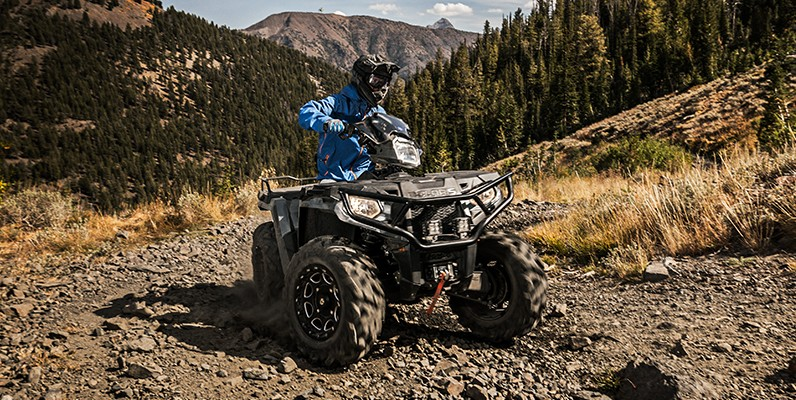
An ATV is ridden rather than driven. The operator straddles the seat, steers with handlebars, and actively moves body weight as terrain changes. That physical involvement is part of the appeal, but it also means an ATV should not be treated like a small four-wheel-drive car.
For a rancher checking fence, a hunter moving alone through narrow timber, or a trail rider using width-restricted routes, the compact footprint can be the deciding advantage. It is also quick to mount and dismount when the job involves frequent stops.
An ATV is not automatically the cheaper answer once the whole household is considered. One quad may cost less than one multi-seat side-by-side, but buying several machines, several sets of riding gear, and a larger trailer can erase that advantage.
Choose an ATV when these needs dominate
- One person normally rides at a time.
- Gates, trees, bridges, or designated routes make width critical.
- You want direct, rider-active handling.
- Cargo can stay within the model's rack and load limits.
- The machine's measured dimensions and weight suit your transport setup.
What Is a UTV or Side-by-Side Best At?

A UTV places the driver and passenger in designated seats with a steering wheel, pedals, seat belts, and an occupant protective structure. Utility-focused models may add a dump bed, receiver, winch provision, roof, windshield, doors, or work accessories. Sport-focused SxS models may prioritize suspension travel and speed instead.
The cabin layout makes a side-by-side attractive for a couple inspecting acreage, a crew carrying tools around a jobsite, or a hunting party moving people and gear together. The tradeoff is size. A wider, heavier machine needs more storage space, more trailer capacity, and routes that permit its vehicle class and width.
Choose a UTV or SxS when these needs dominate
- More than one occupant needs a designated seat.
- A cargo bed is more useful than front and rear racks.
- Farm, ranch, property, hunting, or worksite tasks require tools and supplies.
- A roof, windshield, doors, or enclosed-cab option matters.
- You have verified trail access, storage room, and transport capacity.
Which One Fits Real Off-Road and Work Scenarios?
| Owner Scenario | Likely Better Starting Point | What Can Change the Answer |
|---|---|---|
| Solo trail riding in tight terrain | ATV | Physical comfort, route rules, and the exact trail difficulty |
| Family recreation | Multi-seat UTV | Every occupant must fit a designated seat and restraint system |
| Fence checks or frequent solo stops | ATV | Tool volume and weather exposure |
| Hauling feed, firewood, game, or tools | Utility UTV | Actual payload, bed, terrain, and trailer ratings |
| A route marked for vehicles 50 inches or less | Usually an ATV or qualifying narrow SxS | The route's official vehicle-class rules and measured overall width |
| Crew transport around private property | UTV | Seat count, payload, grade, and surface conditions |
A 50-inch badge is not a universal trail pass. Some public routes use that width class, while others use different vehicle definitions, seasonal restrictions, permits, or closures. Check the current Motor Vehicle Use Map or local land-manager rules before loading the trailer.
Can an ATV or UTV Go in a Pickup Bed?
Sometimes, but never assume a machine will fit because the tow vehicle is a full-size diesel pickup. Crew-cab trucks may have a standard or short bed instead of an eight-foot bed, and dimensions vary by make, model, and year. Measure the machine's overall width and length, tire spacing, the distance between the pickup's wheel wells, usable bed length, ramp approach, tie-down locations, and loaded weight.
A compact or midsize ATV may fit a compatible bed, but its rear tires can still land on the tailgate. Check the truck manufacturer's bed and tailgate instructions before loading. Most multi-seat UTVs and wide sport side-by-sides are too large for a conventional pickup bed and are normally transported on a properly rated trailer or a purpose-built transport deck. Measure anyway; category names are not dimensions.
If the ATV rides in the bed while the truck also pulls a bumper-pull camper, check turning clearance at the tightest expected articulation. A lowered tailgate can interfere with the trailer's tongue jack, power-jack head, propane enclosure, battery box, or other tongue hardware. If the clearance and every weight rating cannot be verified, use another transport arrangement.
When transporting either machine on a trailer
- Use the machine's actual loaded weight, not a vague category estimate.
- Confirm trailer GVWR and available payload after subtracting the trailer's empty weight.
- Verify tow-vehicle payload, axle ratings, towing limits, hitch rating, and tongue-weight limits.
- Connect the safety chains and breakaway system where required, and confirm that the coupler and tow setup are correctly matched.
- Use rated straps and manufacturer-approved tie-down points; do not rely on a loose winch line as the only restraint.
- Check tires, wheel fasteners, lights, brakes, and load security before departure and again after the first stop.
For a diesel-truck owner, the machine is only one part of the load. Fuel, passengers, toolboxes, bed accessories, spare tires, and trailer tongue weight all consume available capacity.
Ford Super Duty owners using a trailer should also prepare the tow vehicle before a loaded trip, including tires, brakes, fluids, hitch hardware, and current fault warnings.
Do Not Compare Cargo and Towing Numbers Without Context
A larger UTV often carries more than an ATV, but category labels do not establish a safe limit. Payload may include the driver, passengers, accessories, cargo, and sometimes tongue weight. Adding a roof, windshield, winch, spare tire, cab enclosure, or tracks reduces the capacity left for people and gear.
The same caution applies to an ATV rack or small utility trailer. Never turn a rack rating into a guess, stack heavy cargo high, or assume four-wheel drive cancels the effect of added mass. Extra load changes steering, braking distance, side-hill stability, and climbing behavior.
Safety Differences That Matter More Than Horsepower
- Wear a properly fitted helmet, eye protection, gloves, boots, long sleeves, and long pants.
- Use every UTV seat belt and keep arms and legs inside the occupant area.
- Never carry people in a cargo bed.
- Do not place a child on an adult-size ATV; follow the manufacturer's age and size label.
- Use a designated seat only. A rack, bed edge, or single-rider ATV seat is not a passenger position.
- Take hands-on training for the vehicle type. ATV body movement and UTV rollover dynamics require different habits.
- Follow the owner manual for tire pressure, loading, slope limits, water crossings, towing, and maintenance.
Road legality also varies by state, county, municipality, and land manager. Registration, an OHV decal, lights, mirrors, or insurance do not automatically make a machine legal on every public road. Verify the rules for the exact road and riding area rather than relying on a seller's summary.
What Does Each Option Really Cost?
Purchase price is only the opening number. Before comparing two machines, add the equipment that the intended use actually requires:
- Helmet and protective gear for every rider
- Trailer, ramps, rated tie-downs, hitch equipment, and storage
- Registration, permits, insurance, and training where applicable
- Winch, windshield, roof, doors, plow, sprayer, cargo box, off-road LED lighting, or other task-specific accessories
- Tires, belt or drivetrain service, fluids, filters, battery care, and repairs
A basic ATV can be the economical choice for one rider. A multi-seat UTV can make better financial sense when one machine must move several people and their equipment. The honest comparison is total ownership cost for the job, not the lowest showroom tag.
FAQ
Q: What is the main difference between an ATV and a UTV?
A: An ATV has a straddle seat, handlebars, and rider-active controls. A UTV has a steering wheel, side-by-side seats, seat belts, and an occupant protective structure, often with a cargo bed.
Q: Is a SxS the same as a UTV?
A: The terms overlap in normal shopping language. SxS describes the side-by-side seating layout, while UTV commonly describes a utility task vehicle. Some sport-oriented side-by-sides are better described as recreational off-highway vehicles than work-focused UTVs.
Q: Is a UTV safer than an ATV?
A: Neither category is automatically safe. They have different handling and injury risks. A UTV's structure and restraints work only when occupants use the seat belts, stay inside the vehicle, wear helmets, and drive within the machine's limits.
Q: Can two people ride on an ATV?
A: Only if the ATV manufacturer designed it as a two-person model with a designated passenger position. Do not add a passenger to a single-rider ATV simply because the seat looks long enough.
Q: Will an ATV fit in my pickup bed?
A: It may, but measure both the machine and bed and verify weight, ramp, tailgate, and tie-down requirements. Full-size pickup does not mean universal ATV fitment.
Q: Do I need a trailer for a UTV?
A: Most side-by-sides are transported on a trailer because of their width and weight, but the required trailer depends on the exact machine. Use measured dimensions and loaded weight to select trailer deck size, payload, axles, tires, brakes, and tie-down capacity.
Q: Can I tow a travel trailer while carrying an ATV in the truck bed?
A: Only when the truck remains within payload, axle, hitch, towing, and combined-weight limits and the loaded ATV can be secured correctly. Verify that the lowered tailgate cannot contact the trailer jack or other tongue hardware through the full turning range.
Q: Can I drive an ATV or UTV on public roads?
A: Rules vary by location and route. Check state and local vehicle laws plus the current rules or Motor Vehicle Use Map for the land you plan to enter. Equipment changes alone do not guarantee road legality.
Choose Around the Job, Not the Badge
An ATV is the focused tool for compact, solo, rider-active travel. A UTV or SxS is the broader platform for passengers, cargo, accessories, and worksite use. Neither answer is universal. Put the expected occupants, route width, cargo, transport plan, ratings, and safety requirements on paper, and the better machine usually becomes obvious before a salesperson starts discussing horsepower.
Before the first loaded highway trip, repeat the restraint and tire check and know how to handle a tire failure while towing. That preparation matters more than another accessory added at the last minute.