Updated on July 17, 2026.
If your heavy-duty pickup starts clicking, squeaking, clunking, humming, grinding, whining, or rattling, treat the sound as a clue, not a diagnosis. A tow rig, payload truck, ranch pickup, or jobsite diesel puts more load through tires, brakes, leaf springs, U-joints, transmission mounts, exhaust hangers, and axle parts than a light commuter ever will.
Key Takeaways
- Truck noise diagnosis starts with when the sound happens: idle, cold start, takeoff, braking, turning, bumps, highway speed, towing, payload, or shifting.
- Grinding, exhaust fumes, steering looseness, hot brake smell, or a heavy metal clunk should be inspected before the next loaded trip.
- Wheel bearings, aggressive tire tread, brakes, leaf springs, U-joints, carrier bearings, slip-yoke splines, transmission fluid, and differential oil are common first checks.
- A bolt-on upgrade only makes sense after the worn, loose, leaking, rubbing, or overheated part has been confirmed.
- Fifth-wheel towing, payload squat, salt-belt corrosion, washboard roads, and off-road articulation can expose noises that stay quiet on an empty test drive.
Heavy-Duty Pickup Noise Diagnosis by Sound
The fastest way to narrow down a truck noise is to match the sound to load, speed, throttle, steering angle, braking, road surface, and suspension movement.
| Noise | When It Happens | Likely System | First Check | Truck-Specific Clue |
|---|---|---|---|---|
| Clicking or chirping | Takeoff, low-speed turns, or throttle tip-in | U-joint, axle shaft, hub, loose brake hardware, stone in tread | Inspect U-joint caps, rust dust, hub play, brake clips, and tire tread | A dry U-joint can chirp before it clunks, especially after winter road salt |
| Squeaking | Payload in bed, over bumps, or during brake apply | Leaf spring pads, shackle bushings, brake wear tab, ball joints, shock bushings | Check spring isolator pads, shackles, bushings, pad thickness, and dust boots | Payload can make spring slap or shackle squeak show up on rough jobsite roads |
| Clunking | Takeoff, shifting from drive to reverse, bumps, or trailer hookup movement | U-joint, slip-yoke splines, carrier bearing, leaf spring hardware, rear axle U-bolts | Inspect driveline play, shaft support, spring plates, U-bolt torque, and mounts | A fifth-wheel or gooseneck can make normal driveline lash feel sharper |
| Humming or growling | Highway speed, steady cruise, or slight lane changes | Tire tread, wheel bearing, differential bearings, carrier bearing | Compare tread wear, rotate tires, check hub play, inspect gear oil, listen under load | Mud-terrain tires can mimic bearing noise, but bearing growl often changes with side load |
| Whining | Acceleration, deceleration, towing grades, or gear changes | Transmission, differential ring and pinion, power steering, alternator bearing | Check ATF, gear oil, fluid smell, leaks, temperature data, and gear pattern clues | Axle whine often changes between pull and coast; tire hum usually tracks road speed |
| Rattling | Idle, cold start, bumps, washboard roads, or one rpm range | Heat shield, exhaust hanger, clamp, skid plate, spare tire, bed hardware | Inspect exhaust mounts, shields, clamps, crossmembers, skid plates, and cargo mounts | Rusty exhaust flanges and thin heat shields are common salt-belt noise makers |
| Grinding | Braking, turning, hub load changes, or shifting | Brake hardware, hub bearing, rotor contact, backing plate, transmission damage | Stop and inspect brakes, hubs, wheel clearance, fluid leaks, and metal contact points | Loaded braking makes a small brake problem louder and hotter |
Cab, Bed, and Body Rattles
Cab and body noises are usually lower risk than brakes or driveline noise, but loose body hardware can still hide under a truck that works hard.

Keep the basic door checks: hinge pins, latch striker, weatherstrip, and loose trim. Then move to truck-specific stuff: bed bolts, toolbox mounts, running boards, headache rack hardware, fifth-wheel rails, tailgate cables, spare tire carrier, and hitch components. A loose bed accessory can sound like a suspension knock from inside the cab.
On salt-belt trucks, rust around brackets, hinge mounts, exhaust hangers, and crossmembers can turn a small rattle into a repeating underbody noise. Look for shiny witness marks, orange dust, missing isolators, and hardware that has walked loose.
Tire, Wheel Bearing, and Brake Noise
Speed-sensitive humming, thumping, squealing, or grinding should be checked around the tire, hub, and brake corner before blaming the engine or transmission.
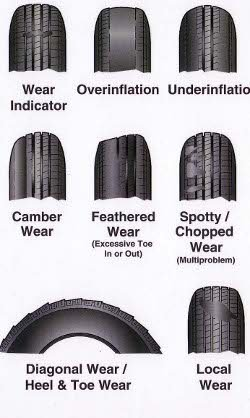
Uneven tread can hum like a bad wheel bearing. A cupped all-terrain tire, separated belt, low pressure, overloaded tire, or aggressive mud-terrain tread can get loud at highway speed. Rotate the tires, inspect the tread blocks, and note whether the sound changes with lane changes or side load.

Brake noise gets priority on a loaded pickup. A light squeal can be pad material or a wear indicator, but grinding, pulsing, pulling, dragging, or a hot-wheel smell means pads, rotors, calipers, slide pins, backing plates, wheel bearings, and brake hardware need a real inspection. Bigger tires and trailer weight can make small brake problems show up faster.
Leaf Spring, Suspension, and Steering Noise
A clunk, slap, pop, or squeak over bumps usually means something is moving more than it should in the suspension, steering, frame-mounted hardware, or rear spring pack.
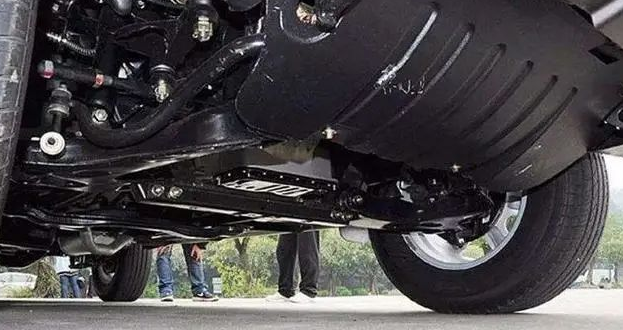
Start with sway bar links, control arm bushings, ball joints, tie rods, shock mounts, track bar joints, leaf spring eye bushings, shackle bushings, spring isolator pads, rear axle U-bolts, bump stops, and loose skid plates. A payload truck may stay quiet empty, then start talking once the rear suspension squats and the spring pack loads up.
Off-road use adds another layer. Articulation can make a tire rub a liner, a sway bar touch a bracket, a shock body contact a guard, a skid plate tap the frame, or an exhaust section hit a crossmember. Check static clearance and dynamic clearance; the problem may only appear when the suspension is compressed, twisted, or loaded diagonally.
If a high-mileage truck has both suspension noise and axle noise, read the high-mileage teardown clues before blaming one shiny part. Frame mounts, bad bushings, heat, and neglected gear oil can stack together.
Driveline, Transmission, Transfer Case, and Differential Noise
Whining, growling, or clunking that changes with throttle, gear selection, takeoff load, or coast-down points toward the driveline more than the body.
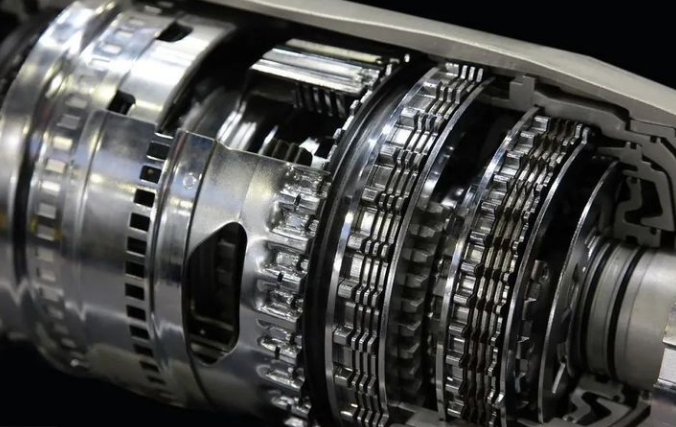
Transmission whine can come from low fluid, burnt fluid, pump noise, bearing wear, converter issues, cooler-flow problems, or a mount letting the case shift under torque. On tow rigs, overheated ATF makes small problems show up faster. If a Ford Super Duty starts whining under load, a 6R140 transmission pan is not the first diagnostic step, but transmission temperature, fluid condition, and debris on the magnet are worth checking.
Takeoff clunk deserves a driveline check before parts swapping. Inspect U-joint caps, rust dust near the bearing cups, carrier bearing rubber, center support alignment, slip-yoke spline movement, pinion yoke play, rear axle U-bolts, engine mounts, transmission mounts, and transfer case mounts. Do not call it backlash until the loose hardware and shaft movement have been checked.
Differential noise has its own rhythm. Ring and pinion whine can change between acceleration and deceleration. Carrier bearing noise may grow with speed. A clunk on throttle tip-in can be backlash, U-joint play, loose mounts, or worn slip-yoke parts. If service confirms the axle cover is damaged, leaking, or due for a fluid change, differential covers and a platform-specific Ford F250/F350 differential cover can be part of the repair plan.
Fluid leaks around cooler fittings, lines, or the radiator area deserve attention before the transmission starts making noise. The fluid leak diagnosis guide covers line fittings, hose types, and when a seep becomes a real risk.
Exhaust Rattle, Drone, or Sudden Loud Noise
An exhaust noise becomes more than an annoyance when it involves leaks, fumes, loose hangers, broken clamps, cracked pipe, or heat shield contact.
A loose heat shield often rattles at idle or at one narrow rpm. A broken hanger can let the pipe tap the frame over washboard roads. A cracked manifold, leaking flange, or open gasket can tick on cold start and quiet down as metal expands. If you smell exhaust in the cab, stop treating it like a sound complaint and inspect it as a safety issue.
For repair or replacement decisions, compare the failed part before ordering. A tired muffler may point toward performance mufflers or an N1 performance exhaust muffler, while a loose joint may only need correct-size butt joint band clamps. For a system-level map of pipes, mufflers, hangers, and leak points, read the underbody layout basics.
Noise Clues by Working-Truck Scenario
The same sound means different things when the truck is empty, towing, loaded with payload, or driving through salt, mud, snow, or washboard roads.
| Scenario | Noise Pattern | What It Often Points To | What To Do Next |
|---|---|---|---|
| Cold start in winter | Ticking, belt chirp, exhaust tick, brief lifter-style noise | Belt or tensioner noise, exhaust leak, oil viscosity, loose heat shield | Listen before and after warm-up; inspect belt drive, manifolds, flanges, and shields |
| Fifth-wheel or gooseneck towing | Whine, drone, vibration, shifting harshness, takeoff clunk | Transmission heat, axle load, carrier bearing, U-joints, exhaust resonance | Check ATF temp, gear oil, shaft play, trailer balance, pin weight, and load rating |
| Payload in the bed | Rear clunk, leaf spring squeak, spring slap, shock rattle, axle wrap feel | Spring isolator pads, shackles, shocks, rear axle U-bolts, bed hardware | Inspect ride height, spring pack, bump stops, U-bolt torque, and loose cargo mounts |
| Salt-belt driving | Rattle, exhaust leak, brake scrape, shield buzz, seized hardware noise | Rusted flanges, thin shields, backing plate contact, corroded hangers | Check underbody corrosion, clamps, hangers, brake shields, flange sealing, and wiring clips |
| Jobsite washboard roads | Fast knock, bed rattle, suspension pop, loose bracket tap | Loose toolbox, skid plate, shock mount, leaf spring bushing, hitch hardware | Inspect witness marks, bracket torque, bed mounts, hitch pins, and shock hardware |
| Off-road or ranch roads | Knock, skid plate tap, tire rub, exhaust contact | Loose armor, bushing wear, shock contact, steering stop rub, pipe clearance | Check shiny rub spots, bracket clearance, articulation clearance, and loose hardware |
Do Not Blame the Wrong Part Too Fast
A noise that sounds like one system can travel through the frame, body, exhaust, or driveline and fool the ear.
| What You Hear | Common Guess | Other Causes To Rule Out | Shop-Level Check |
|---|---|---|---|
| Highway hum | Wheel bearing | Cupped tires, aggressive tread, differential bearing, carrier bearing, road surface | Rotate tires, check hub play, listen under load, inspect gear oil |
| Takeoff clunk | Bad differential | U-joint play, slip-yoke splines, loose rear axle U-bolts, transmission mount, backlash | Lift safely, load the driveline by hand, inspect shaft play and mount movement |
| Cold-start ticking | Engine valvetrain | Exhaust manifold leak, cracked flange, loose heat shield, belt tensioner | Check soot marks, flange hardware, belt drive, and sound change after warm-up |
| Clunk over bumps | Bad shock | Sway bar link, track bar joint, leaf spring bushing, body mount, skid plate, spare tire | Load suspension, pry-test joints, inspect witness marks and torque points |
| Loud exhaust after a bump | Bad muffler | Broken hanger, cracked weld, loose clamp, pipe contact, flange leak | Smoke test or pressure check the pipe path before replacing parts |
What You Can Check Yourself
A driveway inspection can narrow the problem, but anything tied to brakes, steering, exhaust fumes, hot hubs, fluid leaks, or metal grinding deserves proper shop diagnosis.
- Tires: Check cold pressure, load rating, tread depth, cupping, cracks, nails, sidewall bubbles, and separated-looking tread.
- Brakes: Look for thin pads, scored rotors, missing hardware, hot-wheel smell, dragging calipers, loose backing plates, or fluid leaks.
- Suspension: Look for torn boots, cracked bushings, leaking shocks, shiny rub marks, spring pad wear, shackle movement, and loose skid plates.
- Exhaust: Check hangers, clamps, heat shields, flange rust, soot marks, and pipe contact near crossmembers or the frame.
- Drivetrain: Look for fresh leaks, burnt fluid smell, driveshaft play, U-joint rust dust, slip-yoke movement, and gear oil seepage.
- Safety: Never crawl under a truck supported only by a jack. Use proper stands, wheel chocks, and level ground.
Repair, Replace, or Upgrade?
The best repair path depends on whether the noise is a simple maintenance issue, a safety problem, or a confirmed weak point in a truck that works hard.
| Decision | Best Fit | Example | Bad Fit |
|---|---|---|---|
| Monitor | Known tire tread hum, light cold-start noise that disappears quickly, minor interior trim squeak | Track when it happens and recheck during service | Grinding, fumes, steering looseness, braking vibration, hot hubs |
| Service | Loose shield, low tire pressure, dry spring pad, dirty latch, loose clamp | Lubricate, tighten, align, torque, or correct pressure | Worn joints, metal contact, burnt fluid, or cracked mounting points |
| Replace stock-style parts | Worn pads, failing bearing, cracked bushing, leaking muffler, damaged mount, bad U-joint | Use direct-fit quality parts and confirm the root cause | Repeated failures caused by heat, payload, corrosion, poor routing, or poor fitment |
| Upgrade after diagnosis | Work trucks, tow rigs, high-mileage diesel pickups, or off-road setups with confirmed weak parts | transmission parts, exhaust systems, or axle service parts matched to the platform | Buying parts before confirming the noise source |
Legal and Safety Note
Noise diagnosis can involve safety-critical systems, so do not treat this article as a substitute for a hands-on inspection by a qualified mechanic.
Final Advice
A truck noise gets easier to solve when you stop describing it as weird and start describing it like a mechanic would.
Write down when it happens, where it seems to come from, whether it changes with road speed or engine rpm, and what load the truck is under. A daily half-ton, a lifted trail rig, and a 15,000-lb trailer hauler do not put the same stress through tires, leaf springs, exhaust, transmission, driveshaft, or axle parts. Let the pattern lead the repair.
FAQ
Q: Why does my diesel truck tick on cold start?
A: A cold-start tick can come from an exhaust manifold leak, flange leak, loose heat shield, belt drive noise, injector-related noise, or normal short warm-up behavior. Check soot marks and whether the sound fades as metal expands.
Q: Is rear differential growl different from aggressive tire hum?
A: Yes. Tire hum usually follows road speed and tread pattern. Differential growl or whine may change between acceleration, coast, and load. Rotate tires and inspect gear oil before calling the axle bad.
Q: Why does my truck clunk when taking off?
A: Takeoff clunk can come from U-joints, carrier bearing rubber, slip-yoke splines, backlash, loose mounts, rear axle U-bolts, or hitch movement. Inspect driveline play before buying axle parts.
Q: Why does my pickup squeak more with payload in the bed?
A: Payload loads the rear suspension, so leaf spring pads, shackle bushings, shock mounts, bump stops, and bed hardware can make more noise than they do empty.
Q: What does a bad wheel bearing sound like on a pickup?
A: A bad wheel bearing often makes a humming, growling, or grinding sound that rises with speed. The sound may change when turning because side load shifts across the bearing.
Q: Why does my exhaust rattle and smell like fumes?
A: Rattle plus fumes can point to a leaking flange, cracked pipe, loose clamp, failed gasket, broken hanger, or rusted muffler. Exhaust smell in the cab should be inspected before more driving.
Q: When should I stop driving because of truck noise?
A: Stop or get help if the noise involves grinding brakes, steering looseness, strong vibration, exhaust fumes, hot wheel smell, fluid leaks, smoke, or a loose part hanging under the truck.

About the Author
John Lee
Mechanical Engineer | 10+ Years Experience
John has spent the last decade engineering and testing high-performance automotive components. Specializing in drivetrain durability and thermal management across Powerstroke, Cummins, and Duramax applications, he bridges the gap between OEM limitations and aftermarket performance. His philosophy: "Factory parts are just a starting point."