What Is a Coolant Filtration Kit?
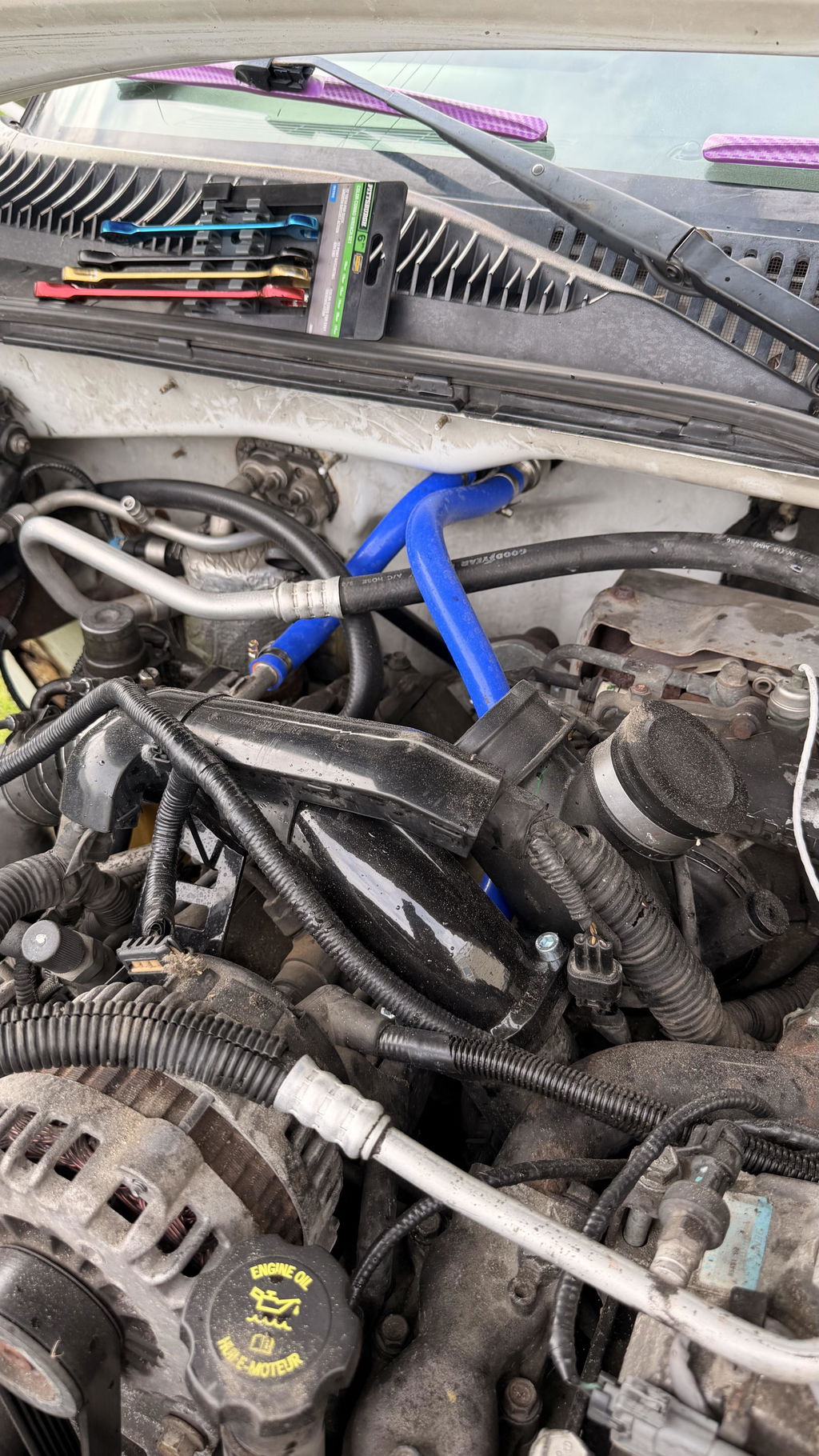
A coolant filtration kit adds a dedicated filter to your engine's cooling system, so the coolant gets cleaned continuously instead of only when you flush it. The kit taps into the coolant circuit with a filter base (sometimes called a filter head or mount), a spin-on filter element, and silicone hoses that route a controlled stream of coolant through the element and back into the system.
Unlike an oil filter, which handles the full flow of the pump, a coolant filtration kit works on a bypass principle: a small portion of the coolant passes through the element on every circuit, so the entire volume of the system is gradually and continuously cleaned while you drive. The spin-on element can be changed in minutes without draining the radiator, which is what makes ongoing maintenance practical rather than a shop job.
Why Diesel Owners Add a Coolant Filtration Kit
Diesel cooling systems are far less forgiving than gasoline ones, and most of the failures truck owners actually experience trace back to contamination rather than to the coolant itself. A coolant filtration kit is installed to solve these specific problems:
-
Casting sand left inside the block. New engines leave the factory with residual foundry sand inside the water jacket. It circulates, wears water pump seals, and can lodge in the narrow passages of the oil cooler and heater core.
-
Rust and scale in aging systems. Any truck that has run extended coolant change intervals, or has been topped off with the wrong coolant or plain water, carries rust particles that act as an abrasive throughout the system.
-
Clogged oil coolers on the 6.0L Powerstroke. This is the single most cited reason for adding filtration. Debris collects in the oil cooler, flow drops, the EGR cooler overheats, and head gasket failure follows. Removing the debris before it gets there is the point of the kit.
-
Water pump seal wear. Abrasive particles are what cut water pump seals. A weeping water pump on a high-mileage diesel is usually a contamination symptom, not a defective part.
-
Debris after a component failure. After an EGR cooler, oil cooler, or water pump failure, fragments and residue stay in the system and will damage the replacement. Filtration is how you clean up after the repair.
The practical value is not more horsepower or better fuel economy. It is avoiding a four-figure repair caused by contamination, on an engine where cooling system problems are a well-documented weak point.
What a Coolant Filtration Kit Removes
- Casting sand and foundry residue from the engine block
- Rust particles and scale from aging coolant passages
- Metal particles from normal wear of the water pump and components
- Silicate dropout and gel formed by degraded or mixed coolants
- Debris released by a failed EGR cooler, oil cooler, or heater core
Whatever the filter catches stays out of your oil cooler, heater core, radiator, and water pump seals. That is the whole job, and it is why filtration is treated as preventive maintenance rather than a performance upgrade.
What's Included in a Coolant Filtration Kit
-
Filter base / filter head - the mounting body that holds the element and provides the inlet and outlet ports
-
Spin-on filter element - the serviceable part you replace at intervals; no draining required to change it
-
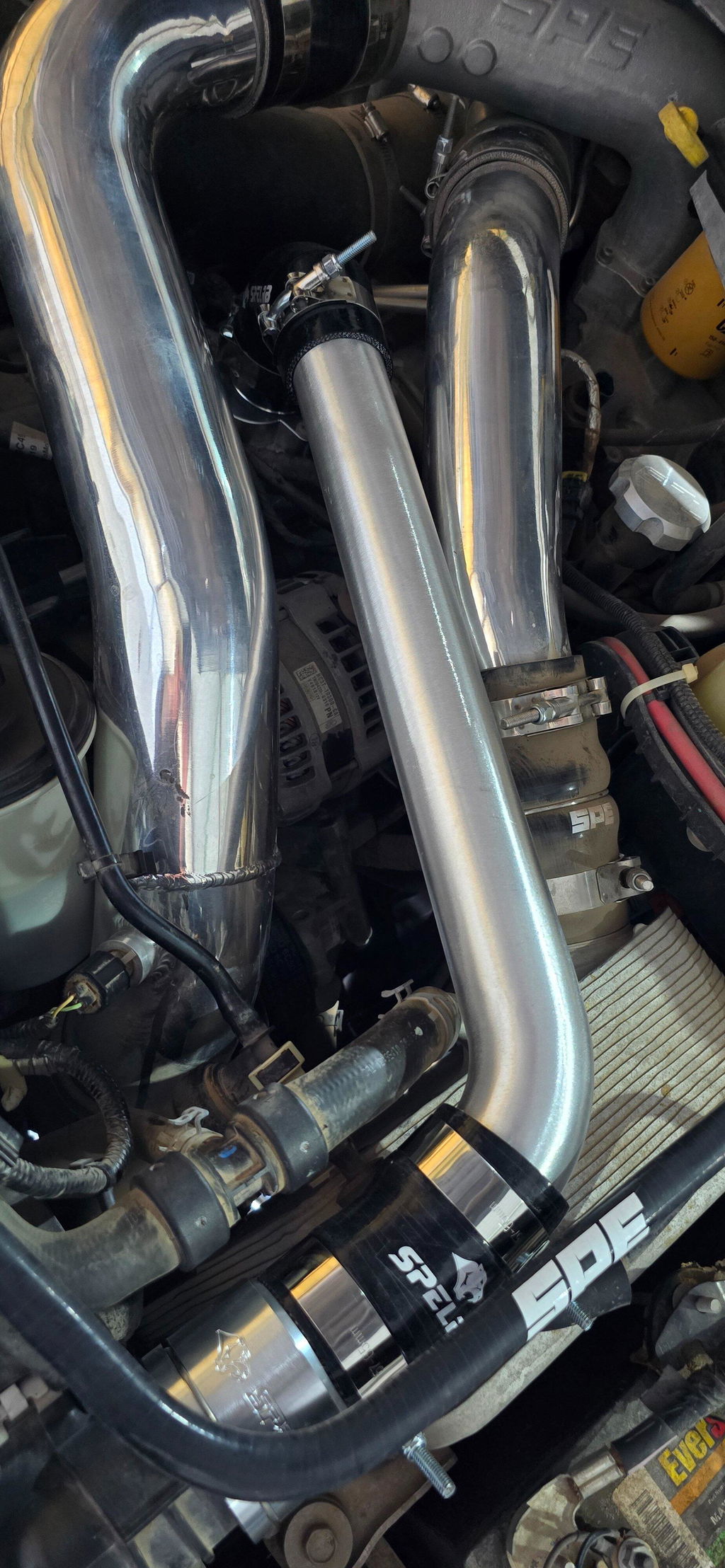
Silicone hoses - high-temperature hose rated for continuous coolant service and under-hood heat
-
Hose clamps and fittings - everything needed to tee the filter into the coolant circuit
-
Mounting hardware - brackets and bolts for securing the base to the frame rail, fender well, or firewall
Kits in this collection are vehicle-specific: the base, hose lengths, and bracket are matched to a particular engine and chassis rather than being a universal part you have to adapt.
Bypass Filtration: What to Expect
A coolant filtration kit does not filter 100% of the coolant on every pass, and it is not supposed to. Full-flow filtration at the volume a diesel water pump moves would require a large element and would create a restriction the cooling system cannot tolerate. Instead, the kit filters a small side stream, and because that side stream runs continuously, the full system volume is cycled through the element many times over the course of normal driving.
The result is gradual, continuous cleaning rather than instant cleanup. If your system is already heavily contaminated, expect to change the first element early - the element is doing its job when it loads up quickly.
Coolant Filtration Kit Fitment
-
1999-2003 Ford 7.3L Powerstroke - F-250, F-350, F-450, F-550 and Excursion
-
2003-2007 Ford 6.0L Powerstroke - F-250 and F-350
-
2008-2010 Ford 6.4L Powerstroke - F-250 and F-350
Confirm your engine and model year before ordering. The 7.3L, 6.0L, and 6.4L use different hose routing and mounting locations, and the coolant specification differs between them - using the wrong coolant in a 6.0L is a known cause of silicate gel problems.
Installing a Coolant Filtration Kit
-
Work on a cold engine. Never open a pressurized, hot cooling system.
-
Pick the tap point. Most installations use the heater hose circuit, which gives a steady bypass flow without cutting into a main radiator hose.
-
Mount the filter base. Choose a location with clearance for the element so you can spin it off later without disassembling anything.
-
Route and clamp the hoses. Keep them away from the exhaust manifold, turbo, and any moving or sharp-edged components; secure them so vibration cannot chafe them.
-
Install the element and refill. Top off the coolant, bleed trapped air from the system, and re-check the level after the first heat cycle.
-
Re-check after the first drive. Inspect for leaks and re-tighten clamps once the system has gone through a full heat cycle.
Installation is within reach of a home mechanic with basic hand tools, and it does not require programming, tuning, or any change to how the engine runs.
Filter Service Intervals
Change the first element early - around the first few hundred miles - because a used system will load it quickly. After that, an annual change, or one at every 12,000 to 15,000 miles, keeps the system clean. If you cut an element open and find heavy sand or rust, the system is still shedding debris and the next interval should be shorter.
What to Check Before You Buy
- Confirm engine displacement and model year - 7.3L, 6.0L, and 6.4L kits are not interchangeable
- Verify your heater hose routing and available mounting space for the filter base
- Check your coolant specification and change intervals; filtration does not replace using the correct coolant
- If the system has already suffered an EGR cooler, oil cooler, or water pump failure, flush before installing the kit
Also Listed in This Collection
This collection also includes engine oil filter and oil cooler housing adapter assemblies for the 3.6L V6 used in 2011-2017 Chrysler 200/300, Dodge, Jeep Wrangler and Ram 1500/2500 models. These are plastic-to-aluminum housing replacements for the common warping and cracking failures on the Pentastar 3.6L - a separate repair from diesel coolant filtration, but a frequent one for the same reason: heat and contamination shorten the life of sealed cooling passages.
Emissions and Warranty Note
A coolant filtration kit is not an emissions control device. It does not alter, bypass, or delete any emissions component, and it does not change how the engine runs. It is a maintenance addition to the cooling circuit only. If your truck is under a factory or extended warranty, confirm with your dealer how they view aftermarket cooling system additions before installing.