1 Product
Fuel Injector Kits
What "Fuel Injector Kits" Actually Covers
"Fuel injector kits" is a broad label, and it hides three genuinely different things. The first is a set of injectors - matched, flow-tested units bought to replace worn ones or to support more fuel. The second is a refresh kit: the seals, rings and washers that have to be replaced whenever an injector is disturbed. The third is a service and installation kit - the tools, sleeves and cleaning equipment that let the job be done properly with the engine in the chassis.
That third category gets the least attention and decides the most. Injector sets and seal kits are straightforward to buy correctly; the service side is where a job either finishes clean or turns into a head removal. Fuel injector kits in this sense exist because removing an injector is rarely the hard part - getting it back in so that fuel, coolant and compression all stay where they belong is.
Why Fuel Injector Kits Exist: The Jobs That Pull Injectors
Few people take injectors out for fun. The usual reasons:
- High-mileage refresh or balance correction. Injectors wear unevenly, and once return flow and spray pattern drift apart between cylinders, the engine runs rough in ways no amount of tuning will smooth out.
- Contamination after an upstream failure. A pump that has come apart sends debris through the whole high-pressure side. The injectors are the last stop, and they usually have to come out.
- A leak at the seat. Fuel smell, fuel where it should not be, or combustion gas escaping past a seal that has taken a set.
- Head or top-end work. Once the head is off, every sealing surface it carries becomes a decision.
The common thread: the moment an injector is out, everything it sealed against is now your call, and that is where a kit earns its money.
The Sleeve or Cup Most People Forget
On many diesel engines - particularly the HEUI-style designs where high-pressure oil and fuel both pass through the head - the injector does not sit directly in the casting. It sits in a removable sleeve, sometimes called a cup, pressed or threaded into the head.
That sleeve does three jobs at once: it carries fuel through the coolant jacket, it keeps fuel and coolant completely separate, and it provides the seat the injector seals against. It is also a wear item, and it fails in predictable ways - corrosion from coolant that has been left too long, erosion and cavitation around the sealing area, or damage from a previous removal that was done with the wrong tool.
When it goes, the symptoms are distinctive once you know to look for them: fuel in the coolant (a sheen, a smell, a level that keeps rising), coolant in the fuel, combustion gas pushing into the cooling system, or a misfire that stays with one cylinder no matter what you swap. The reason it gets missed is simple - from above, a failing sleeve looks perfectly fine.
Why Sleeve Removal Needs a Dedicated Tool
A sleeve is a thin-walled liner sitting in an aluminium head, and the ones at the back of the engine are the ones nobody can reach. This is not a job that tolerates improvisation. A puller that grips the sleeve unevenly will distort or snap it, leave a fragment behind, or score the bore in the head - and a scored bore is a bore that will never seal again, whatever you press into it.
A proper service kit does three specific things, and buying anything less means improvising on the one step you cannot improvise:
- Removal. A remover that threads into the sleeve squarely and draws it out without collapsing it inwards. Hardened threads matter here - soft ones go dull partway through and the tool stops biting.
- Cleaning. A brush sized for the cavity, so the new sleeve seats on clean metal instead of on corrosion and old sealant.
- Installation. A driver that seats the new sleeve square and at the correct depth, rather than cocking it and crushing the sealing area.
The alternative is pulling the cylinder head, which turns a few hours into a very different job. In-vehicle tools exist precisely to avoid that, and the trade is access against time: tighter to work, far cheaper to finish.
Seals and Consumables: Replaced Every Time
Sealing hardware on an injector is single-use. O-rings, seal rings and copper washers take a permanent set once they have been clamped and heat-cycled, and a used one will not re-seat the way it did the first time.
- A lower seal that weeps admits combustion gas past the injector, which carbons the bore and makes the next removal worse.
- An air leak on the fuel side introduces aeration, and cavitation from that is a well-known injector killer.
- Copper washers on the fuel line fittings crush to seal; refitting a crushed one is a guess.
Any kit worth buying either includes the correct seals for the job or is bought alongside them. They are the cheapest parts in the job and the ones most likely to bring you back under the hood.
Fitting a Fuel Injector Kit: A Clean Working Sequence
The order matters more than the force:
- Relieve fuel pressure and isolate the system before opening anything.
- Clean the surrounding area thoroughly first. Debris that falls into an open injector bore is now an engine problem.
- Record position. On engines with coded injectors, each unit belongs to its original hole and the calibration belongs to that unit.
- Extract the old sleeve squarely, then brush and inspect the cavity before anything goes back in.
- Seat the new sleeve with the correct driver - square, and to the depth the design calls for.
- Fit new seals and washers to the injector, then clamp and torque in the sequence the service information specifies.
- Prime the system, check for leaks before starting, then check idle quality and codes once it runs.
Nearly every expensive outcome in injector service comes from skipping one of those steps rather from the parts themselves.
Choosing a Fuel Injector Kit
Work through a short checklist and most of the bad options drop out on their own:
- Completeness. Remover, installer, cavity brush and replacement sleeves belong in one box. A kit that supplies the sleeves but not the tool to fit them is half a kit.
- Tooling quality. Hardened, square-cut threads on the remover and a driver that seats square. These tools get used repeatedly, and soft ones fail mid-job.
- Correct sleeve specification. Material and dimensions have to match the head - this is set by the engine, not by the kit.
- In-vehicle capability. If the engine stays in the chassis, confirm the tools are designed to work at the rear cylinders where access is worst.
- Seals. Included, or ordered at the same time. Decide which before you start, not on the day.
Injector work rewards preparation more than enthusiasm. Choose a fuel injector kit that covers the whole job - the sleeves, the tooling to fit them, and the seals that go back with them - and the repair holds the first time instead of the third.
Filter products
- ENGINE
-
POWERSTROKE
- DPF Delete Exhaust
- All In One Kit
- EGR Delete Kit
- CCV PCV Reroute Kit
- DPF Delete Dual Exhaust
- Tuner
- Intercooler Pipe Kit
- Up-Pipe
- Intercooler
- CP4 Bypass Kit
- CCV Recirculating Kit
- Muffler
- Downpipe
- Intake Manifold
- Air Intake Kit
- Radiator
- Oil Catch Can
- Differential Cover
- Coolant Tube
- Valve Cover
- Transmission Pan
- Coolant Expansion Tank
- Exhaust Manifold
- Turbo
- Suspension & Lift
-
DURAMAX
- Tuner
- EGR Delete Kit
- CCV Reroute/delete kit
- DPF Delete Exhaust
- DPF Delete Dual Exhaust
- All In One Kit
- Muffler
- Up-Pipe
- Downpipe
- Intake Elbow Bridge Kit
- Intercooler
- Intercooler Pipe Kit
- Air Intake Kit
- Radiator
- Differential Cover
- Valve Cover
- Oil Pan
- Cooler Line Kit
- Fuel Sump Return Kit
- Tonneau Cover
- Coolant Tube
- Suspension & Lift
-
DODGE RAM
- Tuner
- EGR Delete Kit
- CCV Reroute/delete kit
- EGT Relocation Kit
- DPF Delete Exhaust
- All In One Kit
- Muffler
- Air Intake Kit
- Intercooler
- Intercooler Pipe Kit
- Radiator
- Valve Cover
- Differential Cover
- Intake Manifold
- Coolant Bypass Kit
- Coolant Leak Repair Kit
- Fuel Rail Plug
- Fuel Tank Sump Kit
- Oil Catch Can
- Oil Pan
- Coolant Tube
- Suspension & Lift
- ALL-IN-ONE KITS
- CATEGORIES
- Delete Tuners
Let customers speak for us
from 6126 reviews
took like 2 hours to do with all the right tools and has much better throttle response. would highly recommend!!
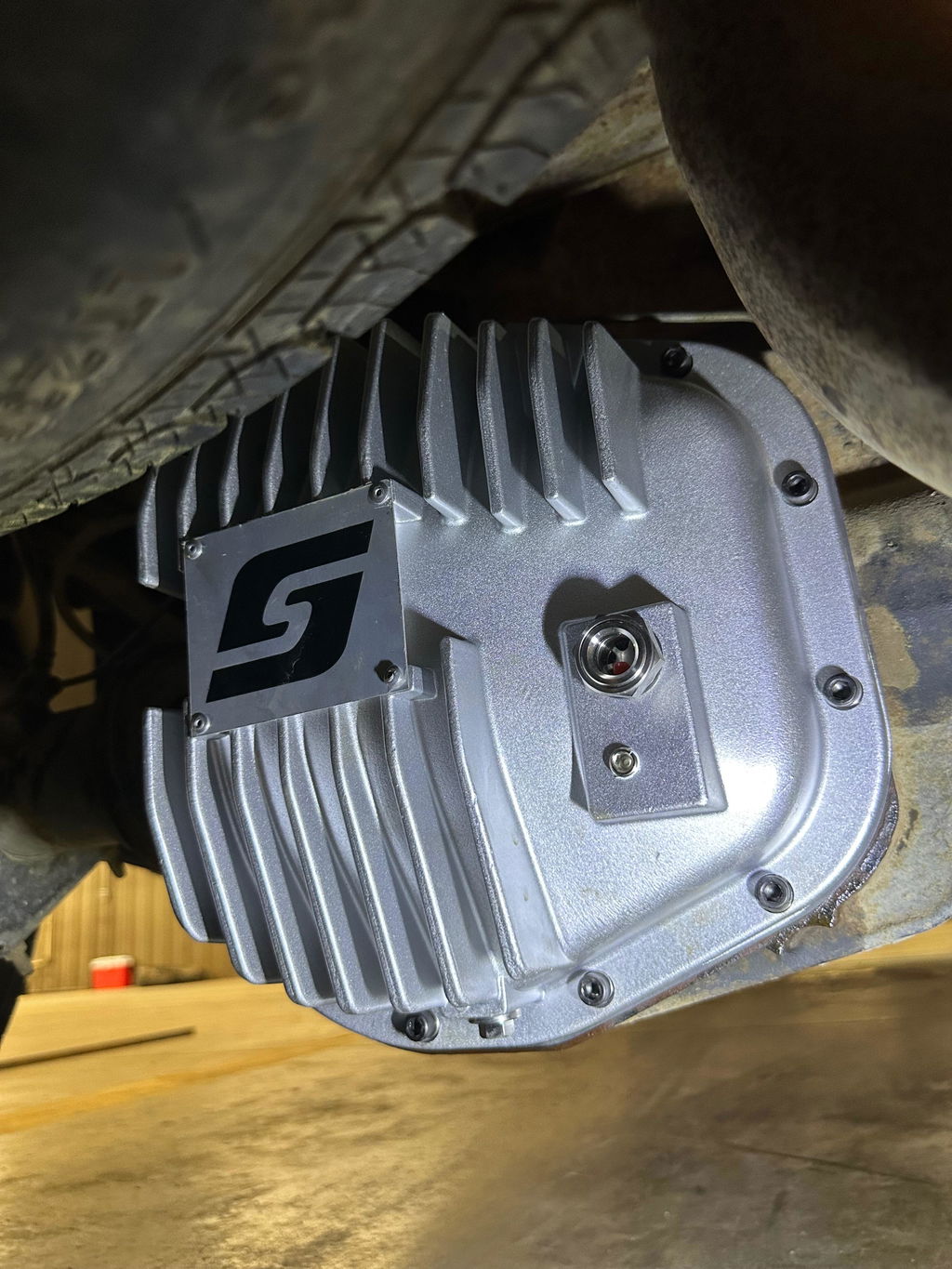
Have had the differential cover on for almost a week now and have had zero issues. The cover looks very nice and I now having the drain & fill plugs and the sight glass will make fluid changes a lot easier. Only recommendation would be to swap from Allen head bolts to regular ones as they are a bit easier to torque but other than that love it. FYI for anyone wondering I torqued all my bolts to 22 ft/lbs and have had zero leaks, couldn't find an exact torque spec but this seems to suffice!
Great for the price and pretty simple install. Did have to modify one bracket but other than that it was a slick install and great product
I got burned with a Banks manifold when their #1 proprietary fuel line split on me. This manifold takes care of that! It was an easy swap out, and worked with the banks plate.
Great Product. Quality seems really good too.
Bought a intake manifold from spelab for my 3500 6.7 cummins, and it works perfect, shipping was fast all parts included. Great company to deal with, highly recommended.
Installation was easy
Absolutely perfect fit! Super easy to install did move gasket from downpipe to DPF and reused but overall extremely pleased!
I bought the Chinese knock off because SPE Motorsports won’t sell it. As advertised. I’m sure it’ll do.
Purchased for my 2011 ram 2500 6.7 Cummins. Great product all the sensors holes lined up perfectly helped with acceleration a lot more responsive now on acceleration
Installed on a 14 3500, seamless install maybe takes 10min. Definitely opens intake up. Noticeably more sound. Not sure any performance gains other than throttle response
I’ve purchased the EGR and CCV deletes as well as the upgraded intake manifold, upper radiator hose and thermostat block, and compressed air piping. Overall I am very satisfied with the quality and fit of all of the parts. Some of the instructions could use a little more detail, but if you are in any way mechanically inclined, you’ll be able to do these yourself no problem. I did have to make a very small modification to the aluminum quick connector on the upper radiator hose in order to get it to lock in place, but other than that everything has been great!
Works amazing and easy to install
too good to not change them!
Slowly piecing this thing back together for the freedom meet this weekend 🤟
Fuel Injector FAQS
Performance injectors have higher flow rates (measured in cc/min or lbs/hr) and better atomization for increased fuel delivery. Stock injectors are matched to factory power levels; upgrading injectors requires supporting mods like a tune, CP3/CP4 pump, and fuel line upgrades.
On a mild tune (up to 50 hp gains), your stock injectors can usually handle the extra fuel. Larger turbos, bigger injectors, or delete tuners pushing 200+ hp gains require injector upgrades to avoid running lean and causing engine damage.
Stock 5.9L injectors are around 120 hp each. For 300–400 hp builds, 180 hp injectors work. For 500+ hp, 200+ hp injectors plus CP3 conversion are typical. Match injector flow to your turbo's airflow capacity and get custom tuning.
Signs include rough idle, white or black smoke at acceleration, power loss, misfire codes (P0200–P0267), and decreased fuel economy. A injector buzz test via OBD scanner checks each coil. Wet injector plugs indicate leaks internally.
Cleaning can restore mildly clogged injectors using ultrasonic cleaning and flow testing. Severely worn injectors (leaking seats, cracked bodies) must be replaced. Remanufactured injectors with new internal components offer the best middle ground for budget builds.
On modern common-rail diesels (LML, 6.7L Cummins, 6.7L Powerstroke), each injector has a unique calibration code programmed into the ECU. Swapping injectors requires updating the code via a dealer-level scan tool or an advanced tuner like EFILive.
Always replace the lower o-rings, seal rings, and copper washers on the fuel line fittings when installing injectors. Reusing old seals risks leaks, air ingestion, and cavitation damage to the new injector. Most injector kits include these parts.
Common causes include contaminated fuel, fuel starvation (causing cavitation), excessive backpressure from a clogged DPF, overheating from running lean, and carbon buildup on tips. High-mileage injectors degrade from wear on the solenoid and pintle.
Bosch is the original equipment supplier for most diesel injectors. Aftermarket Bosch injectors often meet or exceed OEM specs. Remanufactured OEM injectors are rebuilt to factory tolerances. For high-horsepower builds, buying new Bosch or specialized performance injectors is preferred.
Yes for big builds. A stock CP3 pump on a Duramax LML maxes out around 600 hp with larger injectors. Upgrading to a CP3 to CP4 conversion or adding a secondary lift pump prevents fuel supply issues. Fuel lines and rails must also handle increased pressure.