Updated on August 14, 2026.
If your truck stumbles or dies for a second under hard braking, hard cornering, or climbing a grade — especially when the tank's below a quarter — that's worth investigating before you assume it's fuel starvation and reach for a drill. A clogged pickup screen inside the tank causes the exact same symptom and doesn't need a hole cut in anything. If you've ruled that out and you're running a high-flow lift pump that's exposing a real restriction at the factory pickup, a tank sump adds a low-point reservoir that keeps the pickup wet under those conditions. Here's how to tell the difference, and how the install actually goes.
Why the Factory Pickup Sometimes Runs Dry
Most factory diesel fuel tanks aren't shaped to keep fuel pooled at one dead-low point under every condition. Hard braking, hard cornering, climbing a grade, or running under about a quarter tank can let fuel slosh away from the pickup for a second. A stock lift pump rarely notices. A higher-volume pump like an Airdog or FASS-style setup can expose that same momentary gap as a stumble, because it's pulling more volume than a marginal pickup point can keep delivering — but only if there's an actual restriction or shortfall to expose. A properly functioning factory pickup paired with a well-matched pump shouldn't starve on its own. A sump adds a reservoir at the true low point so fuel stays available to the pickup through those conditions.
Rule Out Other Causes Before You Drill
A clogged pickup screen or basket inside the tank produces the same symptom — hesitation that gets worse as the tank runs low — and it's a common enough cause that it's worth checking first, especially on a truck that's never had the tank serviced. Also check the fuel filter, since a clogging filter mimics the same load-dependent hesitation, inspect the fuel lines for kinks or pinch points, and check the suction-side connections for an air leak. If the truck only acts up under hard braking, hard cornering, climbing a grade, or when the tank's low, and the filter, lines, and pickup screen all check out, a sump is addressing the actual bottleneck rather than a symptom of something else.
What's in the Kit
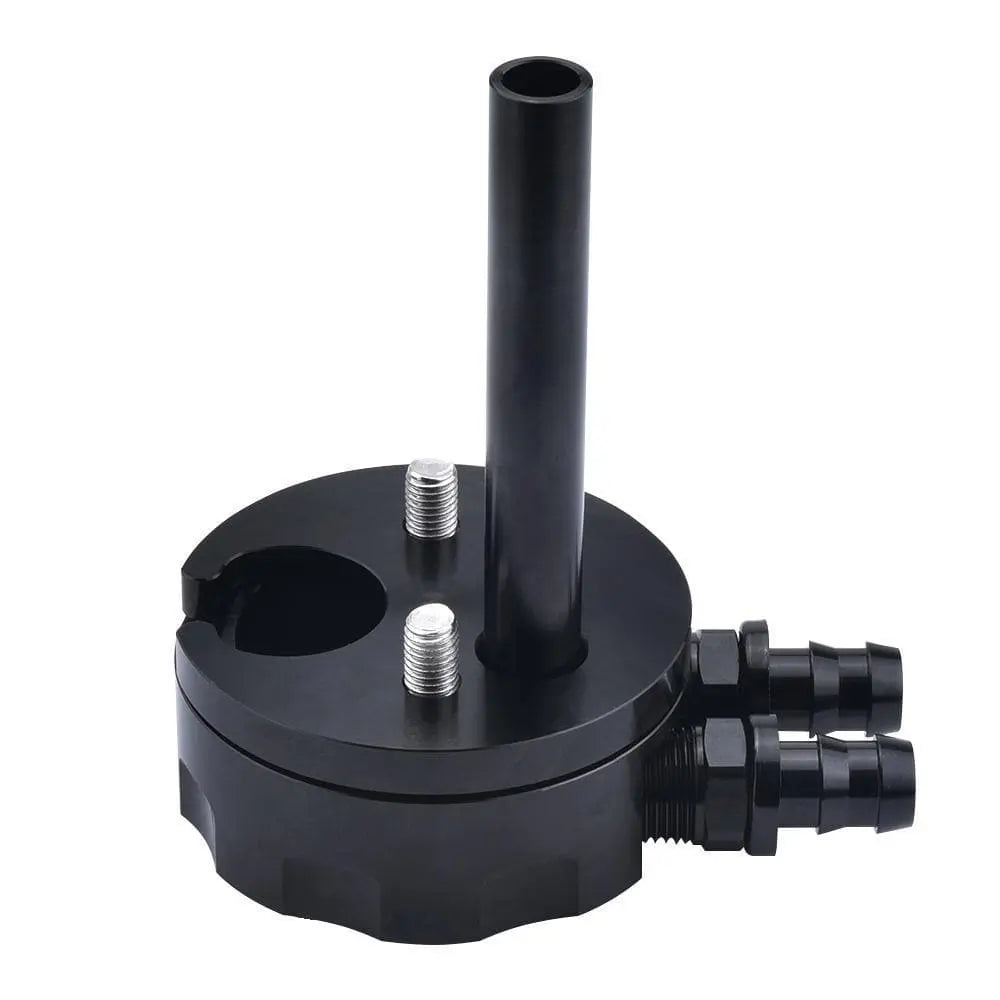
SPELAB's current fuel tank sump kit uses a single-bolt mounting design with an integrated return stand tube, which keeps returned fuel from being pulled straight back into the supply port. The kit includes the aluminum sump body, an inner ring sized to pass through the 3" hole so the tank doesn't need to come off the vehicle for most installs, the mounting hardware and O-ring, and a 3" hole saw. It's built for a 4"-diameter flat area on the tank, metal or plastic, and it's rated for high-flow lift pump setups like Airdog and FASS.
Before You Cut Into the Tank
Drain or siphon the tank down as far as practical and disconnect the battery before you start — you're cutting a hole in a fuel tank, and there's no reason to have a live electrical system nearby while you do it. Work in a ventilated area away from sparks, open flame, or anything hot enough to ignite fuel vapor, and keep a fuel-rated fire extinguisher within reach. Before you drill, confirm there's nothing behind the spot you've picked — no sending unit wiring, baffle, or line running directly under where the hole saw is about to go — and pick a flat section of the tank clear of straps, baffles, and the sending unit itself. Have a drain pan ready regardless of how empty you think the tank is.
Installing the Sump
Mark your center point on a flat, accessible area of the tank, then cut the 3" hole with the included hole saw. Thoroughly de-burr the edge of the hole and knock down any high spots on the outside of the tank — even a small burr of plastic or metal will keep the O-ring from sealing, so don't rush this step. Clean the mating surface until it's smooth, seat the O-ring in its groove, and pass the sump's inner ring and return stand tube through the hole before securing the mounting bolt. Torque to the value printed on the instruction sheet that ships with your specific kit — don't reuse a number from a different sump design, since single-bolt and multi-bolt clamp systems aren't torqued the same way. Run your fuel lines to the lift pump, securing both ends with the supplied clamps, and if you're capping off an old supply line, note that the larger of the two factory lines is typically the supply side.
One more thing worth knowing before you start: NPT threads take a fuel-rated sealant or tape, but AN-style fittings seal on the flare itself — don't wrap tape around an AN connection, since it can shred and end up in your fuel system instead of sealing anything.


Before you top off the tank, add a small amount of fuel and check every connection for weeping or drips while the system is still easy to access. Run the engine, check again once the lines have seen some pressure, and give it a real look after your first drive and a heat cycle — fittings can loosen slightly as things settle.
One Real Trade-Off: Ground Clearance
An external sump lowers the lowest point of your fuel system, which matters if you drive off-road or run a lifted setup with less clearance to begin with. Before you commit to where the sump sits, check the clearance to your axle, driveshaft, exhaust, and any crossmembers with the suspension loaded, not just sitting empty in the driveway. If you're running aggressive off-road terrain regularly, a skid plate over the sump area is worth the money — a rock strike on an unprotected sump can mean a real fuel leak, not just a scrape.
Real-World Load: Towing and Jobsite Use
Towing up a grade with the tank below half is exactly when a marginal fuel pickup shows its limits — right when you need every bit of power the engine has. Jobsite trucks that sit and work at an angle on uneven ground for hours put a similar sustained lean on the tank that hard cornering applies for a few seconds at a time. If you've confirmed the pickup screen and filter aren't the actual problem, a sump is the right fix for both situations. The full fuel tank sump collection covers sizing options if you need more reservoir capacity than the standard kit.
Q: How do I know if I actually need a fuel tank sump?
A: Stumbling or momentary power loss specifically under hard braking, hard cornering, climbing a grade, or when the tank drops below about a quarter is the classic sign, especially with a high-flow lift pump installed. Rule out a clogged pickup screen, a clogging fuel filter, and fuel line issues first.
Q: Does this fit my truck — Cummins, Powerstroke, or Duramax?
A: It's a universal kit designed to work with factory diesel tanks across these platforms, but you need a roughly 4" flat, accessible area on the tank bottom clear of baffles, straps, and the sending unit before you commit to a mounting spot.
Q: Do I need to remove the fuel tank to install this?
A: The current kit's inner ring is sized to pass through the 3" hole, so most installs don't require dropping the tank. Access still varies by vehicle, so check your specific truck's layout before assuming.
Q: What torque spec do I use on the mounting bolt?
A: Use the torque value printed on the instruction sheet included with your specific kit. Sump designs vary between single-bolt and multi-bolt clamp systems, and torque specs aren't interchangeable between them.
Q: Why won't my sump seal even though I followed the steps?
A: The most common cause is a burr or high spot left on the tank surface after cutting the hole — even a small one will keep the O-ring from sealing. De-burr the edges and clean the mating surface thoroughly before installing the O-ring.
Q: Will this work with my Airdog or FASS lift pump?
A: Yes, that's one of the main reasons owners add a sump — but confirm the real cause of any hesitation first. A high-flow pump can expose an existing restriction, like a clogged pickup screen, that a sump alone won't fully solve if the screen itself needs cleaning.
About the Author
John Lee has spent 15 years turning wrenches on diesel pickups, from daily-driven tow rigs to dedicated jobsite trucks. He specializes in fuel system reliability and diagnostics for Powerstroke, Cummins, and Duramax platforms, and writes about what actually holds up under real-world towing, cold-weather use, and high-idle jobsite duty.