Updated on March 12, 2026.
TL;DR: A CP4 bypass kit will not stop the pump from wearing internally, but it can help keep metal debris from contaminating the rest of the fuel system. For many 2011-2016 6.7L Powerstroke owners, that makes it a practical way to reduce repair risk and protect expensive downstream components.
What a CP4 Bypass Kit Does
The CP4 Bypass Kit is designed to help reduce the damage caused by a CP4 pump failure. When a CP4 pump fails, metal debris can spread through the high-pressure fuel system and damage injectors, rails, lines, and other critical components. A bypass kit helps reroute potentially contaminated fuel away from sensitive downstream parts so it can be filtered before re-entering the system.
This CP4 Pump Bypass Kit is designed for 2011-2016 6.7L Powerstroke diesel engines. It does not eliminate internal pump wear, but it can help limit the damage if a failure occurs.
Key Benefits
- Plug-and-Play Fitment: Designed to install without permanent vehicle modifications.
- No Cutting Required: Helps preserve the original layout of the truck.
- Durable Fuel Supply Hose: Uses AN stainless steel braided PVC-coated PTFE hose for the CP4 MPROP connection.
- High-Quality Materials: Includes billet stainless and aluminum swivel fuel manifold components.
- Premium Components: Uses black anodized 6061 aluminum billet parts.
- Reusable Fuel Filter: Includes a patented 20-micron return-side fuel filter.
- Condition Monitoring: Makes it easier to monitor the health of the CP4 pump and inspect for contamination.
- Service-Friendly Design: Built for straightforward installation and maintenance.
- Reversible Setup: Can be removed if needed.
For many 6.7L Powerstroke owners, the biggest benefit is simple: if the CP4 fails, the goal is to avoid turning one failed pump into a full fuel-system repair.
Installation Overview
Before buying a complete CP4 Bypass Kit, it helps to understand the installation process. This kit is generally manageable for owners with basic mechanical experience, but first-time diesel owners may still prefer professional installation.
Tools and Materials Needed
Before starting, make sure you have the following tools and materials:
- CP4 disaster prevention kit
- Basic hand tools (wrenches, sockets, screwdrivers)
- Torque wrench
- Safety gloves and goggles
- Clean rags and a drip pan
Safety Precautions
- Work in a well-ventilated area.
- Make sure the vehicle is parked on a stable, flat surface.
- Disconnect the battery before starting.
- Wear proper safety gear.
- Keep the work area clean to avoid introducing contaminants into the fuel system.
Step-by-Step Installation
Step 1: Preparation
Disconnect the negative battery terminal before starting.
Relieve fuel-system pressure by loosening the fuel cap and following safe service procedures.
Step 2: Access the CP4 Pump Area
- Remove the engine cover to gain access to the CP4 pump area.
- Identify the factory fuel routing and confirm all kit components are present before beginning installation.
- Use clean rags to catch any spilled fuel and keep contamination out of the system.
Step 3: Install the CP4 Disaster Prevention Kit
- Lay out all kit components and review the included instructions.
- Install the protective routing and filtration components according to the kit design.
- Connect the new fuel lines provided in the kit and verify all fittings are secure.
Step 4: Reassemble and Inspect
- Double-check all fasteners and fittings.
- Reinstall any removed covers or brackets.
- Make sure routing is clean, secure, and clear of moving or hot components.
Step 5: Final Checks
- Inspect all connections for leaks before starting the engine.
- Reconnect the battery.
- Prime the fuel system by cycling the ignition to the "on" position without starting the engine. Repeat this a few times so fuel can reach the system properly.
Testing and Verification
- Start the engine and let it idle while checking for fuel leaks or unusual noises.
- Take the truck for a short road test and inspect the system again afterward.
Additional Tips
- Stay Current on Fuel Filter Service: Clean filters are one of the best ways to support CP4 longevity.
- Use Quality Fuel: Good diesel fuel helps reduce contamination and poor lubrication risk.
- Prime the System Properly: Air intrusion is one of the things CP4-equipped trucks do not tolerate well.
Why This Kit Stands Out
There are several CP4 bypass and disaster prevention kits on the market. What matters most to owners is fitment, materials, serviceability, and how well the kit supports contamination control after a pump failure.
| Feature | SPELAB CP4 Bypass Kit |
|---|---|
| Fitment | Designed for 2011-2016 6.7L Powerstroke applications |
| Materials | 6061 aluminum and stainless steel components |
| Installation Style | OE-style fitment with no cutting required |
| Filtration | Reusable 20-micron return-side fuel filter |
| Serviceability | Built for inspection, maintenance, and easy monitoring |
| Price | $399.99 |
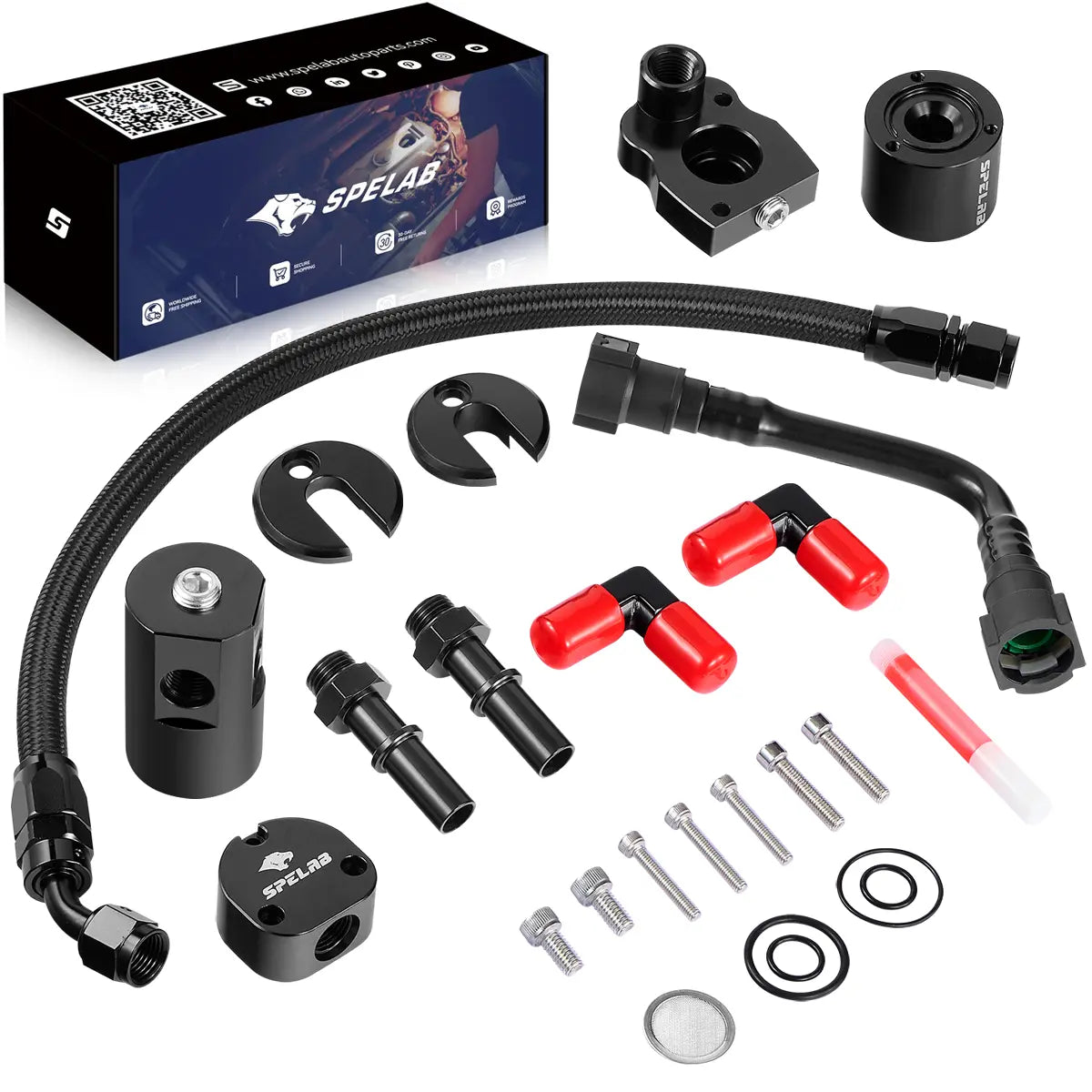
Compatible Vehicles: Ford F250, F350, F450, F550
Package Contents: CP4 Bypass Kit components, fuel lines, fasteners, installation manual
$199.99
Buy NowFor owners comparing options, the real question is not just price. It is whether the kit is built well, installs cleanly, and helps reduce the chance of contamination spreading through the rest of the fuel system.
Supporting Fuel System Upgrades
The CP4 Bypass Kit works best as part of a broader fuel-system protection strategy. These supporting upgrades can help improve reliability and serviceability on a 6.7L Powerstroke:
Fuel Filter Service and Maintenance Parts
Description: Fresh primary and secondary fuel filters help reduce contamination and support proper fuel flow.
Why It Matters: Regular filter service is one of the most important habits for any CP4-equipped truck.
Fuel Pressure Monitoring
Description: Monitoring fuel pressure can help owners keep an eye on fuel-system health.
Why It Matters: Early warning signs are easier to catch when the system is being monitored consistently.
Fuel Tank Sump
Description: Improves fuel pickup design and helps support stable fuel supply.
Why It Matters: Consistent fuel delivery is important for any high-pressure common-rail diesel system.
Cold Side Intercooler Pipe & Tube Upgrade Kit
Description: Improves airflow and boost-side durability.
Why It Matters: While it does not directly affect CP4 protection, it can support overall truck reliability in performance-oriented builds.
Oil Catch Can
Description: Helps reduce oil vapor entering the intake tract.
Why It Matters: It is a useful supporting upgrade for owners trying to keep the engine cleaner over time.
Frequently Asked Questions (FAQ)
Q: How does the CP4 Bypass Kit help protect the engine?
A: The CP4 Bypass Kit helps reroute potentially contaminated fuel away from sensitive high-pressure fuel-system components. It does not stop internal pump wear, but it can help prevent metal debris from reaching injectors, rails, and other expensive downstream parts.
Q: How long does it take to install the CP4 Bypass Kit?
A: Installation typically takes a few hours, depending on the installer’s experience level, tools, and familiarity with diesel fuel-system service.
Q: Will the CP4 Bypass Kit affect the vehicle’s warranty?
A: Warranty impact depends on the vehicle manufacturer and dealer policy. It is always a good idea to confirm warranty terms before installing aftermarket fuel-system components.
Q: What is the impact of the CP4 Bypass Kit on fuel economy?
A: The main purpose of the kit is protection, not fuel-economy gains. Any fuel-economy change would be secondary and may vary from truck to truck.
Q: What is the difference between the CP4 Bypass Kit and the CP4 Disaster Prevention Kit?
A: The terms are often used similarly, but in general a bypass kit focuses on rerouting potentially contaminated fuel, while a broader disaster prevention setup may include additional filtration or monitoring features. The right choice depends on how much protection and monitoring the owner wants.
Additional Knowledge - CP4 vs CP3
CP4 and CP3 are two types of high-pressure fuel pumps used in diesel fuel systems. Each has its own design philosophy and reputation in the diesel world.
Design and Structure
- CP3 Fuel Pump: Uses a simpler and widely respected design that has built a reputation for durability and consistent performance.
- CP4 Fuel Pump: Uses a more compact and efficient design, but it is also more sensitive to lubrication and contamination issues.
Performance and Efficiency
- CP3 Fuel Pump: Known for stable performance under demanding conditions and often favored in higher-load or modified applications.
- CP4 Fuel Pump: Offers precise fuel delivery and efficiency benefits, but it requires closer attention to maintenance and contamination control.
Common Issues
- CP3 Fuel Pump: Usually sees wear-related issues over time, but catastrophic system-wide failures are less commonly discussed.
- CP4 Fuel Pump: More widely associated with metal-debris contamination after internal failure, which is why many owners consider bypass kits or other preventive measures.
Upgrades and Modifications
- Some diesel owners choose to convert from CP4 to CP3 in performance or long-term reliability builds, while others prefer to keep the factory CP4 setup and add protective measures such as a bypass kit.
By choosing SPELAB’s products, owners get durable materials, practical fitment, and a focused solution for one of the most discussed weak points in the early 6.7L Powerstroke fuel system. For more detailed information and installation guides, please visit SPELAB Official Website.
Brand Comparison
| Brand | Price | Material | Warranty | Reusable Filter | Vehicle-Specific Fitment |
|---|---|---|---|---|---|
| SPELAB | $199.99 | 6061 aluminum + stainless steel | 1 year | Yes | Yes |
| XDP | $450.00 | Aluminum | 6 months | Not listed | Varies by application |
| S&S Diesel | $420.00 | Stainless steel | 1 year | Not listed | Varies by application |
| FASS | $380.00 | Aluminum | 6 months | Not listed | Varies by application |