Updated on August 11, 2026.

The stock 6.7 Cummins intake horn has real, well-documented weak points - not a mystery fault code. The factory design restricts airflow, distributes air unevenly to the rear cylinders, and sits right next to the grid heater's notorious "wiggle bolt" failure point. An upgrade can fix the airflow and structural issues; it does not touch your fuel rail pressure system, and it will not cause a P000F code. Here's what an intake horn upgrade actually changes, what can go wrong with a bad install, and what codes to expect if something isn't sealed right.
What's Actually Wrong With The Stock Intake Horn
The factory intake horn on a 6.7 Cummins is functional but has known weak points that show up with age, heat cycles, and boost pressure.
- Grid heater bolt failure: the stud and nut that carry 100+ amps to the grid heater, located between the intake horn and manifold, are exposed to heat cycling, vibration, and electrical arcing at that connection. Over time that can deform, loosen, or melt the hardware; if the nut or stud breaks free and falls into the intake runner, it most commonly lands in cylinder #6, causing catastrophic engine damage. This is the single most talked-about intake-side risk on this engine, and it affects the full 2007.5-2024 production run, not just one model year.
- Cracking and warping: the stock horn and its flange can crack or warp from repeated heat and boost cycling, especially on higher-mileage trucks.
- Uneven air distribution: the factory horn's flat design tends to favor the center cylinders, leaving the rear cylinders slightly air-starved.
- Restrictive airflow: even a healthy stock horn is a flow bottleneck compared to an aftermarket high-flow design.
For a full diagnostic walkthrough if you suspect a leak right now, see this 6.7 Cummins intake manifold leak diagnosis and repair guide, and for the grid heater bolt specifically, this grid heater bolt failure prevention guide covers inspection, symptoms, and delete options.
What An Intake Horn Upgrade Actually Changes
An aftermarket intake horn replaces the restrictive factory design with a more open flow path. On its own, a standard intake horn swap does not automatically remove or change the grid heater stud/bolt failure point - that requires a separate grid-heater-delete option or a combined intake horn + grid heater delete product. Check the exact configuration before assuming a plain intake horn upgrade solves the bolt-failure risk.
Expect improved airflow efficiency (better throttle response, quicker turbo spool) and more even distribution across all six cylinders from the intake horn itself. If eliminating the grid heater bolt risk is your priority, confirm you're buying a grid-heater-delete or combined option, not just an intake horn. That decision has real trade-offs for cold starts, which is worth reading up on separately before you decide: see this 6.7 Cummins grid heater delete pros and cons guide.
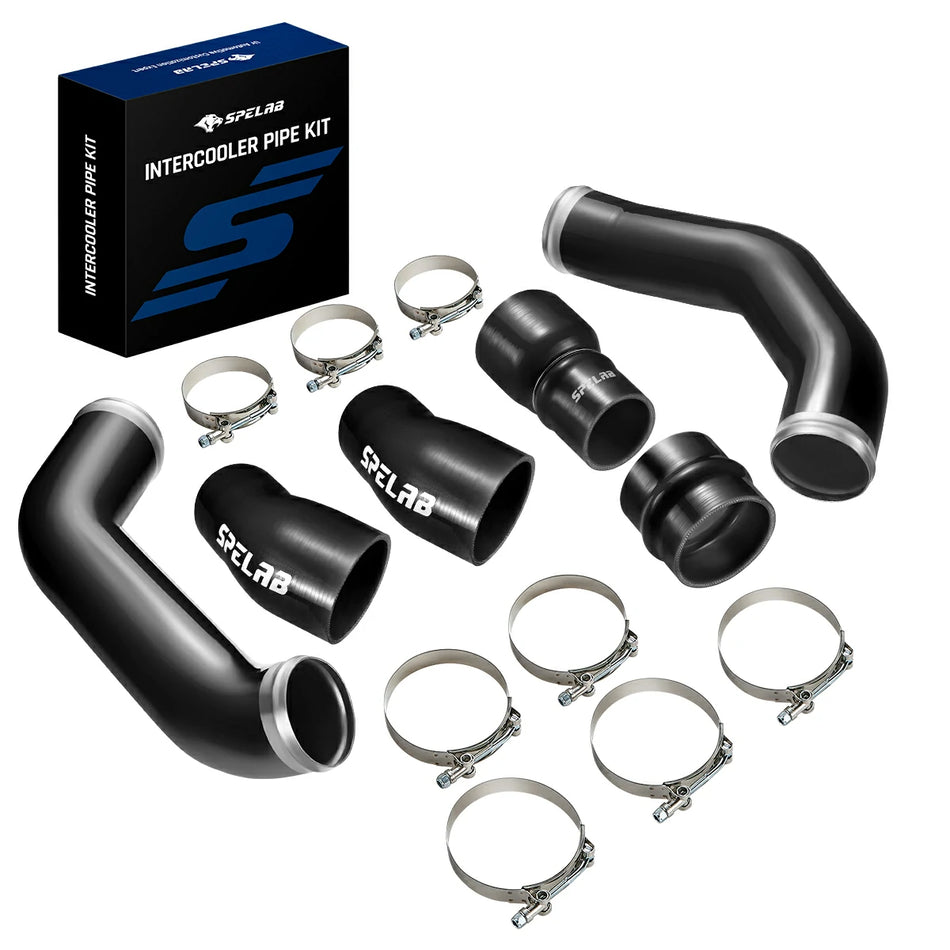
What it does not do: change your fuel rail pressure system, act as a DPF regeneration aid, or fix problems that live in the fuel delivery, injector, or turbo systems. Airflow and fuel pressure are separate systems on this engine. If you're comparing actual intake horn options once you've confirmed your year range, see the SPELAB intake horn/manifold for 2007-2024 6.7L Cummins.
Real Symptoms And Codes From A Bad Intake Install
If a new intake horn isn't sealed or installed correctly, the symptoms and codes point to an air leak - not a fuel pressure fault.
| Symptom | Likely Cause | What To Check |
|---|---|---|
| Hissing or whooshing under load, loss of boost/power | Gasket or seal not seated correctly | Smoke-test the charge air system; inspect the gasket and flange for warping. |
| Black smoke under acceleration | Air leak causing a rich condition (too much fuel for the air available) | Same as above - fix the leak before assuming a fuel or tuning problem. |
| P2281 or similar air-leak code | Usually a physical leak in the charge air system between turbo and intake after a fresh install - but P2281 can also fire from a soot-clogged EGR cooler or heater grid restricting airflow enough that the PCM misreads it as a leak, even with no physical leak present. | Smoke-test for a physical leak first. If none is found, check for soot restriction in the EGR cooler/heater grid, and check whether a PCM calibration update applies to your model year before replacing parts. |
| P2609 or grid heater fault | Grid heater wiring or connection disturbed during install | Check grid heater harness and connector seating; confirm bolt/stud torque and condition if the factory grid heater was retained. |
Don't jump to the intake horn for everything. Coolant loss with no visible puddle usually points to an internally leaking EGR cooler, which sits near the intake but is a separate cooling-system component - pressure-test the cooling system and inspect the EGR cooler on its own rather than assuming a fresh intake install caused it.
A quick myth-bust: some content online links intake manifold upgrades to a P000F (fuel system overpressure relief valve activated) code. Intake work is not a typical direct cause of P000F - it's a fuel-rail-pressure fault, most often tied to an aging or worn relief valve, or added fuel volume from injector/pump upgrades. If you're chasing a P000F code, diagnose commanded vs. actual rail pressure, pressure-relief event history, and recent fuel-system changes; it's also worth checking whether a PCM calibration update applies to your model year before replacing hardware. Don't start with your intake horn.
Pairing An Intake Upgrade With Other Changes
Intake and exhaust-side changes can be planned together, but "compatible" means confirmed fitment and sensor placement, not just that both parts fit a 6.7 Cummins.
If you're planning an EGR delete alongside an intake horn upgrade, confirm the two are meant to work together and that MAP sensor placement on the intake side still lines up correctly - EGT sensors live on the exhaust/aftertreatment side and are generally unaffected by intake horn choice, so that's a separate fitment question entirely. Our 6.7 Cummins EGR delete kit cost and risk guide covers what changes downstream. And before ordering by engine name alone, confirm your exact model year against the 6.7 Cummins intake horn compatibility by year guide - fitment, sensor bungs, and grid heater setup all vary by year range.
Troubleshooting An Intake-Related Code
- Check system sealing first. Air leaks at the ports and gaskets cause most post-install codes.
- Check MAP sensor status. A dirty, damaged, or poorly seated MAP sensor can throw plausibility codes that look like a bigger problem than they are.
- Verify grid heater wiring and connections if you retained the factory grid heater setup.
- Don't chase the fuel system for an airflow symptom, or vice versa. Match the code and symptom to the actual system before replacing parts.
Best Practices For The Upgrade
- Choose a design with known fitment for your exact year range rather than a generic "fits all 6.7 Cummins" listing.
- Decide on the grid heater strategy up front - retain with a stronger mount, or delete - rather than figuring it out mid-install.
- Recheck for leaks after the first heat cycle, not just immediately after install; gaskets can settle.
- Watch the truck for the first few hundred miles and confirm no new codes or smoke under load before considering the job done.
FAQ
Q: Can an intake manifold upgrade really cause a P000F code?
A: There's no established mechanical link between intake airflow changes and fuel rail overpressure. P000F is a fuel-system code, most often tied to a worn relief valve or added fuel volume from injector/pump changes - not intake work.
Q: What's the biggest real risk with the stock 6.7 Cummins intake setup?
A: The grid heater bolt failure - a loose nut that can fall into cylinder #6 and cause catastrophic engine damage. It's a bigger concern than airflow restriction for most owners.
Q: Will an intake horn upgrade set a check engine light?
A: Only if it's not sealed correctly (an air-leak code like P2281) or if grid heater wiring is disturbed during install (P2609-type faults). Note that P2281 can also fire from a soot-clogged EGR cooler/heater grid with no physical leak at all, so don't assume a leak without checking.
Q: Should I delete the grid heater when I upgrade the intake?
A: That depends on your climate and cold-start needs - deleting it removes the bolt-failure risk but changes cold-start behavior. Worth reading the dedicated comparison before deciding, not a quick call.
Q: Do I need to upgrade the exhaust manifold at the same time?
A: No, not as a requirement. They're separate systems. Pair them only if your broader build plan (like an EGR delete) actually calls for both.
Q: Is an intake horn upgrade worth it on a mostly stock, daily-driven truck?
A: For airflow gains alone, it's a moderate upside. If your real goal is eliminating the grid heater bolt risk, make sure you're buying a grid-heater-delete or combined intake+delete option specifically - a standard intake horn swap by itself doesn't remove that risk.