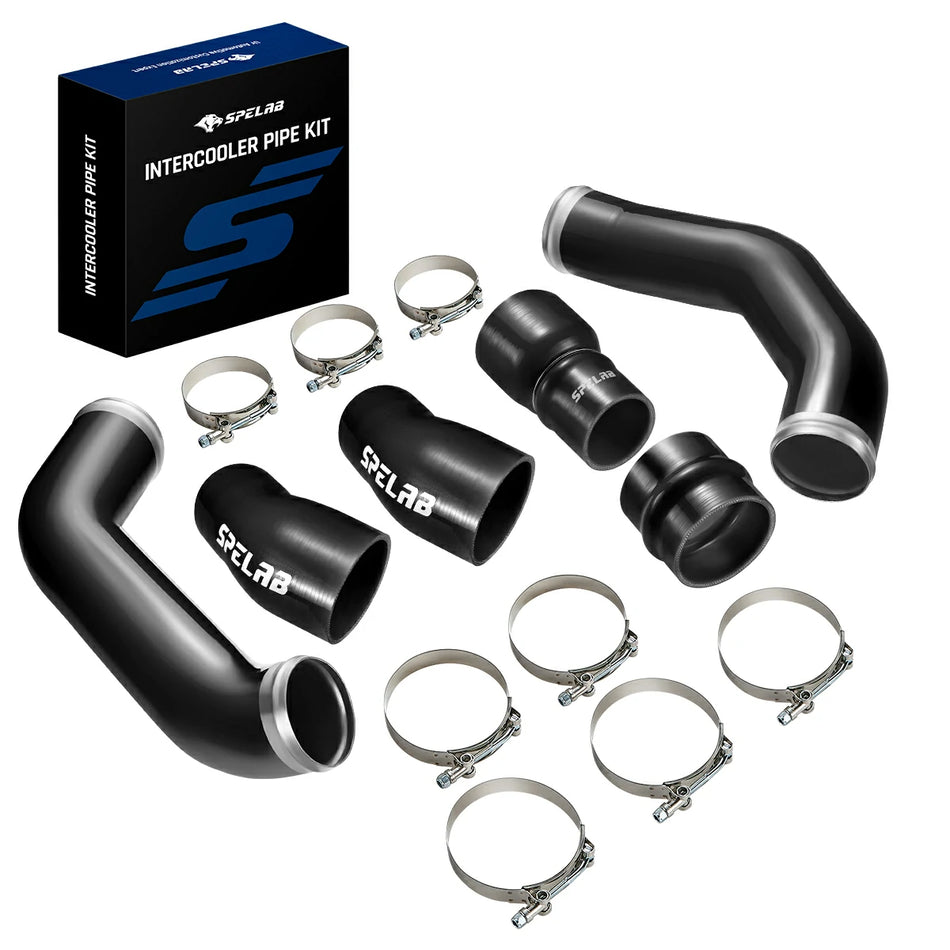
Fitment matters when you’re working in a tight engine bay. So does what happens after the tools are put away and the truck goes back to work.
SPELAB is developing new downpipe kits for selected Power Stroke and Duramax trucks. The first prototypes have completed their initial round of laboratory testing. Now we’re recruiting owners for on-truck testing before launch.
We want feedback from the installation through everyday use: what lines up, what’s difficult to reach, and what needs another look once the truck has some miles on it.
What We’re Working to Improve
We’ve made changes aimed at three practical concerns:
- Fitment and installation: connection alignment, working room, and clearance around nearby components.
- Stress during use: the effects of vibration, engine movement, and repeated heating and cooling.
- Heat management: how the downpipe manages heat in the space where it’s installed.
These are the goals behind this development round. Owner testing will help us evaluate how well the prototypes meet them on actual trucks.
A connection that takes too much effort to line up deserves attention. So does a clearance issue or a rattle that appears only under certain conditions. We want those details while there’s still time to investigate and make changes before release.
From Lab Testing to Working Trucks
Initial laboratory testing is complete. The next step is to see how the kits install and behave on trucks with different mileage, service histories, and existing modifications.
A daily driver, a work truck, and a weekend tow rig each give us useful context. Tell us how you use yours, what you notice, and when it happens.
We’ll use that feedback to investigate concerns and decide where the product, application information, or installation instructions need further work.
Trucks We’re Recruiting
| Truck | Engine | Model years |
|---|---|---|
| Ford F-250 / F-350 Super Duty | 6.7L Power Stroke | 2011–2016 |
| Ford F-250 / F-350 Super Duty | 6.7L Power Stroke | 2017–2019 |
| Ford F-250 / F-350 Super Duty | 6.7L Power Stroke | 2020 and newer* |
| Ford F-250 / F-350 Super Duty | 6.4L Power Stroke | 2008–2010 |
| Chevrolet Silverado 2500HD / 3500HD | 6.6L Duramax L5P | 2017–2019 |
| Chevrolet Silverado 2500HD / 3500HD | 6.6L Duramax L5P | 2020 and newer* |
| Chevrolet Silverado 2500HD / 3500HD | 6.6L Duramax LML | 2011–2016 |
| GMC Sierra 2500HD / 3500HD | 6.6L Duramax LMM | 2007.5–2010 |
| GMC Sierra 2500HD / 3500HD | 6.6L Duramax LBZ | 2006–2007 |
| GMC Sierra 2500HD / 3500HD | 6.6L Duramax LLY | 2004.5–2005 |
* Exact model-year eligibility and vehicle configuration will be checked during application review. This recruitment list does not confirm fitment for every truck within a listed year range.
For this testing round, L5P and LML applications are limited to Chevrolet Silverado. LMM, LBZ, and LLY applications are limited to GMC Sierra.

A Free Kit, With Direct Support
Selected testers will receive a downpipe kit for their approved truck application, free of charge. SPELAB will cover all costs associated with participation.
You’ll also have direct contact with our team throughout installation and testing. If something doesn’t line up as expected or a problem comes up during use, we’ll work with you to investigate and address it.
We’re asking for honest feedback. A free kit does not come with an expectation of a positive review.
What We Need From Testers
You don’t need a polished video or a show truck. We need clear observations and follow-through.
During installation, document:
- Whether the connections and mounting points line up.
- Any difficulty reaching or tightening connections.
- Clearance concerns around nearby components.
- Any unexpected adjustment needed to complete the installation.
During use, tell us about any unusual noise, vibration, contact, or other concern. Include the conditions when it happens—such as a cold start, a fully warmed-up drive, or your normal hauling use.
Photos and short videos help. So do straightforward notes from you or your installer. If everything fits well, document that too, along with your truck’s configuration.
We’ll confirm the installation schedule, feedback expectations, and support arrangements with selected owners before testing begins.
Apply to Test a SPELAB Downpipe
Own one of the trucks listed above? Submit your details through the application form:
[APPLY TO BECOME A PRODUCT TESTER — FORM LINK COMING SOON]
Please include:
- Truck model, model year, and engine.
- Mileage and current vehicle condition.
- Relevant modifications and any existing exhaust issues.
- How you normally use the truck.
- Whether you’ll install the kit yourself or use a shop.
- Your availability for installation and follow-up feedback.
Submitting the form does not guarantee selection. If several owners apply for the same application, we’ll choose participants based on vehicle condition, configuration, and the needs of the testing program.
Selected applicants will be contacted to confirm vehicle details and next steps.
Put your installation experience and working miles into the development process. Help us find what needs attention before these downpipes reach the shelf.
Product Tester FAQ
Is the downpipe kit really free?
Yes. If you’re selected, SPELAB will provide the downpipe kit for your approved truck application as a free gift. All costs associated with participation are covered.
We’ll confirm the shipping, installation, and any other necessary arrangements with you before testing begins, so you know what to expect.
Does applying guarantee that I’ll receive a kit?
No. Submitting the form puts your truck forward for consideration.
If several owners apply for the same application, we’ll select participants based on vehicle condition, configuration, and what we need to evaluate during this testing round.
Do I need a stock truck to participate?
Tell us what’s currently on your truck. Include relevant exhaust changes, tuning, and other modifications that could affect installation or how the truck operates.
A modified truck is not automatically ruled out. We’ll review the setup before confirming whether the prototype is suitable.
My truck already has an exhaust leak or a rattle. Can I apply?
You can apply, but please describe any existing issues in the form.
Knowing what’s happening before installation helps us separate an existing problem from something that appears during testing. Don’t assume the test kit will fix an unresolved issue.
Can I apply if my truck isn’t on the list?
This testing round is limited to the applications listed above.
A similar engine or a shared platform does not automatically make another truck eligible. We need to review the exact model, year, and configuration before assigning a kit.
Does “2020 and newer” mean every newer model year is supported?
No. We’ll check your exact model year and vehicle configuration during application review.
Being within a listed year range is a starting point for selection, not a guarantee that a prototype is suitable for your truck.
Do I have to install the kit myself?
No. You can install it yourself if you have the experience and equipment, or work with a shop.
Tell us your plan when you apply. We’ll confirm installation arrangements with selected testers before work begins. If a shop handles the job, its installation notes and photos will be useful feedback.
What if the kit doesn’t line up or something touches?
Pause the installation and contact our team. Take clear photos of the connection or clearance issue, and describe what you’re seeing.
Don’t force the part into place or make unapproved cuts or modifications to get it installed. We’ll work with you to investigate the issue and agree on the next step.
What if a problem shows up after installation?
Contact us with the symptoms, when they started, and the conditions in which they occur. Photos, video, and your installer’s observations can help us understand the problem.
Our team will stay involved during testing and work with you to address concerns. If something appears unsafe, stop using the truck until it has been assessed.
How soon do I need to install it, and how long will testing take?
We’ll agree on an installation schedule and testing period with selected owners before participation begins.
Please give us a realistic idea of your availability in the application. If you need a shop appointment or have upcoming work commitments, include that information so we can plan accordingly.
Will I have to tow a heavy trailer or push the truck hard?
We want feedback from your normal use. Tell us whether that means commuting, hauling equipment, or towing.
You are not being asked to overload the truck, drive aggressively, or recreate a problem in unsafe conditions. Any specific testing requests will be discussed with you in advance.
Do I need a YouTube channel or a large social following?
No. A large audience is not required.
We’re looking for suitable trucks and owners who can document the installation, communicate clearly, and provide follow-up feedback. Useful photos and honest notes matter more than polished content.
Do I have to post a positive review?
No. We want an accurate account of your experience, including anything that needs improvement.
A difficult installation, an unclear instruction, or an issue during use is information we need. Receiving a free kit does not create an obligation to praise it.
Have these kits already been tested?
Yes. The first prototypes have completed an initial round of laboratory testing.
This program is the next development stage: checking installation and use on owners’ trucks. The kits are still under evaluation before launch, and real-world results will help guide further development.
Can I expect more horsepower, lower exhaust temperatures, or better fuel economy?
Those outcomes are not promised as part of this program.
The current testing priorities are fitment, installation, behavior during use, and heat management. Any performance claim would need appropriate supporting test data.
What happens after I submit the form?
We’ll review your truck information against the needs of the testing program. If you’re selected, we’ll contact you to confirm the vehicle details, installation plan, and feedback expectations before arranging the kit.
Submitting an application does not commit you to installing a prototype before those details have been discussed.