White smoke or rough idle after a DPF delete usually means the truck has a tune mismatch, fuel problem, boost leak, coolant leak, sensor issue, or installation fault. The pipe is rarely the whole story. A deleted Powerstroke, Cummins, or Duramax still needs clean air data, stable rail pressure, correct timing, sealed exhaust joints, and a calibration that matches the exact year, ECM, transmission, and hardware layout.
Key Takeaways
Start with scan data and basic physical checks before buying more parts. White smoke and rough idle after a delete are symptoms, not a diagnosis.
- White smoke on cold start points toward glow plugs, grid heater function, weak compression, low cranking speed, or fuel timing before it points toward the DPF pipe.
- White smoke when warm deserves a coolant, injector, turbo, and EGR cooler check, especially if coolant level drops or the exhaust smells sweet.
- Rough idle after a delete often traces back to tune quality, rail pressure control, injector balance, MAF/MAP data, or unplugged sensors.
- A DPF delete cannot repair over-fueling, boost leaks, weak fuel supply, coolant intrusion, or a bad off-road calibration.
- Street-driven emissions equipment changes can create inspection, warranty, resale, and legal risk, so verify the truck's use case before planning any Mod.
What Changed After a DPF Delete?
A DPF delete changes exhaust hardware and control logic, so the truck must stop expecting normal soot-load modeling, pressure drop, regen events, and EGT behavior from the removed filter system.
Modern diesel trucks do not treat the DPF like a loose muffler. The ECM watches exhaust gas temperature sensors, differential pressure data, regen status, fuel dosing, torque management, and sometimes transmission behavior. When those inputs do not match the calibration, the truck can idle rough, haze white, set codes, or fall into limp mode.
We see this in real fitment and test work: a truck gets a shiny new race pipe, but the owner still has old injector drift, a cracked charge pipe boot, a lazy thermostat, or a tune meant for a different cab and chassis layout. The delete did not create every problem. It made the weak point easier to see.
If you need the base system map before diagnosing the symptom, read our guide on what a DPF delete changes.
White Smoke vs Rough Idle Symptom Map
The fastest way to narrow the fault is to separate when the smoke happens, what it smells like, and whether rough idle appears with fuel, boost, coolant, or sensor clues.

| Symptom | When It Shows Up | Most Likely Area | First Check |
|---|---|---|---|
| White smoke on cold start | First 30-90 seconds after sitting overnight | Glow plugs, grid heater, batteries, cranking speed, fuel timing | Log battery voltage during crank, check glow plug or grid heater command, read cold-start rail pressure, and save any cylinder contribution codes. |
| White smoke after warm-up | Coolant temp is normal, smoke stays visible | Coolant intrusion, EGR cooler leak, injector leakage, turbo seal issue | Pressure-test the cooling system cold, check coolant loss, inspect oil condition, smell the exhaust, and look for residue at cooler connections. |
| Rough idle right after delete | Started after pipe and tune install | Calibration mismatch, sensor unplugged, exhaust leak, bad idle fueling | Confirm tune file, ECM strategy, TCM support, SOTF setting, active DTCs, and every connector touched during install. |
| White smoke plus raw fuel smell | Cold or warm idle, often with haze | Injector over-fueling, low compression, timing error, weak fuel control | Compare commanded vs actual rail pressure, read balance rates, check return flow, inspect fuel filters, and verify oil level is not rising. |
| Rough idle plus low power | Towing, climbing grades, or leaving a jobsite loaded | Boost leak, dirty MAF/MAP, fuel filter restriction, turbo control | Pressure-test the charge-air system, log boost under load, inspect CAC boots, and verify fuel supply before adding more tune. |
| Smoke after hard throttle | Passing, towing, hill climb, or aggressive tune setting | Too much fuel for available air, poor turbo response, high-load calibration issue | Log boost, EGT, rail pressure, turbo vane or actuator data if equipped, and air filter restriction under real load. |
Cause 1: Poor or Mismatched Tuning
A bad or mismatched tune is the first suspect when white smoke or rough idle starts right after a DPF delete.
Diesel timing, pilot injection, post injection, idle fuel quantity, boost control, and torque management have to work together. If the file was built for the wrong model year, wrong ECM strategy, wrong transmission setup, wrong tire/load use, or incomplete emissions configuration, the truck may run dirty even when the hardware is bolted up tight.
A 2011-2016 Ford 6.7L Powerstroke, a 2013-2018 Ram 6.7L Cummins, and a 2011-2016 LML Duramax do not want the same calibration logic. Cab and chassis trucks can also differ from pickup layouts. We have seen rough idle complaints disappear only after the owner stopped chasing clamps and loaded a file that actually matched the VIN, controller, and installed parts.
Ask for the boring details before touching another wrench: tune provider, ECM strategy, TCM support, SOTF setting if used, emissions configuration, tire size, axle ratio, and whether the file was written for towing, street driving, competition, or a dedicated non-road build.
Use our DPF and EGR delete system guide to separate exhaust-side changes from intake-side EGR changes before blaming the wrong system.
Cause 2: Exhaust, Sensor, or Installation Leaks
A loose clamp, wrong hanger angle, missing sensor plug, or leaking flange can make a deleted truck act like the tune is bad.
Start under the truck while it is cold. Check V-band clamps, slip joints, downpipe-back connections, flange gaskets, sensor bungs, harness routing, and any pressure tube or EGT sensor that was removed, capped, relocated, or left unplugged. A heavy-duty exhaust system moves when the engine torques over, especially under Payload or Towing load, so clearance matters as much as static fitment.
Look for black soot tracks around joints, rattled heat shields, melted harness loom, and pipes touching the frame, crossmember, DEF tank area, or spare tire zone. A 4-inch pipe and a 5-inch pipe can both fit badly if the wheelbase, bed length, cab style, or hanger layout is wrong.
For documented non-road builds where fitment is the issue, platform-correct DPF delete race pipes should be matched by year, engine, cab, bed, wheelbase, clamp style, and sensor layout.
Cause 3: Injector or Fuel System Problems Hidden by the Delete
White smoke with rough idle often comes from fuel that is entering the cylinder at the wrong time, in the wrong amount, or without enough cylinder heat to burn cleanly.
Do not let a recent Mod distract you from basic diesel diagnosis. A leaking injector, weak high-pressure pump, restricted fuel filter, air in the fuel supply, poor return flow, water in fuel, or bad rail pressure control can all show up as rough idle, haze, fuel knock, raw fuel smell, hard start, and white smoke.
Ford 6.7L Powerstroke owners should treat low rail pressure, hard start, stall, metal contamination, or fuel-system debris as serious findings, not normal deleted-truck behavior. NHTSA investigation files include Ford diesel supplement material that discusses water-in-fuel warnings, low fuel pressure messages, and the risk of fuel injection equipment damage when contamination is ignored. Use that kind of data point as a reminder: fuel-side warnings deserve testing before the truck goes back under Payload.
Ram 6.7L Cummins owners should know that official NHTSA recall material for certain 2019-2020 Ram HD trucks described high-pressure fuel pump failure as a condition that can introduce debris into the fuel system, cause fuel starvation, and change drive quality. That does not mean every rough-idle Cummins has a failed pump, but it does mean HPFP complaints should be handled cleanly, with scan data and contamination checks.
Duramax LMM and LML trucks need balance rates, return flow, fuel temperature, desired vs actual rail pressure, and injector history reviewed, especially on high-mileage tow rigs. If the smoke smells like raw diesel and the idle shakes through the cab, stop guessing and start logging.
For a deeper Powerstroke fuel-side warning pattern, read our fuel-pressure and rough-idle diagnosis guide. For official fuel-system context, review the NHTSA-hosted Ford diesel fuel-system investigation material and the Ram high-pressure fuel pump recall material.
Cause 4: Coolant, EGR Cooler, or Steam Mistaken for White Smoke
Warm white smoke that smells sweet or comes with coolant loss should be treated as a coolant problem until testing proves otherwise.
Owners often call every pale exhaust cloud "white smoke." A cold diesel can haze during warm-up. Steam can appear on damp mornings. Raw fuel smoke can smell sharp. Coolant vapor usually has a sweet smell and may come with a dropping degas bottle, pressure in the cooling system, wet exhaust, or unexplained overheating.
An EGR cooler leak is a classic trap. Removing or changing DPF-side hardware does not fix a leaking cooler, failed gasket, cracked cooler core, or coolant routing mistake. If the truck had coolant loss before the delete, that problem may still be there after the pipe goes in.
Pressure-test the cooling system cold, inspect the degas bottle, check for combustion gas in coolant when symptoms point that way, and look for white residue near EGR cooler connections. Ford 6.4L and 6.7L Powerstroke, Ram 6.7L Cummins, and Duramax LMM/LML trucks all deserve platform-specific cooler and coolant routing checks.
Use our EGR symptom guide when white smoke overlaps with coolant loss, rough idle, or EGR-related codes.
Cause 5: Boost Leak, MAF/MAP Data, or Intake Restriction
A diesel that gets more fuel than air will smoke, run lazy, and feel rough under load, even when the DPF delete hardware is installed correctly.
Check the air side like a mechanic, not like a parts shopper. Inspect the air filter, intake boot, intercooler boots, cold-side pipe, hot-side pipe, MAP sensor, MAF sensor, turbo actuator or vane control, and clamps. A small split in a boot may idle fine in the driveway, then fall apart when the truck pulls a fifth-wheel up a long grade.
Deleted trucks can make air-data problems more obvious because the tune may command more fuel and expect faster airflow response. If the MAF is dirty, the MAP sensor is packed with soot, or a charge pipe leaks at 20-30 psi, the exhaust color tells on the engine quickly.
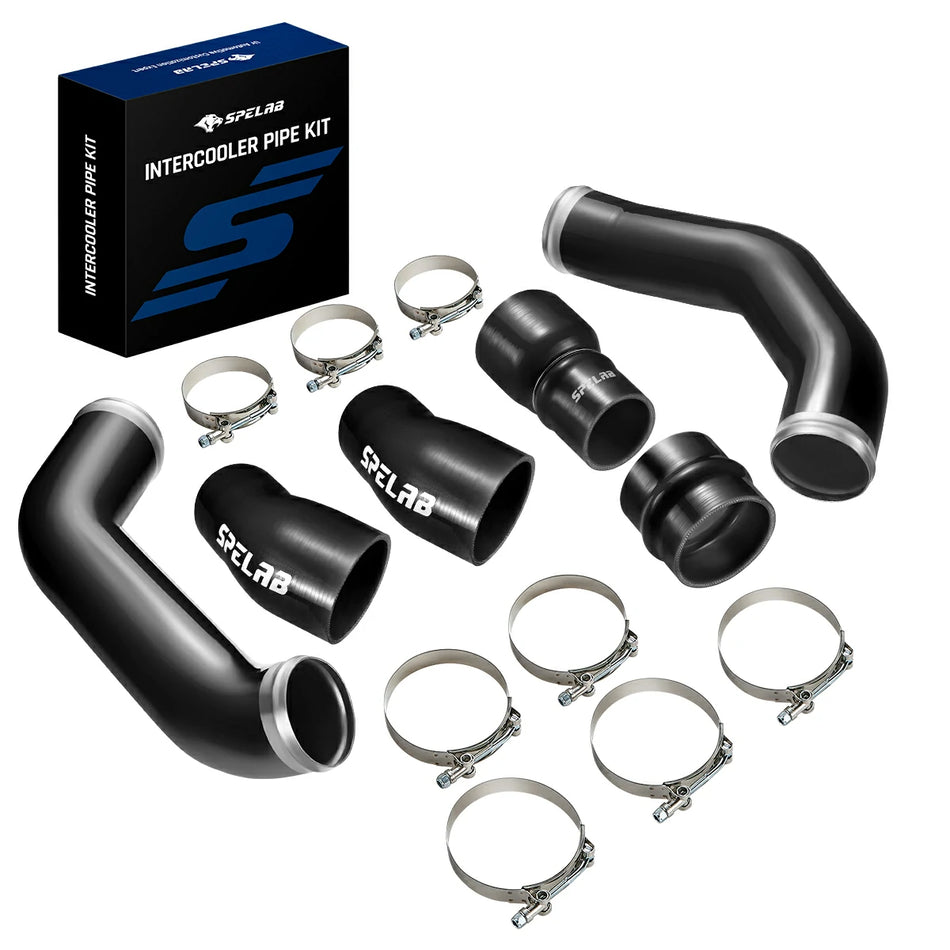
For trucks with confirmed charge-air leaks, direct-fit intercooler pipe kits or intake-side upgrades can be part of the repair path after pressure testing confirms the weak point.
Platform Notes: Powerstroke, Cummins, and Duramax
Each diesel platform has its own pattern, so a post-delete rough idle diagnosis should follow the engine family instead of a generic truck-forum checklist.
Ford Powerstroke
A 6.4L or 6.7L Powerstroke with white smoke after a delete needs fuel pressure, EGR cooler, turbo control, boost leaks, and tune support checked in that order when the symptom starts right after the Mod.
Ford Super Duty tow rigs live hard. Long idle time, heavy trailers, hot grades, and jobsite dust expose cracked boots, weak batteries, fuel filter neglect, and cooling-system leaks. On 2011-2016 6.7L trucks, CP4 health and rail pressure data deserve real attention before anyone calls the exhaust pipe the cause.
Ram Cummins
A 6.7L Cummins with cold white smoke needs grid heater, battery, injector, rail pressure, and intake restriction checks before the owner blames the DPF delete.
Ram trucks used for farm work, plowing, and low-speed hauling often stack idle hours and soot. 2007.5-2012 trucks behave differently from 2013-2018 and 2019-2024 trucks because emissions layout, DEF/SCR equipment, cab and chassis fitment, and calibration support changed over time.
GM Duramax
A Duramax with post-delete white smoke or rough idle needs the exact engine generation identified before diagnosis, because LB7, LMM, LML, and L5P trucks do not share the same emissions hardware or fuel-system behavior.
LB7 owners often chase the wrong phrase because many stock 2001-2004 LB7 pickups do not have a factory DPF. LMM and newer trucks bring DPF logic into the picture. LML and L5P trucks add more sensor-heavy emissions control, so DEF/SCR, NOx, EGT, pressure data, and tune support have to be checked cleanly.
Read our LB7 Duramax fitment guide if the truck generation is unclear before ordering emissions-related hardware.
10-Minute First Check Before Buying Parts
The right first move is to save data, inspect the obvious failure points, and prove whether the symptom is tune, fuel, air, coolant, or hardware fitment.
- Save active, pending, permanent, and history codes before clearing anything.
- Record when smoke appears: cold start, warm idle, throttle tip-in, towing, long idle, or after sitting overnight.
- Smell the exhaust carefully: raw diesel points fuel-side, sweet vapor points coolant-side, oil smell points turbo or engine wear.
- Check coolant level, degas bottle pressure, oil level, and whether oil level is rising from fuel dilution.
- Log commanded rail pressure vs actual rail pressure at idle, snap throttle, and light load.
- Read injector balance, contribution, or correction data with the correct scan tool for the platform.
- Pressure-test the charge-air system and inspect boots, clamps, intercooler tanks, intake pipes, and MAP sensor ports.
- Inspect exhaust joints, V-band clamps, slip joints, hangers, sensor plugs, heat shielding, and harness routing near the new pipe.
- Confirm the tune matches year, engine, ECM strategy, transmission, emissions configuration, tire size, axle ratio, and use case.
- Stop towing heavy until rough idle, white smoke, fuel smell, coolant loss, or low rail pressure is understood.

Repair Path: Tune, Diagnose, Repair, or Refit Hardware?
The fix depends on the failed system, not the loudest symptom.
| Finding | Best Next Step | Do Not Do This |
|---|---|---|
| Problem started immediately after tune install | Verify calibration file, ECM strategy, TCM support, idle fueling, timing, and emissions configuration. | Do not keep driving hard on a file that smokes, surges, or sets new codes. |
| Soot marks or exhaust leak near new pipe | Refit clamps, flanges, hangers, gaskets, and sensor bungs with the truck cold. | Do not assume a universal pipe fits every cab, bed, and wheelbase. |
| Raw fuel smell, hard start, rough idle | Test injectors, rail pressure, return flow, fuel filters, supply pressure, and oil dilution. | Do not add more power tuning before the fuel system is clean. |
| Sweet white vapor, coolant loss, pressure in cooling system | Pressure-test coolant system, inspect EGR cooler, head gasket indicators, and coolant routing. | Do not treat coolant vapor like normal delete smoke. |
| Low boost, haze under load, lazy throttle | Pressure-test intake and charge-air system, then inspect MAF/MAP readings and turbo control. | Do not blame the DPF pipe before the engine has enough air. |
| Street-driven truck with emissions equipment removed | Review compliant repair, inspection, warranty, resale, and local road-use requirements. | Do not assume an off-road label makes a road truck compliant. |
For DPF warning and pressure-data workflow before a delete decision, use our DPF pressure diagnosis guide. For ownership risk, read the inspection and resale risk guide.

Where SPELAB Parts Fit In
Parts belong in the conversation after diagnosis proves the truck needs hardware, not before the cause is known.
As a parts manufacturer, we care about fitment because a rigid, heavy-duty pipe still fails the job if the hanger angle, clamp size, bed length, or sensor layout is wrong. A documented non-road build may need a platform-correct DPF delete race pipe, EGR delete kit, all-in-one kit, intake part, or charge-air repair part. A street truck with a repairable sensor, injector, cooler, or boost leak needs diagnosis first.
Use the broader all-in-one diesel delete kit collection only when the full hardware and calibration plan is already confirmed. Use EGR delete kits only after the EGR side has been identified as part of a legally allowed build plan.
Legal Notice
Emissions, exhaust, and tuning changes can affect road-use legality, inspection status, warranty coverage, resale value, and service access.
This article is for general informational purposes only and is not legal, emissions, warranty, or professional mechanical advice. Always confirm federal, state, and local requirements before modifying emissions, exhaust, engine, or tuning systems. The U.S. EPA states that the Clean Air Act prohibits tampering with emissions controls and prohibits manufacturing, selling, and installing aftermarket devices intended to defeat those controls. For official regulatory context, review the EPA enforcement alert on aftermarket defeat devices and tampering.
FAQ
These answers cover the short questions diesel owners usually ask when a deleted truck starts smoking white or idling rough.
Q: Can a DPF delete cause white smoke?
A: Yes, a delete can expose or trigger white smoke when the tune, fuel timing, sensor logic, injector condition, coolant system, or installation is wrong. The pipe alone is not usually the root cause.
Q: Can a bad tune cause rough idle after DPF delete?
A: Yes. A mismatched tune can create unstable idle fueling, wrong timing, poor rail pressure control, boost mismatch, check engine lights, and smoke. Confirm the tune matches the exact truck and hardware.
Q: Why does my deleted diesel smoke white on startup?
A: Cold-start white smoke often points to incomplete combustion from weak glow plugs, grid heater issues, low battery voltage, poor cranking speed, injector leakage, low compression, or cold fuel timing.
Q: Will a DPF delete fix rough idle?
A: No. A DPF delete may reduce exhaust restriction in a legal non-road build, but it will not fix injectors, fuel pressure, boost leaks, coolant leaks, sensor faults, or bad calibration.
Q: Is white smoke after delete always an injector problem?
A: No. Injectors are common suspects when smoke smells like raw fuel, but coolant vapor, turbo oil leakage, glow plug problems, timing issues, low compression, and bad tuning can look similar.
Q: Should I tow if my deleted truck has white smoke and rough idle?
A: No. Heavy towing can turn a fuel, coolant, boost, or tuning issue into expensive damage. Save codes, check fluids, read live data, and diagnose the fault before putting Payload behind it.
Q: Is a DPF delete legal for street use in the United States?
A: A DPF delete is not a compliant repair path for most emissions-controlled public-road trucks in the United States. Check official EPA guidance, state rules, inspection requirements, and vehicle-specific obligations before modifying emissions equipment.

About the Author
John Lee
Mechanical Engineer | 10+ Years Experience
John has spent the last decade engineering and testing high-performance automotive components. Specializing in drivetrain durability and thermal management across Powerstroke, Cummins, and Duramax applications, he bridges the gap between OEM limitations and aftermarket performance. His philosophy: "Factory parts are just a starting point."