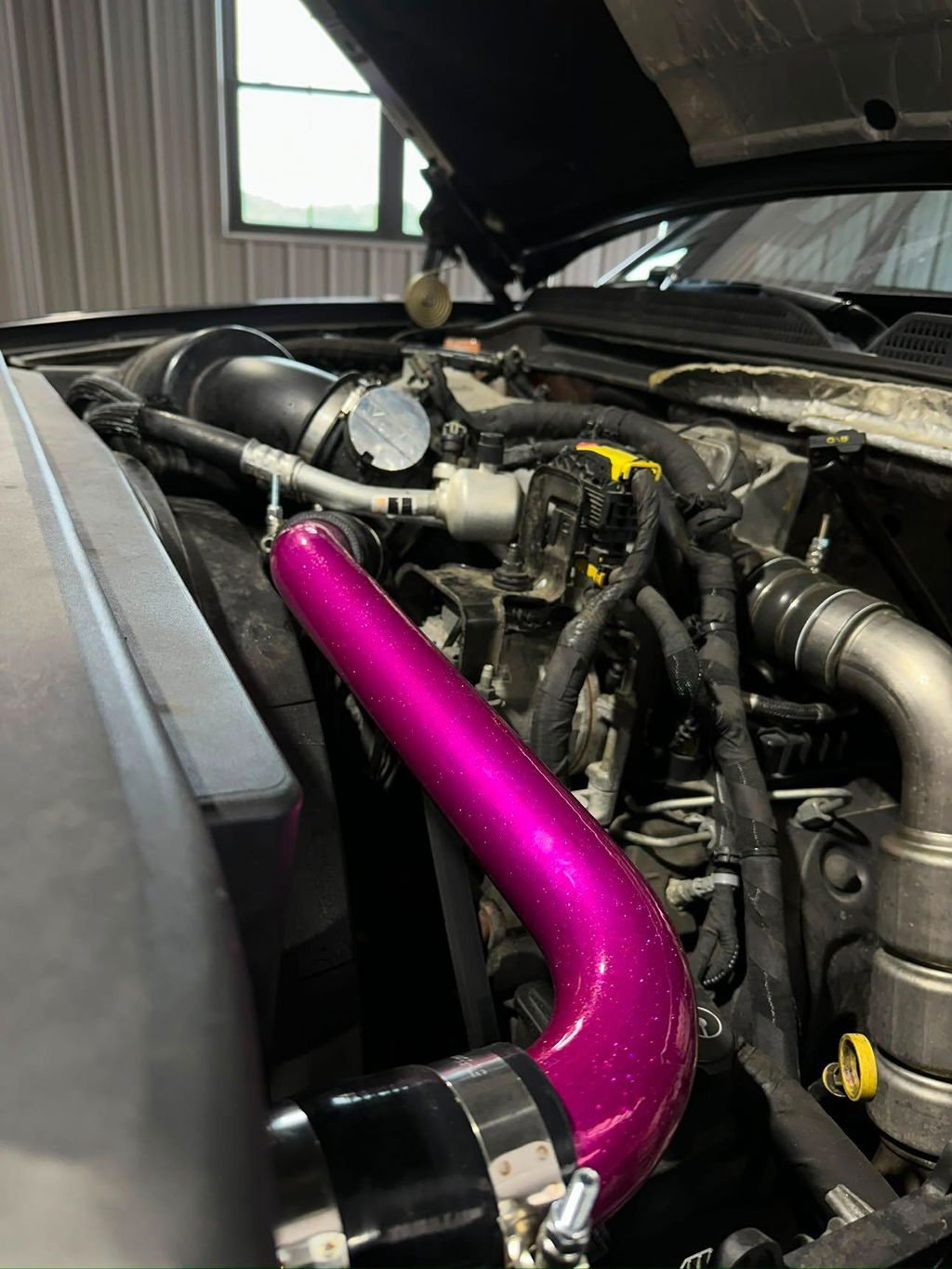
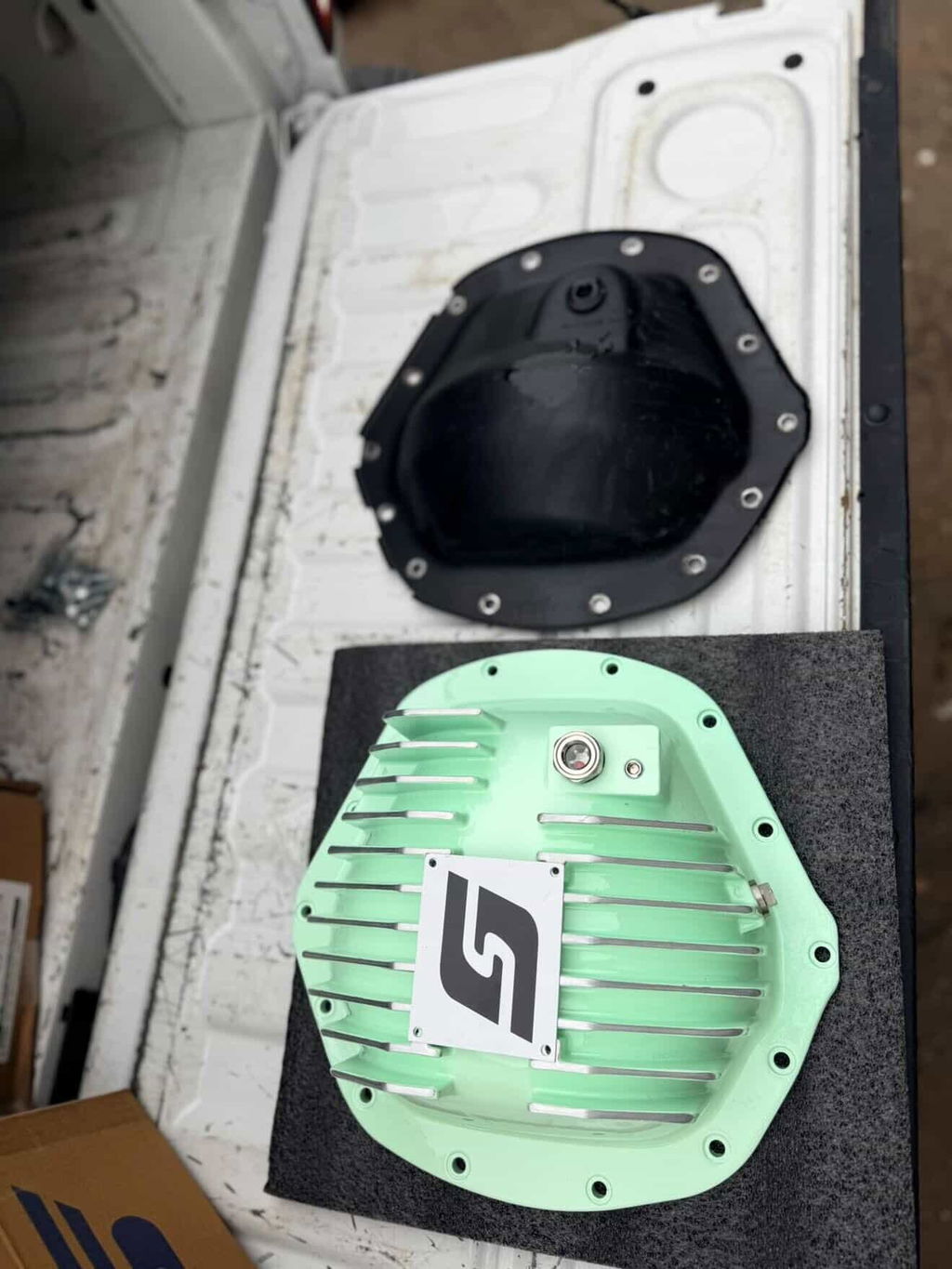
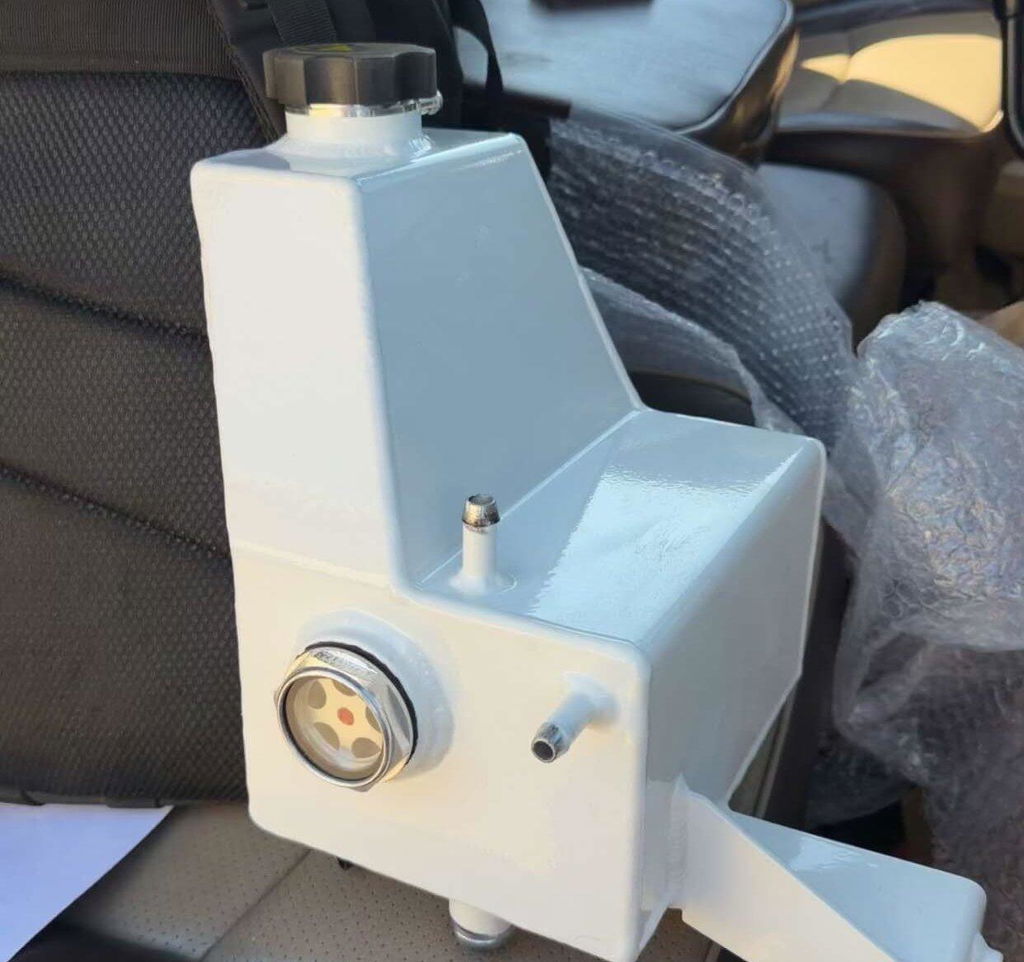
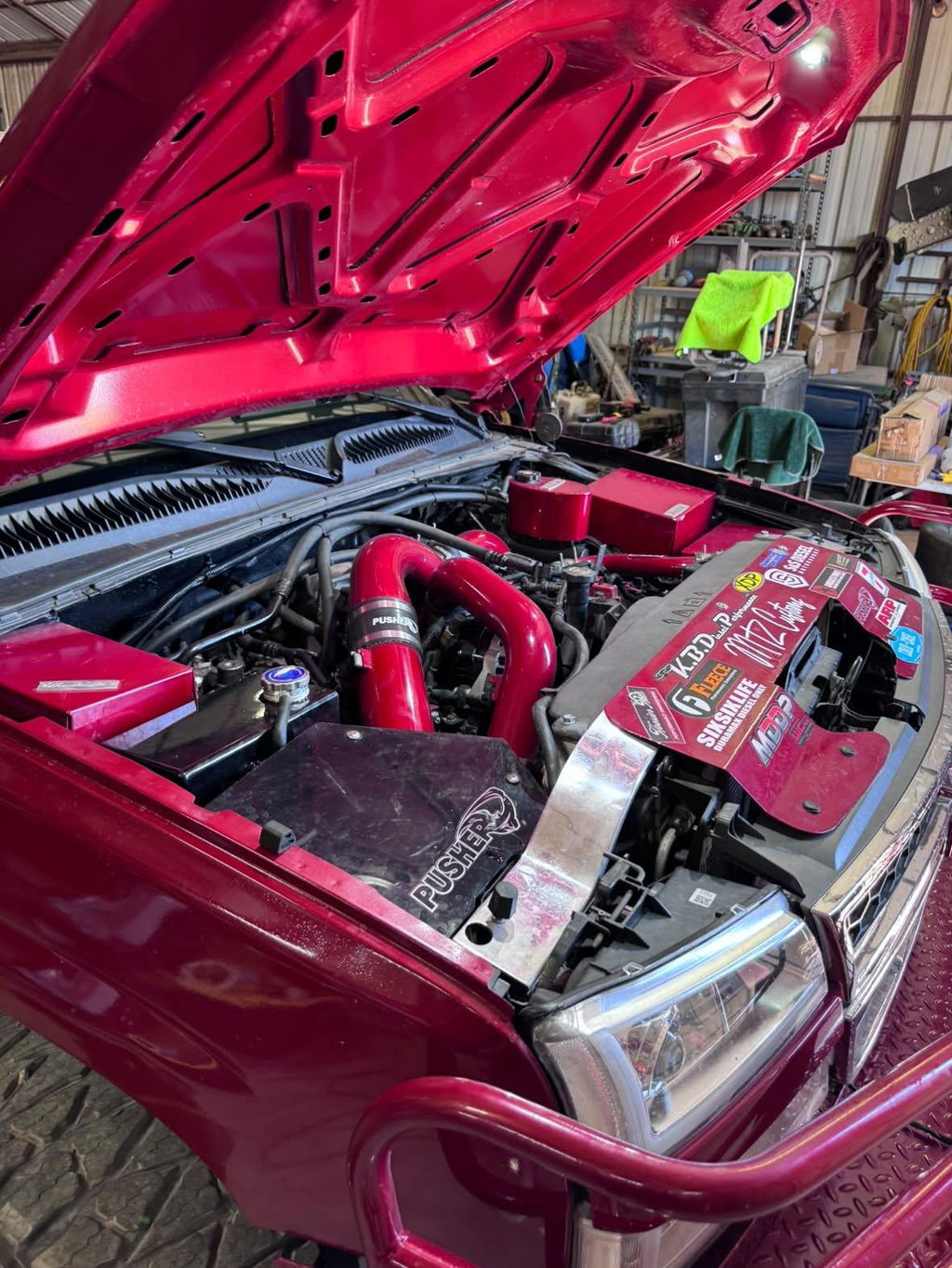
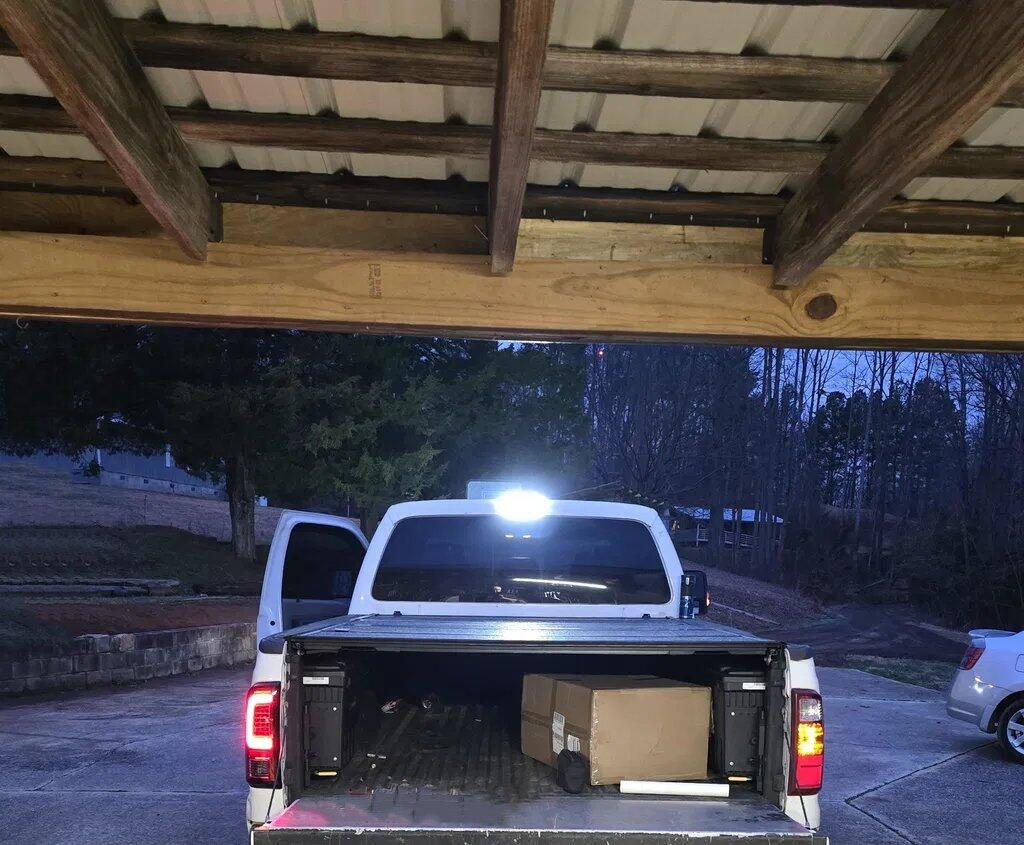
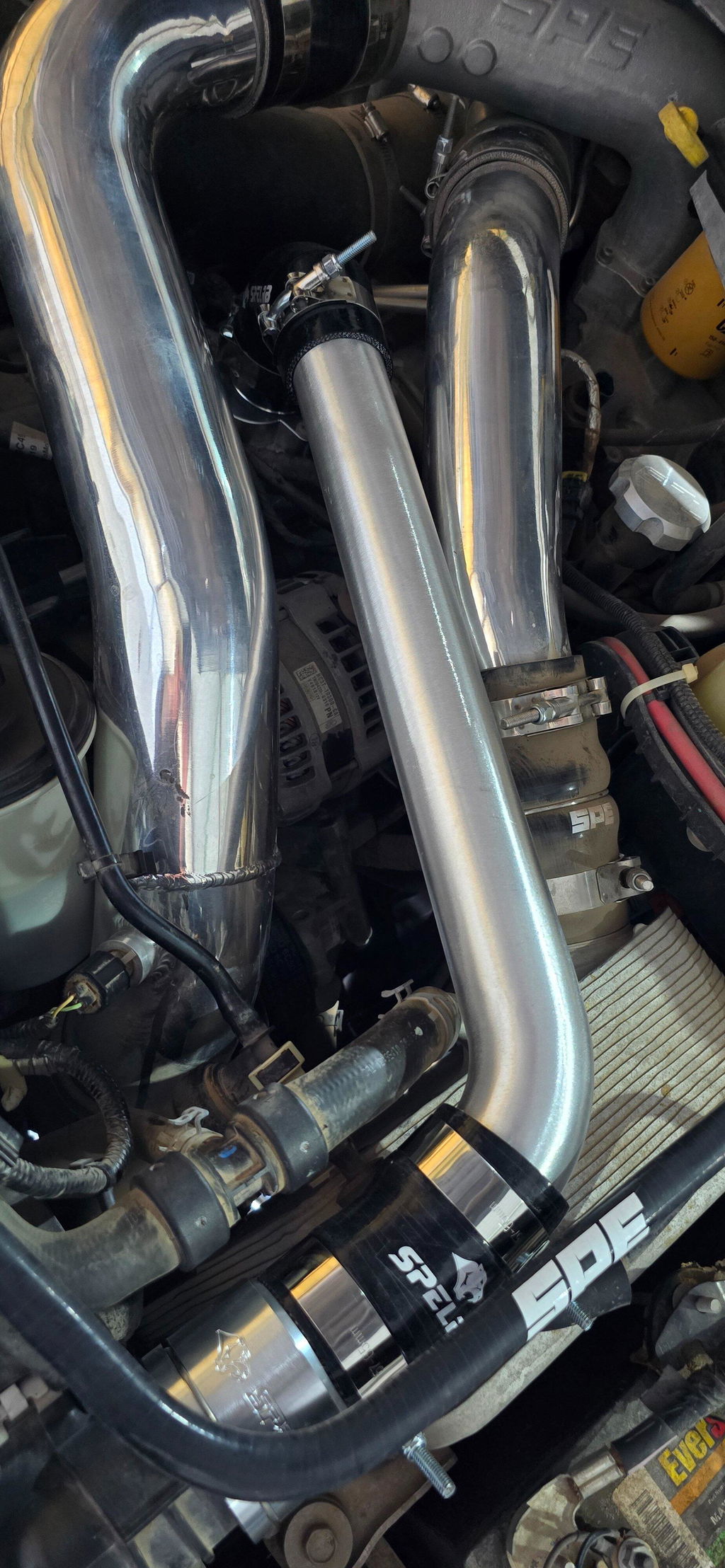
Truck cooling system upgrades are usually bought one part at a time, after something has already failed. This page looks at the whole circuit instead: what each section is responsible for, why the same few parts keep failing first, and how to tell which section a symptom points to before ordering. Most of this applies to diesel pickups worked hard - towing, hauling, idling in heat - where heat is set by load rather than speed. Car platforms follow the same rules with an easier duty cycle.
What a Truck Cooling System Has to Do
A cooling system is not trying to make an engine cold. It is trying to hold the engine in a narrow temperature band by rejecting heat at the same rate the engine makes it. When those rates match, temperature stops climbing. When they do not, it keeps climbing until something gives.
That balance explains a lot of confusing behaviour. A truck that holds temperature on the flat and climbs on a long grade has no broken part - it has run out of rejection capacity at a higher heat input. A truck that is fine in winter and marginal in summer is the same story with less margin.
Load Sets the Heat, Not Speed
-
Heat input follows work. Pulling weight up a grade makes far more heat than cruising, and makes it for minutes rather than seconds.
-
Airflow follows speed. Slow, loaded work - crawling in traffic, backing a trailer, idling on a job site - gives the least airflow when heat input is still real.
-
Shutdown is its own event. When the engine stops, flow and airflow stop while the metal is still at full temperature. That soak cycle ages every plastic and rubber part under the hood.
So the hardest condition here is not high speed. It is sustained work at low speed followed by a hot shutdown - and that is the condition truck cooling system upgrades should be judged against.
Where Truck Cooling System Upgrades Fit in the Circuit
The useful way to read this category is by circuit position. Each section does one job, and upgrading the wrong section for the symptom is the most common reason an upgrade disappoints.
| Circuit position |
What it is responsible for |
What upgrading it changes |
What it does not change |
| Heat exchanger |
Rejecting heat to the air |
How much heat the system can shed at a given airflow |
How much heat the engine makes, or how much flow reaches it |
| Delivery - tubes, pipes, hoses |
Moving coolant between engine and exchanger |
Whether designed flow actually arrives and stays inside the circuit |
Rejection capacity. A better line into a marginal exchanger changes little |
| Pressure and separation - tank, cap |
Holding pressure, absorbing expansion, collecting air |
Boiling margin and whether level readings mean anything |
Air already trapped elsewhere in the circuit |
| Coolant condition - filtration |
Keeping the fluid clean and chemically stable |
How slowly passages foul and how long the fluid lasts |
Damage already done by degraded coolant |
| Separate circuits - transmission, oil |
Rejecting heat from fluids the main circuit never sees |
Fluid temperature in systems with their own heat load |
Engine coolant temperature at all |
| Structure and mounting |
Holding the exchanger and connections in alignment |
Whether connections stay aligned as the front end flexes |
Anything about heat transfer itself |
Read the last column as carefully as the third. Most disappointment here comes from buying capacity when the problem was delivery, or a delivery part when the problem was capacity.
Pressure and Air Are the Two Things Owners Miss
Of everything above, pressure and air cause the most misdiagnosis, because neither leaves a puddle.
-
Pressure sets the boiling point. The cap is a pressure-setting device, not a lid. Lose pressure and coolant boils at a lower temperature - which is why a full system can still overheat under load.
-
Air goes to the highest point and stays there. Overheating after a cooling repair is almost always trapped air, not a defective new part.
-
Pressure leaks are intermittent. A joint that seeps only when hot looks perfect on a cold inspection, which is why the level drops with nothing on the ground.
Why One Upgrade Alone Often Disappoints
A cooling circuit behaves like a chain: the result is set by the section currently limiting it, and changing a different section moves nothing.
-
Added capacity needs flow to use it. A larger exchanger only rejects more heat if the circuit can deliver more coolant through it.
-
Replacing a failed part with the same design repeats the failure. The replacement has to answer the load that caused it - heat cycling, movement, or pressure cycling are three different answers.
-
Sealing pressure without removing air solves half the problem. They are independent, and a system can be doing both at once.
This is why cooling work is often planned as a set rather than as single parts. It is not a selling argument - it is what a series circuit does.
Reading the Symptom Before Choosing Truck Cooling System Upgrades
| What you see |
Which section it points to |
| Temperature climbs on grades, settles on the flat |
Rejection capacity or airflow - not a leak |
| Level drops between services, nothing on the ground |
Pressure holding: cap, seam, or a joint that opens only hot |
| Overheating appears right after a cooling repair |
Trapped air - not full, not faulty |
| Sweet smell after shutdown, no visible leak |
Small pressure-side seep that closes as it cools |
| Gauge swings or level warnings that come and go |
Level sensing, air, or circulation - rarely the exchanger |
| Coolant looks rusty or carries debris |
Coolant condition, before anything else is judged |
| Transmission or oil temperature is the complaint |
A separate circuit - the engine system is not involved |
Choosing Truck Cooling System Upgrades in Order
-
Establish that the system holds pressure and is actually full. Everything else is judged against a baseline that has to be true first.
-
Look at the condition of the fluid. Cheapest to check, and the one that quietly damages everything downstream.
-
Find what failed and why. The failure mode tells you what the replacement has to survive - heat cycling, movement and pressure cycling are three different answers.
-
Then look at capacity. It is the last thing to add and the most expensive to add for no reason.
What Truck Cooling System Upgrades Cannot Fix
Being clear about this saves more money than any buying advice.
-
Combustion gas entering the coolant. That is a sealing failure inside the engine. No external part addresses it.
-
A pump that no longer moves enough coolant. Flow has to exist before anything else matters.
-
Airflow problems. Fan drive, shrouding and obstruction are not solved by bigger hardware upstream.
-
Heat that was not there before. If heat input has risen, something has to give up margin.
Truck Cooling System Upgrades: Fitment Checks Before Ordering
Cooling parts are more configuration-specific than most buyers expect. Two trucks of the same engine generation can leave the factory with different hardware, and the difference is usually visible before ordering.
-
Count what is actually fitted. Radiator configuration and the number of return lines vary within one generation. The part is specific to the configuration, not to the model year.
-
Follow every port. A port exists because a line returns to it. Capping a line still in use stops flow through that circuit.
-
Check cap rating and sensor provision. A cap has to be rated for the system, and a level sensor has to connect to the harness that is there.
-
Think about mixed metals. Where an aluminium part meets fittings or a cap seat of another metal, that interface decides how long the assembly lasts.
-
Buy seals and clamps at the same time. Reusing hardened seals is the usual reason a fresh repair weeps.
Intended Use
Components here are cooling parts. Where a circuit also serves emissions hardware, that circuit has to stay connected on vehicles driven on public roads. Removing or bypassing emissions equipment on road-going vehicles is prohibited under US federal law. Exchangers, lines, tanks, caps and filtration can be fitted to a street-driven truck without changing any emissions function.