Author: John Lee, SPELAB Mechanical Engineer. Updated on May 14, 2026.
Quick Answer
An EGR delete can benefit some diesel engines in off-road or competition applications by reducing exhaust soot entering the intake, lowering EGR-related maintenance issues, improving throttle response, and simplifying the engine bay. However, the real-world gains are not guaranteed. Horsepower, torque, fuel economy, regen behavior, and engine longevity depend heavily on tuning quality, engine condition, driving style, towing load, turbo behavior, coolant routing, and supporting parts.
For public-road diesel trucks, removing or disabling the EGR system can violate emissions regulations, fail inspection, void warranty coverage, and create resale problems. This guide explains the engineering benefits, drawbacks, DTC codes, tuning requirements, and legal considerations so diesel owners can make an informed decision.
This article is for technical and educational purposes only. EGR delete parts are generally intended for off-road, race, competition, or closed-course applications only. This article does not encourage illegal public-road emissions tampering. Always check federal, state, and local laws before modifying any emissions-control system.
What Is EGR on a Diesel Engine?
EGR stands for Exhaust Gas Recirculation. The EGR system routes a controlled amount of exhaust gas back into the intake stream. This helps reduce combustion temperature and lower nitrogen oxide emissions.
On diesel trucks such as 6.7 Cummins, 6.0 Powerstroke, 6.7 Powerstroke, LML Duramax, and L5P Duramax, the EGR system is part of a larger emissions strategy. Depending on the platform, it may work alongside the DPF, SCR, DEF system, NOx sensors, EGT sensors, and ECU calibration.
Common EGR-related components include:
- EGR valve
- EGR cooler
- EGR crossover tube or related piping
- Throttle valve or intake air control components on some platforms
- Coolant lines connected to the EGR cooler
- Gaskets, clamps, sensors, and related hardware
If you are comparing off-road parts by platform, start with SPELAB’s EGR delete kit collection and then narrow by Cummins, Powerstroke, or Duramax fitment.
What Does an EGR Delete Actually Do?
An EGR delete removes, blocks, or bypasses the EGR system so exhaust gas no longer recirculates into the intake. Depending on the truck, this may involve block-off plates, cooler removal or bypass parts, coolant rerouting, throttle valve-related hardware, and tuning support.
| System Area | What Changes After EGR Delete | Why It Matters |
|---|---|---|
| Intake tract | Less exhaust soot enters the intake | May reduce carbon sludge buildup in off-road setups |
| EGR cooler | Cooler may be removed or bypassed | Coolant routing and leak prevention become critical |
| ECU calibration | Factory EGR logic no longer matches the hardware | Off-road tuning is required to avoid fault codes and limp mode |
| Combustion behavior | Fresh-air ratio, combustion temperature, and NOx behavior can change | EGT and cylinder pressure monitoring become more important |
| Emissions output | NOx emissions can increase | Creates legal and environmental concerns for public-road vehicles |
| Maintenance complexity | Fewer EGR components to clog or fail | May reduce EGR-specific maintenance in dedicated off-road use |
EGR Delete Benefits: What Diesel Owners Usually Notice
The benefits of an EGR delete are often discussed online, but they should be understood with context. A delete kit alone is not magic. The outcome depends on the engine platform, tuning, installation quality, and how the truck is used.
1. Reduced Soot Buildup in the Intake
The most practical benefit is reducing exhaust soot recirculation into the intake path. Over time, EGR soot can mix with oil vapor from the crankcase ventilation system and create sticky carbon sludge in the intake manifold, EGR valve, throttle valve, and related passages.
For engines that idle often, tow frequently, or run many heat cycles, soot buildup can contribute to airflow restriction, poor response, EGR valve sticking, and maintenance costs.
Add a comparison image near this section showing a clean intake path vs a soot-clogged intake. Suggested alt text: Clean diesel intake vs soot-clogged intake after EGR buildup.
If your main issue is coolant loss, white smoke, or EGR cooler failure, read SPELAB’s guide on EGR coolant leak symptoms and fixes before replacing parts blindly.
2. Better Throttle Response in Some Setups
In a properly tuned off-road setup, removing EGR-related flow restrictions and soot contamination may help the engine respond more cleanly to throttle input. This is especially noticeable on trucks that previously had a sticking EGR valve, clogged cooler, restricted intake path, or inconsistent sensor feedback.
However, throttle response is not only controlled by EGR. Turbo condition, boost leaks, fuel delivery, transmission tuning, tire size, and pedal mapping all affect how the truck feels.

3. Lower EGR-Related Maintenance
Deleting EGR in an off-road application removes several parts that commonly need cleaning, inspection, or replacement. This can reduce EGR-specific maintenance, especially on trucks that suffer from repeated EGR valve sticking, cooler clogging, or soot accumulation.
| Factory EGR Issue | What Owners Notice | How EGR Delete May Help Off-Road |
|---|---|---|
| EGR valve sticking | Rough running, poor response, fault codes | Removes the valve from the airflow strategy |
| EGR cooler clogging | Reduced efficiency, heat issues, possible coolant concerns | Removes or bypasses the cooler depending on kit design |
| Intake soot buildup | Restricted airflow and dirty intake path | Reduces soot recirculation into the intake |
| Repeated EGR-related diagnostics | Recurring repair bills and downtime | Simplifies one failure-prone subsystem in off-road setups |
4. Cleaner Intake Air Path
By preventing exhaust gas from re-entering the intake, an EGR delete can keep the intake path cleaner in off-road applications. This may support more consistent airflow over time, especially when paired with proper crankcase ventilation maintenance.
For trucks where oil vapor contamination is also a concern, compare SPELAB’s CCV/PCV reroute kits as part of a broader intake cleanliness strategy.
5. Engine Bay Simplification
Removing the EGR cooler, crossover piping, and related hardware can simplify the engine bay in dedicated off-road builds. This may make future service easier, reduce clutter, and improve access around the intake and exhaust side of the engine.
That said, simpler hardware does not mean simpler tuning. The ECU still needs to understand the new hardware configuration in a legal off-road calibration.
Performance and Efficiency: What Is Realistic?
Many owners ask whether EGR delete increases horsepower or fuel economy. The answer is: sometimes, but not by the hardware alone.
| Claim | More Accurate Explanation | What Affects the Result |
|---|---|---|
| More horsepower | Power changes mainly come from tuning and supporting airflow/fuel upgrades | Tune level, turbo, fuel system, exhaust, transmission, engine health |
| Better fuel economy | Some users see MPG gains, but results vary heavily | Driving style, load, tire size, gear ratio, tune, terrain, maintenance |
| Less regen pressure | In some calibrated off-road setups, less soot recirculation may affect soot load behavior | DPF status, tuning, driving cycle, fuel quality, aftertreatment setup |
| Lower temperatures | Less EGR heat can help some areas, but combustion and EGT behavior depend on tuning | Calibration, towing load, boost control, fueling, cooling system condition |
| Longer engine life | Cleaner intake and fewer EGR failures may help, but poor tuning can shorten engine life | EGT control, torque management, oil maintenance, coolant routing, driving use |
The most responsible way to view EGR delete is not “instant horsepower.” It is a system change that may reduce EGR-related restriction and maintenance in off-road use, but it must be supported by correct tuning, temperature monitoring, and platform-specific hardware.
Fuel Efficiency and Regen Behavior: What to Expect
Fuel economy is one of the most misunderstood EGR delete topics. Some diesel owners report better MPG after deleting EGR, but those results often come from a combination of tuning, driving style, fewer soot-related issues, reduced intake restriction, and improved engine response.
Regen behavior is also often misunderstood. EGR delete is not the same as DPF delete. If a truck still uses a functional DPF, soot loading, regeneration frequency, and exhaust temperature behavior depend on the full aftertreatment system, tune, sensors, and driving cycle. Do not assume EGR removal alone automatically eliminates regeneration problems.
MPG depends on:
- tune quality and tune level
- tire size and rolling resistance
- gear ratio
- truck weight
- towing or hauling load
- terrain and speed
- turbo and fuel system condition
- driver throttle habits
The better claim is: an EGR delete can support efficiency in a well-calibrated off-road setup, but it does not guarantee fuel savings by itself.
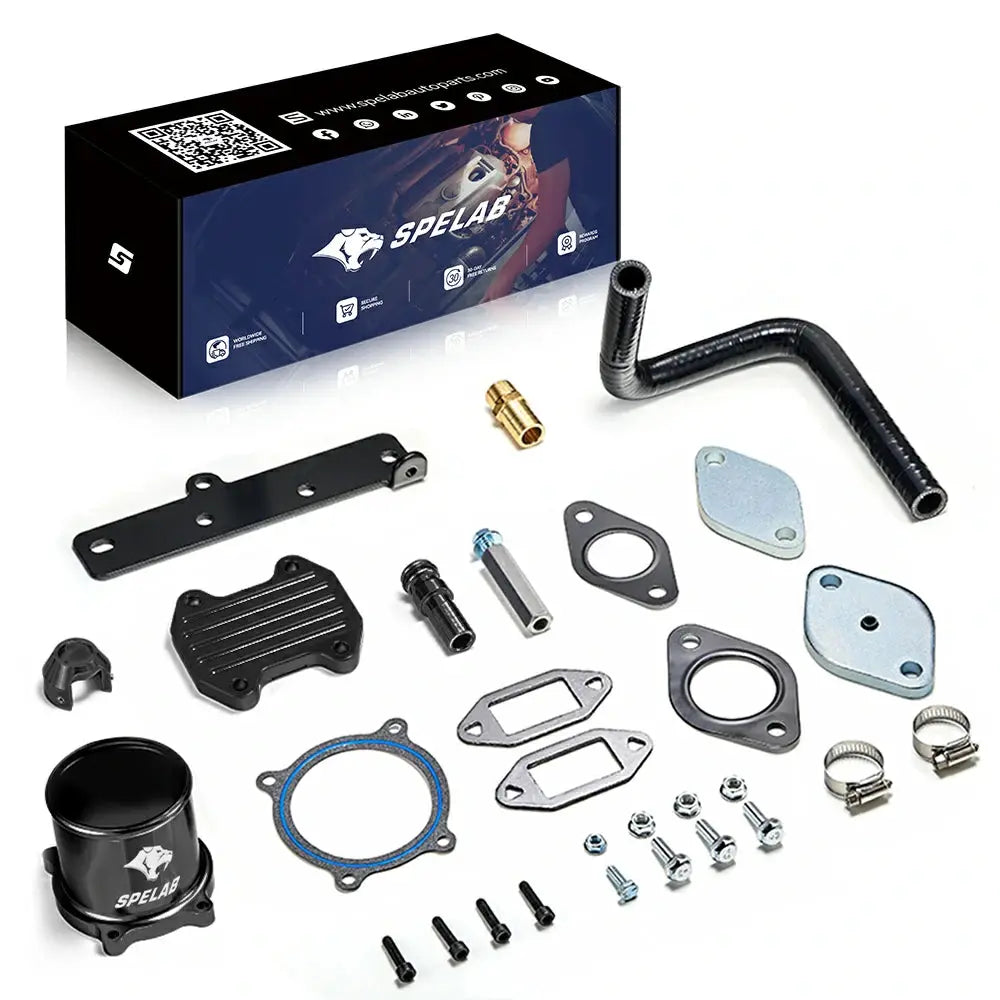
Fitment:
2013 Dodge Ram 2500 / 3500 6.7L Cummins Diesel
2014 Dodge Ram 2500 / 3500 6.7L Cummins Diesel
2015 Dodge Ram 2500 / 3500 6.7L Cummins Diesel
2016 Dodge Ram 2500 / 3500 6.7L Cummins Diesel
2017 Dodge Ram 2500 / 3500 6.7L Cummins Diesel
2018 Dodge Ram 2500 / 3500 6.7L Cummins Diesel
Cummins, Powerstroke, and Duramax: Same Idea, Different Hardware
EGR delete benefits are often discussed across diesel platforms, but the hardware is not universal. A 6.7 Cummins kit will not fit a 6.0 Powerstroke or Duramax. Coolant routing, throttle valve design, cooler shape, brackets, and tuning requirements all vary by engine family and year range.
| Engine Family | Common EGR Concern | Important Fitment Note | Where to Start |
|---|---|---|---|
| 6.7 Cummins | EGR cooler, throttle valve, soot buildup, coolant reroute | Use a kit with correct coolant routing and bypass strategy for the year range | Cummins EGR delete kit |
| Powerstroke | EGR cooler failures, coolant loss, intake contamination | 6.0, 6.4, and 6.7 Powerstroke hardware is not interchangeable | Powerstroke EGR delete kit |
| Duramax | EGR cooler, intake soot, emissions system complexity | LML and L5P have different emissions layouts and tuning needs | Duramax EGR delete kit |
6.7 Cummins Coolant Bypass: The Detail Many Owners Miss
For 6.7 Cummins owners, EGR cooler removal is not just about blocking exhaust flow. Coolant routing matters. A poor reroute can create air pockets, leaks, or localized hot spots near the rear of the cylinder head.
The #6 cylinder area is a common concern among Cummins owners because it sits at the rear of the engine where heat management is already demanding. A high-quality EGR setup should include a proper coolant reroute or bypass strategy instead of simply blocking coolant hoses.
On a 6.7 Cummins, do not treat the coolant bypass hose as a minor accessory. Proper rear-head coolant flow helps reduce localized hot spots, especially on towing or high-load off-road builds.
Reduced Maintenance Needs
One of the strongest EGR delete benefits in off-road use is reducing EGR-specific maintenance. The EGR system can clog with carbon, suffer cooler-related coolant leaks, trigger flow-related codes, or require repeated cleaning.
Without EGR hardware, there are fewer EGR-specific components to service. That can reduce downtime in a dedicated off-road build. But it does not remove the need for normal diesel maintenance, including oil changes, cooling system checks, air filtration, fuel filter service, turbo inspection, EGT monitoring, and boost leak checks.
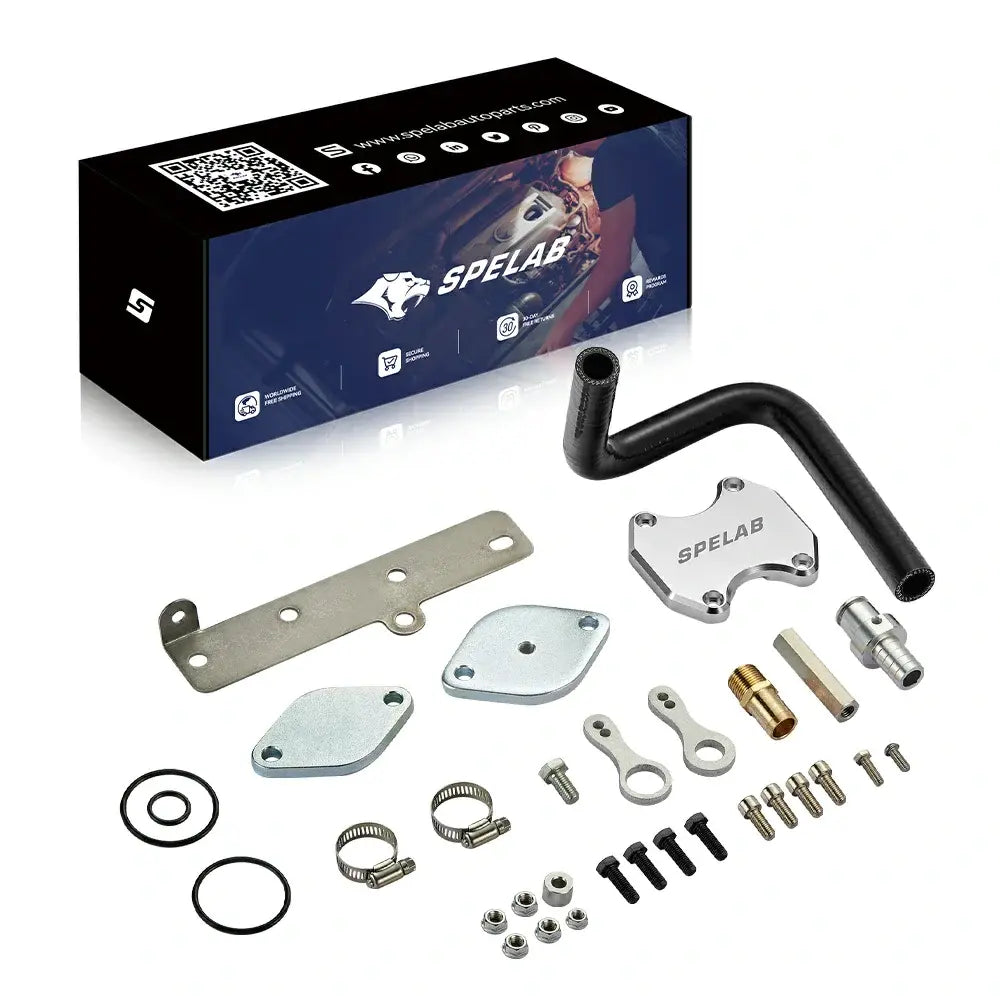
Features:
Designed to reduce EGR-related soot buildup in off-road setups
Includes coolant reroute hose
Replaces EGR valve and EGR cooler hardware according to product fitment
Includes related brackets and hardware depending on configuration
Engine Longevity: Benefit or Risk?
EGR delete can support engine longevity in one way: it may reduce soot recirculation and remove EGR-specific failure points in off-road applications. A cleaner intake path and fewer clogged EGR components can help reduce certain maintenance problems.
But EGR delete can also create risks if the tune is aggressive, coolant routing is poor, exhaust gas temperatures are not monitored, or the truck is worked hard without supporting upgrades. Higher cylinder pressure, poor fuel timing, high EGT, and incorrect torque management can shorten component life.
Why EGT Monitoring Matters
EGT stands for exhaust gas temperature. After emissions hardware changes, especially on tuned diesel trucks, EGT monitoring becomes more important. High EGT under towing, racing, or long hill climbs can stress the turbocharger, pistons, valves, exhaust manifold, and head gasket.
For serious towing, racing, or off-road builds, owners often monitor:
- EGT / exhaust gas temperature
- coolant temperature
- oil temperature
- boost pressure
- transmission temperature
- fuel rail pressure or fuel supply pressure where applicable
The responsible view is balanced:
- Potential benefit: Less soot in the intake and fewer EGR-specific failures.
- Potential risk: Poor tuning or incorrect installation can increase stress and damage parts.
- Best practice: Use correct fitment, quality hardware, conservative calibration, coolant bypass where needed, and regular monitoring.
Common EGR-Related DTC Codes
Diagnostic trouble codes are useful clues, but they should not be treated as automatic instructions to delete emissions equipment. Diagnose the root cause first.
| DTC Code | Common Meaning | What to Check First |
|---|---|---|
| P0401 | EGR flow insufficient | EGR valve, clogged passages, EGR cooler restriction, sensor feedback, intake soot |
| P0402 | EGR flow excessive | Stuck EGR valve, control logic, sensor data, vacuum/electrical control depending on platform |
| P0404 | EGR control circuit range/performance | EGR valve position, wiring, connector, actuator movement, ECU command vs feedback |
| P0405 | EGR sensor circuit low | Sensor wiring, connector damage, reference voltage, failed sensor |
If a truck is still driven on public roads, emissions-compliant repair is usually the safer path. For off-road builds, any calibration must match the hardware configuration.
Potential Drawbacks of EGR Delete
EGR delete is not a one-sided upgrade. It has serious drawbacks, especially for trucks driven on public roads.
1. Increased NOx Emissions
The EGR system exists to reduce NOx emissions. Removing it can increase NOx output, which is one reason EGR delete is not appropriate for emissions-compliant street vehicles.
2. Legal and Inspection Risk
Many regions require emissions systems to remain functional. A truck with deleted EGR may fail inspection, lose registration eligibility, create warranty problems, or become difficult to sell through normal channels.
3. Tuning Dependency
Modern diesel engines expect emissions systems to communicate with the ECU. Removing EGR hardware without matching off-road calibration can trigger fault codes, limp mode, reduced power, poor drivability, or sensor conflicts.
4. Thermal Management Risk
EGR delete can change combustion and exhaust temperature behavior. If tuning is poor or the truck is heavily loaded, EGT and cylinder pressure management become more important.

Legal and Regulatory Considerations
Before considering EGR delete, understand that emissions-control systems are regulated. For public-road vehicles, removing or disabling the EGR system can create legal and compliance problems.
In the United States, emissions tampering and aftermarket defeat devices are major enforcement topics. For that reason, EGR delete content should be treated as off-road / competition-use information, not as a recommendation for street-driven trucks.
| Use Case | EGR Delete Risk Level | Recommended Direction |
|---|---|---|
| Street-driven daily truck | High legal and inspection risk | Use emissions-compliant repair and maintenance |
| Commercial work truck | Very high compliance and liability risk | Keep emissions systems functional |
| Off-road competition truck | Depends on event and local rules | Use off-road parts only where legal |
| Private land / closed-course build | Still requires local rule checks | Confirm laws, tuning, and safety before modifying |
Legal Alternatives Before Deleting EGR
If the truck is used on public roads, consider emissions-compliant solutions before deleting EGR. Many EGR-related problems can be repaired or reduced without removing the system.
- Clean or replace a sticking EGR valve
- Diagnose EGR cooler leaks before replacing unrelated parts
- Fix boost leaks and intake leaks
- Service crankcase ventilation to reduce oily intake deposits
- Inspect sensors and wiring before replacing hardware
- Use emissions-compliant tuning where available
- Upgrade cooling or intercooler parts without disabling emissions systems
For airflow and cooling support that does not automatically require emissions removal, review SPELAB’s intercoolers and diesel exhaust systems collections as part of a broader performance plan.
EGR Delete Decision Checklist
Before buying parts, answer these questions honestly:
- Is the truck driven on public roads?
- Does your state or region require emissions inspection?
- Is the truck still under warranty?
- Is the truck used commercially?
- Have you diagnosed the original EGR problem?
- Do you understand the tuning requirements?
- Do you have a plan for coolant routing and leak checks?
- For 6.7 Cummins builds, does the kit handle coolant bypass correctly?
- Do you have a plan to monitor EGT and coolant temperature?
- Are you prepared for resale and compliance consequences?
For a Cummins-specific explanation, read SPELAB’s guide on what deleting EGR on a 6.7 Cummins involves.
Related Reading
- how EGR delete affects Dodge Cummins performance
- 6.7 Cummins EGR delete pros and cons
- L5P Duramax EGR and DPF delete pros and cons
- 6.7 Powerstroke EGR delete pros and cons
- whether you should delete EGR on a diesel engine
Final Recommendation
EGR delete can benefit diesel engines in off-road or competition use by reducing soot recirculation, simplifying EGR-related maintenance, and improving response when paired with proper hardware and calibration. But it also increases emissions, creates legal risk for street vehicles, and can damage the engine if tuning, coolant routing, or installation quality is poor.
For public-road trucks, emissions-compliant diagnosis and repair is usually the safer choice. For dedicated off-road builds, choose the correct year-specific kit, verify coolant routing, use quality gaskets and hardware, monitor EGT, and make sure the tuning matches the exact hardware configuration.
For product fitment, use SPELAB’s EGR delete kit collection rather than relying only on a general article.
FAQ
Q: Is EGR delete good for diesel engines?
A: It can help some off-road diesel engines by reducing soot recirculation and EGR-related maintenance issues. However, it is not automatically good for every truck. Street legality, tuning quality, emissions compliance, EGT control, and engine condition all matter.
Q: What are the main benefits of deleting the EGR system?
A: Potential benefits include reduced intake soot buildup, fewer EGR-related maintenance issues, improved throttle response in some setups, simpler engine bay layout, and more consistent airflow in off-road applications.
Q: Does EGR delete increase horsepower?
A: The delete hardware itself does not guarantee horsepower. Power changes usually come from tuning and supporting airflow or fuel system upgrades. Results depend on engine condition, turbo behavior, tune quality, and supporting parts.
Q: Will EGR delete improve fuel efficiency?
A: Some owners report MPG gains, but fuel economy improvements are not guaranteed. Driving style, load, tires, gearing, tune level, terrain, and maintenance condition all affect fuel economy.
Q: Does EGR delete reduce DPF regeneration?
A: Not by itself in a simple, guaranteed way. EGR, DPF, SCR, and DEF are different systems. In some calibrated off-road setups, reduced soot recirculation may affect soot load behavior, but regen depends on the full aftertreatment system, sensors, tune, and drive cycle.
Q: What are P0401 and P0404 codes?
A: P0401 usually points to insufficient EGR flow, while P0404 often points to EGR control range or performance issues. These codes can come from clogged passages, a sticking valve, wiring problems, sensor faults, or control issues. Diagnose before replacing parts.
Q: Why does coolant bypass matter on a 6.7 Cummins EGR delete?
A: EGR cooler removal changes coolant routing. On a 6.7 Cummins, proper coolant reroute or bypass helps support coolant movement near the rear of the cylinder head and can reduce localized hot spot concerns.
Q: What are the disadvantages of EGR delete?
A: The disadvantages include increased NOx emissions, legal and inspection risks, warranty issues, tuning dependency, possible resale problems, and potential engine stress if the setup is poorly calibrated.
Q: Is it illegal to delete an EGR on a diesel engine?
A: For public-road vehicles in many regions, removing or disabling emissions equipment is illegal. EGR delete parts are generally intended for off-road, race, competition, or closed-course use only. Always check local laws before modifying emissions systems.
Q: Can EGR delete affect engine longevity?
A: It can reduce EGR-related soot and maintenance problems in off-road setups, but poor tuning, high EGT, bad coolant routing, or aggressive torque output can shorten engine life. Longevity depends on the full setup.
Q: Do I need tuning after EGR delete?
A: Yes, in an off-road configuration. The ECU expects EGR hardware and sensors to operate correctly. Removing EGR without proper calibration can cause check engine lights, limp mode, reduced power, or drivability issues.
Q: Is EGR delete the same as DPF delete?
A: No. EGR delete affects exhaust gas recirculation into the intake. DPF delete affects the exhaust aftertreatment system that filters soot. They are different systems with different parts, risks, and tuning requirements.
Q: What should I consider before doing an EGR delete?
A: Consider legality, inspection requirements, warranty, truck use, tuning support, engine condition, coolant routing, EGT monitoring, emissions impact, and whether an emissions-compliant repair would solve the original problem.

John Lee
Mechanical Engineer | 10+ Years Experience
John has spent the last decade engineering and testing high-performance automotive components. Specializing in drivetrain durability and thermal management across Powerstroke, Cummins, and Duramax applications, he bridges the gap between OEM limitations and aftermarket performance. His philosophy: "Factory parts are just a starting point."