2 Products
Coolant Filtration System
What Is a Coolant Filtration System?
A coolant filtration system is an aftermarket upgrade that adds a dedicated filter to your engine's cooling circuit, so the coolant is cleaned continuously while you drive instead of only when you flush it. The system taps into the coolant circuit with a filter base, a spin-on filter element, and high-temperature hoses that route a controlled stream of coolant through the element and back into the system.
Because the element is a spin-on filter, you can replace it in minutes without draining the radiator, which is what makes coolant filtration practical as routine maintenance rather than a shop job. The purpose is not more power or better fuel economy - it is keeping abrasive contamination out of the parts that fail first in a diesel cooling system.
Why 6.7L Powerstroke Owners Add a Coolant Filtration System
The Ford 6.7L Powerstroke is a strong engine, but its cooling system runs tight tolerances and moves a lot of heat. Contamination is what turns a healthy cooling system into a repair bill, and a coolant filtration system is installed to address these specific problems:
- Casting sand left inside the block. Engines leave the factory with residual foundry sand in the water jacket. It circulates from day one, wears water pump seals, and settles in the narrow passages of the oil cooler.
- Oil cooler restriction. The 6.7L relies on a coolant-to-oil heat exchanger with small passages. Debris collecting there reduces heat transfer, raises oil temperature, and puts the rest of the system under more load.
- Rust and scale from aging coolant.Extended change intervals, a topped-off system, or the wrong coolant specification all leave rust particles that act as an abrasive everywhere the coolant travels.
- Water pump seal wear. Abrasive particles are what cut water pump seals. A weeping pump on a high-mileage Super Duty is usually a contamination symptom rather than a defective part.
- Debris left behind after a repair. After an oil cooler, radiator, or water pump failure, fragments and residue stay in the circuit and will damage the replacement. Filtration is how you clean up after the repair.
- Towing and sustained load. Trucks that tow heavy or work in high ambient temperatures push the cooling system hardest, which is exactly when restricted flow does the most damage.
In all of these cases the coolant filtration system does one job: it keeps particles out of the places where they cause expensive failures.
What a Coolant Filtration System Removes
- Casting sand and foundry residue from the engine block
- Rust particles and scale from aging coolant passages
- Metal particles from normal wear of the water pump and other components
- Silicate dropout and gel formed by degraded or mixed coolants
- Debris released by a failed oil cooler, radiator, or water pump
Everything the element captures stays out of your oil cooler, radiator, heater core, and water pump seals.
How Bypass Filtration Works
A coolant filtration system does not filter the full flow of the water pump, and it is not designed to. Full-flow filtration at the volume a diesel water pump moves would require a large element and would add a restriction the cooling system cannot tolerate. Instead, the system filters a side stream, and because that side stream runs continuously whenever the engine is running, the full volume of the system passes through the element many times over the course of normal driving.
The cleaning is therefore gradual and continuous rather than instant. If your system is already heavily contaminated, expect the first element to load up quickly - that is the filter doing its job, not a defect.
What's Included in a Coolant Filtration System
- Filter base (filter head) - the mounting body that holds the element and provides inlet and outlet ports
- Spin-on filter element - the serviceable part you replace at intervals, without draining the system
- High-temperature hoses - rated for continuous coolant service and under-hood heat
- Hose clamps and fittings - everything needed to tee the filter into the coolant circuit
- Mounting bracket and hardware - for securing the base to the frame rail, fender well, or firewall
The kits in this collection are vehicle-specific rather than universal: base, hose lengths, and bracket are matched to the 6.7L Super Duty so you are not adapting a generic part to fit.
Coolant Filtration System Fitment
- 2011-2016 Ford 6.7L Powerstroke - F-250, F-350, F-450 and F-550 Super Duty
Confirm your model year before ordering. Cooling system layout and hose routing changed across the 6.7L production run, and the coolant specification Ford requires for this engine matters - degraded or incorrect coolant is a common root cause of the contamination this system is meant to remove.
Installing a Coolant Filtration System
- Work on a cold engine. Never open a pressurized, hot cooling system.
- Choose the tap point. Most installations use the heater hose circuit, which provides steady bypass flow without cutting into a main radiator hose.
- Mount the filter base. Pick a location with enough clearance to spin the element off later without dismantling anything around it.
- Route and secure the hoses. Keep them clear of the turbo, exhaust components, and anything sharp or moving, and clamp them so vibration cannot chafe them.
- Install the element, refill, and bleed. Top off with the correct coolant specification and purge trapped air from the system.
- Re-check after the first heat cycle. Inspect for leaks, re-check the coolant level, and re-tighten clamps once the system has been up to temperature.
This is a bolt-on job with basic hand tools. It requires coolant top-off, but it does not require programming, tuning, or any change to how the engine runs.
Filter Service Intervals
Change the first element early, within the first few hundred miles, because a used system will load it quickly. After that, replace the element at every oil change interval or roughly every 15,000 miles, whichever comes first. Use OEM-equivalent or manufacturer-specified replacement elements so the filtration rating stays consistent.
If you cut an element open and find heavy sand or rust, the system is still shedding debris - shorten the next interval and keep going until elements come out clean.
What to Check Before You Buy
- Confirm model year and cab/chassis configuration - hose routing differs across the 6.7L range
- Verify you have mounting space for the filter base and clearance to service the element
- Check your coolant condition and specification; filtration does not replace using the correct coolant
- If the cooling system has already had an oil cooler, radiator, or water pump failure, flush before installing the system
Also in This Collection: 6.7L Powerstroke Oil Filter Housing
This collection also includes an aluminum oil filter housing for 2011-2019 Ford F-250, F-350, F-450 and F-550 6.7L Powerstroke models. It replaces the factory plastic housing, which is a known failure point: repeated heat cycles warp and crack the plastic, leading to oil leaks and, in the worst cases, oil loss.
The aluminum replacement addresses heat-cycle wear and corrosion directly, keeps oil flow stable by reducing pressure fluctuations, and drops in place of the OEM unit. It is a separate repair from coolant filtration, but both target the same underlying issue on this engine - heat and contamination shortening the life of sealed passages.
Emissions and Warranty Note
A coolant filtration system is not an emissions control device. It does not alter, bypass, or delete any emissions component and does not change how the engine runs - it is a maintenance addition to the cooling circuit only. If your truck is still under a factory or extended warranty, confirm with your dealer how they view aftermarket cooling system additions before installing.
Filter products
- ENGINE
-
POWERSTROKE
- DPF Delete Exhaust
- All In One Kit
- EGR Delete Kit
- CCV PCV Reroute Kit
- DPF Delete Dual Exhaust
- Tuner
- Intercooler Pipe Kit
- Up-Pipe
- Intercooler
- CP4 Bypass Kit
- CCV Recirculating Kit
- Muffler
- Downpipe
- Intake Manifold
- Air Intake Kit
- Radiator
- Oil Catch Can
- Differential Cover
- Coolant Tube
- Valve Cover
- Transmission Pan
- Coolant Expansion Tank
- Exhaust Manifold
- Turbo
- Suspension & Lift
-
DURAMAX
- Tuner
- EGR Delete Kit
- CCV Reroute/delete kit
- DPF Delete Exhaust
- DPF Delete Dual Exhaust
- All In One Kit
- Muffler
- Up-Pipe
- Downpipe
- Intake Elbow Bridge Kit
- Intercooler
- Intercooler Pipe Kit
- Air Intake Kit
- Radiator
- Differential Cover
- Valve Cover
- Oil Pan
- Cooler Line Kit
- Fuel Sump Return Kit
- Tonneau Cover
- Coolant Tube
- Suspension & Lift
-
DODGE RAM
- Tuner
- EGR Delete Kit
- CCV Reroute/delete kit
- EGT Relocation Kit
- DPF Delete Exhaust
- All In One Kit
- Muffler
- Air Intake Kit
- Intercooler
- Intercooler Pipe Kit
- Radiator
- Valve Cover
- Differential Cover
- Intake Manifold
- Coolant Bypass Kit
- Coolant Leak Repair Kit
- Fuel Rail Plug
- Fuel Tank Sump Kit
- Oil Catch Can
- Oil Pan
- Coolant Tube
- Suspension & Lift
- ALL-IN-ONE KITS
- CATEGORIES
- Delete Tuners
Let customers speak for us
from 6166 reviews
Easy to install and affordable
Easy to install and affordable. Spelab great.
This product, company, and shipping company is pristine. No issues with any of them and happy with the performance.
Great intake for the price. Install was pretty simple but would've been easier if it came with instructions. I definitely feel a little more throttle response and there is some more turbo noise especially after letting off in the higher rpms. I do not notice any power gains however. Overall, its a good looking intake and for the price I'd say its worth it.
Used on my 2019 f350. Better quality at a fraction of the price compared to the competitors. Would recommend to every truck it is compatible with
Was simple and straight forward on how to installl
I had an issue with my truck throwing a code due to the throttle valve going out for the price this fixed it. I’ve never had the problem since it was very easy to put on. I highly recommend putting this on your truck.
Install was quick and easy. It sounds absolutely amazing on my truck. The hose clamp could’ve been a little better and the screw hole for one of the sensors was slightly off, but nothing that wasn’t manageable. Other than that it’s a great product very easy to install and it sounds great.
Fit great! If you have a short bed, you have to cut the pipe shorter but other than that it was easy! Sounds awesome as well!
Works great
took like 2 hours to do with all the right tools and has much better throttle response. would highly recommend!!
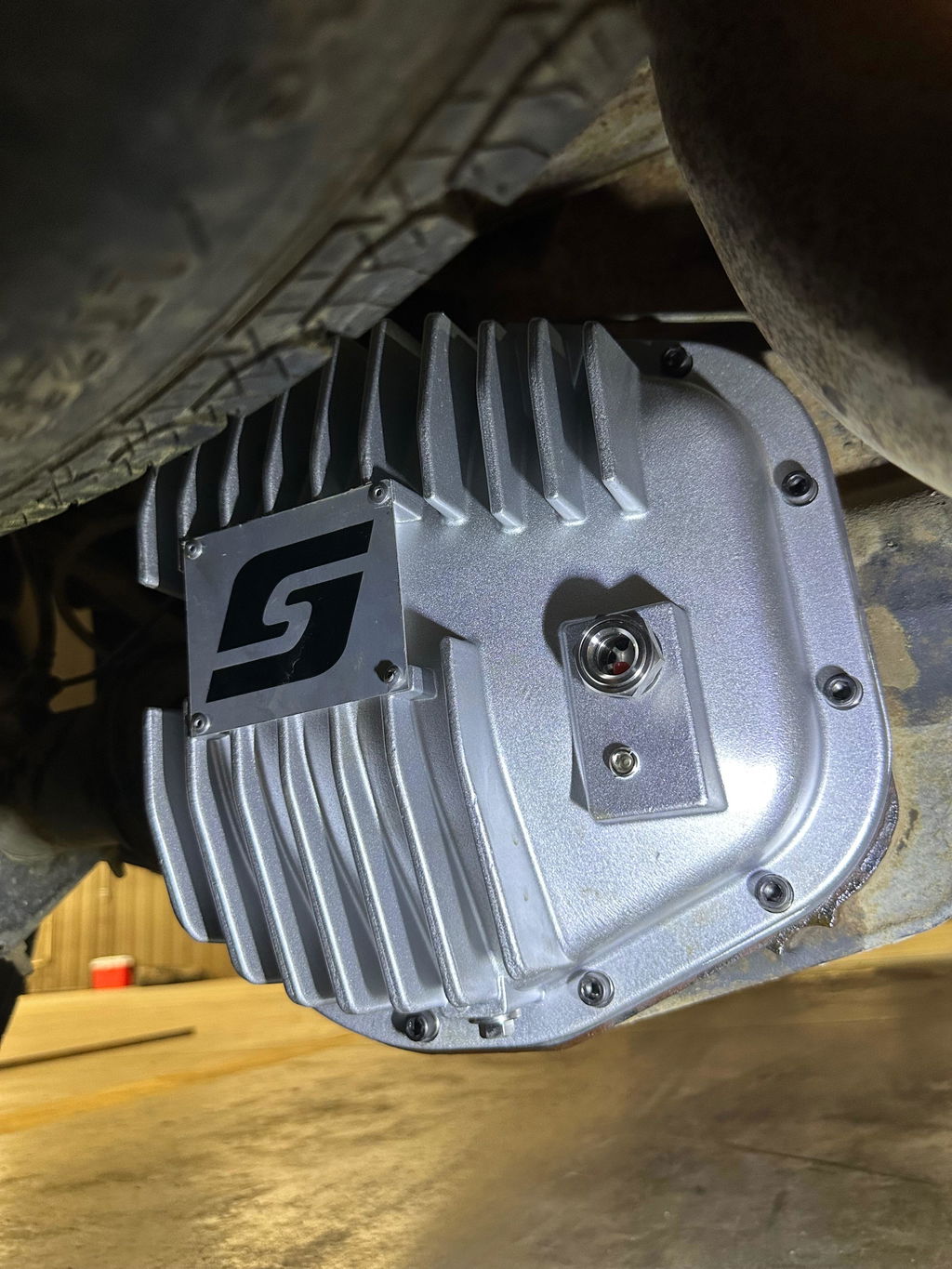
Have had the differential cover on for almost a week now and have had zero issues. The cover looks very nice and I now having the drain & fill plugs and the sight glass will make fluid changes a lot easier. Only recommendation would be to swap from Allen head bolts to regular ones as they are a bit easier to torque but other than that love it. FYI for anyone wondering I torqued all my bolts to 22 ft/lbs and have had zero leaks, couldn't find an exact torque spec but this seems to suffice!
Great for the price and pretty simple install. Did have to modify one bracket but other than that it was a slick install and great product
I got burned with a Banks manifold when their #1 proprietary fuel line split on me. This manifold takes care of that! It was an easy swap out, and worked with the banks plate.
Great Product. Quality seems really good too.
Coolant Filter FAQ
A bypass filter attaches to the cooling system and filters coolant on each pass. It removes casting sand, metal particles, rust, and scale that accumulate over time, protecting the water pump seals and engine block.
6.0L engines are notorious for head gasket and water pump failures often caused by coolant contamination. A coolant filter prevents abrasive particles from accelerating seal wear and cooling system corrosion.
Most manufacturers recommend changing the coolant filter every oil change interval or every 15,000 miles. Use only OEM-equivalent or manufacturer-specified coolant filter elements.
Yes. Bolt-on kits attach to existing coolant lines with no drilling. Basic hand tools and coolant top-off are needed. Installation typically takes 30–60 minutes on most diesel trucks.
A coolant filtration system kit includes a filter base (filter head), a spin-on filter element, high-temperature hoses, hose clamps and fittings, plus a mounting bracket and hardware. The base, hose lengths and bracket are matched to the vehicle rather than universal, so you are not adapting a generic kit to fit.
The coolant filtration system in this collection fits the 2011-2016 Ford 6.7L Powerstroke in F-250, F-350, F-450 and F-550 Super Duty models. Confirm your model year before ordering, because hose routing and cooling system layout changed across the 6.7L production run.
It addresses one of the main causes. The 6.7L oil cooler uses narrow coolant passages that collect casting sand and debris; a coolant filtration system removes those particles before they restrict flow, which protects heat transfer and reduces the load on the rest of the cooling system. It is preventive maintenance, not a repair for restriction already present.
No full drain is needed. A coolant filtration system taps into the heater hose circuit, so you only lose the small amount of coolant in the section you cut into, then top off and bleed trapped air from the system. Work on a cold engine, and re-check the level and hose clamps after the first heat cycle.
Neither. A coolant filtration system is not an emissions control device - it does not alter, bypass or delete any emissions component and does not change how the engine runs. It is a maintenance addition to the cooling circuit only. If your truck is under a factory or extended warranty, confirm with your dealer before installing.