
Updated: May 18, 2026
Deleting a truck means removing, disabling, bypassing, or tuning out one or more factory emissions-related systems. On modern diesel trucks, that usually refers to the EGR, DPF, DEF/SCR, catalytic converter, emissions sensors, or related calibration. Some owners also use the word “delete” loosely when talking about CCV reroutes or crankcase ventilation changes, but those are not the same as deleting exhaust aftertreatment hardware.
Quick answer: A deleted truck is a truck with emissions equipment removed or disabled, usually to reduce restriction, avoid repair costs, change exhaust flow, or support off-road performance goals. Common deletes include EGR delete, DPF delete, DEF/SCR delete, cat delete, and sometimes CCV reroute. For public-road trucks in the United States, emissions deletes can violate the Clean Air Act, fail inspections, void warranties, reduce resale options, and create major legal risk.[1]
This guide explains what truck delete means, which systems are usually removed, why owners consider it, what can go wrong, what severe derate means, and what legal alternatives may make more sense for daily-driven diesel trucks.
Legal Reality: Read This Before Any Delete
For public-road vehicles in the United States, removing, disabling, or bypassing emissions equipment can violate the Clean Air Act. This can include physical hardware removal, sensor tampering, software tuning that disables emissions monitors, or aftermarket parts designed to defeat emissions controls.[1]
A deleted truck may face:
- Failed emissions inspection
- Failed visual inspection
- Failed OBD readiness checks
- Check engine lights or limp mode
- Severe derate in some diesel platforms
- Warranty denial
- Resale and registration problems
- Potential fines or enforcement risk
- Higher harmful emissions
This article is for technical education and buyer decision support. Always confirm federal, state, provincial, and local regulations before modifying emissions-related hardware or calibration.
What Does “Deleting a Truck” Mean?
Deleting a truck usually means removing or disabling factory emissions-control components. The term is most common in diesel truck communities because modern diesel platforms use multiple emissions systems to reduce soot, NOx, hydrocarbons, and crankcase vapor.
Common systems discussed in truck delete conversations include:
- EGR: Exhaust Gas Recirculation
- DPF: Diesel Particulate Filter
- DEF / SCR: Diesel Exhaust Fluid and Selective Catalytic Reduction
- DOC / catalytic converter: Diesel oxidation catalyst or catalyst system
- CCV / PCV: Crankcase or positive crankcase ventilation routing
- ECU / ECM tuning: Software changes that disable or alter emissions logic
For fitment research, start with the EGR delete kit collection, but confirm legal use case before purchasing or installing emissions-related parts.
How the Main Diesel Emissions Systems Work
Before deciding whether a truck should be deleted, it helps to understand what each system actually does. These parts are not random restrictions; they are emissions-control systems that interact with sensors, exhaust temperature, fuel strategy, and ECU logic.
| System | What It Does | Common Failure Complaint | Delete Discussion Risk |
|---|---|---|---|
| EGR | Routes controlled exhaust gas back into the intake to reduce NOx | Soot buildup, stuck valve, cooler leak, intake sludge | Higher NOx, legal risk, inspection failure |
| DPF | Traps diesel soot and burns it during regeneration | Frequent regen, clogging, backpressure, derate | Higher particulate emissions, legal risk |
| DEF / SCR | Uses DEF fluid and catalyst chemistry to reduce NOx | DEF heater, pump, injector, NOx sensor faults | Major NOx compliance risk |
| CCV / PCV | Manages crankcase pressure and oil vapor | Oil vapor, intake residue, crankcase pressure, oily boots | Odor, freezing, routing, local compliance concerns |
EGR Delete: What It Means
EGR stands for Exhaust Gas Recirculation. The EGR system routes a controlled amount of exhaust gas back into the intake to lower combustion temperature and reduce NOx emissions.
An EGR delete removes, blocks, or disables that exhaust recirculation path. Owners consider it because EGR systems can contribute to soot buildup, stuck valves, EGR cooler leaks, intake sludge, and repair costs. However, deleting EGR on a street-driven vehicle can create legal, inspection, warranty, and emissions problems.
For more detail, read what EGR delete means.
DPF Delete: What It Means
DPF stands for Diesel Particulate Filter. It traps soot from diesel exhaust and burns it during regeneration cycles. A DPF delete removes or bypasses the filter and usually requires software changes so the truck no longer expects DPF pressure, temperature, or soot-load behavior.
Owners consider DPF delete because clogged DPFs can cause high backpressure, frequent regeneration, reduced power, limp mode, and expensive repairs. But the DPF is an emissions-critical part. Removing it from a public-road truck can create major compliance risk.[1]
From an exhaust fluid dynamics perspective, the restriction across the filter can be described by a pressure-drop relationship:
ΔP = Pinlet - Poutlet
As soot and ash loading increase, the pressure difference across the DPF can rise. When that pressure exceeds the ECM’s expected range, the truck may trigger warnings, regeneration commands, derate logic, or diagnostic trouble codes. Removing the filter may reduce physical restriction, but it also removes the system designed to trap diesel particulate matter.
For deeper technical context, read whether DPF delete is worth it.
DEF / SCR Delete: What It Means
DEF stands for Diesel Exhaust Fluid. It is injected into the exhaust stream and works with the SCR system, or Selective Catalytic Reduction, to reduce NOx emissions.
A DEF or SCR delete disables that system. Owners may consider it because of DEF heater failures, pump issues, sensor faults, freezing concerns, or refill frustration. However, deleting DEF/SCR on a street vehicle can trigger legal, inspection, warranty, and drivability issues.
Unlike a simple maintenance repair, a DEF/SCR delete changes how the vehicle controls NOx emissions. That makes it one of the highest-risk modifications for public-road use.
CCV Reroute or CCV Delete: Not the Same as DPF/EGR Delete
CCV stands for Crankcase Ventilation. It manages blow-by gases and oil vapor from inside the engine. A CCV reroute changes where crankcase vapors go after leaving the engine. The goal is usually to reduce oil vapor entering the intake, turbo inlet, intercooler pipes, or intake manifold.
CCV reroute is often discussed alongside delete parts, but it is not the same as removing a DPF or SCR system. The biggest concern is keeping crankcase pressure controlled while avoiding oil odor, hose freezing, oil leaks, and emissions-compliance problems.

For crankcase ventilation options, review the CCV PCV reroute kit collection. For daily drivers dealing with oil vapor, a sealed diesel oil catch can may be a more controlled solution than an open breather.
Why Do Some Owners Delete Trucks?
Most owners consider deleting a truck for one of four reasons: repair cost, performance goals, repeated emissions-system faults, or off-road use. The common argument is that emissions systems add restriction, complexity, and maintenance cost.
Typical motivations include:
- Frequent DPF regeneration
- Clogged DPF or high soot load
- EGR cooler leaks
- Stuck EGR valve
- DEF heater, pump, or sensor failures
- NOx sensor faults
- Limp mode caused by aftertreatment faults
- Severe derate warnings that limit speed or power until repair
- High repair quotes
- Off-road or competition-only performance builds
The severe derate scenario is often the real breaking point for diesel owners. A truck that enters limp mode or a low-speed derate can become nearly unusable for towing, jobsite work, long-distance travel, or hauling. However, a delete is not the only way to respond. Failed NOx sensors, DEF quality issues, temperature sensors, differential pressure sensors, thermostats, boost leaks, or incomplete regeneration history should be diagnosed first.
What Actually Happens After a Truck Is Deleted?
After deletion, the truck may feel different because restriction, regeneration behavior, warning systems, and calibration logic have changed. But the outcome depends heavily on tune quality, hardware quality, engine health, and how the truck is used.
| Area | Possible Change | Important Warning |
|---|---|---|
| Power | May improve if restriction or derate was present | Most gains come from tuning, not just removing parts |
| Fuel economy | May improve, stay similar, or worsen | Driving style, tune, tire size, load, and gearing matter |
| Maintenance | Fewer aftertreatment repairs | Other failures can become more expensive if tuning is poor |
| Sound | Exhaust often becomes louder | May violate noise rules or create drone |
| Emissions | Harmful emissions can increase significantly | Legal risk is the biggest issue for street trucks |
| Resale | Buyer pool may shrink | Deleted trucks can be harder to register or trade |
Where the Major Delete Systems Sit
Deleted Truck vs. Tuned Truck vs. Emissions-Compliant Upgrade
These terms are often mixed together, but they do not mean the same thing.
| Term | Meaning | Street-Use Risk |
|---|---|---|
| Deleted truck | Emissions equipment has been removed, disabled, or bypassed | High for public-road use |
| Tuned truck | ECU/TCM calibration has been modified | Depends on whether emissions systems remain active and compliant |
| DPF-back exhaust | Exhaust behind the DPF is upgraded while keeping DPF installed | Lower than DPF removal, but local noise rules still matter |
| Oil catch can | Captures crankcase oil mist before it reaches the intake | Depends on design, installation, and local rules |
| Emissions-compliant performance parts | Parts designed to improve serviceability or flow while retaining emissions systems | Generally lower when properly certified and installed |
Warranty, Insurance, and Resale Risks
Deleting a truck can void or weaken warranty coverage, especially for engine, exhaust, turbo, fuel, emissions, and drivetrain claims. Even if a failure is not directly caused by the delete, a manufacturer or dealer may deny coverage if the modification is connected to the affected system.
Other ownership risks include:
- Dealer refusal to service deleted emissions systems
- Reduced trade-in value
- Difficulty selling across state lines
- Failed inspection before sale
- Insurance complications after non-compliant modification
- Higher risk of poor-quality tuning from unknown sources
For most daily-driven trucks, the long-term ownership risk matters more than a short-term repair bill.
Common Truck Delete Types Compared
| Delete Type | What It Removes or Changes | Why Owners Consider It | Main Risk |
|---|---|---|---|
| EGR delete | EGR valve, cooler, or exhaust recirculation path | Reduce soot entering intake, avoid cooler/valve failures | NOx increase, inspection failure, legal risk |
| DPF delete | Diesel particulate filter and related monitoring strategy | Reduce backpressure and regen-related issues | Soot emissions, legal risk, resale problems |
| DEF/SCR delete | DEF dosing and SCR NOx reduction system | Avoid DEF system faults or refill issues | High NOx emissions and major compliance risk |
| Cat delete | Catalytic converter or diesel oxidation catalyst | Reduce exhaust restriction or change sound | Inspection failure and emissions-law risk |
| CCV reroute | Crankcase vapor routing path | Reduce oil vapor entering intake | Odor, freezing, crankcase pressure, compliance concerns |
Product Reference: 6.7 Cummins All-in-One Kit
The original article included a 2007.5–2009 6.7 Cummins all-in-one kit. I would keep it only as a fitment-specific product reference, not as a universal recommendation. This type of product should be considered only after confirming vehicle year, intended use, local regulations, tuning requirements, and emissions compliance.
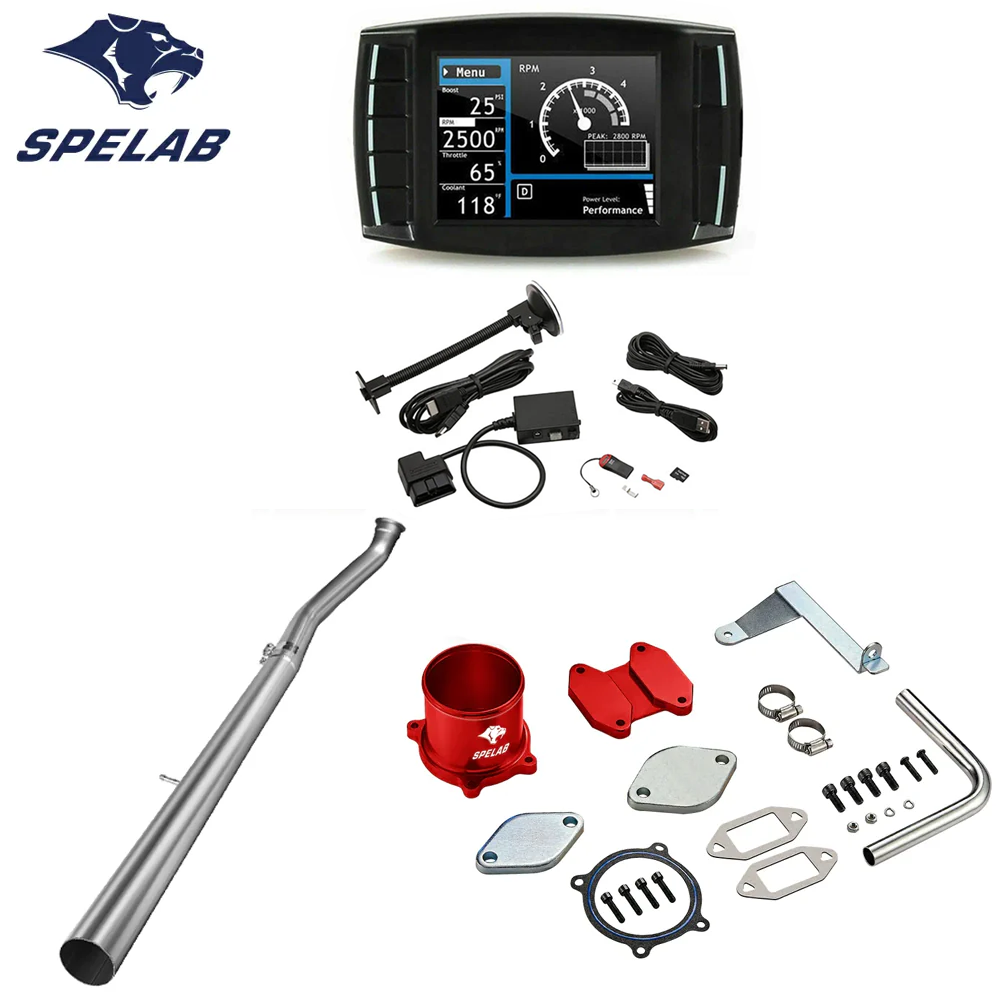
DPF/DEF/EGR Delete 2007.5–2009 6.7 Cummins Dodge Ram 2500/3500 All-in-One Kit
This product is relevant for owners researching off-road-use diesel delete hardware for specific 2007.5–2009 6.7 Cummins configurations. Confirm fitment, tuning requirements, intended use, and local laws before making a purchase decision.
View 6.7 Cummins KitWhen a Truck Delete Might Be Discussed
A truck delete is generally discussed in off-road, competition, agricultural, private-property, or non-road contexts where local law allows that configuration. It may also come up when owners face repeated aftertreatment failures and are trying to understand their options.
However, for a public-road truck, the key question is not “will it make more power?” The key question is “can this vehicle legally be operated after the modification?” In many cases, the answer is no.
For broader platform browsing, use fitment-specific collections such as Ford Powerstroke parts, Chevy Duramax parts, and Dodge Cummins parts.
Legal Alternatives to Deleting a Truck
If your truck is a daily driver, work truck, tow rig, or inspection-area vehicle, start with legal and maintenance-focused solutions before considering deletion.
| Problem | Legal First Step | Why It Helps |
|---|---|---|
| Frequent DPF regen | Diagnose soot load, ash load, EGT sensors, differential pressure, injectors, thermostat, and drive cycle | Many regen issues come from failed sensors or incomplete operating conditions |
| EGR soot buildup | Clean EGR path, inspect sensors, reduce oil vapor with sealed catch can where appropriate | Oil vapor is what turns dry soot into sticky sludge |
| DEF faults | Test DEF quality, heater, pump, injector, level sensor, NOx sensors, wiring | Fixing the failed component keeps the system legal |
| Exhaust sound | Use DPF-back or axle-back exhaust where legal | Changes sound without removing the DPF |
| Oil in intake | Use sealed oil catch can or service CCV filter | Reduces oil contamination without disabling aftertreatment |
| Low power | Check boost leaks, MAF/MAP data, fuel pressure, turbo control, and exhaust pressure | Many “delete-worthy” complaints are actually diagnostic problems |
If your truck is a daily driver in an emissions-inspection area, physical emissions removal is usually not the smart first move. If the real problem is intake sludge, oil-coated sensors, or oil vapor collecting in the charge-air system, the more balanced engineering path is to reduce the oil mist that turns dry soot into sticky sludge. A baffled diesel oil catch can can help intercept crankcase oil vapor before it contaminates the turbo inlet and intake tract, while keeping the truck closer to an emissions-intact service strategy. Confirm local rules and installation details before modifying the factory crankcase ventilation path.
For emissions-intact exhaust sound, compare the performance exhaust system collection. For crankcase oil vapor control, compare the SPELAB oil catch can for Cummins.
Diagnostic Checklist Before You Delete Anything
Before removing parts, confirm the actual failure. A delete can hide the symptom without fixing the underlying problem.
- Scan all active, pending, and history codes.
- Record DPF soot load, ash load, and regen history.
- Check DPF differential pressure sensor data.
- Check EGT sensor readings during warm-up and load.
- Inspect EGR valve movement and cooler condition.
- Check DEF quality, injector, heater, pump, and level sensor data.
- Check NOx sensor readings before replacing expensive parts.
- Check MAF, MAP, and boost data for plausibility.
- Pressure-test the charge-air system for leaks.
- Check injector balance or contribution data where available.
- Inspect CCV filter or oil catch can condition.
- Confirm the vehicle’s legal use case before buying hardware.
For airflow and sensor troubleshooting, read bad Mass Air Flow sensor symptoms. For EGR and DPF interaction, read what happens if EGR is deleted without deleting DPF. For DPF maintenance before replacement, read how to clean a DPF filter.
Should You Delete Your Truck?
For most street-driven trucks, the answer is usually no. The legal, warranty, resale, inspection, and emissions risks are too large. The smarter first step is diagnosis, maintenance, and emissions-compliant repair.
For dedicated off-road or competition-only trucks, delete hardware may be part of a broader build strategy where legally permitted. Even then, hardware quality, calibration quality, sensor strategy, exhaust design, and engine health matter.
The best decision is not based on internet claims about horsepower or MPG. It is based on how the truck is used, where it is registered, what laws apply, what problem is actually present, and whether a legal repair or emissions-compliant upgrade can solve it.
FAQ
Q:What does it mean to delete a truck?
A:Deleting a truck means removing, disabling, bypassing, or tuning out emissions-related systems such as the EGR, DPF, DEF/SCR, catalytic converter, sensors, or related calibration.
Q:What is a deleted truck?
A:A deleted truck is a truck that has had one or more factory emissions-control systems removed or disabled. The most common diesel deletes involve EGR, DPF, DEF/SCR, or catalytic components.
Q:Are deleted trucks illegal?
A:For public-road use in the United States, deleting emissions systems can violate the Clean Air Act. It can also cause inspection, registration, warranty, and resale problems.[1]
Q:What happens if you delete your truck?
A:The truck may run differently, sound different, or avoid some aftertreatment repairs, but it may also fail inspection, void warranty coverage, increase emissions, trigger legal risk, and reduce resale options.
Q:Does deleting a truck increase horsepower?
A:It can in some off-road builds, but most gains come from tuning and supporting hardware, not simply removing parts. Poor tuning can reduce reliability.
Q:Does deleting a truck improve fuel economy?
A:Sometimes owners report better MPG, but it is not guaranteed. Tune quality, driving style, tire size, load, route, gearing, and engine condition matter.
Q:What is a 5-MPH derate?
A:A 5-MPH derate is a severe limp-mode strategy used on some diesel platforms when emissions or aftertreatment faults are not repaired. The truck may limit speed or power until the underlying issue is fixed.
Q:What is an EGR delete?
A:An EGR delete removes or disables the exhaust gas recirculation system. It may reduce soot entering the intake, but it can increase NOx emissions and create legal risk on public-road vehicles.
Q:What is a DPF delete?
A:A DPF delete removes or bypasses the diesel particulate filter. This can reduce exhaust restriction, but it also removes a system designed to trap diesel soot and can violate emissions laws on public roads.
Q:What is a DEF delete?
A:A DEF delete disables the diesel exhaust fluid and SCR system used to reduce NOx emissions. It is a high-risk modification for street-driven trucks.
Q:Is CCV reroute the same as deleting a truck?
A:No. CCV reroute changes crankcase vapor routing, usually to reduce oil vapor entering the intake. It is different from deleting DPF, EGR, or SCR aftertreatment hardware, though it can still raise legal or inspection questions depending on design.
Q:How much does it cost to delete a truck?
A:Costs vary widely based on truck platform, parts, tuning, labor, and supporting hardware. The larger cost may be long-term legal, warranty, inspection, or resale risk.
Q:Can I delete my truck myself?
A:Mechanically, some owners can install hardware, but deleting emissions systems involves legal, calibration, sensor, and drivability risks. For street vehicles, legality should be confirmed before any work is considered.
Q:What are legal alternatives to deleting a truck?
A:Legal alternatives may include diagnosing and repairing emissions systems, cleaning EGR components, replacing failed sensors, servicing the DPF, using DPF-back exhaust, maintaining the CCV filter, or using a sealed catch can where appropriate.
Legal Notes
[1] In the United States, removing or rendering emissions control devices inoperative can violate the Clean Air Act. EPA also states that manufacturing, selling, offering for sale, or installing parts that bypass, defeat, or render emissions controls inoperative is prohibited. Reference: EPA Enforcement Alert on Aftermarket Defeat Devices and Tampering.
[2] Regulations differ by jurisdiction and vehicle use. Always confirm federal, state, provincial, and local requirements before modifying emissions hardware, sensors, or calibration. Reference: EPA Clean Air Northeast: Tampering and Aftermarket Defeat Devices.

John Lee
Mechanical Engineer | 10+ Years Experience
John has spent the last decade engineering and testing high-performance automotive components. Specializing in drivetrain durability and thermal management across Powerstroke, Cummins, and Duramax applications, he bridges the gap between OEM limitations and aftermarket performance. His philosophy: "Factory parts are just a starting point."



5 comments
@Andrew Doll
“I would love to do a full delete on my 2015 Silverado, however, I live in California, in which we do smog inspections, they plug into OBD 11 connector, is this going to be obvious it was performed? And negate me passing?”
The OBD 11 connector inspection is stricter and you will have a hard time passing it. You are advised to make a careful decision.
@Leonard Enninga
We are developing the 2.8 Duramax.
SPELAB has a DPF removal kit for the 2.8 Duramax.
https://www.spelabautoparts.com/products/3-2016-2019-2-8l-duramax-dpf-delete-race-pipe-w-muffler-spelab
Please let me know if there is a product you would like and I will send your suggestion back to our product development department!
Do they make a lot for the 2.8 Duramax?
I would love to do a full delete on my 2015 Silverado, however, I live in California, in which we do smog inspections, they plug into OBD 11 connector, is this going to be obvious it was performed? And negate me passing?
End of what all do I need to delete the def and everything on a 2016 Cummins