Updated: July 7, 2026
Quick Answer: Common bad Mass Air Flow sensor symptoms include check engine light, P0101/P0102/P0103/P0104 codes, lean codes such as P0171 or P0174, hesitation, rough idle, stalling, black smoke, poor MPG, slow throttle response, abnormal fuel trims, and sometimes DPF regeneration complaints on diesel trucks. But the MAF sensor is not always the root cause. A dirty air filter, PCV or CCV oil vapor, a cracked intake hose, a vacuum leak, a boost leak, or unmetered air after the sensor can create the same symptoms.
The smart move is simple: do not replace the MAF sensor until you inspect the intake path. Check the air filter, intake tube, clamps, PCV/CCV oil vapor, turbo inlet, intercooler boots, vacuum lines, MAF connector, live airflow data, fuel trims, and MAF/MAP correlation first.
- A bad or dirty MAF sensor can cause rough idle, hesitation, stalling, poor MPG, black smoke, and P0101-style codes.
- MAF codes do not automatically mean the sensor is dead. Intake leaks, vacuum leaks, dirty filters, oil vapor, and wiring problems can fool the ECU.
- On turbo-diesel trucks, MAF/MAP correlation matters because airflow data can affect EGR logic, boost control, soot output, and DPF regeneration behavior.
- Do not use gasoline-engine idle airflow rules on a diesel truck. A 6.7L diesel can show much higher idle MAF readings than a throttled gas engine.
- The best intake goal is not just “more air.” It is clean, sealed, measurable air.
This guide explains what the MAF sensor does, how to tell if it is dirty or failing, how to separate a bad MAF from an intake leak or O2 sensor problem, how MAF/MAP correlation affects turbo-diesel platforms, and when an intake system upgrade makes sense.
What Does a Mass Air Flow Sensor Do?
The Mass Air Flow sensor, often called the MAF sensor, measures how much air enters the engine. The ECU uses this airflow data to calculate fuel delivery, ignition timing, fuel trims, idle control, load calculation, and on many turbo-diesel platforms, part of the logic used for EGR flow, boost control, and aftertreatment strategy.
On most vehicles, the MAF sensor sits after the air filter and before the throttle body, turbo inlet, or intake manifold path. That location makes it the gatekeeper of the intake system. If the sensor reads too much or too little air, the ECU may add the wrong amount of fuel or misjudge the engine’s real load.
For better filtration and intake hardware options, compare the SPELAB air intake kit collection by engine platform, filter design, and intake tube layout.

Typical airflow path: air filter → MAF sensor → throttle body or turbo inlet → intake manifold.
Bad MAF Sensor Symptoms at a Glance
A failing or contaminated MAF sensor sends incorrect airflow data to the ECU. The engine may run lean, rich, unstable, or sluggish depending on how the reading is wrong. The most common bad mass air flow sensor symptoms usually show up when the ECU’s airflow model no longer matches what the engine is actually breathing.
| Symptom | What It May Feel Like | Do Not Forget to Check |
|---|---|---|
| Check engine light | P0101, P0102, P0103, P0104, P0171, P0174 | Connector, wiring, intake leaks, air filter seal |
| Hesitation or jerking | Stumble during acceleration, merging, towing, or quick throttle changes | MAF live data, fuel trims, boost leaks |
| Rough idle or stalling | Shaking, idle hunting, dying after startup, stalling at stops | Vacuum leak, dirty throttle body, unmetered air |
| Black smoke or rich running | Fuel smell, soot, poor combustion, rough running | Sensor reading too high, injector issue, air restriction, boost leak |
| Poor fuel economy | Worse MPG, unstable trims, lazy correction | Fuel trims, O2 feedback, dirty filter, PCV oil vapor |
| Diesel regen complaints | More frequent regen, incomplete regen, smoke, underboost pattern | MAF/MAP correlation, EGR flow, boost system, soot load |
Common MAF Sensor Codes
If you are chasing bad mass air flow sensor symptoms, start with the codes, but do not stop there. A P0101 code can be a dirty MAF, a cracked intake tube, a poor aftermarket intake layout, a bad connector, or a MAF/MAP airflow mismatch on a turbo-diesel truck.
| Code | Meaning | What to Check Before Replacing the MAF |
|---|---|---|
| P0101 | Mass Air Flow sensor range / performance problem | Dirty sensor, intake leak, wrong intake setup, MAF/MAP mismatch |
| P0102 | MAF circuit low input | Connector, wiring, unplugged sensor, weak signal, failed sensor |
| P0103 | MAF circuit high input | Shorted wiring, sensor fault, incorrect signal, contamination |
| P0104 | MAF circuit intermittent | Loose connector, chafed wiring, vibration-related signal loss |
| P0171 / P0174 | System too lean | Vacuum leak, unmetered air, intake leak, low fuel pressure, exhaust leak |
Lean codes can also be caused by vacuum leaks, intake leaks, low fuel pressure, exhaust leaks, or sensor issues. For deeper code context, read SPELAB’s guide to intake-related fault code diagnosis.
Dirty MAF Sensor vs Bad MAF Sensor
A dirty MAF and a dead MAF are not the same problem. A dirty sensor may still respond, but the reading is skewed because oil mist, dust, or filter residue is coating the sensing element. A failed sensor may have circuit faults, dropouts, or live data that does not move correctly even after the intake system is checked and the sensor is cleaned.
| Condition | Common Pattern | Best Next Step |
|---|---|---|
| Dirty MAF sensor | Slow response, skewed airflow, fuel trims off, no hard circuit fault | Inspect intake and clean with dedicated MAF cleaner |
| Bad MAF sensor | P0102/P0103/P0104, signal dropout, dead or unrealistic live data | Confirm wiring and replace sensor if data remains wrong |
| Good MAF fooled by a leak | Lean codes, positive fuel trims, cracked hose after the MAF | Smoke test or inspect intake path before replacing sensor |
| Good MAF fooled by boost leak | Underboost, black smoke, reduced power, MAF/MAP mismatch | Pressure test charge pipes, boots, clamps, and intercooler connections |
MAF Sensor vs O2 Sensor: Quick Comparison
MAF and O2 sensor problems can overlap because both affect fuel trims. The difference is where they sit in the system: the MAF reads incoming air before combustion, while O2 sensors read exhaust oxygen after combustion.
| Symptom | More Likely Bad MAF | More Likely Bad O2 Sensor |
|---|---|---|
| Unstable idle | Common | Less common as first symptom |
| Hesitation during acceleration | Common | Possible, but usually less direct |
| Poor fuel economy | Common | Common |
| Black smoke or fuel smell | Possible if MAF reads high airflow | Possible if O2 feedback is wrong |
| Check engine light | P0101, P0102, P0103, P0104, P0171, P0174 | O2 heater, circuit, slow response, rich / lean codes |
| Fuel trims abnormal | Often positive if unmetered air or low MAF reading exists | Pattern depends on O2 waveform and sensor response |
The Intake Pressure Drop Problem
For both gasoline engines and turbo-diesel platforms, the MAF sensor depends on a clean, stable, sealed intake path. When the filter is restricted, the intake tube collapses, a boot leaks, or a clamp loosens, the airflow arriving at the engine no longer matches what the ECU expects.
A simple engineering way to think about restriction is:
ΔP = Pupstream - Pdownstream
Here, Pupstream is the pressure before a restriction, and Pdownstream is the pressure after that restriction. A dirty filter, cracked tube, collapsed hose, or leaking boot can increase pressure loss or allow unmetered air to enter. The result is MAF data that no longer matches the true air entering the cylinders.
On turbocharged vehicles, this matters even more. A weak plastic tube, loose coupler, or ballooning boot under boost can create a MAF/MAP mismatch. The ECU may respond with abnormal short-term fuel trims, underboost logic, throttle closure, limp mode, or reduced fueling to protect components.
What Actually Kills a MAF Sensor?
Many bad mass air flow sensor symptoms start before the sensor itself dies. Oil vapor, dust, poor sealing, unstable air turbulence, and boost leaks can all make the ECU distrust the airflow signal.
1. PCV or CCV Oil Vapor
In many engines, the PCV or CCV system routes crankcase vapors back into the intake. Those vapors can carry oil mist. Over time, oil can coat the MAF sensor’s hot wire or hot-film sensing element, causing false readings.
For background, read SPELAB’s guide to common PCV system problems.
John Lee’s Shop-Floor Fix: Stop Re-Contaminating the MAF
Spraying a dirty MAF element with cleaner only resets the countdown if the intake tube is still coated with sticky oil film. When PCV or CCV vapor keeps feeding oil mist into the intake, that film can bake onto the sensing element again and push fuel trims out of line.
The mechanical fix is reducing oil mist at the source. Pair your intake refresh with a SPELAB 300ml aluminum baffled oil catch can kit to help trap oil vapor before it reaches the intake tract, turbo inlet, throttle body, valves, and sensor area.
For Ford diesel owners dealing with intake boot soak and crankcase vapor, a 6.7 Powerstroke CCV reroute kit with catch can can be a stronger platform-specific solution than repeatedly cleaning oil out of the intake tube.
2. Dirty or Poorly Sealed Air Filter
A clogged, damaged, or poorly sealed filter can distort airflow or let dust reach the MAF sensor. Dirt on the sensing element can skew airflow readings and create lean or rich conditions.
If your intake filter is dirty or the stock airbox no longer seals well, inspect the full intake path instead of cleaning only the sensor. A sealed intake with a properly sized MAF housing matters more than a shiny tube.
3. Over-Oiled Reusable Filter
Some reusable filters require oil. If too much oil is applied, airflow can carry oil droplets onto the MAF element. This is one reason some drivers blame “cold air intakes” for MAF issues. The real cause is often filter oil misuse, poor filtration, unstable airflow, or bad installation.
4. Intake Leaks After the MAF
If air enters after the MAF sensor, the ECU only sees part of the air entering the engine. That is called unmetered air. The engine may run lean even if the MAF sensor itself is working correctly.
For hose inspection, read SPELAB’s guide on how to inspect the intake hose.

5. Aftermarket Intake Geometry
On vehicles that use a MAF housing, tube diameter and sensor placement matter. If an aftermarket intake changes the MAF tube size, creates turbulence before the sensor, or places the sensor at a poor angle, the ECU may see airflow that does not match the real air entering the engine. That can trigger P0101 even when the sensor itself is not dead.
Hot-Wire Burn-Off Cycle: Why Oil Film Is So Hard to Beat
Many hot-wire style MAF sensors use a self-cleaning burn-off strategy after shutdown or during controlled operating conditions. The idea is simple: heat the sensing element enough to burn away light dust or residue so the airflow reading stays stable.
That does not mean the sensor can survive abuse forever. Thick oil film from an over-oiled filter, PCV vapor, CCV vapor, or intake sludge can overwhelm the self-cleaning strategy. Once oily residue bakes onto the sensing element, the sensor may respond slowly, under-report airflow, over-report airflow, or set range/performance codes.
That is why the right fix is not “clean the MAF every month.” The right fix is finding why the intake is getting contaminated in the first place.
Diesel Trucks: Why the 1 g/s Per Liter Rule Does Not Work
Gasoline engines are often diagnosed with a rough warm-idle airflow rule of thumb around 1 g/s per liter of displacement. That can be useful on some naturally aspirated gas engines because a nearly closed throttle plate creates idle vacuum and limits airflow.
Do not apply that rule to a 6.7L Cummins, 6.7L Powerstroke, or Duramax diesel. Diesel engines operate with a very different air-control strategy. Depending on EGR command, intake throttle behavior, temperature, altitude, idle speed, and calibration, a heavy-duty diesel can show idle MAF readings far above the gas-engine shortcut. Seeing 30–60+ g/s at idle on a large diesel can be normal in the right context.
The real diesel test is not “does my 6.7L read 6.7 g/s?” That would be the wrong yardstick. The real test is whether MAF, MAP, EGR command, boost, smoke output, and DPF regeneration behavior tell the same story.
Diesel Trucks: Why MAF/MAP Correlation Matters
On diesel trucks, the MAF sensor is not just a simple fuel-economy part. On many turbo-diesel platforms, airflow data helps the ECU evaluate EGR flow, boost behavior, oxygen availability, soot output, and aftertreatment strategy.
If the MAF signal is contaminated or skewed, the ECU may see a mismatch between expected airflow and actual MAP / boost behavior. That mismatch can show up as underboost complaints, smoke, reduced power, EGR flow codes, or repeated DPF regeneration complaints.
| Truck Symptom | Possible Airflow Issue | What to Inspect |
|---|---|---|
| Frequent DPF regeneration | Bad airflow data, poor combustion, EGR / boost mismatch | MAF reading, MAP reading, EGR flow, boost leaks, soot load |
| Underboost or reduced power | Boost leak, dirty MAF, turbo inlet problem, charge pipe leak | Intercooler boots, clamps, turbo inlet, MAP/boost data |
| Black smoke under load | Fuel and air mismatch | Air filter, MAF, MAP, boost leak, injector behavior |
| P0101 after intake work | MAF housing, turbulence, leak, sensor placement issue | MAF orientation, tube diameter, clamps, airbox seal |
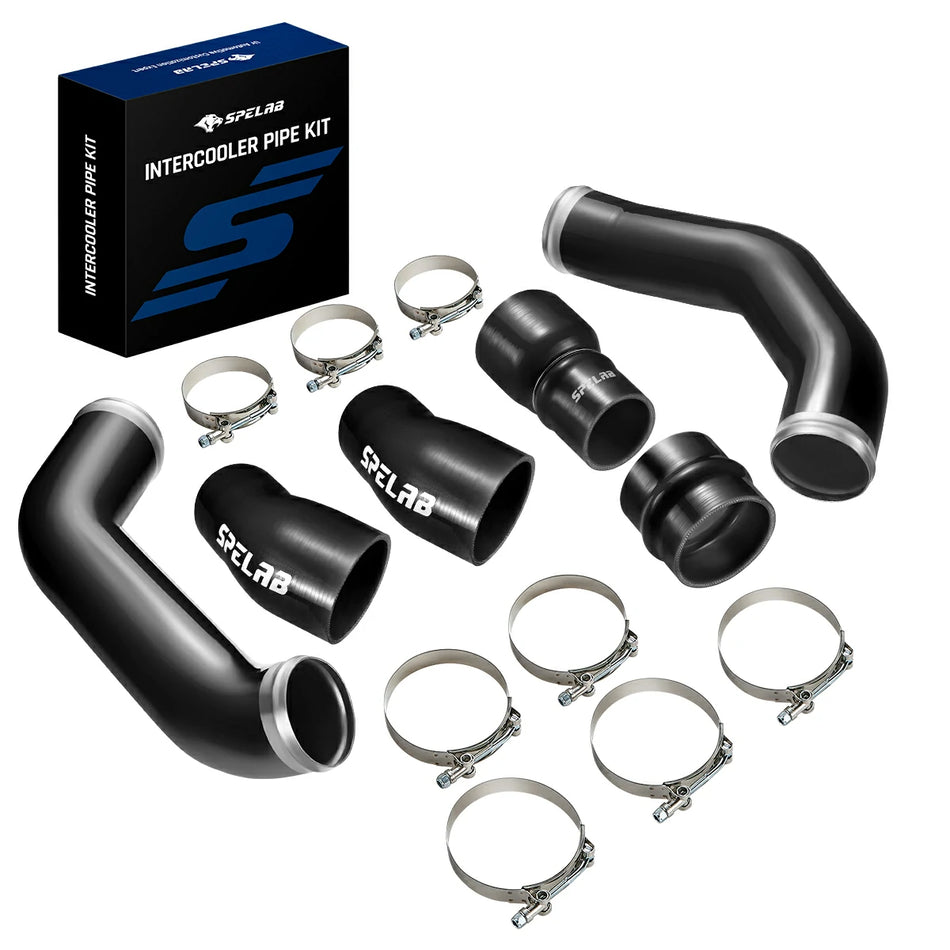
If a diesel truck keeps logging airflow, underboost, or regen-related complaints, do not diagnose the MAF in isolation. Inspect the full intake and charge-air path. For turbocharged applications, compare the intercooler pipe kit path and check every boot, clamp, and coupler under boost.
On 2011–2025 Ford Super Duty trucks, a split charge pipe or weak boot can mimic sensor drama under load. A stronger 6.7 Powerstroke intercooler pipe kit is worth considering when repeated boost leaks are part of the same airflow complaint.
How to Diagnose a Bad MAF Sensor
Use evidence before replacing parts. A scan tool, visual inspection, leak test, and careful cleaning can separate a bad sensor from a dirty intake or air leak.
Step 1: Scan for Codes
Look for P0101, P0102, P0103, P0104, P0171, P0174, and fuel-trim codes. On diesel trucks, also check for MAF/MAP correlation, EGR flow, underboost, and DPF regeneration-related codes. Write them down before clearing anything.
Step 2: Check Live Data Without Using the Wrong Rule
On many naturally aspirated gasoline engines, the old warm-idle shortcut is roughly 1 g/s per liter of displacement. Use that only as a loose gas-engine sanity check, not as a diesel rule. A large diesel can show much higher idle airflow because it is not operating like a throttled gasoline engine.
Instead, watch the pattern. MAF should rise smoothly with load. On a diesel, MAF should also make sense next to MAP, EGR command, boost, smoke, and regen behavior.
Step 3: Inspect Fuel Trims
High positive fuel trims may indicate unmetered air, a low MAF reading, low fuel pressure, or intake leaks. High negative trims may indicate rich running, over-reporting airflow, leaking injectors, or fuel pressure problems.
Step 4: Compare MAF and MAP Behavior
On turbocharged and diesel applications, the MAF and MAP sensors should tell a believable story together. If the MAF reports low incoming air while MAP / boost shows load, or if boost is commanded but airflow does not rise correctly, suspect intake leaks, sensor contamination, turbo control issues, or EGR flow problems.
Step 5: Smoke Test or Pressure Test the Intake
A smoke test can reveal vacuum leaks after the MAF on gasoline engines. On turbocharged vehicles, a pressure test can expose charge-pipe leaks that only show up under boost. This step prevents the classic mistake: replacing a good MAF sensor when the real problem is a cracked hose or loose clamp.
Step 6: Inspect the Intake Tube
Check every clamp and rubber section after the MAF sensor. If the hose is cracked, brittle, oil-soaked, or loose, fix that before replacing the sensor.
Step 7: Clean the Sensor Correctly
Use only dedicated MAF sensor cleaner. Do not use brake cleaner, carb cleaner, compressed air, towels, cotton swabs, or fingers on the sensing element. Let the sensor dry completely before reinstalling.
Step 8: Use the Unplug Test Carefully
Some engines run better when a bad or badly skewed MAF is unplugged because the ECU falls back to a default airflow strategy. That can be a clue, but it is not proof. A vacuum leak, intake leak, wiring issue, or bad intake geometry can still be the real cause. Use the unplug test only as one piece of the diagnosis.
When Should You Replace the MAF Sensor?
Replace the MAF sensor when cleaning and intake leak repair do not fix the problem, live data remains wrong, or the sensor has circuit faults such as P0102, P0103, or intermittent signal dropouts.
Before replacing it, confirm:
- The air filter is clean and properly sealed.
- The intake hose is not cracked.
- All clamps are tight.
- There are no vacuum leaks after the MAF.
- The PCV or CCV system is not coating the intake with oil.
- The connector and wiring are not damaged.
- MAF and MAP readings make sense together under load.
- The intake tube diameter and sensor placement have not changed in a way that confuses the ECU.
Should You Upgrade the Intake System?
An intake upgrade is not a cure for every MAF code. If the sensor is dead, wiring is damaged, or a vacuum leak exists, the problem must be repaired first. But a better intake setup can help prevent repeated issues when the stock intake tube is cracked, the filter housing seals poorly, or the old system is oil- and dust-contaminated.
A quality intake setup can help with:
- Cleaner filtration: better sealing helps protect the MAF from dirt.
- Durability: stronger intake tubing can replace cracked plastic or brittle rubber sections.
- More stable airflow: a clean, sealed path gives the ECU more reliable airflow data.
- Serviceability: easier access helps with filter inspection and MAF cleaning.
The right goal is not simply “more air.” The goal is clean, sealed, measurable air. If your vehicle is turbocharged or diesel, also inspect charge-air plumbing, boots, clamps, and intercooler pipes because a leak under boost can mimic or amplify a MAF problem.
Final Thoughts
The Mass Air Flow sensor is a sensitive instrument. It needs a clean filter, sealed intake tubing, stable airflow, and minimal oil vapor contamination. If you have bad MAF sensor symptoms, do not simply replace the sensor and hope. Inspect the air filter, intake tube, clamps, PCV or CCV system, vacuum lines, MAF/MAP data, and live scan data first.
Once the real cause is fixed, the engine can return to stable fuel trims, smoother idle, better throttle response, cleaner combustion, and more predictable fuel economy.
FAQ
Q: What are the most common bad Mass Air Flow sensor symptoms?
A: Common bad Mass Air Flow sensor symptoms include check engine light, P0101/P0102/P0103 codes, hesitation, rough idle, stalling, poor MPG, black smoke, slow throttle response, and abnormal fuel trims.
Q: What codes does a bad MAF sensor cause?
A: Common related codes include P0101, P0102, P0103, P0104, P0171, and P0174. However, intake leaks, vacuum leaks, low fuel pressure, wiring issues, and MAP sensor problems can trigger similar codes.
Q: Dirty MAF sensor vs bad MAF sensor: what is the difference?
A: A dirty MAF usually still works but sends skewed airflow data because the sensing element is contaminated. A bad MAF may have circuit codes, signal dropouts, or live data that remains wrong after cleaning and leak repair.
Q: Is 1 g/s per liter a good MAF idle rule for diesel trucks?
A: No. That shortcut is mainly a rough gasoline-engine sanity check. A large diesel such as a 6.7L Cummins, 6.7L Powerstroke, or Duramax can show much higher idle MAF readings depending on EGR, intake throttle behavior, temperature, altitude, and calibration.
Q: Bad MAF sensor vs bad O2 sensor: how do I tell?
A: A bad MAF often causes hesitation during acceleration, rough idle, stalling, and abnormal airflow readings. A bad O2 sensor usually shows up through exhaust feedback, slow response, heater faults, or fuel-trim correction patterns. Scan-tool data is the best way to separate them.
Q: Will installing a cold air intake damage my MAF sensor?
A: A quality intake installed correctly should not damage the MAF sensor. Problems usually come from over-oiled filters, poor filtration, air leaks, bad sensor placement, incorrect MAF housing diameter, or unstable airflow around the sensor.
Q: Can PCV or CCV oil vapor damage the MAF sensor?
A: Yes. Oil vapor from the PCV or CCV system can coat the MAF sensing element and cause false readings. A catch can or CCV reroute setup can help reduce oil mist entering the intake.
Q: Can a vacuum leak make it look like the MAF sensor is bad?
A: Yes. A leak after the MAF lets unmetered air enter the engine. The MAF may be reading correctly, but the ECU receives a misleading airflow picture.
Q: Can a bad MAF sensor affect DPF regeneration?
A: On some diesel platforms, yes. Incorrect MAF data can disturb EGR flow logic, boost control, soot-load estimation, and combustion quality. That can contribute to frequent or incomplete DPF regeneration, although DPF issues should always be diagnosed as a complete system.
Q: Should I clean or replace the MAF sensor?
A: Clean it first if contamination is likely and the sensor still responds. Replace it if cleaning does not help, live data remains wrong, circuit codes remain, or the sensor signal is unstable.

John Lee
Mechanical Engineer | 10+ Years Experience
John has spent the last decade engineering and testing high-performance automotive components. Specializing in drivetrain durability and thermal management across Powerstroke, Cummins, and Duramax applications, he bridges the gap between OEM limitations and aftermarket performance. His philosophy: "Factory parts are just a starting point."