
Author: John Lee, SPELAB Mechanical Engineer. Updated on July 1, 2026.
A true 2004.5–2005 LLY Duramax is usually an EGR-equipped, pre-DPF pickup platform. That means the real discussion is EGR, intake heat, cooling load, injector-harness issues, tuning, and towing reliability—not a factory DPF delete. DPF-related problems fit later Duramax generations, especially LMM and newer trucks.
The LLY Duramax sits in a weird but important spot in GM diesel history. It came after the LB7 injector-problem era and before the stronger LBZ electronics and fuel-system package. Owners like the truck because it is simple compared with newer emissions-heavy diesels, but that does not make every delete-related search accurate. A real LLY should be diagnosed as an EGR and reliability platform first.

Key Takeaways
The cleanest answer is this: LLY is mainly an EGR and cooling-platform conversation, not a factory DPF conversation.
- A true LLY Duramax pickup is usually pre-DPF, so “LLY DPF delete” is often the wrong search phrase.
- An EGR delete may reduce intake-side soot exposure on off-road or competition builds where legally allowed.
- EGR delete will not fix LLY overheating, Ice Pick Fix issues, boost leaks, injector-harness problems, poor tuning, or a weak fan clutch.
- LLY and LBZ are not the same calibration family; the injector-control and ECM architecture changed between generations.
- Street-driven trucks should repair and maintain required emissions equipment instead of treating delete parts as normal road-use repairs.
LLY Duramax vs DPF: Why the Search Term Is Misleading
Most LLY Duramax owners should treat “EGR delete” as the relevant search term and “DPF delete” as a generation-mix-up unless the truck has been swapped, modified, or misidentified.
Many owners search “LLY Duramax EGR DPF delete” because they see later diesel trucks dealing with DPF, DEF, SCR, regen cycles, sensors, and pressure lines. That is not the normal LLY pickup setup. A true 2004.5–2005 LLY is better known for EGR hardware, heat management, turbo inlet restriction, injector harness contact problems, and towing temperature complaints. For a clean breakdown of each emissions system, read our guide to system differences.
| Duramax Engine | Common Pickup Years | Main Owner Conversation | Factory DPF? |
|---|---|---|---|
| LB7 | 2001–2004 | Injectors, fuel system, early emissions variation | Usually no |
| LLY | 2004.5–2005 | EGR, overheating, turbo inlet, injector harness, tuning | Usually no |
| LBZ | 2006–2007 Classic | EGR, stronger electronics, higher fuel-system capability | Usually no |
| LMM | 2007.5–2010 | DPF, regen, EGR, sensors, aftertreatment | Yes |
| LML and newer | 2011+ | DPF, DEF, SCR, EGR, sensors, calibration complexity | Yes |
If your truck has regen behavior, DPF pressure lines, DPF temperature sensors, or DPF-specific codes, verify the engine generation before ordering parts. A 2005 LLY, a 2006 LBZ, and a 2007.5 LMM can all wear Chevy or GMC badges, but they do not use the same emissions logic.
How to Confirm an LLY Duramax Before Buying EGR Parts
The fastest way to avoid wrong parts is to confirm the truck is a 2004.5–2005 LLY by VIN, emissions label, engine-bay hardware, and control-system architecture.
| Check Point | What to Look For | Why It Matters |
|---|---|---|
| Model year and engine code | 2004.5–2005 LLY; many pickup applications are tied to VIN code 2 | Confirms you are not ordering LB7, LBZ, or LMM parts. |
| Under-hood emissions label | Engine family and emissions wording | The label gives the cleanest first clue about original emissions configuration. |
| EGR valve and cooler | Valve body, cooler, gaskets, tubes, and intake-side routing | Confirms the EGR hardware being discussed. |
| Turbo inlet mouthpiece | Factory inlet restriction and intake path condition | LLY heat and airflow complaints often involve more than EGR. |
| Injector harness area | Loose connector contact, rub points, intermittent cylinder issues | Ice Pick Fix-type symptoms are not solved by EGR work. |
| Exhaust aftertreatment | DPF pressure lines, temp sensors, or regen-related hardware | If present, verify whether the truck is actually LMM or modified. |
LLY and LBZ should not be treated as the same diagnostic or calibration family. The LLY uses an earlier injector-control architecture with an external FICM-style setup, while the later LBZ moved into a stronger 32-bit Bosch E35 ECM strategy with a higher-pressure fuel-system package. That means parts matching, scan-data interpretation, tuning, and troubleshooting need to stay locked to the actual engine code, emissions label, module strategy, and hardware under the hood.
LLY Duramax EGR Delete Pros and Cons
An LLY EGR delete can make sense only for off-road or competition-use trucks where legally allowed; it should not be sold or treated as a universal fix for heat, smoke, tuning, or towing complaints.
As a parts manufacturer, we look at this mod through real truck use: towing in summer heat, long idling, dirty intake plumbing, old EGR coolers, worn gaskets, and owners trying to get a high-mileage HD truck back to dependable work. The upside is mostly hardware simplification and intake cleanliness. The downside is legal risk, calibration responsibility, and the chance of hiding a deeper failure.

| Potential Result | What It Means in the Garage | Hard Limit |
|---|---|---|
| Less soot entering the intake | May reduce exhaust soot mixing with oil vapor in the intake path. | Crankcase vapor can still leave residue. |
| Fewer aging EGR parts | Removes valve, cooler, gasket, and tube-related failure points on permitted builds. | Does not repair head gaskets, injectors, or wiring issues. |
| Cleaner service access | Less intake-side clutter can make inspection and wrenching easier. | Fitment still needs to match the exact 2004.5–2005 truck. |
| Possible throttle feel improvement | Some owners notice smoother response with proper calibration and a healthy setup. | No fixed horsepower, MPG, or towing gain is guaranteed. |
| Legal and inspection risk | Removing required emissions equipment can create road-use compliance problems. | Street trucks should keep required systems functional. |
| Tuning responsibility | The ECU may react to changed or missing EGR behavior. | Bad calibration can create smoke, codes, heat, or poor drivability. |
For a confirmed off-road or competition-use LLY, the SPELAB 2004-2005 6.6L Duramax LLY EGR Delete Kit With High Flow Intake is the most direct fitment path. If the truck only needs a standard emissions-hardware kit, compare it with the 2004-2005 Chevy/GMC 6.6L Duramax LLY EGR Delete Kit before ordering.
Overheating, Ice Pick Fix, and Problems EGR Delete Will Not Fix
EGR delete is not the whole fix for LLY overheating, and it does not repair injector harness contact issues known in the truck community as the Ice Pick Fix problem.
LLY overheating usually needs a full load-path inspection. Check the cooling stack, radiator face, debris between coolers, fan clutch engagement, coolant flow, turbo inlet mouthpiece, charge-air boots, boost leaks, tune quality, and EGT behavior. A truck towing a fifth-wheel through Arizona heat has a different stress profile than a grocery-getter with a light tune.
| Symptom | Will EGR Delete Fix It? | Better First Check |
|---|---|---|
| Overheating while towing | Not by itself | Cooling stack, fan clutch, radiator, coolant flow, inlet restriction, EGT. |
| Rough idle or intermittent cylinder issue | No | Injector harness, connector contact, balance rates, wiring rub. |
| Black smoke under load | Not automatically | Boost leaks, dirty filter, turbo response, fueling, tune, MAF/MAP data. |
| Coolant loss | Diagnose first | Pressure test, EGR cooler, head gasket indicators, hose condition. |
| Check engine light | Depends on codes | P0401, P0404, P0405, boost codes, fuel-pressure codes, harness-related faults. |
| Poor towing power | Not the first move | Fuel filter, rail pressure, boost leaks, exhaust leaks, transmission behavior. |
Do the boring checks first. A clean bolt-on part cannot fix a plugged cooling stack, a weak fan clutch, a cracked charge-air boot, or a loose injector-harness contact. If airflow restriction is the real problem, a Cold Air Intake for 2004.5-2005 Chevy/GMC 2500HD/3500HD 6.6L Duramax LLY belongs in a different diagnostic lane than an EGR delete.
LLY EGR Delete vs Repairing the Stock System
Repairing the stock system is the better path for street-driven trucks that need to stay emissions-compliant, while EGR delete belongs only in legal off-road or competition-use discussions.
| Option | Best For | Upside | Downside |
|---|---|---|---|
| Clean or repair stock EGR | Street trucks, inspection areas, resale-focused owners | Keeps emissions equipment intact and easier to register or resell. | Does not remove future EGR maintenance concerns. |
| EGR blocker or delete kit | Off-road or competition trucks where legally allowed | May reduce soot entering the intake path and simplify hardware. | Legal, inspection, tuning, and resale risks. |
| Full reliability plan | Towing trucks with heat, boost, and maintenance issues | Addresses cooling, airflow, monitoring, tune quality, and service history together. | More planning, more cost, and better diagnosis required. |
For a public-road truck, the professional move is simple: identify the failed part, repair the required system, and keep the truck compliant. For a dedicated off-road build, confirm fitment, sealing hardware, coolant routing, calibration needs, and monitoring before parts come off. Owners who want to keep the intake cleaner without treating every issue as an EGR problem should also understand the separate role of a CCV PCV ReRoute Delete Kit 2004-2010 6.6L LLY LBZ LMM Duramax.
What to Monitor After an LLY EGR Delete
A modified LLY still needs monitoring because the truck can overheat, smoke, or run poorly if airflow, fueling, cooling, or calibration is not healthy.
| Parameter | Why It Matters |
|---|---|
| EGT | Protects pistons, turbocharger, and exhaust parts under load. |
| Coolant temperature | LLY trucks can run hot during towing, high load, or poor airflow conditions. |
| Boost pressure | Helps catch charge-air leaks, turbo response problems, and tune behavior. |
| Intake air temperature | Useful for hot-weather towing and restricted-intake diagnosis. |
| Check engine codes | Shows whether the ECU is unhappy with EGR, airflow, fuel, or sensor behavior. |
| Smoke level | Excessive smoke points toward fueling, boost leaks, dirty filters, or poor calibration. |
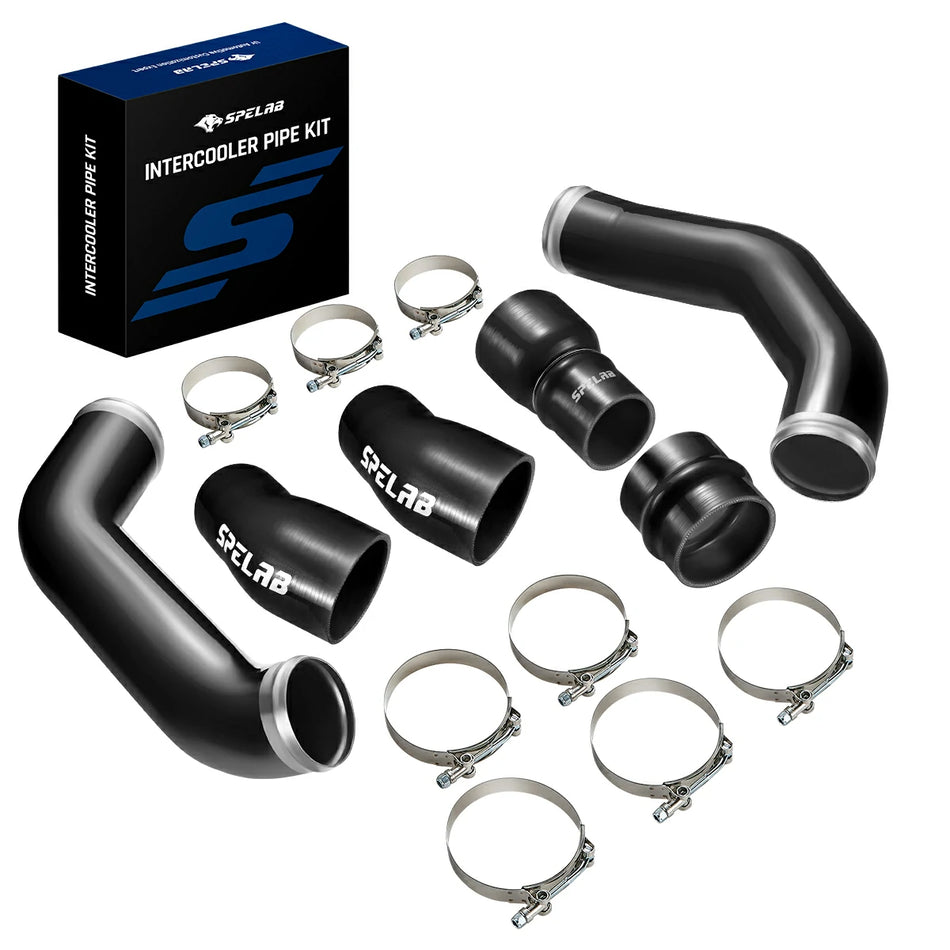
MPG is not guaranteed. Some owners report better fuel economy after fixing restrictions or cleaning up EGR-related issues, but a truck that feels quicker often gets driven harder. If a pressure-side leak is part of the problem, inspect charge-air hardware such as the SPELAB Hot Side Intercooler Pipe Kit For 2004.5-2010 6.6 LLY LBZ LMM Duramax Diesel and follow a full charge-air inspection before blaming EGR.
For a deeper look at pressure-side leaks and IAT problems across Duramax engines, use our charge-air upgrade guide.
Legal Note for U.S. Street Trucks
Removing, disabling, or bypassing emissions equipment on public-road vehicles can create federal, state, inspection, registration, resale, and enforcement problems.
The EPA states that the Clean Air Act prohibits tampering with emissions controls and prohibits manufacturing, selling, or installing aftermarket devices intended to defeat those controls. Read current EPA guidance here: EPA.gov.
For street-driven trucks, treat emissions equipment as required hardware. For verified off-road or competition builds where legally allowed, make sure the truck’s engine generation, kit fitment, calibration needs, and local rules are all understood before parts are removed. For a dedicated legal-risk breakdown, read our guide to street-use legal risks.

Final Recommendation
An LLY Duramax EGR delete can make sense only for off-road or competition-use trucks where legally allowed, especially when the goal is reducing intake-side soot exposure and simplifying old EGR hardware.
If the truck is street-driven, must pass inspection, or may be sold later, repairing the stock system is usually the safer path. If the truck is a dedicated off-road build, confirm the exact engine generation, EGR hardware, cooling health, injector-harness condition, tune requirements, and monitoring plan before removing parts.
Treat the LLY like a working diesel, not a search phrase. Confirm the truck, diagnose the real failure, understand the legal risk, and choose parts only after the data points in the same direction. For later soot-filter trucks, use our 2007.5–2010 comparison instead of applying LLY logic to an LMM.
When the goal is broader maintenance and fitment planning, the 2004-2005 LLY 6.6L Duramax Applicable Products collection is a cleaner starting point than a generic delete search.
FAQ
Q: Is an LLY Duramax EGR delete worth it?
A: It can be worth considering for off-road or competition-use trucks where legally allowed, especially if the goal is reducing EGR-related soot buildup. For public-road trucks, legal and inspection risks may outweigh the benefits.
Q: Does an LLY Duramax have a DPF?
A: A true 2004.5–2005 LLY Duramax pickup is usually pre-DPF. DPF-related delete topics apply more directly to later Duramax engines such as the 2007.5–2010 LMM and newer platforms.
Q: What are the pros and cons of an LLY EGR delete?
A: Pros may include less intake soot, fewer aging EGR parts, and cleaner service access on permitted off-road builds. Cons include legal risk, inspection problems, tuning responsibility, resale concerns, and wrong-diagnosis risk.
Q: Will an EGR delete fix LLY overheating?
A: Not by itself. LLY overheating can involve the radiator, fan clutch, cooling stack, turbo inlet mouthpiece, boost leaks, tuning, EGT, and towing load.
Q: What is the LLY Duramax Ice Pick Fix?
A: The Ice Pick Fix is an owner-known repair approach for injector harness connection issues on LLY trucks. It is separate from EGR work and should be diagnosed independently if the truck has rough running or intermittent cylinder issues.
Q: Do I need tuning for an LLY EGR delete?
A: Some setups may require tuning or code handling to prevent check engine lights or drivability issues. Confirm the requirements of your exact kit and truck before installation.
Q: Is an LLY EGR delete legal for street use?
A: Removing or disabling emissions equipment on public-road vehicles can violate federal, state, or local rules and may fail inspection. EGR delete parts should only be discussed for off-road, competition, or non-public-road applications where legally allowed.

John Lee
Mechanical Engineer | 10+ Years Experience
John has spent the last decade engineering and testing high-performance automotive components. Specializing in drivetrain durability and thermal management across Powerstroke, Cummins, and Duramax applications, he bridges the gap between OEM limitations and aftermarket performance. His philosophy: "Factory parts are just a starting point."





1 comment
Nice random allison 1000 transmission photo on an egr delete blog…