Author: John Lee, SPELAB Mechanical Engineer (focusing on car modification for 10 years)
Updated on May 6, 2026.
TL;DR: Modifying an L5P Duramax typically costs between $1,500 and $4,000. Unlike older engines, the L5P requires a specialized ECM Unlock process due to heavy factory encryption. While performance gains are significant, owners must weigh these against voided warranties, legal risks, and complex diagnostic requirements.
Curious about how much it costs to delete an L5P Duramax and what factors are usually involved? That question comes up often among diesel truck owners because the L5P is a strong platform, but it also relies on a complex emissions system that can affect maintenance, service costs, and long-term ownership decisions.
This guide covers what owners typically mean when they talk about an L5P delete, the cost range most often discussed, the parts and tools commonly associated with the conversation, the performance reasons people consider it, and the legal, warranty, and service risks that should be weighed before spending the money.

What Is L5P?
The L5P Duramax diesel engine, produced by General Motors, powers heavy-duty Chevrolet Silverado HD and GMC Sierra HD trucks. This 6.6-liter V8 diesel brought major improvements over previous Duramax generations, including an updated turbocharger, revised cylinder heads, and a newer fuel injection system.
With output up to 445 horsepower and 910 lb-ft of torque in factory form, the L5P has built a strong reputation for towing, drivability, and overall capability. It also operates with a modern emissions package that includes EGR, DPF, and SCR systems, which is one reason owners often start looking into L5P delete cost, maintenance trade-offs, and long-term reliability questions.
The L5P Technical Barrier: ECM Unlocking
One of the biggest factors in the L5P delete cost is the engine control module (ECM). Starting in 2017, GM equipped the L5P with the E41 ECM, which features advanced hardware-level encryption.
- The Process: You cannot simply "flash" an L5P. The ECM must be physically unlocked or replaced with a modified unit to allow any calibration changes.
- The Cost Impact: This single step usually accounts for $800 to $2,200 of the total project cost, which is why L5P modifications are significantly more expensive than older LML or LMM Duramax platforms.
EGR, DPF & SCR
EGR, DPF, and SCR systems all play an important role in reducing emissions on modern diesel trucks. Here is a quick overview of each system and why it matters in the broader L5P ownership discussion:
- Exhaust Gas Recirculation (EGR): The EGR system routes part of the exhaust gas back into the intake to reduce combustion temperature and lower NOx emissions.
- Diesel Particulate Filter (DPF): The DPF captures soot and particulate matter produced during diesel combustion and removes buildup through regeneration.
- Selective Catalytic Reduction (SCR): The SCR system uses DEF to help convert harmful NOx emissions into less harmful gases before they exit the tailpipe.
From a compliance standpoint, these systems are essential. From an ownership standpoint, they also add complexity, heat, sensors, service requirements, and potential failure points, which is why many diesel owners keep a close eye on long-term emissions-related maintenance costs.

What Does an L5P Delete Usually Mean?
When owners talk about deleting an L5P, they are generally referring to emissions-related modifications involving systems such as EGR, DPF, and SCR, along with the calibration changes required to keep the truck operating after those factory systems are altered.
In other words, the discussion is not just about removing hardware. It is also about how the truck is calibrated, how it behaves afterward, and how that decision affects long-term legality, serviceability, and ownership costs.
What Costs and Components Are Usually Involved?
If you are researching l5p delete kit, the conversation usually includes four broad categories: hardware, calibration, tools, and labor.
- Hardware: Owners often factor in the cost of replacement pipes, related modules, and other parts associated with emissions-related modifications. Fitment and build quality matter, especially on newer trucks where packaging is tight and serviceability matters.
- Calibration and Tuning: For many owners, this is the most complicated part of the entire cost discussion. Calibration support is often one of the largest expenses, and it has a major effect on drivability, fault handling, and long-term serviceability.
- Basic Tools and Equipment: Mechanical access, hand tools, lift access, and a clean work area all affect the labor side of the job. On paper, tools may seem like a minor factor, but they often influence whether an owner can realistically handle anything beyond basic disassembly.
- Installation Guidance and Labor: Even when owners research parts pricing first, labor often becomes a major part of the real-world cost. Trucks that look straightforward in theory can still become time-consuming once access, seized fasteners, calibration issues, or follow-up troubleshooting enter the picture.
This is why the total cost can vary so much from one truck to another. The cheapest number is usually a parts-only estimate. The more realistic number often includes labor, calibration, and the possibility of additional troubleshooting afterward.

Cost of L5P Delete: Typical Price Range
The cost most often discussed for an L5P delete generally falls between $1,500 and $4,000, depending on the truck, the parts involved, the level of calibration support, and whether professional labor is included.
A lower estimate usually reflects a narrower parts-focused view. A higher estimate often reflects a more realistic ownership picture that includes labor, tuning-related costs, installation time, and any follow-up work needed to keep the truck running properly afterward.
That is why owners should be careful with simple headline numbers. The actual price of the parts is only one piece of the total cost.
L5P Modification: Cost Breakdown (2026 Estimates)
| Category | Estimated Cost | What's Included |
|---|---|---|
| ECM Unlock & Tuning | $800 – $2,200 | E41 ECM unlocking service, flash interface, and calibration files. |
| Exhaust Hardware | $600 – $1,200 | Downpipe-back or full race pipes and mounting hardware. |
| EGR Components | $150 – $400 | Block-off plates and bypass gaskets for off-road use. |
| Professional Labor | $500 – $1,200 | Specialized labor for EGR removal and ECM configuration. |
Why Do Some Owners Still Consider It?
Even with the risks involved, some L5P owners still look into delete-related costs because they are usually trying to solve one or more of the following concerns:
- Reduced exhaust restriction: Some owners associate emissions-related restrictions with reduced efficiency and more heat in demanding use.
- Improved throttle response: Changes in exhaust flow and calibration are often part of why owners expect a different driving feel.
- Lower exposure to emissions-related service issues: The more systems a truck relies on, the more potential failure points exist over time.
- Simplified long-term ownership in certain use cases: Some owners view the issue through the lens of work-truck downtime, long-term operating costs, or non-road-use builds.
- Performance goals: Others approach the conversation from a power and responsiveness standpoint rather than a maintenance one.
That said, expected benefits are not the same as guaranteed outcomes. What works for one truck and one owner may not make sense for another, especially if the truck still needs to remain easy to inspect, service, register, or resell later.

Installation, Tuning, and Labor Considerations
One reason owners underestimate L5P delete cost is that they focus on parts first and everything else second. In reality, installation access, calibration complexity, and troubleshooting can all affect the total investment.
For experienced diesel owners with proper tools, some of the mechanical side may seem manageable. But on newer trucks like the L5P, the real complexity often lies in how all of the systems interact afterward. Drivability, fault handling, service lights, inspection readiness, and long-term maintainability are all part of the broader conversation.
That is why many owners researching this topic end up comparing not just parts, but also labor costs, tuning support, truck usage, and how much complexity they are willing to take on long term.
Potential Risks of L5P Deletion
Before making any emissions-related modification, it is important to understand that the trade-offs can be much bigger than the parts invoice suggests.
- Legal Issues: Emissions-related modifications may not be legal for road use depending on where the truck is registered and operated. They can also create inspection and compliance problems.
- Warranty Exposure: Significant changes to factory emissions systems can create warranty concerns and may leave the owner responsible for future repair costs.
- Service and Diagnostic Complexity: Trucks that are no longer in factory configuration may be harder to diagnose and service later, especially at dealerships or emissions-compliant shops.
- Resale Impact: Some buyers avoid modified diesel trucks, especially if they want inspection compliance, warranty confidence, or a clean dealer-service path.
- Ongoing Maintenance and Calibration Dependence: Even after the initial work is done, long-term drivability and serviceability may depend on how well the truck was calibrated and how it is maintained afterward.
In the diesel world, the real risk is not always the initial change itself. It is everything that becomes more difficult after the truck moves away from factory configuration.
How to Think About Cost vs. Long-Term Ownership
If your main question is “How much does it cost to delete an L5P?” a better follow-up question is “What am I actually trying to gain, and what am I willing to give up?”
Before spending money, owners should think about:
- Whether the truck is still under warranty
- Whether it must pass emissions or inspection
- Whether it is a daily-driven work truck or a dedicated project vehicle
- How much future tuning, maintenance, and troubleshooting complexity they are willing to accept
- Whether good maintenance on a stock truck would solve most of the issues they are trying to avoid
For some owners, the answer is to stay stock and maintain the truck well. For others, the decision depends heavily on intended use. Either way, the smartest decision usually comes from looking at the whole ownership picture, not just the cost of the parts.
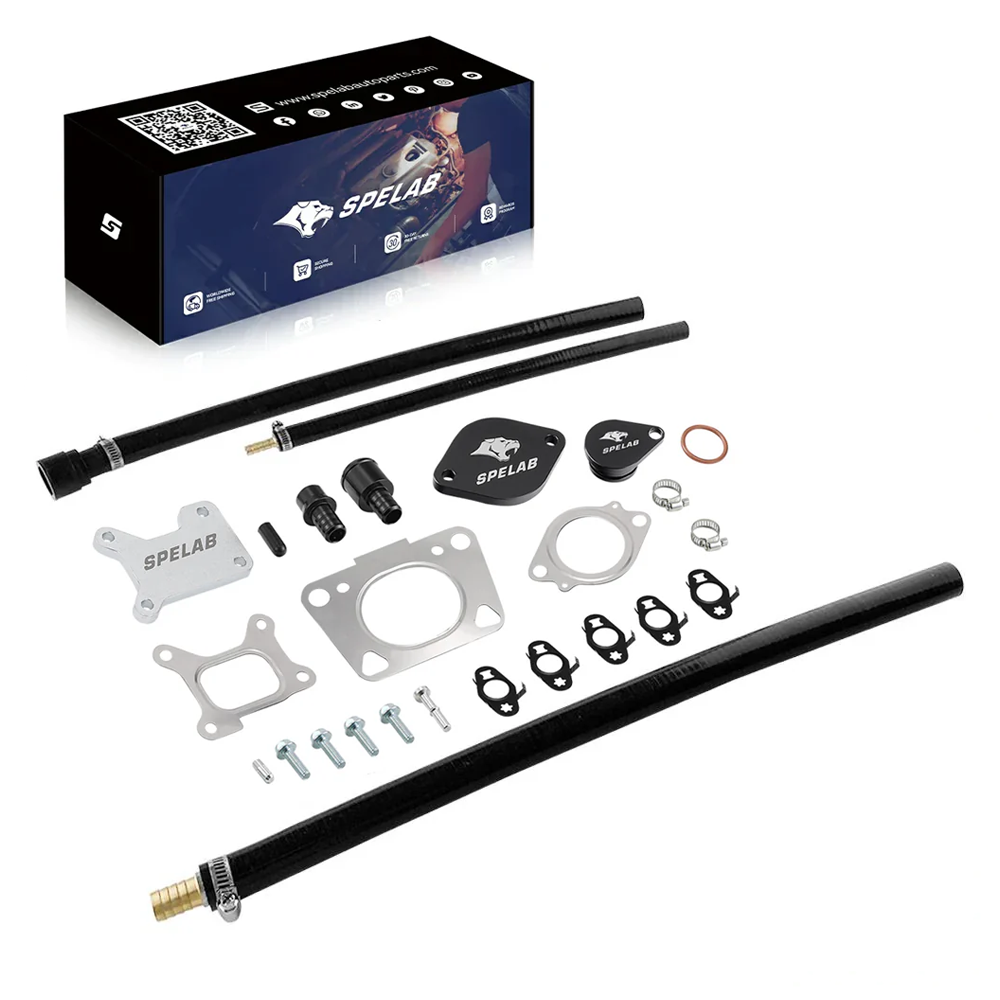
Chevy / GMC Duramax Diesel 6.6 L5P
Buy NowConclusion
Deleting the EGR, DPF, and SCR systems on an L5P Duramax is often discussed in terms of cost and performance, but the real decision is broader than that. The cost range matters, but so do legal exposure, warranty concerns, inspection requirements, serviceability, and long-term ownership priorities.
Final Thoughts:
- Cost vs. Trade-Offs: The total cost can vary widely, and the cheapest number rarely reflects the full ownership impact.
- Legal Considerations: Owners should always understand local regulations and inspection requirements before making any emissions-related change.
- Professional Review Matters: When major calibration, drivability, or serviceability questions are involved, professional guidance becomes part of making an informed decision.
The L5P is already a strong diesel platform in stock form. For many owners, the smarter long-term move is not just asking what a modification costs, but asking whether it truly makes sense for how the truck is used.
L5P Duramax: Frequently Asked Questions (2026 Update)
Q1: What is actually needed to perform an L5P delete?
A: A successful L5P delete requires a specialized ECM unlock, off-road calibration software, and physical bypass hardware (EGR/DPF pipes). Because the 2017-2025 L5P uses an encrypted E41 controller, you cannot simply "plug and play" a tuner; the computer must be unlocked by a professional interface before any hardware modifications will function.
Q2: Is it illegal to delete the emissions system on an L5P Duramax?
A: Yes, removing emissions equipment from a vehicle used on public roads is a federal offense under the Clean Air Act. These modifications are strictly intended for legally permitted off-road, competition, or agricultural applications. Driving a modified truck on public highways can result in heavy fines, inspection failure, and registration suspension.
Q3: How much does a full L5P delete typically cost in 2026?
A: The total investment generally ranges between $1,500 and $4,000, depending on labor and tuning choices. The "hardware only" cost is often around $800–$1,500, but when you factor in the high cost of the mandatory ECM Unlock ($800–$2,000) and professional installation, the price increases significantly compared to older Duramax generations.
Q4: How long will a well-maintained L5P Duramax engine last?
A: With proper maintenance, an L5P Duramax is a 300,000+ mile engine platform. Thanks to its beefed-up rotating assembly and improved cooling system, the L5P is widely considered one of the most durable diesel engines GM has ever produced, provided the fuel system (CP4-free design) and oil are serviced regularly.
Q5: Why is the L5P platform so highly regarded by diesel enthusiasts?
A: The L5P is praised for its massive factory power (445HP / 910lb-ft) and its move to a more reliable Denso fuel system. Unlike the previous LML engines which suffered from CP4 pump failures, the L5P's fuel system and stronger internal components make it a superior choice for heavy towing and long-term reliability.
Q6: Is 300,000 miles considered "too much" for a used Duramax?
A: Not necessarily, but at 300,000 miles, the aftertreatment system (DPF/SCR) often nears its end of life. While the internal engine components are likely fine, buyers should inspect the emissions history, as replacing a clogged DPF or a failed SCR catalyst at this mileage can cost upwards of $3,000–$5,000 at a dealership.
Q7: Why do owners specifically target the EGR system for modification?
A: Owners modify the EGR to stop abrasive soot and heat from being recirculated back into the engine's intake. Over time, EGR soot mixes with oil vapor to create a "sludge" that restricts airflow and increases maintenance costs. For many, a high-quality CCV Reroute Kit is a legal way to mitigate this without a full delete.
Q8: Can emissions modifications void my GM factory warranty?
A: Yes, any emissions-related modification will almost certainly result in a denied powertrain warranty claim. Dealerships can easily detect that the ECM has been "flashed" or "unlocked," giving them legal grounds to void coverage for the engine, turbocharger, and transmission components.
Q9: How long does the L5P delete process usually take?
A: A full hardware and software conversion typically takes 1 to 2 full days in a shop. The physical removal of the EGR cooler is the most time-consuming mechanical part, while the ECM unlock and software synchronization can take several hours depending on the tuning interface used.
Q10: Is the L5P delete a DIY-friendly project?
A: The hardware installation is manageable for experienced DIYers, but the software unlock is best left to professionals. Prying into the engine bay to swap pipes is one thing, but managing the complex E41 ECM unlock and ensuring the truck doesn't enter a "no-start" state during flashing requires specialized tools and expertise.

John Lee
Mechanical Engineer | 10+ Years Experience
John has spent the last decade engineering and testing high-performance automotive components. Specializing in drivetrain durability and thermal management across Powerstroke, Cummins, and Duramax applications, he bridges the gap between OEM limitations and aftermarket performance. His philosophy: "Factory parts are just a starting point."