Updated on July 21, 2026.
A PCV or CCV reroute changes where a diesel engine sends crankcase blow-by vapor. Instead of feeding oil-laden vapor back into the turbo inlet, the reroute sends it through an oil separator, catch can, or another permitted outlet while keeping the crankcase ventilated. A proper reroute can reduce oil carryover into the intake, but it cannot stop blow-by, repair worn piston rings, fix a leaking turbo seal, or create horsepower by itself.
Key Takeaways
A PCV/CCV reroute is a routing decision, not a shortcut around engine diagnosis or platform-specific fitment.
- Confirm where the oil is coming from before changing the factory ventilation path.
- Match the hardware to the engine code, model year, factory sensors, hose layout, and emissions configuration.
- Keep the vent path unrestricted; a kinked, frozen, undersized, or saturated system can raise crankcase pressure.
- Use a closed catch can when odor control and street manners matter more than engine-bay simplicity.
- Inspect the routing after the first heat cycle, the first towing trip, and the first hard freeze.
Is It PCV or CCV on a Diesel Truck?
Diesel owners often use PCV and CCV for the same general job, but CCV is usually the more accurate term for a diesel crankcase ventilation system. Searchers still use "PCV reroute" heavily, especially for Duramax trucks, so both terms matter when identifying parts and service information.
PCV means Positive Crankcase Ventilation. CCV means Closed Crankcase Ventilation. Both systems give combustion gases that pass the piston rings a controlled route out of the crankcase. The valve, filter, separator, sensor, hose, and intake connection vary by engine generation.
A Duramax owner asking for the "PCV valve location" may not find a small gasoline-style valve like the one in an old small-block Chevy. A late-model diesel can use valve-cover passages, separators, molded housings, filters, pressure monitoring, and larger hoses instead. Identify the engine code before ordering hardware.
Use this breakdown of how crankcase pressure problems develop when the truck has oil leaks, pressure symptoms, or a ventilation-related warning.
| Term | Full Name | What It Handles | Common Owner Search |
|---|---|---|---|
| PCV | Positive Crankcase Ventilation | Controlled crankcase vapor routing | PCV reroute |
| CCV | Closed Crankcase Ventilation | Crankcase vapor routed through a closed system | CCV reroute or CCV delete |
| CCV filter | Crankcase Ventilation Filter | Oil-mist separation before vapor continues through the system | CCV filter replacement |
| Catch can | Oil-Vapor Separator | Collects part of the oil mist and condensed moisture | Diesel catch can |
How Does the Stock System Compare With a Reroute?
The stock system prioritizes controlled, closed crankcase ventilation, while a reroute changes the downstream path to reduce oil vapor entering the intake. A catch can adds a serviceable separation stage; an open vent moves vapor outside the intake but brings odor, residue, moisture, and compliance tradeoffs.
| Setup | Intake Oil Carryover | Maintenance | Main Tradeoff | Practical Fit |
|---|---|---|---|---|
| Stock closed system | Some oil mist may return to the intake | Follow factory filter and hose service requirements | Oil film can collect in intake plumbing | Stock daily driver or emissions-inspected truck |
| Closed catch can | Reduced when the separator is correctly sized | Drain and inspect the can | A full, frozen, or restrictive can can raise pressure | Daily driver that needs oil separation without open venting |
| Open reroute | Vapor no longer returns through the original intake connection | Inspect the hose outlet and drainage path | Odor, residue, icing, and legal concerns | Application-dependent use after compliance review |
| Venturi-assisted routing | Depends on routing, flow, and separator design | Inspect fittings, hose condition, and outlet flow | Fitment and exhaust configuration matter | Purpose-built setups with verified compatibility |
Does a PCV Reroute Keep Oil Out of the Turbo and Intercooler?
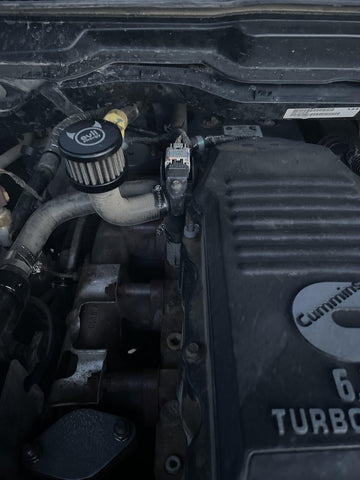
A correctly designed reroute can reduce the amount of crankcase oil mist reaching the turbo inlet, charge pipes, intercooler, intake bridge, and silicone boots. A completely dry intake is not guaranteed because turbo leakage, old residue, and normal engine wear can still put oil in the system.
Oil vapor matters after it collects over thousands of miles. The film can lubricate boot connections, trap dirt around the turbo inlet, coat sensors, and pool at low points in the charge-air system. Oil mixed with EGR soot can also form sticky deposits in the intake tract.
A truck pulling a fifth-wheel through long grades runs at higher sustained load than a grocery-getter. Higher cylinder pressure and a tired high-mileage engine can increase blow-by volume, making an existing oil-carryover problem easier to see. Jobsite idle time and repeated short winter trips can add more moisture to the system.
Check the Other Oil Sources
Heavy oil inside the intake requires a wider inspection before any reroute hardware is ordered.
- Inspect the compressor inlet and outlet for signs of turbo oil leakage.
- Verify the oil level, oil grade, and correct fill quantity.
- Check the vent hose, separator, and filter for restriction, collapse, kinks, or ice.
- Look for blue smoke, seal leakage, heavy visible vapor, and unusually high oil consumption.
- Clean old oil from the intercooler and charge pipes before judging the result of a new setup.
- Pressure-test oily boots and charge-air connections when the truck also has low boost or underboost symptoms.
Follow these oily charge-pipe and boost-leak checks when boot condition, clamp position, or pipe alignment is part of the complaint.
Measure the Result Instead of Guessing
A useful before-and-after test records oil usage, collected liquid, crankcase pressure, and intake condition over the same mileage and workload.
- Photograph the cleaned turbo inlet and charge-pipe low points before installation.
- Record engine-oil level from the same parking position and temperature condition.
- Measure catch-can contents at fixed intervals such as every 1,000 miles.
- Separate oily liquid from water-heavy condensation when reviewing catch-can volume.
- Measure crankcase pressure with a suitable manometer in inches of water column, written as in. H2O, and compare the result with service information for that exact engine.
No universal oil-capture percentage or crankcase-pressure limit applies to every Big 3 diesel. Engine condition, load, ambient temperature, hose resistance, and measurement location move the result.
What Changes Between Duramax, Power Stroke, and Cummins?
Engine generation changes the hardware, monitoring logic, filter arrangement, and available routing space, so Big 3 owners should buy by engine code and model year instead of treating every CCV setup as a universal bolt-on.
| Platform | Common Applications | Frequent Owner Concern | Fitment Check |
|---|---|---|---|
| Duramax | 2004.5-2010 LLY/LBZ/LMM, 2011-2016 LML, 2017-2024 L5P kit groups | Oil film at the turbo inlet, intake bridge, boots, or intercooler piping | Confirm engine code, build date, valve-cover connection, and kit routing |
| Power Stroke | 2008-2010 6.4L and 2011-2025 6.7L kit groups | Intake oil carryover, CCV housing service, hose monitoring, or P04DB complaints | Confirm year split, sensor retention, factory spacer, and CCV housing design |
| Cummins | 2007.5-2024 Ram 6.7L kit group | CCV filter restriction, oil mist, crankcase pressure, or engine-bay packaging | Confirm filter-equipped configuration, model year, hose path, and outlet location |
Duramax PCV/CCV Reroute
Duramax fitment must follow the engine code because LLY, LBZ, LMM, LML, and L5P hardware uses different plates, connections, and routing layouts.
LLY/LBZ/LMM products commonly cover 2004.5-2010 pickup applications, while LML hardware covers 2011-2016 and L5P hardware starts with the 2017 generation. An LB7 or a truck near a model-year split should never be assumed to accept the next generation's kit.
LML owners often notice oil around the turbo mouthpiece, Y-bridge, cold-side plumbing, or boot connections. Clean the system first, inspect turbo condition, and track how quickly the oil returns. A light film and a puddle are not the same diagnosis.
Power Stroke CCV Reroute
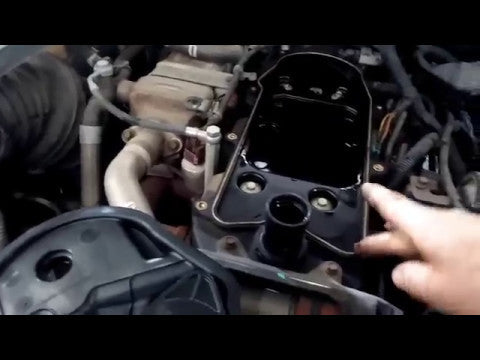
Power Stroke owners need to preserve the correct CCV flow path and factory monitoring behavior, especially on later 6.7L Super Duty applications.
The 6.4L Power Stroke uses different hardware from the 6.7L introduced for the 2011 model year. The 6.7L product range also contains year-split components, so a kit advertised for 2011-2025 still requires the buyer to select the correct 2011-2016 or 2017-and-later configuration where applicable.
A P04DB code after installation points toward a crankcase ventilation system or disconnected-hose condition on applicable trucks. Inspect sensor retention, connectors, hose resistance, routing, and fitment before clearing the code. Repeatedly clearing it without checking the hardware is not a repair.
Cummins CCV Reroute
Cummins owners should inspect the factory CCV filter and crankcase pressure before replacing the system with a hose and breather.
The 5.9L and 6.7L Cummins do not share one universal CCV layout. Current SPELAB 6.7L applications cover 2007.5-2024 Ram diesel trucks, while older 5.9L routing requires its own parts and inspection process.
A restricted 6.7L CCV filter can contribute to pressure and oil-leak complaints. Read why neglected filter service causes pressure complaints before replacing a maintenance item with different routing.
Is a PCV Reroute Good or Bad?
A PCV reroute is useful when it reduces verified intake oil carryover without restricting crankcase flow, upsetting sensors, or conflicting with the truck's operating requirements. It is a poor choice when it hides heavy blow-by, vents fumes under the cab, or replaces diagnosis with a length of hose.
| Truck Condition or Use | Best Next Step | Reason |
|---|---|---|
| Light oil film with no pressure symptoms | Clean and monitor | A functioning stock system may not need a mod |
| Repeated oil carryover into turbo and charge pipes | Inspect the engine, then compare a separator or reroute | Oil-vapor management may reduce repeat contamination |
| Heavy visible vapor, blue smoke, or rising oil consumption | Run mechanical diagnostics first | The truck may have an internal engine or turbo problem |
| Truck tows in subfreezing weather | Use a short, protected, continuously draining route | Long low spots can trap water and freeze |
| Street-driven truck with emissions inspections | Verify federal, state, and local requirements | Road-use rules depend on configuration and location |
| High-idle jobsite or fleet truck | Use a serviceable system with scheduled inspections | Idle hours and condensation can matter more than odometer miles |
Should You Use a Catch Can or an Open Vent?
A closed catch can is usually the cleaner choice for a daily-driven truck, while an open vent has more odor, residue, icing, and compliance tradeoffs. Either design must move enough vapor without creating a restriction.
A catch can needs internal volume, effective separation media, oil-resistant seals, secure mounting, and a drain that the owner will actually service. A tiny universal can with small fittings may look clean in the engine bay but choke a heavy-duty diesel under sustained towing load.
An open outlet belongs away from the HVAC intake, cab, hot exhaust parts, rotating components, tires, and direct road spray. Some chassis can support a protected frame-rail route toward the rear, but longer is not automatically better. Every extra foot adds resistance and another chance to create a low spot.
Use a breather filter or drain valve only when its flow capacity, oil compatibility, service needs, and installation direction are approved for the selected system. A small saturated breather or a stuck one-way valve can become the restriction the reroute was supposed to avoid.
Evaluate any advertised separation-efficiency percentage by checking the test engine, flow rate, vapor temperature, load, test duration, and measurement method. A bare "99% efficient" claim does not tell a Duramax, Power Stroke, or Cummins owner how the part will behave on the road.
Can a PCV Reroute Reduce Blow-By or Oil Consumption?
A PCV reroute cannot reduce the combustion gas leaking past the piston rings, so it does not reduce true blow-by. It may reduce the amount of suspended oil pulled into the intake, but that result is not the same as repairing oil consumption.
Normal diesel blow-by produces some vapor and oil mist. Pressure that pushes the oil cap off, forces oil through seals, creates heavy visible vapor, or accompanies blue smoke needs more than a driveway cap test. Check crankcase pressure, compression or cylinder leakage where appropriate, turbo condition, oil level, and vent restriction.
A catch can that fills with several ounces of liquid may be collecting engine oil, water, fuel dilution, or a mixture. Let the sample settle and record the mileage, ambient temperature, towing hours, and idle time before using the volume as evidence of engine condition.
Which Installation Mistakes Cause PCV Reroute Problems?
Undersized hose, sharp bends, low spots, loose fittings, blocked outlets, poor sensor handling, and cold-weather icing cause most reroute problems after installation.
- Route the hose without kinks, flattened bends, or an S-shaped sag.
- Keep the outlet away from hot exhaust parts, rotating components, tires, direct road spray, and the cab air intake.
- Support long runs with rigid mounts or heavy-duty ties that cannot cut into the hose.
- Position a catch can upright and leave room to remove or drain it.
- Close the former intake connection with the kit's intended plug, plate, gasket, O-ring, and retainer.
- Retain factory sensors and spacers when the selected kit or engine generation requires them.
- Inspect the system after the first heat cycle and again after towing or highway use.
Hose Size and Material Are Functional Specs
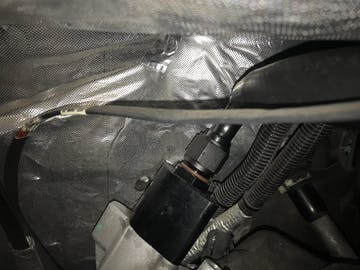
Hose bore, oil compatibility, wall construction, temperature exposure, and total routing length affect crankcase flow, so random vacuum hose is not a proper substitute.
Current SPELAB LML Duramax fitment uses a 3/4-inch, 5-foot reinforced silicone hose with anodized aluminum components. The current 6.7L Power Stroke configuration uses a 3/4-inch, 6-foot reinforced silicone hose with year-specific hardware. The updated 6.7L Cummins kit uses a stainless-steel breather element and anodized components.
Those dimensions describe specific products, not a universal CCV engineering standard. During our manufacturing fitment checks, hose bore, bend radius, mounting height, sealing surfaces, and sensor retention are treated as functional requirements. Copying one kit's hose diameter onto another engine without checking outlet size and flow demand is a bad shop shortcut.
Run a Post-Installation Check
A proper post-installation check confirms free vent flow, dry sealing surfaces, stable crankcase behavior, and no contact between the new hardware and moving or high-temperature parts.
- Warm the engine and inspect every fitting for vapor or oil leakage.
- Check the hose under idle and light throttle for collapse or movement.
- Scan for pending CCV-related diagnostic trouble codes.
- Recheck clamps, plates, plugs, and hose supports after one full heat cycle.
- Inspect for condensation after the first cold-weather drive.
- Record oil level and catch-can contents before the next towing trip.
Are PCV and CCV Reroutes Legal on Street Trucks?
Road-use legality depends on whether the modification changes a certified emissions-related configuration and on the federal, state, and local rules that apply to the truck. A part sold for a diesel platform should not be assumed legal for every street-driven application.
Check the vehicle's factory emissions label, inspection requirements, warranty terms, and local regulations before changing crankcase ventilation routing. Keep the stock hardware when reversibility matters.
Which Big 3 Owners Are Good Candidates?
Good candidates have verified intake oil carryover, a mechanically sound engine, known fitment, and a plan for routing and maintenance. Trucks with unexplained smoke, heavy visible vapor, major oil loss, or unknown previous-owner mods need diagnosis first.
- Duramax: Inspect the system when oil repeatedly coats the turbo inlet, Y-bridge, intercooler pipes, or boots after cleaning.
- Power Stroke: Check the CCV housing, sensors, connectors, and year split when the truck has intake oil or P04DB-style complaints.
- Cummins: Inspect the factory CCV filter and crankcase pressure when a 6.7L develops oil leaks, oil mist, or ventilation-service concerns.
- Towing truck: Favor a rigid, supported, oil-resistant route that handles sustained load and can be inspected before a long haul.
- Cold-climate truck: Favor short runs, continuous drainage, protected mounting, and a service schedule based on condensation rather than mileage alone.
Platform-Specific PCV and CCV Reroute Options
A platform-specific kit is worth considering only after inspection confirms that rerouting is appropriate and the product matches the engine generation, sensors, and intended use.
Compare current diesel CCV and PCV reroute kits when the truck's engine code and routing requirements are known.
PCV Reroute FAQ
These short answers cover the questions owners usually ask before diagnosing, buying, or installing a diesel PCV/CCV reroute.
Q: Does a PCV reroute add horsepower?
A: A PCV reroute does not create a predictable horsepower gain. It changes crankcase-vapor routing and may keep the intake cleaner, but a healthy stock CCV system is not normally a major airflow restriction. Treat power claims without controlled dyno testing as marketing, not proof.
Q: Will a PCV reroute stop oil from entering the intercooler?
A: A proper reroute can reduce oil mist entering through the crankcase ventilation path. Oil from a leaking turbo seal, excessive blow-by, an overfilled crankcase, or residue already trapped inside the intercooler requires separate work.
Q: Is a PCV reroute the same as a CCV delete?
A: The terms overlap in diesel-truck marketing, but the hardware may reroute, separate, filter, or externally vent crankcase vapor. The engine must still breathe. Never interpret "delete" as permission to block the crankcase outlet.
Q: Does a Duramax have a PCV valve?
A: Duramax engines have crankcase ventilation, but the hardware does not always resemble a small gasoline-engine PCV valve. Valve-cover passages, separators, hoses, and intake connections vary across LB7, LLY, LBZ, LMM, LML, and L5P generations.
Q: Does a 6.7L Power Stroke need a CCV reroute?
A: A healthy, stock 6.7L Power Stroke does not automatically need one. Inspect intake oil carryover, CCV housing condition, sensors, hoses, crankcase pressure, and the truck's workload before changing the factory system.
Q: Should a 6.7L Cummins CCV filter be replaced or rerouted?
A: Replace and maintain the factory filter when the truck remains stock and the existing system suits its use. Consider different routing only after checking pressure, oil carryover, exact model-year fitment, service requirements, and road-use rules.
Q: Can a PCV reroute freeze in winter?
A: Water vapor can condense and freeze inside long hoses, S-shaped low spots, breathers, and catch cans. Use protected routing with continuous drainage, inspect the outlet during freezing weather, and never drive with a blocked crankcase vent.