Updated: May 17, 2026
A bad fuel pressure regulator can make a perfectly good engine feel broken. It can cause misfires, black smoke, poor fuel economy, hard starts, fuel smell, rough idle, or even a no-start condition. The tricky part is that these symptoms can also look like a weak fuel pump, clogged fuel filter, leaking injector, vacuum leak, or sensor problem.
Important note: This guide focuses mainly on gasoline passenger vehicles, vacuum-referenced return-style fuel systems, and universal custom performance builds. Many modern diesel trucks use high-pressure common-rail systems with different regulators, fuel control actuators, rail pressure sensors, and diagnostic procedures. If you are working on a Cummins, Powerstroke, or Duramax common-rail diesel, do not apply gasoline fuel-pressure numbers or vacuum-hose tests directly.
Quick answer: The clearest sign of a bad fuel pressure regulator is gasoline inside the vacuum hose on a vacuum-operated regulator. Other common symptoms include engine misfires, poor acceleration, black smoke, sooty spark plugs, poor MPG, hard starting, backfires, fuel pump noise, and in extreme cases fuel dripping from the tailpipe.
This guide explains the 9 most common symptoms, how the regulator works, which OBD codes may appear, how to test it safely, and when to replace it instead of chasing other fuel-system problems.
What Does a Fuel Pressure Regulator Do?
A fuel pressure regulator controls the pressure supplied to the fuel injectors. The injectors need stable pressure so the engine can maintain the correct air-fuel ratio during idle, cruise, acceleration, and load.
In a traditional return-style system, the fuel pump sends fuel to the rail, and the regulator returns excess fuel to the tank. Many older regulators also use a vacuum hose so fuel pressure can change with engine load.
In many modern returnless systems, the regulator may be built into the fuel pump module or controlled electronically. That means the exact test procedure depends on your vehicle design. Before replacing parts, confirm whether your vehicle uses an external vacuum-operated regulator, an in-tank regulator, or ECU-controlled pressure strategy.
For a broader view of related parts, see the fuel system components collection.
How a Vacuum Fuel Pressure Regulator Works
On a vacuum-referenced regulator, fuel pressure is controlled by a balance between spring force, fuel rail pressure, and manifold vacuum. At idle, manifold vacuum helps lower effective fuel pressure. Under acceleration, vacuum drops, and the regulator allows higher rail pressure to support engine load.
A simplified way to think about it is:
Prail = Pspring ± ΔPvacuum
When the internal diaphragm tears, sticks, or loses control, this pressure balance breaks down. The ECM may try to compensate with fuel trims, but once rail pressure becomes too high or too low, you can get rich codes, lean codes, misfires, hard starts, and poor drivability.
9 Symptoms of a Bad Fuel Pressure Regulator
Some symptoms point to too much fuel pressure. Others point to low pressure. The regulator can fail in different ways, so diagnosis matters.
1. Engine Misfires
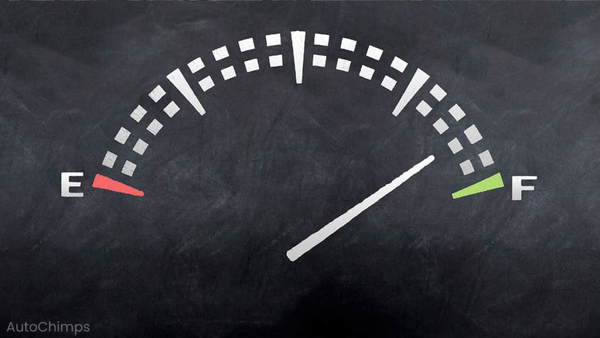
Misfires are one of the most common symptoms. If fuel pressure is too low, the injectors may not deliver enough fuel under load. If pressure is too high, the engine may run rich and foul the plugs. Either way, combustion becomes unstable.
Common related signs include rough idle, shaking, hesitation, flashing check engine light, and poor acceleration. If the misfire is isolated to one cylinder, also check the ignition coil, spark plug, injector, and compression before blaming the regulator.
2. Poor Acceleration or Low Power
If the regulator is stuck open or returning too much fuel, pressure can drop below the engine’s demand. The engine may feel flat when you step on the gas because the injectors cannot supply enough fuel volume at the correct pressure.
This symptom can also be caused by a weak fuel pump, clogged filter, bad MAF sensor, or restricted exhaust, so pressure testing is important.
3. Black Smoke From the Exhaust
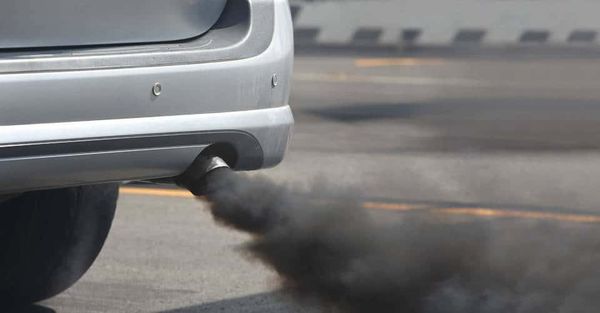
Black smoke usually means the engine is running too rich. If the regulator is stuck closed or cannot return excess fuel, pressure rises and the injectors deliver more fuel than the engine can burn cleanly.
Other rich-running signs include fuel smell, poor MPG, rough idle, and a catalytic converter that overheats from unburned fuel.
4. Black, Sooty Spark Plugs
Spark plugs can tell you a lot on gasoline engines. If the plugs are dry, black, and sooty across multiple cylinders, the engine may be running rich. A bad regulator is one possible cause.
If only one plug is black, suspect a leaking injector, ignition problem, or cylinder-specific issue instead. A fuel pressure regulator problem usually affects the entire fuel rail, not just one cylinder.
5. Poor Fuel Mileage
Bad fuel pressure can waste fuel in two ways. If pressure is too high, the engine burns too much fuel. If pressure is too low, the ECU may compensate with longer injector pulse width, and drivability still suffers.
If fuel economy suddenly drops along with fuel smell, black smoke, or rough idle, the regulator should be tested.
6. Gasoline in the Vacuum Hose
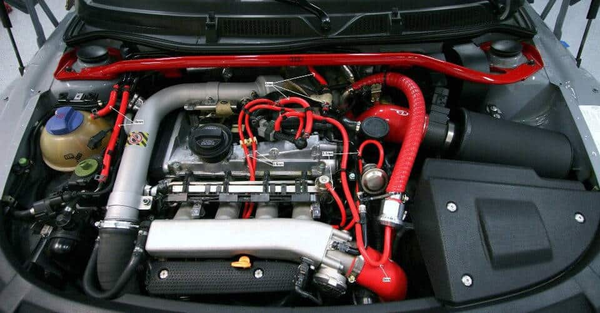
This is the “smoking gun” symptom on a vacuum-operated gasoline regulator. If the internal diaphragm ruptures, raw fuel can enter the vacuum hose and get pulled into the intake manifold.
How to check: With the engine off and cool, carefully remove the vacuum hose from the regulator. If you see wet fuel or smell strong gasoline inside the hose, the regulator has likely failed and should be replaced.
7. Engine Backfires
A rich condition can send unburned fuel into the exhaust. When that fuel ignites in the hot exhaust stream, it can cause popping or backfiring, especially during deceleration or throttle transitions.
Backfires can also come from ignition timing, exhaust leaks, bad coils, or valve timing issues, so use fuel pressure data to confirm the regulator.
8. Hard Start or No Start
Starting requires the right pressure at the right time. If pressure bleeds down after shutdown, the engine may crank longer than normal. If pressure is too low, it may crank but not fire. If pressure is too high or fuel leaks into the intake, the engine may flood.
A hard start after sitting overnight can also point to a leaking injector, fuel pump check valve, or pressure leak-down problem.
9. Excessive Fuel Pump Noise or Fuel From the Tailpipe
A regulator stuck closed can force the pump to work harder, causing a constant whining or whirring noise. Over time, this can shorten fuel pump life.
Fuel dripping from the tailpipe is rare and serious. It suggests extreme over-fueling, misfire, or raw fuel entering the exhaust. Do not continue driving if you suspect raw fuel is reaching the exhaust system.
Bad Regulator vs. Other Fuel System Problems
Many fuel-system problems overlap. Use the pattern of symptoms to narrow the cause.
| Problem | Similar Symptoms | How It Differs From a Bad Regulator |
|---|---|---|
| Weak fuel pump | Low power, lean misfire, hard start | Usually causes low pressure but does not put fuel in the regulator vacuum hose. |
| Clogged fuel filter | Hesitation, low pressure, poor acceleration | Often worse under load; filter replacement is usually the first low-cost check. |
| Leaking injector | Rich condition, fuel smell, hard start | May affect one cylinder more than the whole rail. |
| Clogged injector | Misfire, rough idle, poor power | Often cylinder-specific, especially if one plug looks different. |
| Vacuum leak | Lean codes, rough idle, hesitation | Usually causes low vacuum and lean running, not fuel in the vacuum hose. |
If the issue feels like broader delivery loss, read how to diagnose broader delivery problems.
Common OBD Codes Linked to Fuel Pressure Problems
A bad regulator may not always trigger a regulator-specific code. Instead, the ECM sees the result: too much fuel, not enough fuel, unstable rail pressure, or misfires.
| Code | Meaning | How It Can Relate to the Regulator |
|---|---|---|
| P0172 / P0175 | System too rich, Bank 1 / Bank 2 | Fuel pressure may be too high, or fuel may be pulled through a ruptured vacuum diaphragm. |
| P0171 / P0174 | System too lean, Bank 1 / Bank 2 | Fuel pressure may be too low, or another issue such as a vacuum leak or weak pump may be present. |
| P0087 | Fuel rail/system pressure too low | Can point to low delivery pressure, pump weakness, restricted filter, or a regulator returning too much fuel. |
| P0300 or cylinder misfire codes | Random or cylinder-specific misfire | Incorrect fuel pressure can destabilize combustion, but ignition and injector issues must also be checked. |
If long idling and poor combustion are part of the issue, review how deposits build up over time.
How to Safely Test a Fuel Pressure Regulator
Safety first: Fuel is flammable, and the system may be under pressure. Work in a ventilated area, wear safety glasses, keep sparks and flames away, relieve fuel pressure when required, and follow the service manual for your vehicle.
Test 1: Fuel Pressure Gauge Test
- Find the test port. Many fuel rails have a Schrader valve, but not all vehicles do.
- Attach the gauge safely. Make sure the connection is tight and fuel does not leak.
- Check KOEO pressure. Turn the key on without starting the engine. Record the prime pressure.
- Check idle pressure. Start the engine and compare pressure to specification.
- Snap the throttle. Pressure should respond quickly and stay within spec.
- Check leak-down. After shutdown, pressure should not drop too quickly.
Do not rely on generic pressure numbers. Some gasoline vehicles may be around 40–60 PSI, but the correct range depends on make, model, engine, and fuel-system design.
Test 2: Vacuum Hose Test
For a vacuum-operated regulator, inspect the vacuum hose. If fuel is present, the diaphragm has likely ruptured. When the hose is disconnected at idle, fuel pressure often rises because manifold vacuum is no longer acting on the regulator.
If pressure does not respond to vacuum changes, the regulator, vacuum supply, or fuel-system design should be checked.
Test 3: Return Line or Scan Tool Data
On some return-style systems, restricted return flow can cause high pressure. On modern returnless systems, scan data may be more useful than a simple vacuum hose check. Look at commanded pressure, actual pressure, fuel trims, misfire counters, and related codes.
Fuel Pressure Regulator Replacement Cost
If testing confirms the regulator is faulty, replacement is usually the correct fix. The total cost depends on whether the regulator is external, built into the fuel rail, or part of the in-tank fuel pump module.
| Setup | Typical Repair Complexity | Cost Notes |
|---|---|---|
| External rail-mounted regulator | Lower | Often a straightforward replacement if access is good. |
| Regulator integrated with fuel rail | Medium | May require more disassembly and new seals. |
| In-tank regulator or pump module | Higher | May require fuel tank access or pump module replacement. |
Parts can range widely, and labor depends on vehicle access. Do not replace the regulator based on symptoms alone; confirm pressure and rule out pump, filter, injector, and vacuum issues first.
Should You Upgrade the Fuel Pickup or Sump?
For a stock daily driver, a fuel tank sump is usually not the first repair for a bad regulator. But for custom performance builds, external fuel pump setups, heavy-load applications, or vehicles that experience fuel starvation at low tank levels, the fuel supply path matters.
If the pump is noisy, pressure drops under load, or the system repeatedly runs lean during hard acceleration, check the tank pickup, filter, pump voltage, return path, and fuel supply routing. A regulator cannot maintain stable rail pressure if the pump is being starved upstream.
For custom builds where gravity-fed supply and more stable pickup are needed, compare the fuel tank sump kit collection.
What to Replace Along With the Regulator
Depending on the test results, it may make sense to inspect related components while the fuel system is open.
- automotive fuel filter: Replace if pressure is low under load or service history is unknown.
- fuel injector kit: Inspect if misfire is cylinder-specific or pressure leak-down is abnormal.
- fuel pump: Test if fuel pressure is low, unstable, or slow to build.
The Dangers of Ignoring a Faulty Regulator
A faulty regulator can do more than hurt drivability. A rich condition can overheat or damage the catalytic converter. A lean condition can create misfires, hesitation, and higher combustion temperatures. A leaking diaphragm can pull raw fuel into the intake, creating both performance and fire risks.
If you smell raw fuel, see fuel in the vacuum hose, or suspect fuel is reaching the exhaust, stop driving and diagnose the problem immediately.
For seasonal reliability checks, read basic reliability checks.
Final Diagnosis: Is the Regulator Really Bad?
A bad fuel pressure regulator should be diagnosed by evidence, not guesswork. The strongest evidence is fuel in the vacuum hose, fuel pressure outside specification, poor pressure response to vacuum change, or pressure leak-down that matches the failure pattern.
If pressure is low, do not automatically blame the regulator. Check the pump, filter, voltage supply, tank pickup, and restricted lines. If pressure is high, check the return path, regulator diaphragm, and whether the system is return-style or returnless.
FAQ
Q:What does a fuel pressure regulator actually do?
A:It maintains correct fuel pressure for the injectors so the engine can receive the proper air-fuel mixture during idle, cruise, acceleration, and load.
Q:What is the most obvious sign of a bad fuel pressure regulator?
A:Fuel inside the vacuum hose is the clearest sign on a vacuum-operated gasoline regulator. It usually means the internal diaphragm has ruptured.
Q:Can a bad fuel pressure regulator cause poor fuel economy?
A:Yes. Too much pressure can make the engine run rich, while too little pressure can cause poor combustion and drivability issues. Both can reduce MPG.
Q:Can a bad regulator cause black smoke?
A:Yes. If the regulator creates excessive fuel pressure, the engine may run rich and produce black smoke from the exhaust.
Q:Will a faulty regulator trigger a check engine light?
A:Often, yes. Incorrect fuel pressure can trigger rich codes, lean codes, misfire codes, or fuel trim problems depending on how the engine responds.
Q:What codes can a bad fuel pressure regulator cause?
A:Possible related codes include P0172 or P0175 for rich conditions, P0171 or P0174 for lean conditions, P0087 for low fuel rail pressure, and misfire codes such as P0300.
Q:Is this guide for diesel trucks?
A:Not primarily. This guide focuses on gasoline fuel systems, especially vacuum-operated regulators. Diesel common-rail systems use different pressure ranges, components, and diagnostic procedures.
Q:Is it safe to drive with a bad fuel pressure regulator?
A:It is not recommended. The vehicle may stall, misfire, leak fuel, damage the catalytic converter, or create a fire hazard if raw fuel is present.
Q:How long does it take to replace a fuel pressure regulator?
A:An external regulator may take about an hour for a professional. In-tank or integrated regulators can take longer because more disassembly is required.
Q:Should I test fuel pressure before replacing the regulator?
A:Yes. A fuel pressure gauge or scan-tool data helps confirm whether the regulator is actually the problem and prevents unnecessary parts replacement.
Q:Can I replace only the regulator?
A:Sometimes. If it is an external regulator, yes. If the regulator is built into the pump module or fuel rail assembly, the larger assembly may need to be replaced.

John Lee
Mechanical Engineer | 10+ Years Experience
John has spent the last decade engineering and testing high-performance automotive components. Specializing in drivetrain durability and thermal management across Powerstroke, Cummins, and Duramax applications, he bridges the gap between OEM limitations and aftermarket performance. His philosophy: "Factory parts are just a starting point."