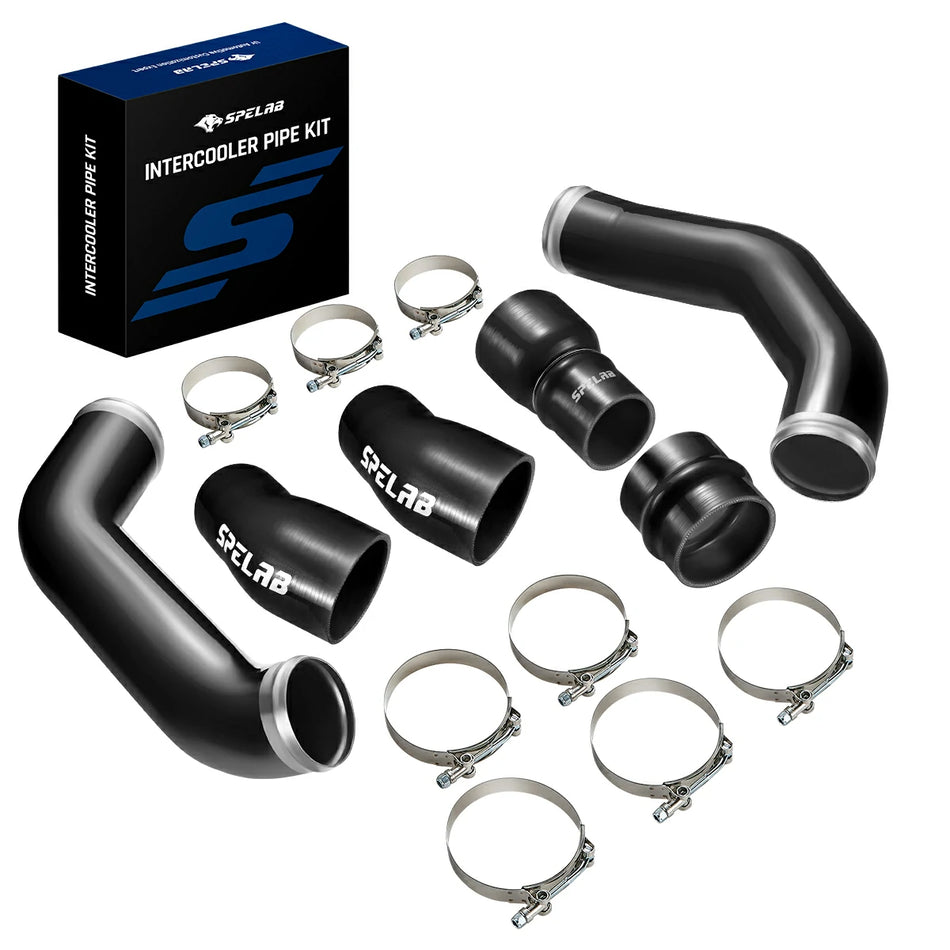
Updated on August 24, 2026.
For the average commuter, a gas engine is the right call. But if you're hauling a gooseneck to a jobsite, running a fifth wheel across three states, or just building the most capable truck in the lot, "diesel vs. gas" isn't really about fuel economy — it's about torque, duty cycle, and how far the platform can be pushed before it gives up.
The Torque King: Why Diesel Wins Where It Matters
The core difference is how the two engines make power. Gas engines lean on high RPM to get there. Diesel engines, backed by a turbo and running a higher compression ratio, make their torque low and early — though "high compression" varies more by engine than people assume. The current 6.7L Power Stroke runs roughly 16.2:1, not the 17:1+ figure often quoted for older or smaller diesels, so it's worth checking the actual spec for your specific engine rather than assuming a round number.
Real-World Torque Comparison (2023-model-year figures, both engines)
- Gas (7.3L "Godzilla" V8): 485 lb-ft @ 4,000 RPM
- Diesel (6.7L Power Stroke, standard): 1,050 lb-ft @ 1,600 RPM (the HO variant reaches 1,200 lb-ft)
Verdict: The diesel makes more than double the torque at well under half the RPM. That doesn't automatically mean the gas engine is "straining" at its power peak — both are rated for sustained duty within their spec — but it does mean the diesel reaches its full pulling power much sooner, which matters when you're already loaded on a grade. Final drive gearing, axle ratio, and total combined weight all factor into real-world towing performance too, not torque numbers alone.

Modifiability: Where Diesel Pulls Ahead — With a Real Caveat
This is the part enthusiasts care about. A naturally aspirated gas V8 is expensive to wake up — you're looking at cams, heads, or a supercharger to move the needle. A modern diesel is different: a lot of its factory power ceiling comes from emissions hardware sized for compliance, not peak output, so there's real headroom in the platform. What you're allowed to do about that headroom depends on how the truck is actually used.
Where the Legal Line Actually Sits
Whether a modification is legal for a street-driven truck doesn't come down to a category like "intake" or "tuning" — it comes down to whether the specific product is certified as emissions-compliant for your exact engine and model year, and whether it leaves the truck's OBD monitoring functioning as designed. A cold air intake that doesn't touch emissions hardware is the lowest-risk category, but "no gray area" isn't quite right either — state rules and specific product certification still matter. As of mid-2026, the EPA has recognized SEMA's Certified Emissions program alongside CARB Executive Orders as a way for aftermarket parts to demonstrate federal compliance — look for that kind of documentation on the specific part, not just a category label. The same goes for tuning: a calibration that leaves EGR, DPF, and DEF hardware physically in place is a different category from a full delete, but it still needs to be documented as emissions-compliant for your exact configuration — changing fueling, boost, or OBD monitoring can create compliance problems even with the hardware untouched. This breakdown covers when a delete actually restores power versus when the real problem is somewhere else entirely.
Delete Kits: The Part of This Conversation That Needs a Straight Answer
EGR and DPF delete kits are real products that real SPELAB customers buy. But here's the part a lot of sales copy skips: under the federal Clean Air Act, removing or disabling EPA-certified emissions equipment on a vehicle that's actually driven on public roads is illegal, regardless of what the packaging says. The EPA has been explicit that "for off-road use only" or "competition only" labeling doesn't create a blanket legal exemption — the agency has said it generally won't pursue individual owners whose vehicles are solely and verifiably used in competition, but that's enforcement discretion aimed at owners, not a legal shield, and it does not protect sellers or manufacturers who market delete kits with unverified use claims. There isn't a standard legal pathway for converting a public-road vehicle into an exempt "competition vehicle." If you're weighing a delete kit, read SPELAB's own legal breakdown before you decide — it lays out the inspection, resale, and warranty exposure honestly.
Longevity, Payload, and What Actually Decides "Which Truck"
Diesel long blocks are generally built heavier to survive high compression cycle after cycle, and owners commonly report a 5.9L Cummins or LBZ Duramax clearing 300,000 miles with routine maintenance — though that's owner-reported experience, not a formal reliability study. Modern gas V8s have closed the gap more than people expect, too — a well-maintained truck-duty gas engine can also run well past 200,000 miles, so "diesel always outlasts gas" is more of a tendency than a guarantee. The more consistent weak point on a modern diesel is emissions-system complexity, not the long block itself.
EGR soot recirculation is a real contributor to intake-side carbon buildup over time. A catch can that intercepts crankcase oil vapor before it reaches the intake is a maintenance item rather than an emissions-system modification, though it's not automatically street-legal everywhere by default either — a closed-loop system that routes vapor back into the intake keeps the crankcase ventilation system's function intact, while an open, vent-to-atmosphere setup is a different situation state-by-state. Check the specific product design and your state's rules before assuming.
The scenario most "diesel vs. gas" comparisons skip: payload. A diesel long block, turbo, and DEF system add real weight over a comparable gas engine, and that weight comes directly out of your available payload if the two trucks share a GVWR. If you're running a fifth-wheel or gooseneck, that matters more than torque: Ford's own towing guidance recommends sizing pin weight at roughly 15% of total loaded trailer weight, and that pin weight has to fit inside your remaining payload alongside passengers, gear, and fuel — not just inside the trailer's own rating. Before deciding on torque numbers alone, check the payload sticker on your specific truck's door jamb, not just the advertised max GVWR or GCWR, since options and cab configuration shift the real number.
Summary: Which Should You Choose?
| Feature | Gasoline Truck | Diesel Truck |
|---|---|---|
| Initial Cost | Lower | Higher ($8k-$10k premium, typically) |
| Towing | Good for light-to-medium loads | Built for heavy, sustained hauling |
| Available Payload (same GVWR) | Generally higher — lighter engine | Generally lower — diesel long block, turbo, and DEF system add weight |
| Routine Maintenance | Spark plugs, cheaper oil changes (~6-8 qts) | Fuel filters, DEF fluid, roughly 13 qts of oil (check your exact model year) |
| Legal Aftermarket Potential | Lower without major engine work | Real, but depends on product-specific emissions certification, not the category alone |
Final Thoughts
If you want a simple daily driver, gas is the easier, cheaper answer. But if you're towing serious weight, putting real hours on the truck, and want a platform that responds well to legal bolt-on upgrades, diesel is still the stronger case. Check out SPELAB's parts selection by platform for Cummins, Duramax, and Powerstroke trucks.
Frequently Asked Questions
Q: Is diesel maintenance really more expensive than gas?
A: Per visit, usually yes — a 6.7L Power Stroke oil change needs roughly 13 quarts (verify your exact model year), versus 6-8 for most gas trucks, plus fuel filters and DEF fluid. Diesel service intervals are often longer, but that varies with towing load, idle hours, and climate — the trade-off is generally stronger durability and resale value, not lower total cost of ownership.
Q: What about payload if I'm running a fifth-wheel or gooseneck?
A: Check it before you check torque numbers. A diesel's extra weight comes out of your available payload under a shared GVWR, and pin weight (roughly 15% of your loaded trailer weight, per Ford's towing guidance) has to fit inside what's left after passengers, gear, and fuel. The payload sticker on your specific truck's door jamb is the real number — advertised max towing and GVWR figures don't account for your actual configuration.
Q: Do diesel trucks actually get better MPG while towing?
A: Usually, yes. Under a heavy load, a gas engine has to rev hard to make power, which tanks fuel economy — sometimes into single digits. A diesel stays in its low-RPM torque band and typically holds up better under the same load.
Q: Which engine lasts longer, gas or diesel?
A: Diesel long blocks are generally built for a longer service life, but the gap has narrowed — a well-maintained modern gas V8 can also cover serious mileage. The more common "weak link" on a modern diesel is the emissions system, not the engine block itself.
Q: Is a diesel a good choice for short commutes?
A: Not ideally. A DPF-equipped diesel needs sustained heat to complete regeneration — the self-cleaning cycle that burns off trapped soot. Short trips that never get the exhaust hot enough can lead to incomplete regens and a clogged filter over time. If most of your driving is short hops, a diesel needs an occasional longer highway run to stay healthy.
Q: Can I make my gas truck sound more like a diesel?
A: Not exactly — you won't replicate turbo whistle or injector clatter — but a set of performance headers and a cat-back exhaust will give a gas V8 a noticeably deeper, more aggressive tone.
Q: Are EGR and DPF delete kits legal, and where should I start if I want more power without the risk?
A: For a truck used on public roads, removing certified emissions equipment is illegal tampering under the Clean Air Act, and "off-road use only" marketing doesn't change that for a truck actually driven on the street — that's enforcement discretion aimed at individual owners in verified competition use, not a blanket legal exemption, and it doesn't protect sellers. If you want more power without that exposure, start with an intake and a tune backed by documented emissions-compliant certification for your exact configuration — that's where most of the easy, lower-risk gains are.