Updated: July 7, 2026
Quick Answer: What Are the Signs of a Bad Fuel Pressure Regulator?
A bad fuel pressure regulator can cause misfires, rough idle, poor acceleration, black smoke, poor fuel economy, hard starts, fuel smell, rich or lean codes, and in severe cases raw fuel entering the intake or exhaust. On a vacuum-operated gasoline regulator, the clearest warning sign is fuel inside the vacuum hose, which usually means the internal diaphragm has ruptured.
Important scope note: This guide focuses mainly on gasoline passenger vehicles, vacuum-referenced return-style fuel systems, modern returnless gasoline systems, and universal performance fuel setups. Modern Cummins, Powerstroke, and Duramax diesel trucks use high-pressure common-rail systems with different parts, pressure ranges, and test procedures. Do not apply gasoline pressure numbers or vacuum-hose tests directly to a common-rail diesel.
A bad fuel pressure regulator can make a healthy engine feel broken. The vehicle may crank longer than normal, shake at idle, run rich, smell like fuel, lose power under acceleration, or turn on the check engine light. The hard part is that these symptoms can also come from a weak fuel pump, clogged fuel filter, leaking injector, vacuum leak, bad fuel pressure sensor, restricted return path, or wiring issue.
That is why guessing is expensive. A regulator should be replaced only after the pressure pattern matches the failure mode. This guide explains the 9 most common symptoms, how the regulator works, which OBD codes may appear, how to test it safely, and when the real problem may be somewhere else in the fuel system.
9 Symptoms of a Bad Fuel Pressure Regulator
Fuel pressure regulators can fail in more than one way. A stuck-open regulator may create low pressure. A stuck-closed regulator may create high pressure. A ruptured diaphragm can pull raw fuel through the vacuum hose. A returnless system can lose resting pressure after shutdown. The symptoms below help you narrow down which failure pattern fits your vehicle.
1. Engine Misfires
Misfires are one of the most common symptoms of incorrect fuel pressure. If pressure is too low, the injectors may not deliver enough fuel under load. If pressure is too high, the engine may run rich and foul the spark plugs. Either way, combustion becomes unstable.
Common signs include rough idle, shaking, hesitation, poor acceleration, and a flashing check engine light. If the misfire affects only one cylinder, also inspect the spark plug, ignition coil, injector, and compression before blaming the regulator.
2. Poor Acceleration or Low Power
If the regulator is stuck open or returning too much fuel, rail pressure can drop below what the engine needs. The vehicle may feel flat when you press the gas because the injectors cannot deliver fuel at the correct pressure.
This can also be caused by a weak pump, clogged filter, bad MAF sensor, restricted exhaust, or low voltage to the pump. If the vehicle falls on its face only under load, verify pressure with a gauge or scan data before replacing parts. For a wider diagnostic path, check whether the issue matches broader delivery problems rather than a regulator-only failure.
3. Black Smoke From the Exhaust
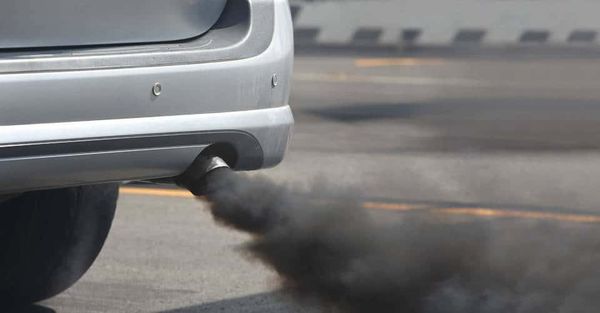
Black smoke usually means the engine is running too rich. If the regulator is stuck closed or cannot return excess fuel, pressure rises and the injectors deliver more fuel than the engine can burn cleanly.
Other rich-running clues include raw fuel smell, poor MPG, sooty spark plugs, rough idle, and a catalytic converter that runs hotter than normal from unburned fuel.
4. Black, Sooty Spark Plugs
Spark plugs can reveal whether a gasoline engine is running rich. If several plugs are dry, black, and sooty, excessive fuel pressure may be one possible cause.
If only one plug looks black, suspect a cylinder-specific issue such as a leaking injector, weak ignition coil, plug problem, or compression issue. A fuel pressure regulator usually affects the entire rail, not one cylinder only.
5. Poor Fuel Mileage
Bad fuel pressure can waste fuel in two different ways. Too much pressure can make the engine run rich. Too little pressure can force the ECU to compensate with longer injector pulse width, while drivability still suffers.
If fuel economy drops suddenly along with fuel smell, rough idle, rich codes, or black smoke, the regulator and the rest of the fuel delivery system should be tested.
6. Gasoline in the Vacuum Hose
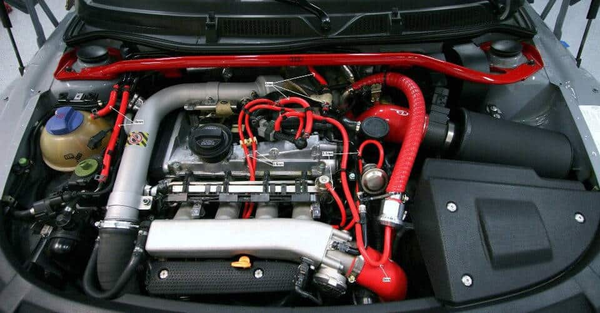
This is the strongest “smoking gun” symptom on a vacuum-operated gasoline fuel pressure regulator. If the internal diaphragm ruptures, raw fuel can enter the vacuum hose and get pulled into the intake manifold.
How to check: With the engine off and cool, carefully remove the vacuum hose from the regulator. If you see wet fuel or smell strong gasoline inside the hose, the regulator has likely failed and should be replaced.
7. Engine Backfires or Popping
A rich condition can send unburned fuel into the exhaust. When that fuel ignites in the hot exhaust stream, the engine may pop, bang, or backfire during deceleration or throttle transitions.
Backfires can also come from ignition timing, exhaust leaks, bad coils, or valve timing problems, so pressure data is still needed before condemning the regulator.
8. Hard Start, Long Crank, or No Start
Starting requires the right pressure at the right time. If pressure bleeds down after shutdown, the engine may crank longer than normal. If pressure is too low, it may crank but not fire. If pressure is too high or fuel leaks into the intake, the engine may flood.
A hard start after sitting overnight can also point to a leaking injector, bad pump check valve, restricted filter, weak pump, or pressure leak-down problem.
9. Fuel Pump Noise or Raw Fuel From the Tailpipe
A regulator stuck closed can force the pump to work harder, causing a constant whining or whirring noise. Over time, that extra load can shorten fuel pump life.
Fuel dripping from the tailpipe is rare and serious. It suggests extreme over-fueling, misfire, or raw fuel entering the exhaust. Do not continue driving if you suspect raw fuel is reaching the exhaust system.
[[product-recommend:1]]Fuel Pressure Regulator Failure Modes: Too High, Too Low, or Leaking
The fastest way to diagnose a regulator is to match the symptom to the pressure behavior. This table keeps the logic straight before you start replacing parts.
| Failure Mode | Pressure Behavior | Common Symptoms | What to Check |
|---|---|---|---|
| Stuck open | Fuel returns too easily; pressure may be low. | Lean misfire, hesitation, low power, long crank. | Fuel pressure gauge, pump volume, filter restriction, return flow. |
| Stuck closed | Fuel cannot return properly; pressure may be high. | Black smoke, rich codes, fuel smell, poor MPG, sooty plugs. | High pressure reading, restricted return line, regulator response. |
| Ruptured diaphragm | Fuel may enter the vacuum hose. | Rich running, fuel smell, rough idle, hard start, raw fuel risk. | Vacuum hose inspection for fuel or strong gasoline odor. |
| Returnless leak-down | Pressure drops too quickly after the engine is turned off. | Long crank, hot restart issue, overnight hard start. | Resting pressure leak-down test, injector leak, pump check valve, in-tank regulator seal. |
If pressure loss appears only under load, do not stop at the regulator. A restricted filter or weak pickup can starve the rail before the regulator ever has a chance to control pressure. Start with service history and restriction clues; this restriction-symptom guide can help separate a supply problem from a regulator problem.
What Does a Fuel Pressure Regulator Do?
A fuel pressure regulator controls the pressure supplied to the injectors. The injectors need stable pressure so the engine can maintain the correct air-fuel ratio during idle, cruise, acceleration, and load.
In a traditional return-style system, the fuel pump sends fuel to the rail, and the regulator returns excess fuel to the tank. Many older regulators also use a vacuum hose so fuel pressure can change with engine load.
In many modern returnless systems, the regulator may be built into the fuel pump module or controlled electronically. That means the exact test procedure depends on the vehicle design. Before replacing parts, confirm whether the vehicle uses an external vacuum-operated regulator, an in-tank regulator, or ECU-controlled pressure strategy.
For related parts beyond the regulator itself, the Fuel System collection is the better starting point than guessing one part from symptoms alone.
Returnless Fuel System Test: What If There Is No Vacuum Hose?
Modern returnless systems often do not give you a vacuum hose to pull. The regulator may be inside the tank module, controlled by the pump assembly, or managed through ECU command and pump duty cycle. That means the classic “check the vacuum hose for fuel” test simply does not apply.
John Lee’s Shop-Floor Trick: Resting Pressure Leak-Down Test
If your vehicle uses a modern returnless fuel system and has a hot restart or long-crank problem, perform a resting pressure leak-down test. Connect a mechanical fuel pressure gauge, prime the system, start the engine if needed, then shut it off and watch the gauge.
A healthy system should hold rail pressure long enough for the next restart. Always use the service manual for the exact specification, but as a quick diagnostic screen, pressure that drops to zero almost immediately can point to a leaking injector, weak pump check valve, failed in-tank regulator seal, or internal module leak-back.
The key is pattern matching. A returnless vehicle with instant leak-down and long hot cranking is not diagnosed the same way as an old vacuum-referenced regulator with fuel in the hose.
| Gauge Behavior After Shutdown | What It Suggests | Next Diagnostic Step |
|---|---|---|
| Pressure holds near spec | The pump check valve, regulator sealing, and injectors may be holding. | Look at ignition, sensors, cranking RPM, or fuel command. |
| Pressure drops slowly | Possible minor leak-down, aging check valve, or injector seepage. | Compare to service spec and repeat hot/cold. |
| Pressure drops immediately | Possible pump module leak-back, failed in-tank regulator seal, injector leak, or line issue. | Isolate the feed side, inspect injectors, and confirm with service manual flowchart. |
Performance Fuel Systems: Why 1:1 Boost Reference Matters
Universal performance builds need one more layer of diagnosis. On a naturally aspirated engine, a regulator only needs to maintain stable injector pressure across vacuum and throttle changes. On a turbocharged or supercharged engine, manifold pressure can push against the injector outlet. If fuel pressure does not rise with boost, the effective pressure across the injector drops.
That is why many adjustable performance regulators use a boost-reference port. In a proper 1:1 boost-referenced setup, every 1 PSI of boost pressure should raise fuel pressure by roughly 1 PSI above the base setting. The goal is not to “overfuel” the engine blindly. The goal is to preserve the injector pressure differential so the fuel map remains predictable under boost.
| Condition | What Happens | Risk |
|---|---|---|
| Base pressure set correctly, no boost | Injector pressure differential is stable. | Normal idle and cruise behavior. |
| Boost rises, regulator is not referenced | Manifold pressure pushes back against injector flow. | Lean condition, detonation risk, poor high-load fueling. |
| Boost rises, 1:1 reference works | Fuel pressure rises with manifold pressure. | More stable injector delivery under boost. |
For custom EFI swaps, turbo street cars, and high-horsepower fuel layouts, the regulator is only one piece of the system. The supply side, return side, rails, injectors, tank pickup, and plumbing must all support the pressure and volume demand. For high-flow rail planning, compare Fuel Rail Kits with the rest of the fuel system instead of sizing the regulator in isolation.
Fuel Pressure Regulator vs. Fuel Pressure Sensor: What’s the Difference?
Many drivers confuse the regulator with the fuel pressure sensor. They are related, but they do different jobs.
| Part | Main Job | Common Failure Clue | Diagnostic Note |
|---|---|---|---|
| Fuel pressure regulator | Controls or limits fuel pressure. | Fuel in vacuum hose, pressure too high, pressure too low, poor response to vacuum or command. | Confirmed with pressure testing, vacuum response, return flow, or scan data. |
| Fuel pressure sensor | Reports pressure data to the ECU. | Unrealistic pressure reading, sensor range/performance code, wiring-related issue. | A bad sensor can make pressure look wrong even when mechanical pressure is fine. |
If scan data shows pressure that does not match a mechanical gauge, do not replace the regulator first. Check the sensor, connector, wiring, ground, and reference voltage.
Bad Regulator vs. Other Fuel System Problems
Many fuel-system problems overlap. Use the pattern of symptoms to narrow the cause.
| Problem | Similar Symptoms | How It Differs From a Bad Regulator |
|---|---|---|
| Weak fuel pump | Low power, lean misfire, hard start. | Usually causes low pressure but does not put fuel in the regulator vacuum hose. |
| Clogged fuel filter | Hesitation, low pressure, poor acceleration. | Often worse under load. If service history is unknown, inspect Fuel Filters before chasing expensive parts. |
| Leaking injector | Rich condition, fuel smell, hard start. | May affect one cylinder more than the whole rail and can cause pressure leak-down. |
| Clogged injector | Misfire, rough idle, poor power. | Often cylinder-specific, especially if one plug looks different from the others. |
| Vacuum leak | Lean codes, rough idle, hesitation. | Usually causes lean running, not fuel in the regulator vacuum hose. |
| Bad fuel pressure sensor | Wrong pressure reading, codes, poor drivability. | Mechanical gauge pressure may not match scan-tool pressure. |
Common OBD Codes Linked to Fuel Pressure Problems
A bad regulator may not trigger a regulator-specific code. The ECU usually sees the result: too much fuel, not enough fuel, unstable rail pressure, or misfires.
| Code | Meaning | How It Can Relate to Fuel Pressure |
|---|---|---|
| P0172 / P0175 | System too rich, Bank 1 / Bank 2. | Fuel pressure may be too high, or fuel may be pulled through a ruptured vacuum diaphragm. |
| P0171 / P0174 | System too lean, Bank 1 / Bank 2. | Fuel pressure may be too low, or another issue such as a vacuum leak, weak pump, or clogged filter may be present. |
| P0087 | Fuel rail/system pressure too low. | Can point to low delivery pressure, pump weakness, restricted filter, or a regulator returning too much fuel. |
| P0088 | Fuel rail/system pressure too high. | Can point to a stuck pressure-control device, restricted return path, sensor issue, or control problem. |
| P0191 | Fuel rail pressure sensor range/performance. | May indicate sensor, wiring, actual pressure instability, or mismatch between commanded and actual pressure. |
| P0300 or cylinder misfire codes | Random or cylinder-specific misfire. | Incorrect fuel pressure can destabilize combustion, but ignition and injector faults must also be checked. |
If the pressure code shows up on a Ford 6.7L Power Stroke, remember that regulator-style symptoms can overlap with a much larger high-pressure pump failure path. Do not treat every low-pressure or rail-pressure code as a simple regulator swap.
How to Safely Test a Fuel Pressure Regulator
Safety first: Fuel is flammable, and the system may be under pressure. Work in a ventilated area, wear safety glasses, keep sparks and flames away, relieve fuel pressure when required, and follow the service manual for your vehicle.
Test 1: Fuel Pressure Gauge Test
- Find the test port. Many fuel rails have a Schrader valve, but not all vehicles do.
- Attach the gauge safely. Make sure the connection is tight and fuel does not leak.
- Check KOEO pressure. Turn the key on without starting the engine. Record the prime pressure.
- Check idle pressure. Start the engine and compare pressure to the service specification.
- Snap the throttle. Pressure should respond quickly and stay within spec.
- Check leak-down. After shutdown, pressure should not drop too quickly.
Do not rely on generic pressure numbers. Some gasoline vehicles may run around 40–60 PSI, but the correct range depends on make, model, engine, and fuel-system design.
Test 2: Vacuum Hose Test
For a vacuum-operated regulator, inspect the vacuum hose. If fuel is present, the diaphragm has likely ruptured. When the hose is disconnected at idle, fuel pressure often rises because manifold vacuum is no longer acting on the regulator.
If pressure does not respond to vacuum changes, check the regulator, vacuum supply, hose condition, and whether the vehicle actually uses a vacuum-referenced system.
Test 3: Scan Tool Data
On modern returnless systems, scan data may be more useful than a simple vacuum-hose check. Look at commanded pressure, actual pressure, fuel trims, misfire counters, and related codes.
Test 4: Leak-Down Test
If the engine has a long crank after sitting, watch how quickly pressure drops after shutdown. A fast drop may point to a leaking injector, pump check valve, regulator seal, in-tank module leak-back, or fuel line problem.
Diesel Truck Note: Why Common-Rail Fuel Pressure Problems Are Different
Diesel truck owners often search for “bad fuel pressure regulator symptoms,” but a modern common-rail diesel does not diagnose the same way as an older vacuum-operated gasoline regulator. A 6.7 Cummins, 6.7 Powerstroke, or Duramax may use parts such as a fuel control actuator, MPROP/fuel metering valve, rail pressure sensor, pressure relief valve, lift pump, high-pressure pump, and injector return system.
| Diesel Symptom | Possible Direction | Why Gasoline Tests Do Not Apply |
|---|---|---|
| Long crank or no start | Low rail pressure, injector return/leak-off, weak lift pump, high-pressure pump issue. | No vacuum hose test; cranking rail pressure and commanded-vs-actual data matter. |
| P0087 low fuel rail pressure | Restricted fuel filter, lift pump weakness, supply restriction, FCA/MPROP issue, CP3/CP4 problem. | Low pressure may start on the low-pressure side before the rail ever sees it. |
| P0088 high fuel rail pressure | Sticking metering valve, control issue, rail pressure sensor issue, wiring problem. | It is not the same as a gasoline return regulator stuck closed. |
| Power loss while towing | Fuel supply cannot keep up with load, filter restriction, pressure control issue, pump limitation. | Loaded rail-pressure data matters more than idle-only testing. |
| Rail pressure leak under load | Pressure relief valve leakage, rail plug issue, injector return loss, or high-pressure supply problem. | Diesel rail pressure failures require platform-specific diagnosis. |
If you are diagnosing a diesel common-rail truck, use this dedicated common-rail diesel diagnosis instead of applying gasoline regulator tests directly. If testing points toward rail pressure relief leakage on certain Cummins or Duramax applications, compare the correct Fuel Rail Plug fitment before replacing unrelated parts.
Fuel Pressure Regulator Replacement Cost
If testing confirms the regulator is faulty, replacement is usually the correct fix. The total cost depends on whether the regulator is external, built into the fuel rail, or part of the in-tank fuel pump module.
| Setup | Typical Repair Complexity | Cost Notes |
|---|---|---|
| External rail-mounted regulator | Lower | Often straightforward if access is good. |
| Regulator integrated with fuel rail | Medium | May require more disassembly and new seals. |
| In-tank regulator or pump module | Higher | May require fuel tank access or pump module replacement. |
Do not replace the regulator based on symptoms alone. Confirm pressure and rule out the pump, filter, injector, sensor, wiring, and vacuum issues first.
Performance Build Note: Don’t Fix a Supply Problem With a Regulator
If your gauge shows stable pressure at idle but pressure drops during hard acceleration, the regulator may be responding to a supply-side problem rather than causing it. High-demand builds need enough pickup area, pump volume, filtration, rail capacity, and return flow before the regulator can do its job.
For custom fuel layouts where gravity-fed pickup and an integrated return are useful, the SPELAB Aluminum Alloy Fuel Tank Sump Kit with Integrated Return is the more relevant upgrade than replacing a regulator that testing has not proven bad.
When Fuel Pressure Problems Are Really Upstream Supply Problems
A fuel tank sump does not fix a failed fuel pressure regulator. It only becomes relevant when testing shows the regulator is reacting to an upstream supply problem. If pressure drops only under hard acceleration, low fuel level, heavy load, or a custom external pump setup, the tank pickup, filter, pump voltage, and supply routing need to be checked.
For custom builds where gravity-fed supply and a more stable pickup are needed, compare the Fuel Tank Sump collection. For installation planning, see the guide on sump installation planning.
Safety Red Flags: When to Stop Driving
Some fuel pressure regulator symptoms are more than drivability problems. Stop driving and diagnose immediately if you notice any of the following:
- Raw fuel smell around the engine bay.
- Fuel inside the regulator vacuum hose.
- Fuel dripping from the tailpipe.
- Severe misfire with flashing check engine light.
- Backfiring with strong fuel odor.
- Visible fuel leak from the rail, hose, or fittings.
Raw fuel near heat, ignition sources, or the exhaust system creates a fire risk. Do not keep driving a vehicle that may be leaking or dumping fuel.
Final Diagnosis: Is the Regulator Really Bad?
A bad fuel pressure regulator should be diagnosed by evidence, not guesswork. The strongest evidence is fuel in the vacuum hose, fuel pressure outside specification, poor pressure response to vacuum or command, or pressure leak-down that matches the failure pattern.
If pressure is low, do not automatically blame the regulator. Check the pump, filter, voltage supply, tank pickup, and restricted lines. If pressure is high, check the return path, regulator diaphragm, pressure sensor data, and whether the system is return-style or returnless.
For performance builds, remember that base pressure, boost reference, pump volume, rail sizing, and return flow must work as a system. For diesel trucks, do not confuse gasoline regulator symptoms with common-rail pressure-control faults. The right repair starts with pressure data, not the most obvious part name.
FAQ
Q: What does a fuel pressure regulator actually do?
A: It maintains correct fuel pressure for the injectors so the engine can receive the proper air-fuel mixture during idle, cruise, acceleration, and load.
Q: What is the most obvious sign of a bad fuel pressure regulator?
A: Fuel inside the vacuum hose is the clearest sign on a vacuum-operated gasoline regulator. It usually means the internal diaphragm has ruptured.
Q: What if my vehicle has no fuel pressure regulator vacuum hose?
A: It may use a returnless fuel system. In that case, use a mechanical gauge, scan data, and a resting pressure leak-down test instead of looking for fuel in a vacuum hose that does not exist.
Q: What happens when a fuel pressure regulator is stuck open?
A: A stuck-open regulator can return too much fuel to the tank, causing low pressure, hesitation, lean misfires, low power, or hard starting.
Q: What happens when a fuel pressure regulator is stuck closed?
A: A stuck-closed regulator can create excessive fuel pressure, causing rich running, black smoke, fuel smell, poor MPG, sooty spark plugs, or rich codes.
Q: Why does a boost-referenced regulator need a 1:1 ratio?
A: On a turbo or supercharged setup, boost pressure pushes against injector flow. A 1:1 boost-referenced regulator raises fuel pressure with manifold pressure so the injector pressure differential stays more stable under boost.
Q: Is a fuel pressure regulator the same as a fuel pressure sensor?
A: No. The regulator controls pressure. The sensor reports pressure to the ECU. A bad sensor can make the ECU see incorrect pressure even when the mechanical pressure is normal.
Q: What codes can a bad fuel pressure regulator cause?
A: Possible related codes include P0172 or P0175 for rich conditions, P0171 or P0174 for lean conditions, P0087 for low fuel pressure, P0088 for high fuel pressure, P0191 for pressure sensor range/performance, and misfire codes such as P0300.
Q: Is this guide for diesel trucks?
A: Not primarily. This guide focuses on gasoline fuel systems, especially vacuum-operated and returnless gasoline systems. Common-rail diesel systems use different pressure ranges, control valves, sensors, pumps, and diagnostic procedures.
Q: Should I test fuel pressure before replacing the regulator?
A: Yes. A fuel pressure gauge, leak-down test, or scan-tool data helps confirm whether the regulator is actually the problem and prevents unnecessary parts replacement.
Q: Is it safe to drive with a bad fuel pressure regulator?
A: It is not recommended. The vehicle may stall, misfire, leak fuel, damage the catalytic converter, or create a fire hazard if raw fuel is present.

John Lee
Mechanical Engineer | 10+ Years Experience
John has spent the last decade engineering and testing high-performance automotive components. Specializing in drivetrain durability and thermal management across Powerstroke, Cummins, and Duramax applications, he bridges the gap between OEM limitations and aftermarket performance. His philosophy: "Factory parts are just a starting point."