
Updated on May 11, 2026.
If you own a Ford 6.7L PowerStroke, you may know the sinking feeling that comes with a check engine light, rough idle, coolant loss, white smoke, or an EGR-related fault like P0401. For many owners, the question becomes simple but expensive: should you clean the EGR system, replace the cooler, or remove the system for an off-road build?
There is a lot of bad information online. Some people make an EGR delete sound like a magic horsepower button. Others ignore the legal side completely. The real answer depends on how the truck is used, whether it needs to stay road legal, and whether the actual failure has been diagnosed first.
What Is the EGR System and Why Does It Fail?
The Exhaust Gas Recirculation system reduces NOx emissions by routing a measured amount of exhaust gas through an EGR cooler and back into the intake. The cooler lowers the temperature of the exhaust gas before it re-enters the engine.
The real-world problem is soot. Diesel exhaust carries carbon, and when that soot mixes with oily crankcase vapor in the intake, it can form thick sludge. Over time, that buildup can affect airflow, sensors, the EGR valve, the EGR cooler, and the intake manifold.
- Clogged EGR cooler passages: Restricted flow can trigger P0401 or other EGR-related faults.
- Sticking EGR valve: A stuck valve can cause rough idle, hesitation, smoke, or poor drivability.
- Heavy intake soot: Soot mixed with oil vapor can coat the intake path and MAP sensor area.
- Coolant loss: A failing EGR cooler can leak internally and create white smoke or sweet exhaust smell.

Symptoms of a Failing 6.7 PowerStroke EGR System
Before deciding between repair and delete, make sure the EGR system is actually the problem. Many symptoms overlap with boost leaks, dirty sensors, weak fuel pressure, coolant leaks, turbo problems, and intake restriction.
- P0401 code: Insufficient EGR flow.
- Rough idle or hesitation: The EGR valve may be sticking or airflow readings may be off.
- Coolant loss: A failing EGR cooler may leak internally.
- White smoke: Coolant entering the exhaust stream can create white smoke.
- Rising EGTs under load: Restriction and poor airflow can affect heat management.
- Heavy intake soot: EGR soot mixed with oil vapor creates sticky buildup.
- Reduced fuel economy: Poor EGR operation can affect combustion and drivability.
The Pros: Why Owners Choose an EGR Delete for Off-Road Builds
For dedicated off-road, racing, or competition trucks, removing the EGR system with a 6.7 PowerStroke EGR Delete Kit can offer real mechanical advantages when used legally and tuned correctly.
1. Less Soot Entering the Intake
No EGR flow means exhaust soot is no longer routed back into the intake manifold. This helps stop the tar-like buildup that forms when soot mixes with crankcase oil vapor.
2. Fewer EGR-Specific Failure Points
The EGR cooler and EGR valve are common failure points. Removing them from a legally permitted off-road setup eliminates those specific failure modes, including cooler restriction, stuck valves, and cooler-related coolant leaks.
3. Cleaner Intake Path Over Time
With less soot entering the intake, the manifold, sensors, and charge-air path can stay cleaner. If carbon buildup is your main issue on a street-driven truck, start with compliant service and intake cleaning before assuming delete is the answer.
4. Better Throttle Response When Properly Tuned
A properly calibrated off-road setup may feel more responsive because the engine is working with cleaner intake air and fewer EGR-related flow interruptions. However, the delete hardware itself is not a guaranteed horsepower upgrade. Power changes depend on tuning, supporting mods, truck condition, and how the vehicle is used.
Some off-road builds also pair EGR changes with a PowerStroke DPF delete pipe, but emissions-system modifications must be evaluated together and are not legal for public-road use.
The Cons: What You Need to Understand First
The downside of an EGR delete is not just mechanical. The biggest risks are legal, tuning-related, warranty-related, and resale-related.
1. It Is Illegal for Street Use
If the truck is driven on public roads, deleting the EGR system can violate emissions laws and cause failed inspections, registration problems, fines, and resale issues.
2. ECU Tuning Is Required
You cannot simply bolt on an EGR delete kit and expect the truck to run normally. The ECU expects to see EGR operation. Without proper off-road calibration, the truck can set fault codes, run poorly, or enter limp mode.
That means budgeting for a quality diesel tuner along with the hardware.
3. Warranty Concerns
If your truck still has factory warranty coverage, an EGR delete can create major warranty problems. Dealers can often detect missing emissions components or modified ECU software.
4. Resale Can Be More Difficult
Many dealerships will not accept deleted trucks as trade-ins because they cannot legally resell them for highway use without emissions equipment restored. Private buyers may also hesitate because of inspection and registration concerns.
Should You Delete or Repair the EGR System?
The right choice depends less on internet opinions and more on how the truck is actually used. A daily-driven truck has a very different answer than a trailer-only competition truck.
| Truck Use | Better Choice | Why |
|---|---|---|
| Daily-driven street truck | Repair, clean, or replace EGR components | Keeps the truck emissions-compliant and avoids inspection, registration, and resale issues. |
| Truck still under warranty | Repair through compliant service | Deleting emissions equipment can create warranty and dealer-service problems. |
| High-mileage work truck with repeated EGR cooler issues | Compare compliant repair vs legally permitted off-road use case | The right answer depends on legality, inspection requirements, repair cost, and how the truck is used. |
| Off-road, racing, or competition truck | EGR delete may be considered | Removes a common soot and cooler-failure point when legally permitted and properly tuned. |
Compliant Alternatives to an EGR Delete
If your 6.7 PowerStroke is street-driven, the safer path is to keep the emissions system functional and fix the root cause of the EGR issue.
- EGR cooler replacement: Best when the cooler is cracked, restricted, or leaking.
- EGR valve cleaning or replacement: Useful when soot is causing the valve to stick.
- Intake cleaning: Helps remove soot and oil sludge that restricts airflow.
- Sensor diagnosis: P0401 and airflow-related faults can also involve sensors, wiring, and flow readings.
- CCV inspection: Oil vapor from the crankcase ventilation system can accelerate soot-sludge buildup inside the intake.
What Parts Are Usually Needed for an Off-Road EGR Delete?
For legally permitted off-road or competition trucks, an EGR delete is not just one part. The hardware, coolant routing, and ECU calibration must work together.
- EGR delete kit or block-off hardware
- Coolant bypass or coolant reroute components, if required by the kit design
- Diesel tuner / ECU calibration for off-road use
- Fresh coolant and clamps, if coolant lines are opened
- Inspection of intake boots, MAP sensor, and charge pipes
If your off-road build requires emissions-related hardware as a complete package, compare 6.7 PowerStroke Delete Kits before buying individual parts separately.
Product Options for Off-Road 6.7 PowerStroke Builds
The following options are intended for off-road, racing, competition, or legally exempt applications only. Always confirm your model year, fitment, and local laws before ordering.
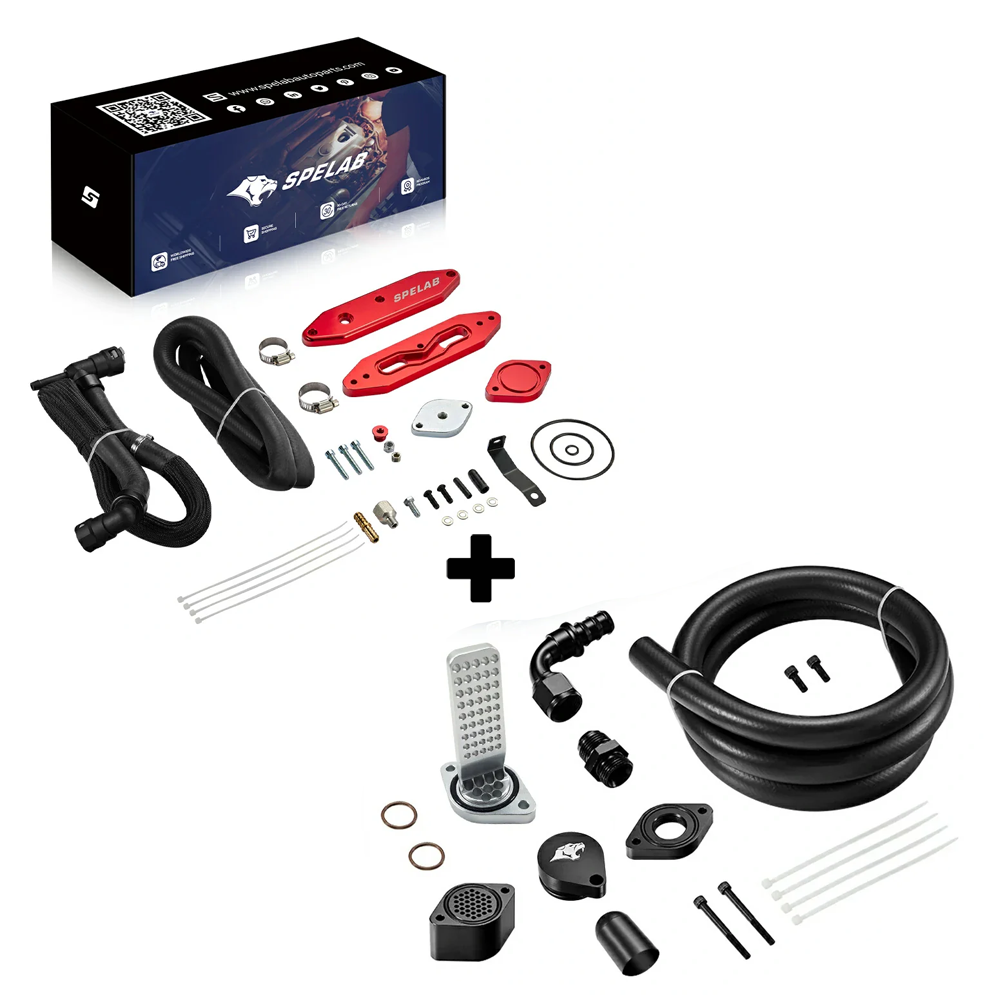 EGR Delete Kit for 2015–2016 6.7L PowerStroke Diesel
With coolant bypass for Ford F-250, F-350, F-450, and F-550 applications.
Check Fitment EGR Delete Kit for 2011–2025 Ford 6.7L PowerStroke Diesel
Designed for Ford F-250, F-350, F-450, and F-550 6.7L PowerStroke fitments.
Check FitmentQuick Comparison: Pros vs. Cons
| Pros for Off-Road / Competition Use | Cons for Street Use |
|---|---|
| Reduces soot entering the intake path | Illegal for public-road vehicles |
| Eliminates EGR cooler and valve failure points | Can fail emissions inspections |
| Can improve throttle response when tuned correctly | Requires ECU tuning / off-road calibration |
| Cleaner intake path and less soot sludge | May affect warranty, dealer service, and resale value |
Frequently Asked Questions
Q: Does an EGR delete improve reliability on a 6.7 PowerStroke?
A: For off-road or competition trucks, removing the EGR system can eliminate EGR-specific failure points like clogged coolers and stuck valves. For street-driven trucks, compliant repair and maintenance are the safer route.
Q: Will an EGR delete increase horsepower?
A: An EGR delete by itself is not a guaranteed horsepower upgrade. With proper off-road tuning and supporting modifications, some trucks may feel more responsive, but results depend on calibration, truck condition, and use case.
Q: Can I drive my truck on public roads after an EGR delete?
A: No. In the United States and many other regions, removing or disabling emissions equipment such as the EGR system is not legal for vehicles operated on public roads.
Q: Do I need a tuner after deleting the EGR?
A: Yes. ECU tuning is required for off-road delete setups. Without proper calibration, the truck can trigger fault codes, enter limp mode, or run poorly.
Q: Will an EGR delete fix P0401?
A: In an off-road calibrated setup, removing EGR flow can eliminate the EGR flow fault path. However, P0401 should be diagnosed first because a clogged valve, failed cooler, sensor issue, wiring problem, or restricted passage can all trigger the code.
Q: What are the most common symptoms of a failing EGR system?
A: Common symptoms include P0401, rough idle, hesitation, reduced fuel economy, excessive soot buildup in the intake, coolant loss, white smoke, and rising exhaust gas temperatures under load.
Q: Is cleaning the EGR system better than deleting it?
A: For street-driven trucks, cleaning, repairing, or replacing EGR components is usually the better option because it preserves emissions compliance and avoids legal, inspection, and resale problems.
Q: Can I delete the EGR without deleting the DPF?
A: Some off-road setups may separate these systems, but the ECU calibration and emissions strategy must be handled correctly. For public-road vehicles, removing or disabling emissions equipment is not legal.
Q: What is the legal alternative to an EGR delete?
A: Legal alternatives include EGR cooler replacement, EGR valve cleaning, sensor repair, intake cleaning, coolant leak diagnosis, and keeping the factory emissions system functional.
Q: Will an EGR delete hurt resale value?
A: It can. Many dealerships will not accept deleted trucks as trade-ins, and private buyers may hesitate because of legal, inspection, or registration concerns. Reinstalling emissions equipment may be required before resale.
Final Verdict: Is a 6.7 PowerStroke EGR Delete Worth It?
Mechanic’s take: If the truck is street-driven, the legal and inspection risks usually outweigh the benefits. The smarter route is compliant diagnosis, cleaning, repair, and maintenance.
For an off-road, racing, or competition build where emissions modification is legally permitted, an EGR delete can remove known soot and cooler-related failure points. But the job must be done with quality parts, correct coolant routing, and proper off-road ECU tuning.
- Daily-driven street trucks: Repair, clean, and maintain the EGR system.
- Warranty-sensitive trucks: Avoid emissions removal and use compliant service.
- Off-road or competition builds: A properly tuned delete setup may improve reliability by removing EGR-specific failure points.
If you are building an off-road PowerStroke setup, compare SPELAB 6.7 PowerStroke Delete Kits, designed for durability, fitment, and real-world diesel use.

SPELAB Mechanical Engineer
Diesel Emissions & Fitment Specialist | 10+ Years Experience
Focused on PowerStroke, Cummins, and Duramax fitment, diesel reliability, off-road performance parts, and practical troubleshooting for modern diesel trucks.



1 comment
I own a 2022 F350 6.7 piwerstroke. Is there a handheld tuner available to add HP without doing a EGR or DFR delete? If so, what hand tuner do you recommend?