Author: John Lee (10+ years specializing in diesel truck modification) Updated on May 7, 2026.
Quick Answer (TL;DR): Yes, it is technically possible to delete the EGR system while keeping the DPF installed. However, doing so can change combustion behavior, increase the chance of DPF soot loading, trigger more frequent DPF regeneration cycles, and require ECU tuning to avoid diagnostic trouble codes. For most street-driven diesel trucks, keeping the emissions system intact is the safest and most reliable option. For off-road, racing, or legally permitted applications, consult a qualified diesel professional before modifying emissions-related components.
Diesel truck owners and enthusiasts often ask whether they can delete the EGR (Exhaust Gas Recirculation) without deleting the DPF (Diesel Particulate Filter). Some owners want to reduce intake carbon buildup while keeping the factory DPF system in place, while others are trying to avoid the cost or complexity of a full emissions-system modification.
The answer is more nuanced than a simple yes or no. While it is technically possible to delete the EGR without deleting the DPF, doing so can introduce a range of mechanical, tuning, reliability, and legal considerations.
Short Verdict: Can You Delete EGR Without Deleting DPF?
| Question | Answer |
|---|---|
| Can it be done? | Yes, it is technically possible to delete EGR while keeping the DPF installed. |
| Is it recommended for street trucks? | Usually no. Street-driven trucks should generally keep emissions systems intact to avoid reliability, inspection, and legal issues. |
| Main mechanical risk | Possible DPF clogging, more frequent regeneration, higher exhaust gas temperatures, and emissions-related fault codes. |
| Does it require tuning? | In most modern diesel platforms, ECU tuning or recalibration is required after EGR removal. |
| Best approach | Keep the system intact, repair failed components, or consult a qualified diesel professional for legally permitted off-road or competition applications. |
What Is EGR and How Does It Work?
EGR (Exhaust Gas Recirculation) is a system designed to reduce nitrogen oxide (NOx) emissions by recirculating a portion of an engine's exhaust gas back to the engine cylinders. This process lowers combustion temperature, which reduces NOx emissions but can also introduce soot and carbon deposits into the intake system.

When functioning correctly, the EGR valve opens under certain operating conditions and allows exhaust gases to mix with incoming air in the intake manifold. This lowers combustion temperatures and reduces the formation of harmful emissions.
However, the recirculated exhaust gases also carry soot particles, which can gradually accumulate inside components such as the intake manifold, EGR cooler, and intake valves. Over time, this buildup may reduce airflow, affect throttle response, and increase maintenance needs.
EGR System Issues and When to Consider an EGR Delete
While the EGR system effectively reduces emissions, it can create maintenance issues as mileage increases. This is one reason some diesel owners research whether they can install an EGR delete kit while keeping the DPF installed.
- Carbon Buildup: Soot accumulation in the intake manifold and EGR valve can reduce airflow and engine efficiency.
- Valve Sticking: A stuck EGR valve may cause rough idle, hesitation, or stalling.
- Cooling System Stress: EGR coolers are known failure points in some diesel platforms.
- Maintenance Costs: Cleaning or replacing EGR components can become expensive over time.
Reasons Some Owners Delete the EGR System
- Reduce carbon buildup inside the intake system
- Improve throttle response
- Lower intake air contamination
- Prevent EGR cooler failure
- Improve long-term engine cleanliness
- Reduce maintenance requirements
- Slight improvement in engine efficiency under certain conditions
These potential benefits depend heavily on engine platform, tuning quality, vehicle use, and whether the truck is being used in a legally permitted application.
What Is DPF and How Does It Work?
The Diesel Particulate Filter (DPF) captures soot particles from diesel exhaust before they exit the tailpipe. The filter periodically cleans itself through a process called regeneration, where accumulated soot is burned off at high temperatures.
During regeneration, the engine increases exhaust gas temperatures to burn away stored soot. If regeneration cannot occur properly, the DPF may become clogged, triggering warning lights, reduced power, or limp mode.
This is why deleting EGR while keeping the DPF can be complicated. The EGR and DPF are separate components, but they are part of the same emissions-control strategy and are monitored by the ECU.
Stock vs EGR Deleted: DPF Still Installed
Removing the EGR while keeping the DPF installed changes how combustion and emissions behave inside the engine. The exact results vary by engine platform, ECU calibration, fuel delivery, boost control, engine load, and driving conditions.
| Condition | Stock Engine | EGR Deleted With DPF Still Installed |
|---|---|---|
| Combustion Temperature | Lower under EGR operation | Often higher depending on calibration |
| NOx Emissions | Controlled by EGR strategy | May increase when EGR is disabled |
| Soot Production | Moderate and calibration-dependent | Can increase under certain conditions |
| DPF Regeneration Frequency | Normal | May increase if soot loading rises |
| Risk of DPF Clogging | Lower when system is functioning correctly | Moderate to high depending on driving and tuning |
| Engine Carbon Buildup | Higher in the intake system over time | Lower in the intake system |
| Check Engine Light Risk | Low if components are working properly | High without proper ECU calibration |
While the intake system may stay cleaner without EGR, the DPF may experience higher soot loading or more frequent regeneration depending on how the engine is tuned and driven.
ECU Tuning Considerations
Modern diesel trucks rely heavily on engine control units (ECUs) to monitor emissions systems. If the EGR system is removed without recalibrating the ECU, the engine will usually detect missing airflow, unexpected sensor readings, or emissions-system faults.
Common EGR-related diagnostic trouble codes include:
- P0401 – EGR Flow Insufficient
- P0402 – EGR Excessive Flow
- P0405 – EGR Sensor Circuit Low
Proper ECU tuning is typically required to prevent check engine lights and maintain normal engine operation when emissions components are modified. Poor tuning can create additional problems, including excessive smoke, high EGT, poor drivability, DPF regeneration issues, and premature component wear.
Diesel Platforms Where This Question Commonly Appears
Questions about EGR deletion while keeping the DPF are particularly common among owners of popular diesel pickup platforms:
- Ford 6.7L Powerstroke
- Ram 6.7L Cummins
- GM 6.6L Duramax, including LML and L5P
Each engine platform has different emissions calibration strategies, meaning the results of partial deletes can vary significantly. What works on one diesel platform may create problems on another.
Platform-Specific Notes: Powerstroke vs Cummins vs Duramax
Ford 6.7L Powerstroke
On Ford 6.7L Powerstroke trucks, the emissions system is tightly monitored by the ECU. Removing EGR while keeping the DPF can trigger diagnostic trouble codes and may affect regeneration strategy if tuning is not handled correctly.
Ram 6.7L Cummins
On Ram 6.7L Cummins trucks, EGR, DPF, SCR, and related sensors work together as part of the emissions-control system. Deleting only the EGR while keeping the DPF may reduce intake carbon buildup, but it can also create soot-loading, regen, and calibration challenges.
GM 6.6L Duramax LML and L5P
On GM Duramax platforms such as LML and L5P, emissions-system calibration can be especially sensitive. L5P trucks in particular are known for more complex electronic control, so improper emissions modification can cause drivability issues, check engine lights, or limp mode.
Challenges of Deleting EGR Without Deleting DPF
-
Possible Increased Soot Accumulation
Without EGR dilution, combustion characteristics change. Depending on tuning, fuel delivery, boost, and engine load, soot loading in the DPF may increase under certain conditions. -
Higher Exhaust Gas Temperatures
Higher combustion temperatures may increase exhaust gas temperatures, placing additional thermal stress on the DPF and other exhaust components. -
More Frequent Regeneration Cycles
The DPF may need to regenerate more often if soot loading increases, which can increase fuel consumption and thermal stress on the filter. -
Engine Warning Codes
Without proper ECU calibration, the vehicle will likely trigger emissions-related diagnostic trouble codes or a check engine light. -
Legal Considerations
In many regions, modifying emissions systems is restricted or prohibited for vehicles used on public roads.
Real-World Diesel Owner Scenarios
In real-world diesel ownership, the decision to delete the EGR while keeping the DPF often depends on how the truck is used. Different driving conditions can influence whether this modification creates benefits or additional problems.
Daily Commuting and City Driving
For trucks primarily used in stop-and-go city driving, deleting the EGR while keeping the DPF may actually increase the likelihood of DPF clogging. Lower exhaust temperatures during short trips make it harder for the filter to regenerate properly, especially if soot production increases.
Towing and Heavy Load Applications
Diesel trucks used for towing trailers or hauling heavy loads often operate at higher engine loads and exhaust temperatures. In these conditions, the DPF is more likely to reach regeneration temperatures naturally. However, removing the EGR may still increase exhaust gas temperatures and place additional thermal stress on the DPF over time.
Highway and Long-Distance Driving
For trucks that regularly travel long highway distances, the DPF regeneration cycle tends to work more efficiently. In these situations, some owners report fewer immediate problems when the EGR is removed, though proper ECU tuning is still required to avoid diagnostic trouble codes.
Ultimately, the way a diesel truck is driven plays a significant role in how the emissions system behaves after any modification.
Expert Recommendation
While deleting the EGR without deleting the DPF is technically possible, most diesel technicians recommend either keeping the entire emissions system intact or modifying the system only with proper engineering, tuning, and legal guidance.
If the truck is street-driven, the most reliable and compliant approach is usually to repair, clean, or replace failed emissions components rather than removing them. If the goal is maximum performance in off-road, racing, or legally permitted applications, some owners choose to address the emissions system as a complete package rather than deleting only one component.
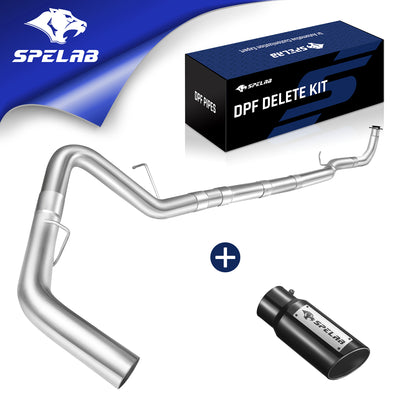
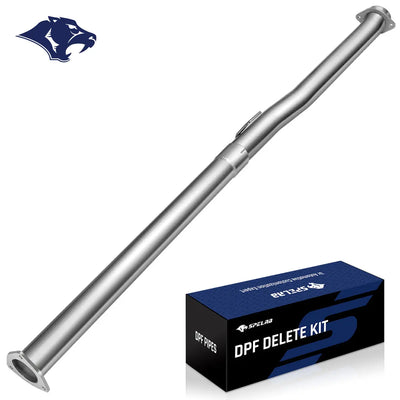
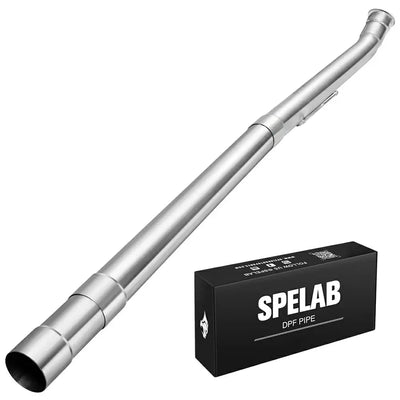
If the goal is maximum performance in off-road applications, some owners choose to remove both systems using components such as a DPF delete pipe alongside an EGR delete kit and appropriate tuning.

Related Off-Road and Competition Parts
For customers working on off-road, racing, or legally permitted diesel applications, SPELAB offers emissions-related components for selected Powerstroke, Cummins, and Duramax platforms. Always confirm local laws, vehicle use, and product fitment before purchasing or installing emissions-related parts.
Conclusion
Deleting the EGR while keeping the DPF installed is technically possible, but it introduces several mechanical and operational challenges. Increased soot loading, higher exhaust temperatures, more frequent regeneration cycles, ECU compatibility issues, and emissions compliance concerns can all affect the reliability of the truck.
For most street-driven diesel trucks, keeping the complete emissions system intact is usually the safest and most reliable choice. For off-road, racing, or legally permitted applications, consult experienced diesel professionals and use proper tuning support before modifying EGR, DPF, or other emissions-related components.
FAQs
Q: Can you delete EGR without deleting DPF?
A: Yes, it is technically possible to remove or disable the EGR system while keeping the DPF installed. However, without proper ECU tuning, the truck may trigger multiple check engine lights, emissions-related trouble codes, regeneration issues, or even limp mode. In other words, the dashboard can quickly start looking like a Christmas tree if the system is not calibrated correctly.
Q: Is it safe to delete the EGR while keeping the DPF?
A: It depends on the engine platform, tuning quality, driving conditions, and vehicle use. For street-driven trucks, it is generally safer to keep the emissions system intact or repair failed components.
Q: Will deleting the EGR make the DPF clog faster?
A: In some cases, yes. Changes in combustion temperature, fuel delivery, boost, and soot production may increase soot loading in the DPF, which can lead to more frequent regeneration cycles or clogging.
Q: Does an EGR delete require ECU tuning?
A: Yes. Most modern diesel engines require ECU recalibration after EGR removal. Without proper tuning, the engine may trigger diagnostic trouble codes such as P0401, P0402, or P0405.
Q: Will deleting EGR improve engine performance?
A: Some drivers notice improved throttle response and reduced intake carbon buildup, but results vary depending on engine calibration, platform, tuning, and how the truck is used.
Q: Will an EGR delete cause more DPF regeneration cycles?
A: It can. If soot loading increases after EGR removal, the DPF may need to regenerate more often, which can increase fuel consumption and thermal stress on the filter.
Q: Is it legal to delete EGR or DPF?
A: Emissions-system modifications may be restricted or illegal for vehicles used on public roads in many regions. Always check federal, state, and local laws before modifying EGR, DPF, SCR, or other emissions-control systems.
Q: How long does a DPF normally last?
A: Many DPF systems require cleaning or replacement between 100,000 and 150,000 miles depending on driving conditions, maintenance history, oil quality, fuel quality, and regeneration behavior.
Q: Should I delete both EGR and DPF together?
A: For street-driven vehicles, deleting emissions systems is generally not recommended. For off-road, racing, or legally permitted applications, some owners address EGR and DPF together with proper parts and tuning, but this should only be done with professional guidance and legal awareness.

John Lee
Mechanical Engineer | 10+ Years Experience
John has spent the last decade engineering and testing high-performance automotive components. Specializing in drivetrain durability and thermal management across Powerstroke, Cummins, and Duramax applications, he bridges the gap between OEM limitations and aftermarket performance. His philosophy: "Factory parts are just a starting point."