Updated on June 10, 2026.
Are EGR Delete and DPF Delete the Same Thing?
EGR delete and DPF delete are not the same mod because they remove or disable different emissions systems on a diesel truck. An EGR delete targets the Exhaust Gas Recirculation system on the intake side, while a DPF delete targets the Diesel Particulate Filter in the exhaust aftertreatment system. EGR issues usually show up as intake soot, EGR cooler leaks, coolant loss, rough running, or airflow restriction. DPF issues usually show up as frequent regen, soot-load warnings, high backpressure, limp mode, or DPF pressure codes.
Key Takeaways
A diesel truck owner should diagnose the failed system before comparing EGR delete, DPF delete, repair, cleaning, or legal replacement.
- EGR delete and DPF delete are different jobs. EGR is intake-side exhaust recirculation; DPF is exhaust-side soot filtration.
- EGR symptoms are usually intake-side or coolant-side. Watch for intake sludge, EGR cooler leaks, coolant loss, rough running, and airflow restriction.
- DPF symptoms are usually regen-side or restriction-side. Watch for frequent regen, soot-load codes, high exhaust backpressure, DPF warnings, and derate.
- Power and MPG gains are not guaranteed. Real results depend on calibration, turbo health, injector condition, airflow, load, and duty cycle.
- Street-use legality is the hard line. Removing or disabling required emissions equipment on public-road diesel trucks can create Clean Air Act, inspection, resale, and warranty risk.
EGR Delete vs DPF Delete: What Is the Real Difference?
The real difference is that EGR delete affects intake-side exhaust recirculation and NOx control, while DPF delete affects exhaust-side soot filtration, regeneration, and backpressure.
| Decision Point | EGR Delete | DPF Delete |
|---|---|---|
| System affected | Exhaust Gas Recirculation | Diesel Particulate Filter |
| System location | Engine / intake side | Exhaust aftertreatment side |
| Main emissions role | NOx control during combustion | Soot / particulate matter filtration |
| Common symptoms | Intake sludge, EGR cooler leak, coolant loss, rough running | Frequent regen, DPF warning, high backpressure, soot-load code |
| Biggest buyer mistake | Buying parts before confirming valve, cooler, coolant, or intake condition | Buying a pipe before checking soot load, ash load, pressure data, or sensors |
| Street-use risk | Clean Air Act, inspection, warranty, and resale risk | Clean Air Act, inspection, smoke, resale, and return-to-stock risk |
What Does an EGR Delete Do?
An EGR delete blocks, removes, or disables the system that routes exhaust gas back into the intake side of the engine.
A modern diesel EGR setup can include an EGR valve, EGR cooler, exhaust feed pipe, intake connection, coolant lines, gaskets, clamps, and ECM monitoring. On 2011–2019 Ford F-250 and F-350 6.7L Powerstroke trucks, high-mileage intake sludge can come from soot mixing with crankcase oil vapor. On 2013–2018 Ram 2500 and Ram 3500 6.7L Cummins trucks, EGR cooler and valve problems can show up during towing, cold-weather operation, or idle-heavy jobsite use. Owners comparing broad EGR Delete Kits should still match the kit to the exact engine, model year, coolant routing, and sensor layout.
We see this in real parts testing: the truck owner says “it needs an EGR delete,” but the actual failure can be an EGR cooler leak, a stuck valve, a plugged intake horn, a coolant-side restriction, or a sensor reading that does not match the truck’s real airflow. A wrench and a scan tool should come before any bolt-on decision.
What Does a DPF Delete Do?
A DPF delete removes or disables the exhaust filter that traps diesel soot and particulate matter before it leaves the tailpipe.
The DPF is tied to regeneration, differential pressure, soot-load modeling, ash capacity, EGT sensor feedback, and limp-mode strategy. A 2011–2019 Ford 6.7L Powerstroke used for short trips and idling can load soot faster than the same truck pulling a trailer at steady highway speed. A 2011–2016 Duramax LML can stack DPF, DEF/SCR, and NOx-sensor faults together in a way that confuses owners. A 2017–2024 Duramax L5P needs even tighter scan-data discipline because the aftertreatment system is more sensor-heavy. When live data points toward pressure-sensor trouble, review DPF pressure sensor symptoms before blaming the filter itself.
DPF delete should not be treated as a universal cure for regen problems. A weak injector, bad thermostat, cracked pressure tube, failed EGT sensor, old fuel filter, boost leak, or poor duty cycle can make a healthy filter act like the problem. If the truck is an off-road-use build and fitment is confirmed, DPF Delete Kits & Straight Pipe Exhaust should still be matched against wheelbase, pipe diameter, sensor bungs, and emissions layout.
What Are the Pros of an EGR Delete?
The main benefits drivers expect from an EGR delete are cleaner intake airflow, less soot buildup, fewer EGR cooler-related failure points, and simpler off-road-use plumbing.
Removing EGR flow on an off-road-use diesel build can reduce the soot load entering the intake tract. That can help keep the intake manifold, throttle valve area, grid heater area, and charge-air path cleaner. On a high-mileage 6.7L Powerstroke or 6.7L Cummins, less soot mixing with crankcase oil vapor can mean less heavy sludge inside the intake. Ford owners comparing Powerstroke EGR Delete Kits need to separate 6.0L, 6.4L, 6.7L, and newer platform fitment instead of shopping by engine name alone.
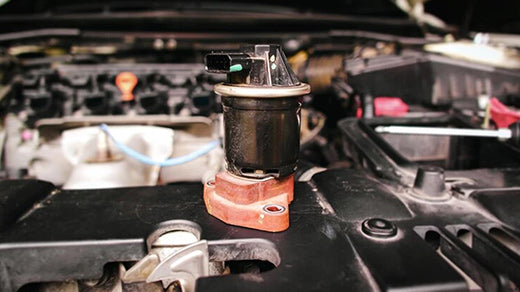
Power gains should be treated carefully. Cleaner airflow can help consistency, but horsepower and MPG depend on calibration, turbo response, injector health, fuel delivery, intake condition, tire size, payload, and how the truck is used. A heavy tow rig running mountain grades behaves differently from a weekend off-road truck.
What Are the Cons of an EGR Delete?
The biggest downsides of an EGR delete are legal risk, NOx increase, tuning dependency, inspection failure, and drivability problems when the truck is not calibrated correctly.
A deleted EGR system can create problems on a public-road truck: inspection failure, warranty trouble, dealer service refusal, resale concerns, coolant-routing mistakes, exhaust odor, and check-engine-light issues. A bad calibration can also make the truck run rough, smoke, knock, overheat, or derate for a different reason.

Do not mistake coolant loss for a reason to buy random parts. A Duramax LML with coolant loss near the EGR cooler needs pressure testing before looking at a Duramax EGR Delete Kit. A Ram 6.7L Cummins with rough running needs scan data, intake inspection, and coolant checks. A Ford 6.7L Powerstroke with heavy intake sludge may need intake and crankcase ventilation diagnosis before any bigger decision.
What Are the Pros of a DPF Delete?
The main benefits drivers expect from a DPF delete are reduced exhaust restriction, no DPF regeneration cycle, and fewer DPF-specific pressure or soot-load fault triggers on off-road-use vehicles.
A less restricted exhaust path can help an off-road-use diesel breathe easier under load. A truck that was constantly regenerating may feel sharper because regen-related heat and fuel events are gone. Some owners report better throttle feel, lower perceived exhaust restriction, or improved MPG, but those claims need same-route testing, hand-calculated fuel economy, and scan data.

We do not treat a straight pipe as magic. A weak turbo, dirty air filter, overfueling injector, boost leak, bad MAP reading, oversized tires, or poor tune can kill drivability even after restriction drops. The hardware is only one piece of the system.
What Are the Cons of a DPF Delete?
The biggest downsides of a DPF delete are inspection failure, smoke, exhaust odor, resale problems, tuning dependency, and legal risk on public-road trucks.
A street-driven truck with a deleted DPF can become hard to sell, hard to trade, hard to inspect, and expensive to return to stock. The owner may also deal with raw exhaust smell, visible smoke under load, poor calibration, check-engine-light issues, and dealer refusal.
A family tow rig is not the same as a competition truck. Smoke behind a fifth-wheel, exhaust smell around kids, or inspection trouble before registration renewal can turn a cheap-looking mod into an expensive headache.
Which Symptoms Point to EGR, DPF, or DEF/SCR Problems?
Frequent regen usually points toward DPF or soot-load issues, intake sludge and coolant loss often point toward EGR, and DEF warnings usually point toward SCR/DEF faults.
| Symptom | More Likely EGR | More Likely DPF | More Likely DEF/SCR | First Check |
|---|---|---|---|---|
| Frequent regen | Possible | Strong | Weak | Soot load, regen history, injector balance, thermostat |
| Intake sludge | Strong | No | No | Intake tract, EGR valve, CCV oil vapor, charge-air path |
| Coolant loss near cooler | Strong | No | No | EGR cooler pressure test and coolant routing |
| DPF warning | Weak | Strong | Possible | Differential pressure, soot load, ash load, EGT sensors |
| DEF quality warning | No | No | Strong | DEF quality, NOx sensors, SCR dosing, software updates |
| Limp mode | Possible | Possible | Possible | Codes, freeze-frame data, live sensor readings |
| Black smoke | Possible | Possible | Weak | Airflow, boost leaks, fueling, DPF condition |
| High exhaust backpressure | No | Strong | Weak | DPF pressure tubes, sensor data, filter restriction |
Do not buy parts from one dashboard message. Read codes, save freeze-frame data, check soot load, ash load when available, EGT readings, NOx readings, differential pressure, coolant level, injector balance, boost behavior, and duty cycle.
Is EGR Delete or DPF Delete Legal for Street Use?
EGR delete and DPF delete can create Clean Air Act risk when required emissions equipment is removed or disabled on public-road diesel trucks.
The EPA states that tampering with a vehicle emissions control system is illegal under the Clean Air Act, and the law also prohibits manufacturing, selling, offering for sale, or installing aftermarket devices that defeat those controls. EPA also reports civil enforcement activity against aftermarket defeat devices and tampering. Read the EPA enforcement page here: EPA: Stopping Aftermarket Defeat Devices.
Street-use risk is not just a fine on paper. A deleted truck may fail inspection, create registration trouble, lose buyer trust, complicate warranty claims, and require return-to-stock parts before resale. Off-road-use wording does not make a public-road truck legal.
EGR Delete vs DPF Delete Cost: What Are You Really Paying For?
The real cost of EGR delete or DPF delete includes hardware, labor, tuning, diagnostics, fitment mistakes, inspection risk, and possible return-to-stock work.
| Cost Area | EGR Delete | DPF Delete | Legal Repair Alternative |
|---|---|---|---|
| Hardware | EGR plates, cooler parts, hoses, gaskets, coolant fittings | Race pipe, clamps, sensor bungs, hangers, exhaust hardware | EGR cooler repair, EGR valve service, DPF cleaning, DPF replacement |
| Labor | Engine bay access, coolant routing, intake-side work | Exhaust access, rusted clamps, wheelbase-specific fitment | Diagnosis, cleaning, sensor replacement, legal repair |
| Tuning | Often required for off-road-use configurations | Often required for off-road-use configurations | OEM emissions logic stays intact |
| Hidden risk | NOx increase, coolant mistakes, inspection failure | PM increase, smoke, smell, inspection failure | Lower street-use legal risk |
| Resale impact | Buyer may want intact emissions hardware | Buyer may demand return-to-stock parts | Usually easier to document and sell |
Price the whole job, not just the pipe or plate kit. A truck that needs off-road calibration may also require a matching Delete Tuner & DEF Delete Kit, while a street-driven truck may be better served by diagnostics, repair, cleaning, and documented maintenance. For a broader look at emissions delete repair costs, compare the first parts bill against inspection risk, warranty issues, and return-to-stock labor.
What Should You Check Before Buying an EGR or DPF Delete Kit?
Before buying an EGR or DPF delete kit, confirm year, engine, cab, bed, wheelbase, emissions layout, sensor locations, tune requirements, and legal use case.
- Check the exact truck: year, make, model, engine, cab, bed length, wheelbase, GVWR class, and pickup vs cab chassis.
- Check the platform split: 2011–2019 Ford 6.7L Powerstroke, 2020–2024 Ford 6.7L Powerstroke, 2007.5–2012 Ram 6.7L Cummins, 2013–2018 Ram 6.7L Cummins, 2011–2016 Duramax LML, and 2017–2024 Duramax L5P do not all share the same fitment.
- Check the symptoms: intake sludge, coolant loss, frequent regen, DPF warning, DEF warning, limp mode, high backpressure, or black smoke.
- Check the data: codes, freeze-frame data, soot load, ash load, differential pressure, EGT readings, NOx readings, injector balance, and coolant temperature.
- Check the use case: towing, payload, jobsite idle time, highway cruising, off-roading, inspection-state status, and street-use legality. Ram owners should separate general diesel parts from a fitment-specific Cummins EGR Delete Kit before ordering.
What Are Legal Alternatives to EGR Delete and DPF Delete?
Legal alternatives usually start with diagnosis, cleaning, sensor repair, cooler repair, injector repair, intake cleaning, and correct maintenance.
| Problem | Legal First Step | Why It Makes Sense |
|---|---|---|
| Intake sludge | Intake cleaning, CCV check, EGR diagnosis | Sludge may be oil vapor plus soot, not a reason to guess |
| Coolant loss | EGR cooler pressure test and coolant-system inspection | Coolant loss can point to cooler failure or routing problems |
| Frequent regen | Check soot load, injectors, thermostat, EGT data, and duty cycle | The truck may be producing too much soot |
| High backpressure | DPF pressure test, ash-load review, professional cleaning | Ash and restriction need proof before replacement |
| DEF warning | DEF/SCR diagnosis, NOx sensor check, manufacturer updates | DEF faults are often misread as DPF problems |
| Limp mode | Pull codes and freeze-frame data first | Derate can come from EGR, DPF, DEF/SCR, boost, fuel, or temperature faults |
Heavy intake sludge does not always mean the truck needs parts removed. A proper intake cleaning, CCV check, EGR cooler pressure test, and scan-data review can separate a repairable maintenance problem from a real off-road-use modification decision.
FAQ
These FAQ answers cover the short questions diesel owners usually ask before they diagnose, repair, or buy EGR and DPF parts.
Q: Is EGR delete the same as DPF delete?
A: No. EGR delete targets the intake-side exhaust recirculation system, while DPF delete targets the soot filter in the exhaust aftertreatment system.
Q: Can you delete EGR without deleting DPF?
A: Some platforms can be modified separately, but compatibility, tuning, emissions layout, sensor logic, and legal use case must be checked before any parts decision.
Q: Does EGR delete improve MPG?
A: It may help in some off-road-use setups, but MPG depends on calibration, engine condition, driving cycle, load, and whether the original EGR system was actually causing a problem.
Q: Does DPF delete improve MPG?
A: It may reduce regen-related fuel use in some cases, but claims should be proven with hand-calculated fuel economy under the same route, load, tire, and weather conditions.
Q: Will DPF delete fix limp mode?
A: Not always. Limp mode can come from DPF restriction, DEF/SCR faults, NOx sensors, EGR issues, boost leaks, fuel problems, or temperature sensor failures.
Q: Is EGR delete or DPF delete legal?
A: For public-road vehicles in the United States, removing or disabling required emissions equipment can create Clean Air Act, inspection, warranty, and resale risk.
Q: What should I check before buying an EGR or DPF delete kit?
A: Check year, engine, cab, bed length, wheelbase, emissions layout, sensor locations, tune requirements, symptoms, scan data, and whether the truck is street-driven or off-road-only.
References

About the Author
John Lee
Mechanical Engineer | 10+ Years Experience
John has spent the last decade engineering and testing high-performance automotive components. Specializing in drivetrain durability and thermal management across Powerstroke, Cummins, and Duramax applications, he bridges the gap between OEM limitations and aftermarket performance. His philosophy: "Factory parts are just a starting point."