The 2011-2016 LML 6.6L Duramax works hard in Chevrolet Silverado and GMC Sierra 2500HD / 3500HD trucks. These trucks tow campers, haul equipment, idle on jobsites, and run long highway miles in hot weather, so an aging cooling system can become expensive fast.
One part that often gets ignored is the upper radiator hose, also called the upper coolant pipe or upper coolant tube. When the factory rubber hose, plastic quick-disconnect fittings, or clamp areas start aging, a small coolant stain near the upper hose can turn into a real problem under towing load.
This guide covers common symptoms, what else to inspect before replacing parts, and how to choose the right repair path for your truck.
Key Takeaway: If your 2011-2016 LML Duramax still has the original upper radiator hose, inspect the rubber sections, clamp areas, and plastic quick-disconnect fittings before heavy towing. A stock-style hose can work for basic repairs, but an aluminum upper coolant pipe makes more sense for high-mileage trucks, tow rigs, and modified builds.
What Does the Upper Radiator Hose Do on an LML Duramax?
The upper radiator hose is part of the engine cooling system. On an LML 6.6L Duramax diesel engine, it helps route coolant from the engine and thermostat housing area toward the radiator, where heat can be removed from the coolant.
This hose assembly works in a harsh environment. It deals with hot engine coolant, cooling system pressure, engine vibration, repeated heat cycles, towing and hauling loads, and under-hood heat from a diesel engine.
For a stock daily-driven truck, the factory hose may last a long time. But as these trucks age, especially if they are still running original cooling system parts, the rubber, clamps, and plastic connection points deserve a closer look. Owners comparing broader diesel cooling system upgrades should treat the upper hose as one part of the full heat-management picture.
Common Upper Radiator Hose Problems on 2011-2016 LML Duramax Trucks
The factory upper radiator hose assembly uses rubber and plastic components. That is normal for an OEM cooling system, but time and heat are not kind to those materials.

Common problems include:
- Rubber hose hardening over time
- Rubber hose becoming soft, swollen, or weak
- Small cracks near bends or connection points
- Coolant residue around clamps or fittings
- Brittle plastic connectors
- Weak or aging clamp areas
- Coolant leaks that only show up under pressure
- Coolant smell from the engine bay
- Low coolant level in the reservoir
- Higher coolant temperature while towing or climbing grades
A small coolant stain near the upper hose may not look dramatic, but it should not be ignored. A Duramax cooling system under load can expose a weak hose or connector quickly.
If the truck is just driving across town, the issue may stay hidden. If it is pulling a loaded trailer through summer heat or climbing a long grade, that same weak point can become a real problem.
Symptoms That Mean You Should Inspect the Upper Coolant Pipe
LML Duramax owners should inspect the upper radiator hose area if they notice any of the following:
- Coolant level keeps dropping
- Sweet coolant smell after driving
- White, orange, or crusty residue near the upper hose
- Wet spots around the radiator connection
- Hose surface cracks
- Hose feels unusually soft, swollen, or brittle
- Steam or coolant odor after towing
- Engine temperature rises under heavy load
- Cooling system was recently opened for radiator or thermostat service
A pressure test is often the best way to confirm whether the leak is coming from the upper hose, radiator, thermostat housing, reservoir, water pump, or another part of the system.
If the truck also shows a recurring warning on the dash, this related guide on the low coolant warning may help separate a real leak from a reservoir or sensor issue.
Don’t Blame the Hose Too Fast
This is important: not every coolant leak or overheating issue on an LML Duramax is caused by the upper radiator hose.
Before replacing parts at random, inspect the broader cooling system. Common areas to check include:
- Radiator
- Thermostat housing
- Thermostats
- Water pump
- Coolant reservoir
- Pressure cap
- Fan clutch
- Lower radiator hose
- Heater hoses
- EGR cooler
- Coolant condition
- Head gasket warning signs
If the truck has repeated coolant loss, unexplained pressure, or overheating under load, do a proper diagnosis first. Replacing the upper hose can solve an upper-hose leak, but it will not fix a bad radiator, weak water pump, stuck thermostat, or head gasket problem.
That is the difference between maintenance and guessing.
Who Is Most Likely to Need This Repair or Upgrade?
Not every LML Duramax owner needs an aluminum upper coolant pipe. The right choice depends on mileage, use case, maintenance history, and the condition of the existing hose.
This issue matters most for:
- High-mileage 2011-2016 LML Duramax trucks
- Chevrolet Silverado 2500HD / 3500HD tow rigs
- GMC Sierra 2500HD / 3500HD work trucks
- Trucks used for RVs, boats, campers, horse trailers, or equipment trailers
- Farm, ranch, and construction trucks
- Tuned, deleted, or modified Duramax builds
- Trucks driven in hot climates or mountain areas
- Owners already replacing the radiator, thermostat, or coolant
- DIY owners doing preventative maintenance
- Diesel repair shops diagnosing coolant leaks
If the truck is mostly a light-duty daily driver and the hose was recently replaced, inspection may be enough. If it is an older tow rig with original cooling parts, replacement becomes a much more reasonable conversation.
Owners planning multiple repairs at once may also compare other LML 6.6L Duramax upgrades to decide which weak points are worth handling while the truck is already apart.
Real-World Scenarios Where the Upper Hose Matters
The upper radiator hose becomes more important when the cooling system is under pressure and heat.
For example:
- A 2015 Silverado 2500HD towing a fifth-wheel camper through summer traffic
- A 2012 GMC Sierra 3500HD hauling equipment on mountain roads
- A 2016 LML Duramax with tuning and frequent trailer use
- A 2011 Silverado 3500HD with high mileage and original coolant hoses
- A diesel shop replacing a radiator and noticing the upper hose is brittle
- A ranch truck that idles, hauls, and works daily
- A driver seeing coolant residue after a long towing trip
If the truck is stranded on the shoulder with a hot engine and coolant leaking from a failed connection, the cheaper repair no longer feels cheap. That is why many owners treat the upper hose as preventative maintenance, not just a repair item.
Heat-related decisions often overlap. For intake-air temperature, boost leaks, and towing behavior, this separate Duramax guide can help owners choose the right upgrade path before replacing parts based on guesswork.
Replacement and Upgrade Options
There are several ways to handle an aging or leaking LML Duramax upper radiator hose. Each option has a place.
Option 1: Keep the Existing Hose and Monitor It
If there are no symptoms, the current hose may not need immediate replacement.
Advantages:
- No immediate parts cost
- No labor required
- Reasonable if the hose is newer
- Works for lightly used trucks with no signs of wear
Disadvantages:
- Does not address aging rubber or plastic
- Small leaks may only appear under pressure
- Not ideal for high-mileage tow rigs
- Risk increases if the hose is original
Best for:
Owners with a well-maintained truck, recently replaced hose, no coolant smell, no residue, and no cooling system symptoms.
Option 2: Replace with a Stock-Style Rubber Hose
A stock-style rubber hose can be OEM or aftermarket. This keeps the truck close to the factory layout and is often the most straightforward repair.
Advantages:
- Usually affordable
- Familiar factory-style fit
- Easy for repair shops to install
- Good for stock trucks
- OEM-style parts may have predictable fitment
Disadvantages:
- Still relies on rubber and plastic-style components, including factory-style plastic quick-disconnect fittings that can get brittle with age and start leaking at the worst possible time
- Long-term heat aging remains a concern
- Aftermarket quality can vary by brand
- Less appealing for towing, high-mileage, or modified trucks
Best for:
Stock daily drivers, budget repairs, and owners who simply want to replace a worn or leaking hose with a factory-style part.
Option 3: Upgrade to an Aluminum Upper Coolant Pipe
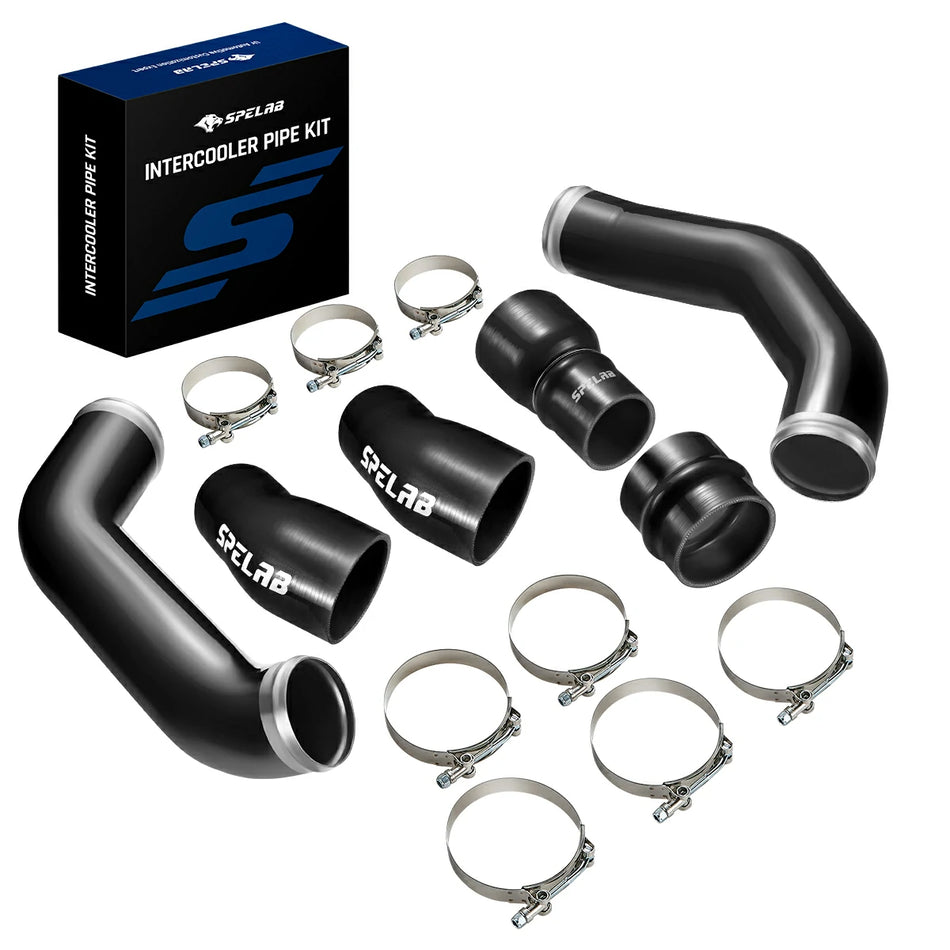
An aluminum upper coolant pipe replaces much of the factory rubber/plastic hose assembly with a stronger metal tube. These kits typically use aluminum tubing, silicone couplers, and stronger clamps.

Advantages:
- Better resistance to heat and pressure
- Reduces reliance on aging rubber and plastic parts
- Good fit for towing, hauling, and high-mileage trucks
- Often improves engine bay appearance
- Usually available as a direct-fit kit
Disadvantages:
- Costs more than a basic rubber hose
- Still requires proper coolant handling during installation
- Does not fix unrelated cooling system problems
- Fitment should be confirmed before ordering
Best for:
High-mileage LML Duramax trucks, tow rigs, modified builds, work trucks, and owners who want a longer-term cooling system upgrade.
A direct-fit kit such as the SPELAB upper coolant pipe is one example of this solution for 2011-2016 LML 6.6L Duramax Silverado and Sierra trucks.
Option 4: Inspect and Refresh the Broader Cooling System
Sometimes the upper hose is only part of the story. If the truck has overheating, repeated coolant loss, or pressure concerns, the better move is a broader cooling system inspection.
Advantages:
- More complete diagnosis
- Reduces the chance of missing the real cause
- Best for recurring coolant loss or overheating
- Helps protect the engine under towing conditions
Disadvantages:
- More time-consuming
- Higher cost than replacing one hose
- May reveal additional repairs
Best for:
Trucks with repeated coolant loss, overheating under load, unknown maintenance history, or multiple aging cooling system components.
In some cases, the radiator itself is part of the problem. If the core, tanks, or connections show age-related wear, owners may compare performance aluminum radiators along with hoses, clamps, coolant quality, and thermostat operation.
Which Option Makes the Most Sense?
There is no single answer for every truck.
For a clean, stock truck with no symptoms, monitoring the hose during regular maintenance may be enough. For a basic leak repair, a stock-style rubber hose can be the most cost-effective solution.
For a high-mileage tow rig, work truck, or modified LML Duramax, an aluminum upper coolant pipe is often the more durable long-term option. For repeated overheating or unexplained coolant loss, start with diagnosis instead of assuming one hose is the whole problem.
The best choice depends on how the truck is used. A grocery-getter and a 15,000-lb trailer hauler do not put the same demand on the cooling system.
Vehicle Fitment
This guide applies to 2011-2016 GM HD trucks equipped with the 6.6L LML Duramax diesel engine.
| Year Range | Vehicle |
|---|---|
| 2011-2016 | Chevrolet Silverado 2500HD / 3500HD with 6.6L LML Duramax |
| 2011-2016 | GMC Sierra 2500HD / 3500HD with 6.6L LML Duramax |
Always confirm vehicle year, engine code, radiator setup, and cooling system layout before ordering replacement parts.
Installation Considerations
Replacing an upper radiator hose or installing an aluminum upper coolant pipe requires basic cooling system care.

Important notes:
- Work only on a fully cooled engine
- Relieve pressure before removing any coolant hose
- Drain or control coolant as needed
- Inspect the radiator connection and thermostat housing area
- Make sure couplers are fully seated
- Tighten clamps evenly
- Refill coolant to the correct level
- Bleed air from the cooling system if required
- Check for leaks after the engine reaches operating temperature
DIY owners can often handle this job if they are comfortable working with coolant hoses and clamps. If the truck is used for heavy towing or has recurring coolant issues, a professional inspection is the safer route.
Owners chasing boost leaks or charge-air problems at the same time may also inspect related intercooler pipe kits, since aging boots, clamps, and plastic piping can create separate symptoms under load.
Is an Aluminum Upper Coolant Pipe Worth It?
An aluminum upper coolant pipe is worth considering when the original hose is old, leaking, cracked, soft, swollen, or being removed during related cooling system work.
It is most relevant for high-mileage LML Duramax trucks, tow rigs, farm and construction trucks, hot-climate use, mountain driving, and modified builds. For a lightly used truck with a newer hose and no cooling symptoms, inspection may be enough.
The key is matching the repair to the truck. A basic hose repair can solve a simple leak, while a direct-fit aluminum kit makes more sense when long-term durability matters.
Final Thoughts
The upper radiator hose on a 2011-2016 LML 6.6L Duramax is not the biggest part of the cooling system, but it can become important as the truck ages. Rubber, plastic, clamps, heat, pressure, and towing loads all add up over time.
A stock-style replacement hose can be the right answer for a simple repair. A full cooling system inspection is the smarter move for repeated coolant loss or overheating. An aluminum upper coolant pipe makes sense when the goal is a more durable replacement for an aging factory hose assembly.
For Silverado 2500HD, Silverado 3500HD, GMC Sierra 2500HD, and GMC Sierra 3500HD owners who tow, haul, work, or keep their trucks for the long run, inspecting the upper radiator hose area is a small step that can help prevent bigger cooling system trouble later.
For broader platform planning, owners can browse Duramax performance parts by engine generation instead of mixing parts across LML, LMM, L5P, LBZ, LLY, or LB7 trucks.
FAQ
Q: What are common symptoms of a failing LML Duramax upper radiator hose?
A: Common symptoms include coolant leaks, coolant smell, visible residue near the hose, low coolant level, cracked rubber, swollen hose sections, or higher coolant temperature under load.
Q: Is coolant loss always caused by the upper radiator hose?
A: No. Coolant loss can come from the radiator, water pump, thermostat housing, coolant reservoir, heater hoses, lower hose, EGR cooler, pressure cap, or head gasket problems. The upper hose is one visible area to inspect.
Q: Is an aluminum upper coolant pipe better than an OEM rubber hose?
A: An aluminum pipe is usually more durable under heat and pressure, especially for towing, high-mileage, or modified trucks. However, an OEM-style rubber hose may be sufficient for a stock truck with normal use.
Q: Should I upgrade the upper coolant pipe when replacing the radiator?
A: It is a good time to inspect it. If the hose is old, cracked, soft, leaking, or original to the truck, replacing or upgrading it during radiator service can save labor later.
Q: Will an aluminum upper coolant pipe fix overheating?
A: Not always. It can remove one weak point in the cooling system, but overheating may be caused by the radiator, thermostat, water pump, fan clutch, coolant condition, pressure issues, or other engine problems.
When diagnosing towing heat, coolant temperature is only one piece of the picture. Oil temperature also matters; this guide explains why engine oil temperature matters during heavy diesel use.
Q: What trucks use the LML 6.6L Duramax?
A: The LML 6.6L Duramax was used in 2011-2016 Chevrolet Silverado HD and GMC Sierra HD diesel trucks, including 2500HD and 3500HD models.
Q: Is this upgrade useful for towing?
A: Yes, it can be useful for towing because towing increases heat and load on the cooling system. A stronger upper coolant pipe can reduce one possible hose-related failure point.
Q: Can I install an upper coolant pipe myself?
A: Many DIY owners can install one if they are comfortable working with coolant hoses and clamps. The engine must be cool, the system should be depressurized, and the cooling system should be checked for leaks afterward.