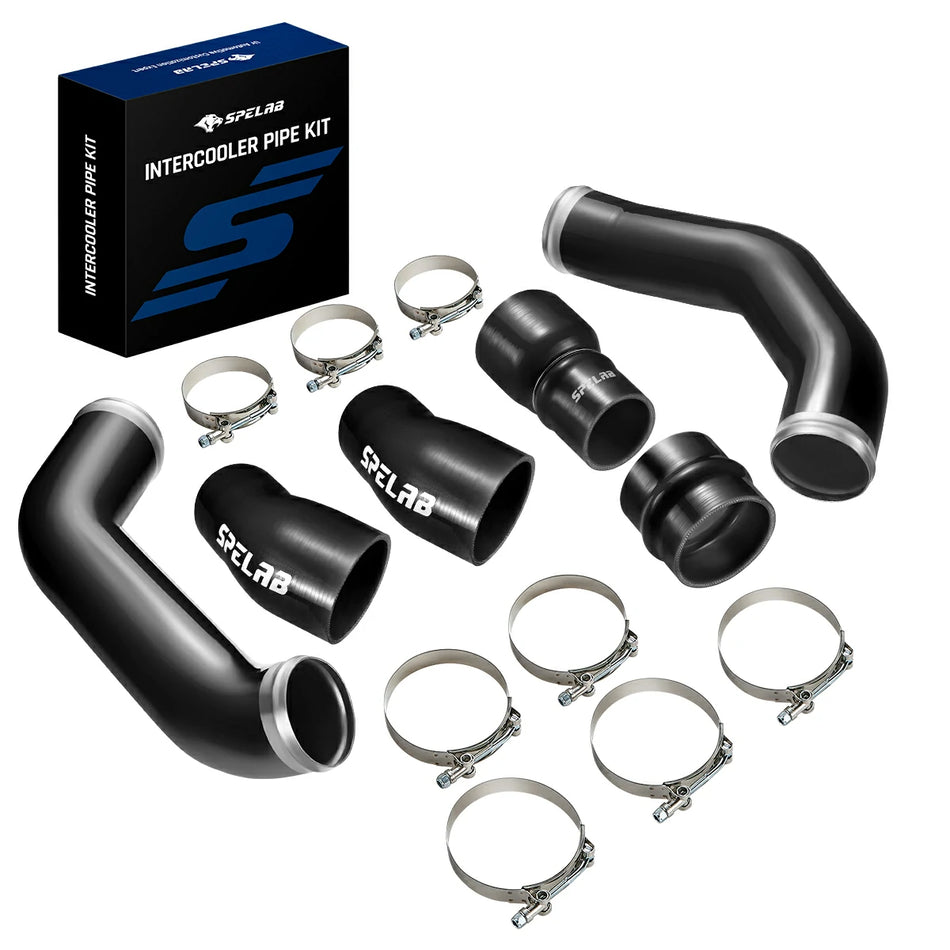
Deleting the diesel particulate filter, or DPF, does not automatically mean the exhaust gas recirculation system, or EGR, must be removed too. For race-use or non-road diesel builds, many owners plan both systems together because the tune, sensors, exhaust flow, and remaining hardware need to agree. For any truck still used on public roads, the legal answer comes first: keep required emissions equipment intact.
Key Takeaways
The right answer depends on the truck’s job, not just the parts in the shopping cart.
- A DPF-side change does not automatically fix intake-side soot if EGR stays active.
- An EGR delete is not always physically required, but the calibration must match what is still plugged into the truck.
- Closed-course and race-use builds usually need full system planning instead of random single-part mods.
- Street-driven trucks should stay emissions-compliant and use legal repair parts.
- Diagnose regen history, pressure readings, EGT data, NOx sensor faults, DEF/SCR issues, and EGR condition before buying parts.
Why Diesel Owners Ask This Question
Owners ask this because one emissions problem often points to several connected systems, not just one bad pipe or one bad valve.
Most truck owners do not start with a textbook question. They start with a real problem: frequent regen, a clogged filter, limp mode, a failed EGR cooler, soot around the intake, or a truck that feels lazy under a trailer. Then they start comparing a DPF pipe, an EGR kit, a tuner, and an all-in-one delete kit.
As a parts manufacturer, we see the same mistake over and over: the owner buys hardware first and checks the calibration later. That is backwards. Modern Powerstroke, Cummins, and Duramax trucks are loaded with pressure sensors, exhaust gas temperature sensors, NOx sensors, DEF/SCR logic, OBD readiness monitors, and emissions readiness checks. A pipe alone does not tell the ECU what happened.
How the Systems Work Together
EGR and DPF parts sit in different places, but the ECU treats them as part of one emissions strategy.
EGR sends controlled exhaust gas back into the intake to help control NOx. The DPF catches soot downstream in the exhaust and burns it off during regen. SCR uses DEF to help reduce NOx farther down the aftertreatment system. The DOC, or diesel oxidation catalyst, also sits in the exhaust stream and helps the aftertreatment package do its job.

That is enough theory. The practical issue is simple: if the exhaust-side hardware changes but the intake-side system keeps working, intake-side soot may still continue. If the hardware changes but the tune still expects stock emissions feedback, the truck can set codes, limit power, or fail readiness checks.
Can You Remove the DPF and Keep EGR?
Some trucks can physically keep EGR hardware after a DPF-side change, but whether that works depends on how the tune handles the remaining parts.
One setup may leave the EGR cooler and valve bolted in place but disable EGR function in the calibration. Another setup may keep the valve active, which means exhaust gas can still enter the intake path. Those two trucks may look similar from the outside, but they will not behave the same.
The shop-floor answer is this: the tune has to know what parts are still on the truck. If the ECU expects a working DPF, normal regen logic, stock pressure readings, or active EGR flow, then unplugged or missing parts can trigger a check engine light, limp mode, smoke, rough idle, or poor towing manners. If you are asking the opposite question — deleting EGR while keeping the DPF — that setup has its own regen and soot-balance concerns.
Another mistake we see in the shop is assuming the EGR cooler is harmless simply because the truck still runs. A cracked EGR cooler can allow coolant to enter the intake stream, leading to coolant loss, persistent white smoke, rough running, and in severe cases enough coolant accumulation to create hydrolock risk. Those symptoms are often mistaken for injector or head gasket problems until the cooling system and EGR circuit are properly tested.
Which Setup Fits Your Truck’s Real Problem?
The best setup starts with the symptom, the truck’s use case, and the legal status of the vehicle.
A 2017 Ram 2500 that idles on a jobsite and keeps loading the filter is not the same problem as a 2015 LML with an EGR cooler leak. A 6.7 Powerstroke pulling a fifth-wheel through mountain grades is not the same use case as a closed-course race truck. Start with diagnosis, then choose the plan.

| Real Truck Scenario | Better Direction | Why | Check Before Buying Parts |
|---|---|---|---|
| Closed-course or race-use truck with a matched calibration | Plan the intake and exhaust emissions changes together | The tune, sensors, flow path, and remaining hardware can be handled as one package | Engine year, exhaust size, tuner support, coolant routing, and sensor handling |
| Failed EGR cooler, stuck valve, coolant loss, white smoke, or heavy intake soot | Include EGR-side diagnosis in the plan | An exhaust-only change will not fix intake contamination, coolant ingestion, or a leaking cooler | EGR cooler pressure test, valve movement, MAP sensor condition, coolant loss, and intake buildup |
| Frequent regen, DPF backpressure, or soot-load warnings only | Diagnose the aftertreatment side first | The issue may be a pressure sensor, cracked line, bad EGT reading, short-trip driving, or filter load | Differential pressure, EGT probe data, soot load, regen history, and thermostat operation |
| Street-driven daily truck | Keep emissions equipment intact | Public-road removal creates legal, inspection, smog check, and OBD readiness risk | EPA/CARB-compliant or 50-state legal replacement parts where required |
| Budget-limited owner trying to change one part at a time | Build a full plan before wrenching | Random staged mods often create codes, limp mode, or poor drivability | Parts list, calibration file, remaining sensors, connector status, and wiring condition |
Choosing Between an Exhaust-Only Change and Full System Planning
An exhaust-only change may solve one restriction problem, but it will not automatically clean up EGR-side soot, cooler issues, coolant loss, or calibration mismatches.
For non-road builds, a simple exhaust-side plan may make sense when the truck’s only confirmed issue is filter restriction or backpressure. A full system plan makes more sense when the truck also has EGR cooler trouble, intake soot, coolant loss, persistent white smoke, or a tune that expects the intake-side hardware to be changed.
Do not buy parts based only on what another guy did to a different truck. Ford 6.7 Powerstroke, Ram 6.7 Cummins, and GM Duramax LML/L5P platforms have different emissions layouts, sensor locations, and tuning requirements. Match the setup to the engine family, model year, exhaust configuration, and the truck’s actual job.
Platform Notes: Powerstroke, Cummins, and Duramax
Fitment changes by platform, so the same delete question can have a different practical answer on Ford, Ram, and GM trucks.
Ford 6.7 Powerstroke
Super Duty owners should check towing behavior, EGT sensor data, limp mode history, and exhaust pressure readings before choosing any emissions-side parts.
A truck pulling a camper, dump trailer, or race trailer will expose a poor setup fast. Check the exact model year, exhaust layout, and calibration support before treating the truck like a generic diesel.
On Super Duty trucks that spend long hours towing, we also recommend reviewing EGT trends during sustained climbs. Excessive exhaust temperature under load may point to a restriction, airflow issue, or fueling problem rather than a failed emissions component alone.
Ram 6.7 Cummins
Ram owners should separate intake soot problems from aftertreatment problems before assuming both sides need work.
Inspect the intake horn area, MAP sensor, EGR valve, cooler condition, coolant traces, and signs of oil residue in the intake path. Short-trip driving and long idle time can make regen complaints worse even when the hardware is not the only cause.
For 6.7L Cummins applications, repeated short-trip driving often accelerates soot loading because regeneration cycles cannot finish completely. Before replacing expensive hardware, confirm that the truck has been able to complete normal regeneration events.
GM Duramax LML and L5P
Duramax owners should treat electronics and calibration support as first-step checks.
L5P trucks need extra planning around ECM support, tuning compatibility, connector integrity, and emissions readiness. Guessing on a late-model Duramax can turn a bolt-on job into a truck that will not behave in the driveway.
Later L5P models rely heavily on electronic integration. Before changing any exhaust hardware, verify ECM support, calibration compatibility, and connector condition to avoid unnecessary diagnostic issues.
If Your Truck Is Street-Driven, What Are Your Legal Repair Options?
Street-driven trucks should be repaired with compliant parts and proper diagnostics instead of race-use delete hardware.
If the truck has frequent regen, check differential pressure readings, pressure sensor tubes, EGT probes, soot load, thermostat operation, boost leaks, injector health, and drive cycle first. A weak thermostat or boost leak can make the truck run dirty enough to load the filter faster.
If the truck has EGR-related faults, inspect the EGR valve, cooler, coolant loss, intake buildup, white smoke, and MAP sensor contamination. A cracked EGR cooler can send coolant into the intake stream, causing coolant loss, rough running, and smoke that can look like a head gasket issue until the cooling system is tested correctly.
If DEF or SCR faults are present, check diesel exhaust fluid quality, NOx sensor data, wiring, heater circuits, and related readiness monitors. Bad data from one sensor can send the owner chasing the wrong system for days.
Owners dealing with intake carbon or oil residue should also separate emissions faults from normal wear. Cleaning contaminated MAP sensors, repairing boost leaks, replacing failed EGR components, and maintaining the crankcase ventilation system often restore drivability without unnecessary parts replacement. On platforms where they are legal and appropriate, airflow upgrades such as a stronger intake horn or an oil-separation catch can may improve long-term durability, but they are not substitutes for required emissions equipment.
For states with smog check or state inspection, look for EPA-compliant, CARB-compliant, or 50-state legal replacement parts where required. That path is not as flashy as a race-use mod, but it keeps the truck usable, inspectable, and out of trouble.
Before replacing expensive emissions components, record fault codes, review live sensor data, and verify whether the issue comes from a failed sensor, damaged wiring, or an actual aftertreatment fault. Accurate diagnosis is almost always less expensive than replacing parts based on assumptions.
What Happens When the Tune and Hardware Don’t Agree?
The risk is not the pipe; the risk is a calibration that does not match what is still installed, unplugged, blocked, or removed.
Modern diesel ECMs monitor far more than a single exhaust component. They compare signals from the Differential Pressure Sensor across the diesel particulate filter, Exhaust Gas Temperature (EGT) probes, manifold airflow, EGR valve position, NOx sensors, DEF/SCR operation, and overall aftertreatment readiness. When those signals no longer match the installed hardware, the calibration may trigger diagnostic trouble codes, reduced-power strategies, or incomplete OBD readiness.

| Symptom | Likely Cause | What It Means |
|---|---|---|
| Check engine light after parts are changed | Sensor or calibration mismatch | The ECU still expects stock emissions feedback |
| Limp mode under load | Pressure or temperature readings outside expected range | The truck is pulling power to protect itself |
| Excess smoke | Fueling and airflow do not match | The calibration may not fit the hardware |
| Intake soot keeps coming back | EGR still active or leaking | An exhaust-side change did not clean the intake path |
| White smoke and coolant loss | Possible EGR cooler leak or coolant ingestion | The cooling system and EGR circuit should be tested before blaming the head gasket |
| Regen or readiness codes | Aftertreatment logic is still active or incomplete | The truck may fail OBD readiness or inspection checks |
Legal and Inspection Risks
Required emissions equipment on public-road trucks should stay intact because federal law treats tampering and defeat devices as enforcement issues.
The EPA states that the Clean Air Act prohibits tampering with emissions controls and also prohibits manufacturing, selling, and installing aftermarket devices intended to defeat those controls. EPA reporting also says its FY 2020 through FY 2023 aftermarket defeat device initiative finalized 172 civil enforcement cases and $55.5 million in civil penalties.
Legal Note: This article is for general information and race-use or non-road discussion only. Always follow federal, state, and local emissions laws before modifying any vehicle. Read EPA enforcement guidance here: EPA aftermarket defeat devices enforcement guidance.
Final Answer: Do You Need Both?
You do not automatically need both systems removed just because one side is being changed, but race-use trucks often work better when the full setup is planned before any wrenching starts.
If the only confirmed issue is filter restriction, pressure data, or regen behavior, diagnose the exhaust aftertreatment side first. If the truck also has EGR cooler failure, stuck valve symptoms, coolant loss, intake soot, white smoke, or a calibration that expects EGR-side changes, then full system planning belongs on the table.
For street use, repair the truck legally. For race-use or non-road builds, match the hardware, tune, sensors, coolant routing, exhaust layout, and engine platform before ordering parts. That is how you avoid fixing one problem and creating three new ones. For a deeper compliance breakdown, see our guide on legal and inspection risk.
FAQ
These short answers cover the questions truck owners usually ask before choosing a single-system fix or a full race-use setup.
Q: Do you need an EGR delete with a DPF delete?
A: Not always. The real issue is whether the tune matches the remaining hardware, sensors, and emissions logic on the truck.
Q: Can I remove the DPF and keep EGR?
A: Some trucks can physically keep the EGR hardware, but the calibration must support that choice. If it does not, codes and drivability problems can show up.
Q: Will an exhaust-side change stop intake soot?
A: No. If EGR stays active, exhaust gas can still enter the intake path and leave carbon behind.
Q: Can a failed EGR cooler cause white smoke?
A: Yes. A cracked EGR cooler can introduce coolant into the intake stream, creating persistent white smoke, coolant loss, and rough running. Those symptoms can resemble injector or head gasket failures, so the cooling system and EGR circuit should be inspected before replacing major engine parts.
Q: When does planning both systems together make sense?
A: It makes sense for race-use or non-road trucks when the build needs matching hardware, tuning, coolant routing, and sensor handling.
Q: When should EGR not be the first thing to address?
A: If the problem is only frequent regen, filter restriction, pressure sensor data, or bad EGT readings, diagnose the aftertreatment side first.
Q: What should I do if my truck is street-driven?
A: Keep the emissions system intact and repair the failed parts with compliant components, especially in states with smog check or inspection requirements.
Q: Is EGR and DPF removal legal for street use?
A: No. Removing or disabling required emissions equipment on public-road vehicles creates legal and inspection risk in the United States.

About the Author
John Lee
Mechanical Engineer | 10+ Years Experience
John has spent the last decade engineering and testing high-performance automotive components. Specializing in drivetrain durability and thermal management across Powerstroke, Cummins, and Duramax applications, he bridges the gap between OEM limitations and aftermarket performance. His philosophy: "Factory parts are just a starting point."