Updated on August 11, 2026.
The right 6.7 Cummins DPF delete setup depends on model year, emissions layout, pickup vs cab chassis configuration, pipe diameter, sensor bung layout, tuner compatibility, and legal-use status. Do not buy by “6.7 Cummins” alone. A 2008 early DPF truck, a 2012 pre-DEF pickup, a 2016 DEF/SCR truck, and a 2019–2024 Ram HD do not share one universal bolt-on fitment path.
Key Takeaways
6.7 Cummins fitment starts with the year split, then gets confirmed by chassis layout, pipe routing, sensor positions, and the intended use case.
- 2007.5–2012 trucks are not the same as 2013–2018 trucks. The 2013+ Ram HD pickup DEF/SCR layout changes the buying logic.
- 2019–2021 and 2022–2024 Ram HD trucks need separate late-model fitment verification. Do not assume a 2018 pipe carries over, and do not assume 2019–2021 parts automatically fit 2022–2024.
- 2025+ trucks should be verified separately. This guide focuses on 2007.5–2024 fitment and should not be treated as a 2025+ fitment promise.
- Pickup and Cab Chassis trucks must be checked separately. Frame layout, tank placement, wheelbase, and hanger points can affect pipe routing.
- Delete-related hardware is not a legal emissions repair for public-road trucks. This guide is limited to fitment education and legally allowed non-public-road or documented closed-course use where applicable.
Direct Answer: What Kit Fits My 6.7 Cummins Year?
The safest buying path is to choose by year range first, then verify pickup vs cab chassis, cab and bed length, pipe diameter, sensor bung count, and tuner compatibility before ordering.
We see the same wrong-kit problem over and over: the buyer searches “6.7 Cummins delete kit,” sees the engine name, and skips the truck underneath it. That is how a pre-DEF 2012 owner gets pulled toward 2013+ parts, or a 2019–2024 owner assumes an older mid-pipe will bolt up.
Use this article as a fitment filter, not as a public-road emissions repair guide. If your truck is street-driven, the legal path is diagnosing, repairing, cleaning, or replacing emissions components with compliant parts. If you are still sorting out the basic DPF system, get that straight before comparing hardware.
Legal and Road-Use Warning
This guide is a fitment and education guide, not a statement that DPF, DEF, or EGR delete hardware is legal for public-road diesel trucks.
Public-road diesel trucks must follow applicable federal, state, and local emissions rules. Removing, bypassing, or disabling emissions controls can create Clean Air Act tampering and defeat-device risk. The EPA states that Clean Air Act vehicle and engine requirements include testing, reporting, warranty, labeling, tampering, defeat devices, maintenance, and vehicle or engine alterations. Labels like "race-only," "export," or "off-road" describe an intended use case; they are not a standing legal exemption, and EPA enforcement has not treated them as one.
This is not a hypothetical risk. In January 2025, EPA and the Department of Justice settled with an aftermarket diesel parts seller over defeat-device sales, and as part of that settlement the company was required to stop selling the products, destroy remaining inventory, and revise its website and marketing materials to remove references to tampering and defeat devices. Disclaimers alone did not resolve that case.
Use delete-related content only for documented closed-course race-only builds, permitted export use, or legally allowed non-public-road applications where applicable. For a street truck, the correct path is diagnosis, cleaning, repair, replacement, or compliant emissions-system service, especially when questions around EGR delete legality or inspection risk are involved.
Reference: EPA Clean Air Act Vehicle and Engine Enforcement Case Resolutions and EPA/DOJ settlement on defeat-device sales (January 2025).
Master Year-by-Year Fitment Matrix
The five main 6.7 Cummins fitment groups are 2007.5–2009, 2010–2012, 2013–2018, 2019–2021, and 2022–2024.
This master table keeps the year breaks, system layout, and buyer risk in one place. 2019–2021 and 2022–2024 are split out separately because current part listings and confirmed fitment data do not automatically carry across that split - it replaces the repeated year-by-year tables that usually make these guides feel like a catalog dump.

| Year Range | Truck Group | Factory Aftertreatment Layout | Fitment Focus | Primary Buyer Risk |
|---|---|---|---|---|
| 2007.5–2009 | Early 6.7 Ram 2500 / 3500 | EGR + DPF, no later pickup DEF/SCR layout. | Early 6.7 exhaust routing, sensor bungs, pipe section, 2500/3500 configuration. | Confusing 2007.5+ 6.7L parts with 2007 5.9L parts or later 2013+ parts. |
| 2010–2012 | Pre-DEF Ram HD pickup | EGR + DPF, pre-DEF pickup group. | DPF pipe layout, hanger position, cab/bed length, pipe size, tuner plan. | Treating a 2012 truck like a 2013+ DEF/SCR truck. |
| 2013–2018 | DEF/SCR-era Ram 2500 / 3500 pickup | EGR + DPF + DEF/SCR aftertreatment. | DPF/DEF/SCR/EGR planning, NOx sensors, EGT sensors, ECM calibration path. | Buying a simple pipe when the truck needs broader system planning. |
| 2019–2021 | Late-model Ram HD, early cycle | Late-model aftertreatment packaging and electronics. | Exact year, VIN, pickup/cab chassis, sensor layout, pipe routing, tuner compatibility. | Assuming 2013–2018 hardware automatically fits a 2019–2021 truck. |
| 2022–2024 | Late-model Ram HD, later cycle | Late-model aftertreatment packaging and electronics; verify separately from 2019–2021. | Confirm exact fitment against current part listings before ordering - do not assume 2019–2021 parts carry over. | Stretching a 2019–2021 listing to cover a 2022–2024 truck without checking updated fitment data. |
For 2025+ trucks, verify fitment separately. Do not assume this 2007.5–2024 guide covers later production trucks without updated part data.
For Street-Driven Trucks: Compliant Alternatives to Deleting
If the truck is used on public roads, the safer path is compliant diagnosis and repair instead of removing emissions equipment.
Street-driven Ram 2500 and Ram 3500 trucks need a different plan than a documented closed-course puller or non-public-road work asset. A street truck with DPF, DEF, SCR, EGR, or sensor problems should be diagnosed before any part is condemned.
- DPF cleaning or replacement: use this when soot loading, ash buildup, or failed regeneration points to the filter itself.
- DEF system diagnosis: check DEF quality, dosing faults, pump behavior, tank issues, and related codes.
- NOx / EGT / pressure sensor testing: bad feedback can make a good aftertreatment system look guilty, so check DPF pressure sensor testing and diagnosis before blaming the filter.
- EGR service or replacement: stuck valves, cooler issues, and intake-side buildup should be diagnosed as their own system.
- OEM or compliant aftermarket repair: use legal replacement parts when the truck is operated on public roads.
Cost is part of the decision, but DPF delete cost should not replace diagnosis.

Street Truck? Diagnose Before You Replace Parts
DPF, DEF, EGR, NOx, and EGT faults can overlap. Start with compliant diagnosis before treating any emissions component as the problem.
See DPF Delete Cost vs Repair CostWhat Changed by Generation: Early, Pre-DEF, DEF/SCR, and Late-Model
The biggest buying breakpoints are early 6.7 fitment, pre-DEF pickup fitment, 2013+ DEF/SCR hardware, and the 2019–2021 vs 2022–2024 late-model split.
2007.5–2009: Early 6.7 DPF Trucks
A 2007.5–2009 6.7 Cummins should be treated as an early 6.7 DPF-era truck, not a 5.9L truck and not a 2013+ DEF/SCR truck.
The ".5" exists because Ram switched from the 5.9L Cummins to the 6.7L Cummins partway through the 2007 model year, not at a clean model-year boundary - so "2007" alone is ambiguous and can mean either engine depending on production date. Start with the half-year split.
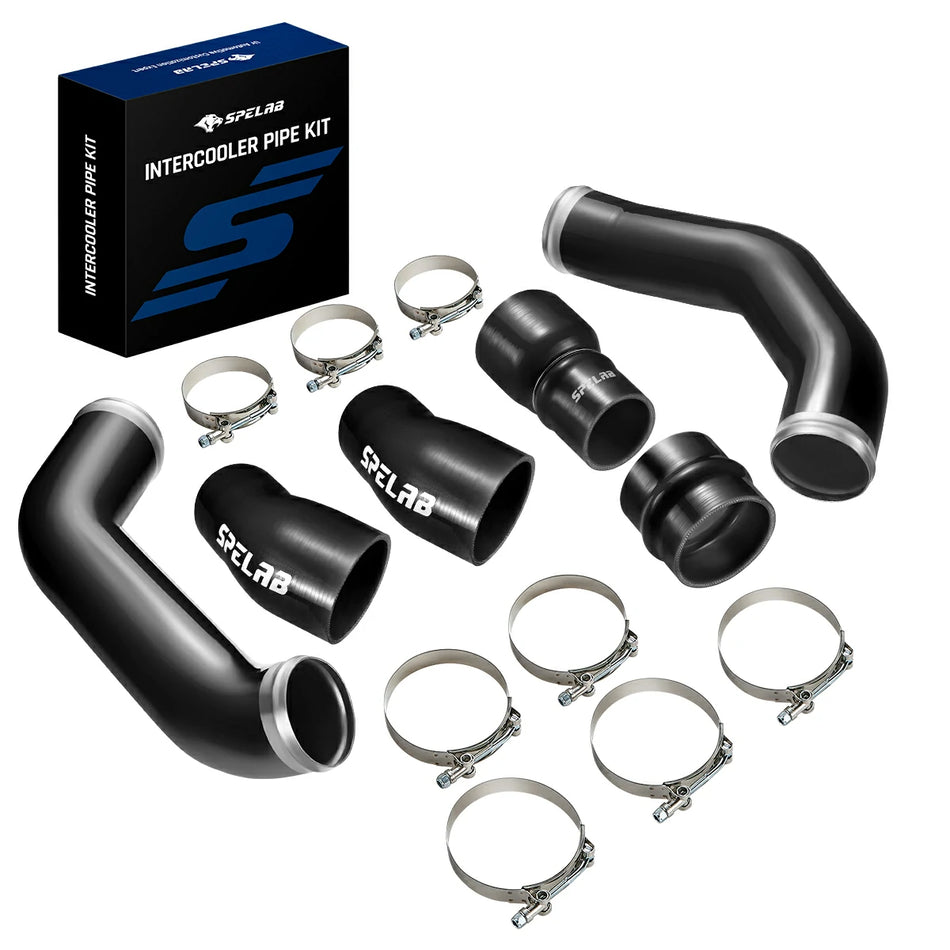
A 2007 5.9L and a 2007.5–2009 6.7 Cummins do not share the same buying logic. Check the engine, exhaust routing, sensor bungs, pipe section, and truck configuration before comparing parts. Note that this listing's title currently includes "DEF" as part of SPELAB's standard all-in-one kit naming template, even though 2007.5–2009 trucks did not come factory-equipped with DEF/SCR (per the fitment matrix above) - that title should be corrected on the product side; don't let it override the fitment facts in this guide.
2010–2012: Pre-DEF Pickup Years
A 2010–2012 Ram 2500 or 3500 pickup should be treated as a pre-DEF pickup fitment group.
These trucks are newer than the early 2007.5–2009 group, but 2010–2012 Ram 2500 or 3500 6.7 Cummins trucks should not be lumped into the 2013–2018 DEF/SCR group. A 2012 owner should verify DPF pipe layout, cab/bed length, sensor placement, pipe size, and tuner compatibility before ordering.
2013–2018: DEF/SCR-Era Trucks
A 2013–2018 Ram 2500 or 3500 6.7 Cummins pickup needs DEF/SCR-aware fitment planning.
This is where a DPF pipe, EGR hardware, DEF/SCR planning, NOx sensors, EGT sensors, and calibration path all start showing up in the same buying conversation. A 2013–2018 6.7 Cummins all-in-one race-use fitment setup has to match the truck’s year, chassis, sensor layout, and calibration path.
Fitment is only one part of the decision. Owners still weighing risk, cost, reliability, and use limits should read the 6.7 Cummins DPF delete pros and cons before choosing a direction.
2019–2021 And 2022–2024: Two Separate Late-Model Groups, Not One
A 2019–2024 6.7 Cummins should not be treated as a single fitment group - 2019–2021 and 2022–2024 need to be verified separately.
Use exact model year, VIN, 2500 vs 3500, pickup vs cab chassis, pipe route, sensor count, and tuner plan. A 2019–2021 6.7 Cummins listing has confirmed fitment data for that range specifically - it should not be stretched to cover 2022–2024 or 2025+ trucks. If you're shopping for a 2022–2024 truck, confirm current fitment against the latest part listings rather than assuming the 2019–2021 example applies; that generation has not been separately verified in this guide.
Pickup vs Cab Chassis: The Fitment Trap Buyers Miss
A Ram 3500 pickup and a Ram 3500 cab chassis should not be treated as the same exhaust fitment until the frame layout, wheelbase, tank location, hanger points, and pipe routing are checked.

Cab chassis trucks are built for upfit work: flatbeds, service bodies, dump beds, utility boxes, and fleet work. That means the underbody layout can differ from a normal pickup box truck. A pipe built around a consumer pickup bed may not clear the same way under a commercial work setup.
The pre-DEF vs DEF/SCR year split can also land differently on cab chassis trucks than on pickups of the same model year. Ram's own 2012 diesel supplement documents DEF fault warnings and a full DEF/SCR system description under "Chassis Cab Only" sections - meaning a 2012 Ram chassis cab may already carry DEF/SCR hardware that a 2012 pickup of the same model year does not. Do not assume "2012 pickup = pre-DEF, so 2012 chassis cab = pre-DEF too." Verify chassis cab DEF/SCR status independently for your specific year and configuration.
Check the truck in the driveway, not just the product title. Crawl underneath and check the actual exhaust routing side for your specific chassis - it isn't always the driver side - along with the frame rails, fuel tank area, crossmembers, leaf spring perches, rear axle packaging, and hanger locations. Heavy-duty fitment is physical. If the pipe hits the frame, tank bracket, or rear suspension, the engine badge will not save the install.
4-Inch vs 5-Inch Pipe: Clearance, Sound, and Use Case
A 4-inch pipe usually gives easier fitment and better clearance, while a 5-inch pipe needs more careful alignment around the frame, crossmembers, spare tire area, and heat-sensitive components.

Pick pipe size by the build, not by ego. A 4-inch setup is usually easier to package on a tow rig or work truck because it leaves more room around the transfer case area, rear shock zone, spare tire shield, wiring, and clamps.
A 5-inch setup can make sense on a higher-output competition build where flow and sound matter more than packaging. Treat diesel truck exhaust systems as fitment parts, not universal tubing; a large pipe that rattles on a crossmember or cooks nearby wiring is not a clean install.
| Pipe Size | Best Fit | Main Advantage | Main Check Before Ordering |
|---|---|---|---|
| 4-Inch | Non-public-road tow rigs and work trucks where packaging is tight. | More clearance and easier install path. | Verify flange size, clamp fit, pipe section, and sensor bung layout. |
| 5-Inch | Higher-output competition setups where packaging is already planned. | More flow capacity and deeper sound. | Verify crossmember clearance, spare tire area, heat shielding, hanger alignment, and wiring clearance. |
Sensor Bung Count, EGT/NOx Sensors, and Tuner Planning
Sensor bung count and location can stop an install faster than pipe diameter, especially on 2013+ and late-model trucks with more aftertreatment feedback.
Count the sensors before the truck goes on the lift. Look for EGT sensors, NOx sensors, differential pressure lines, oxygen sensors where equipped, and any year-specific aftertreatment wiring that ties back into the ECM.
Do not assume the replacement section has the right ports because the listing says "6.7 Cummins." Thread size, port position, and harness reach can all matter, and they vary by specific SKU, not just by year range. Lay the new pipe beside the old section and compare every bung before cutting, clamping, or tightening anything.
Tuning belongs in the same conversation. For documented non-public-road emissions changes, the hardware plan and calibration path must match the exact model year and system layout. Hardware-only buying can leave the truck electronically unresolved.
If the issue starts with EGR-related codes instead of exhaust fitment, check EGR delete legal risks and diagnosis basics before assuming an exhaust-side part is the answer.
Field Matching Protocol: What To Confirm Before Ordering Or Asking For Help
The safest way to avoid a wrong-kit purchase is to verify the truck physically before ordering, and have the same details ready if you contact SPELAB for fitment help: exact year, chassis type, cab/bed/wheelbase, sensor layout, pipe size, and calibration path.
- Confirm the exact model year and VIN. Use the VIN and production details instead of relying only on registration or listing title.
- Confirm Ram 2500 vs 3500, SRW vs DRW, and pickup vs cab chassis. Check the frame layout, tank location, body type, and underbody packaging.
- Confirm cab, bed, and wheelbase. Regular Cab, Crew Cab, Mega Cab, short/long bed, flatbed, service body, or other work-body configurations can change pipe length and hanger position.
- Count sensor bungs and compare locations. Match EGT, NOx, pressure, and related sensor provisions before installation - have clear underbody photos ready if you need support.
- Confirm pipe diameter, tuner compatibility, and legal-use category. A 4-inch/5-inch mismatch, unsupported calibration plan, or unclear use case (documented closed-course, export, or other legally allowed non-public-road category where applicable) can turn a simple job into a dead truck on the lift.

Not Sure Which Direction Fits Your Truck?
Get your year, VIN, cab layout, pipe size, and sensor photos ready before choosing any race-use or non-public-road component.
Verify Cummins Non-Public-Road Fitment OptionsDPF Pipe, EGR Kit, DEF Setup, or All-in-One Kit?
A DPF pipe, EGR kit, DEF/SCR-related setup, tuner, and all-in-one kit solve different problems and should not be treated as interchangeable names.
A DPF pipe deals with an exhaust-side section. EGR delete kits deal with the intake-side recirculation path. DEF/SCR-related planning matters most on 2013+ Ram HD pickups and should still be verified on cab chassis or commercial configurations. A tuner plan handles ECM logic for documented non-public-road use. An all-in-one direction makes sense when the buyer needs matched components instead of mixing parts blind.
| User Need | Better Direction | Why It Matters |
|---|---|---|
| Replace or re-route a DPF exhaust section on a limited-use build. | DPF pipe / exhaust section | Handles physical exhaust fitment. |
| Plan intake-side emissions hardware changes. | EGR kit | Separate hardware path from the DPF pipe. |
| Build around 2013+ DEF/SCR-era hardware. | Matched all-in-one direction | DPF, DEF/SCR, EGR, sensors, and calibration need to line up. |
| Handle ECM logic on non-public-road builds. | Tuner plan | Hardware alone may not complete the system plan. |
| Unclear truck year or chassis configuration. | Fitment check first | Avoids wrong-year, wrong-body, and wrong-sensor purchases. |
For documented closed-course or legally permitted non-public-road applications, start with fitment verification before choosing any component. Confirm year range, chassis layout, pipe diameter, sensor ports, and calibration path before viewing race-use parts.
Real-World Wrong-Kit Scenarios
Wrong-kit purchases usually happen when the buyer gets the engine right but misses the year split, chassis layout, pipe size, sensor layout, or calibration plan.
- Buyer grabbed 5.9L parts for a 2007.5+ 6.7L truck: the half-year engine break got missed entirely.
- 2012 owner bought 2013+ hardware: the pipe direction did not match the pre-DEF pickup layout.
- Cab chassis owner bought pickup-bed pipe: hanger points and routing did not line up under the work body.
- 5-inch pipe ordered without clearance check: the pipe interfered with nearby brackets, wiring, or heat-sensitive areas.
- 2019–2021 owner assumed 2018 fitment: late-model packaging and sensor layout still needed separate verification.
- Buyer skipped sensor bung comparison: the install stopped because the replacement section did not match the factory sensor layout.
- Hardware bought with no calibration plan: ECM-controlled trucks needed a matched tuning strategy that the parts alone didn't provide.

Avoid the Wrong-Year, Wrong-Chassis Buy
Compare your truck against the year split, chassis type, pipe diameter, and sensor layout before choosing any fitment direction.
Review a 2013–2018 Fitment ExampleFAQ
Most 6.7 Cummins DPF delete questions come down to year break, DEF/SCR status, pickup vs cab chassis fitment, sensor bungs, pipe size, tuner planning, and legal use.
Q: What year 6.7 Cummins trucks have DPF?
A: Ram HD 6.7 Cummins trucks entered the DPF era with the 2007.5 6.7L introduction. Exact layout still changes by model year, so do not buy by engine size alone.
Q: What year did 6.7 Cummins get DEF?
A: For Ram HD pickups, 2013 is the major DEF/SCR buying breakpoint. Cab chassis and commercial configurations should still be verified separately.
Q: Is a 2012 6.7 Cummins kit the same as a 2013 kit?
A: No. A 2012 pickup belongs in the pre-DEF pickup group, while 2013–2018 trucks need DEF/SCR-aware planning.
Q: Will a 2018 6.7 Cummins pipe fit a 2019?
A: Do not assume it will fit. 2019–2021 and 2022–2024 should be checked as two separate late-model fitment groups, each with exact year, chassis layout, sensor layout, and exhaust routing confirmed against current part listings.
Q: Will a pickup exhaust pipe fit a Ram 3500 Cab Chassis?
A: Not always. Cab chassis trucks can have different frame, tank, hanger, and exhaust routing than pickup-bed trucks, so final fitment must be verified under the truck. DEF/SCR timing can also differ - a 2012 chassis cab may already have factory DEF/SCR hardware that a 2012 pickup of the same year does not, per Ram's own diesel supplement documentation. Confirm chassis cab DEF status independently rather than assuming it matches the pickup year split.
Q: Should I choose a 4-inch or 5-inch pipe?
A: A 4-inch pipe usually gives easier clearance on tow and work trucks. A 5-inch pipe may suit higher-output competition builds, but it needs careful clearance checks around crossmembers, wiring, spare tire area, and heat shields.
Q: Is a 6.7 Cummins DPF delete legal?
A: Not as a public-road emissions repair. Delete-related hardware should only be discussed for documented race-only or legally allowed non-public-road use where applicable.
Final Recommendation: Choose by Year First, Then by Truck Layout
Do not shop a 6.7 Cummins delete kit by engine name alone; shop by year range, chassis layout, pipe diameter, sensor layout, tuner compatibility, and legal-use status.
Start with the year split. Confirm whether the truck is early 6.7, pre-DEF pickup, DEF/SCR-era, or 2019–2024 late-model. Then crawl under the truck and confirm pickup vs cab chassis, cab/bed layout, pipe routing, sensor ports, and clearance.
A clean buy starts before the cart. The truck tells you what fits. The listing only confirms it.

About the Author
John Lee
Mechanical Engineer | 10+ Years Experience
John has spent the last decade engineering and testing high-performance automotive components. Specializing in drivetrain durability and thermal management across Powerstroke, Cummins, and Duramax applications, he bridges the gap between OEM limitations and aftermarket performance. His philosophy: "Factory parts are just a starting point."