
Updated on May 6, 2026.
Discover how a ported intake manifold can add up to 20 HP to your 6.7 Cummins. Learn about airflow, installation tips, and the best upgrades for maximum performance.
Introduction
Upgrading the air intake manifold, especially with a ported intake manifold, is one of the more popular modifications among diesel enthusiasts. The intake manifold plays a key role in controlling how air flows into the engine, directly impacting horsepower (HP) and overall performance. But exactly how much HP can you expect to gain from a ported intake manifold? It’s a tricky question with many factors to consider.
Expert Insight: For many 6.7 Cummins owners, upgrading the manifold isn't just about the 20 HP gain; it's about reducing EGTs and eliminating the notorious "Grid Heater Bolt" failure risk. This guide explains why airflow velocity matters as much as volume.
Fit for 6.7 Cummins intake horn, for example, can be a major restriction point. Upgrading to a ported manifold often involves addressing these restrictions to improve airflow. Let’s break down the details and explore how much HP a ported intake manifold can add.

1. Performance Gains from Porting an Intake Manifold
Porting an intake manifold can provide significant horsepower gains, but the exact amount varies widely depending on several factors. On average, properly porting an intake manifold might boost HP by 10-20%. However, this can range from minor or even negative gains if done incorrectly, to substantial increases when combined with other performance mods.
The key is ensuring the air flows more efficiently through the intake, allowing for better combustion. By smoothing out the surface and widening the ports, more air can reach the combustion chamber, leading to improved power output.
However, porting isn’t a one-size-fits-all solution. It depends on the engine type, existing modifications, and the precision of the porting process itself. A poorly done job can actually reduce airflow and performance, which is why professional help or detailed research is crucial.
It’s important to note that if your vehicle is naturally aspirated and hasn’t had any other supporting upgrades (like a cold air intake or ECU tuning), the gains from porting alone may be minimal—or even negative. Some dyno tests on stock setups have shown little to no improvement. This highlights that porting should be considered as part of a performance upgrade package rather than a standalone solution.
While the raw power increase is impressive, the "hidden" benefit of a ported manifold is lower Exhaust Gas Temperatures (EGTs). By allowing more oxygen into the cylinder more efficiently, the engine burns fuel more completely and breathes easier, which can drop EGTs by 50-100°F under heavy towing loads—a critical advantage for longevity.
2. Technical Details of Porting and Airflow Improvement
Porting an intake manifold involves reshaping and polishing the internal surfaces to maximize airflow. One of the critical techniques used is port matching, which ensures that the ports on the manifold line up perfectly with those on the cylinder heads. This eliminates turbulence that can reduce efficiency and limit horsepower gains.
In professional settings, porting is often supported by flow bench testing to measure actual airflow (CFM) through the intake tract and cylinder head interface. Some high-end builders also use digitizing tools like a Renshaw digitizer to create a 3D model of the optimal port shape, which is then replicated with CNC machines to ensure consistency across all cylinders.
In high-performance applications, many shops utilize CNC machining to precisely port each manifold for optimal airflow. This process allows for consistent and repeatable results, ensuring that each cylinder receives the maximum amount of air possible. Without this precision, airflow may become unbalanced, leading to inconsistent performance across the engine.
The true power gain comes from reducing pumping losses—the energy the engine wastes trying to pull air through restrictive, rough-cast OEM passages. By minimizing these losses, the engine reclaims power that would have been lost to friction and turbulence, redirecting that energy to the wheels and improving turbo spool-up time.
For DIY enthusiasts, porting by hand is an option, but it requires significant skill and experience. It's essential to understand that improper porting can lead to power loss instead of gains. Combining porting with other upgrades, such as a new intake horn, can help unlock the full potential of the engine by allowing for smoother and higher-volume air delivery.

3. Recommended Upgrade Plan for 6.7 Cummins Owners
For 6.7 Cummins owners looking to maximize the performance of their engine, upgrading the intake manifold is an excellent step. The factory-installed intake horn for 6.7 Cummins and OEM manifold tend to restrict airflow, especially under heavy loads or when towing. By switching to a higher-flow ported manifold, you can unlock significant horsepower gains.
⚠️ Safety Alert for 6.7 Cummins Owners: The factory grid heater bolt (jiggle pin) is a known failure point that can fall into the engine, causing catastrophic failure. Upgrading to a high-flow manifold allows you to install a Grid Heater Delete or a safer aftermarket solution, protecting your engine while boosting performance.
One highly recommended option is the SPELAB Intake Manifold for 6.7L Cummins 2007-2024 Dodge Ram 2500/3500. Priced at $598.00, this manifold offers substantial improvements in both airflow and mass air flow (MAF) when compared to the stock unit. Here’s a comparison to give you a clearer idea:
- SPELAB New Intake Manifold: 897 CFM (airflow) | 72.7 lbs/min (MAF)
- 5" Budget Intake Manifold: 487 CFM | 43.5 lbs/min
- OEM (Stock) Manifold: 421 CFM | 38.6 lbs/min
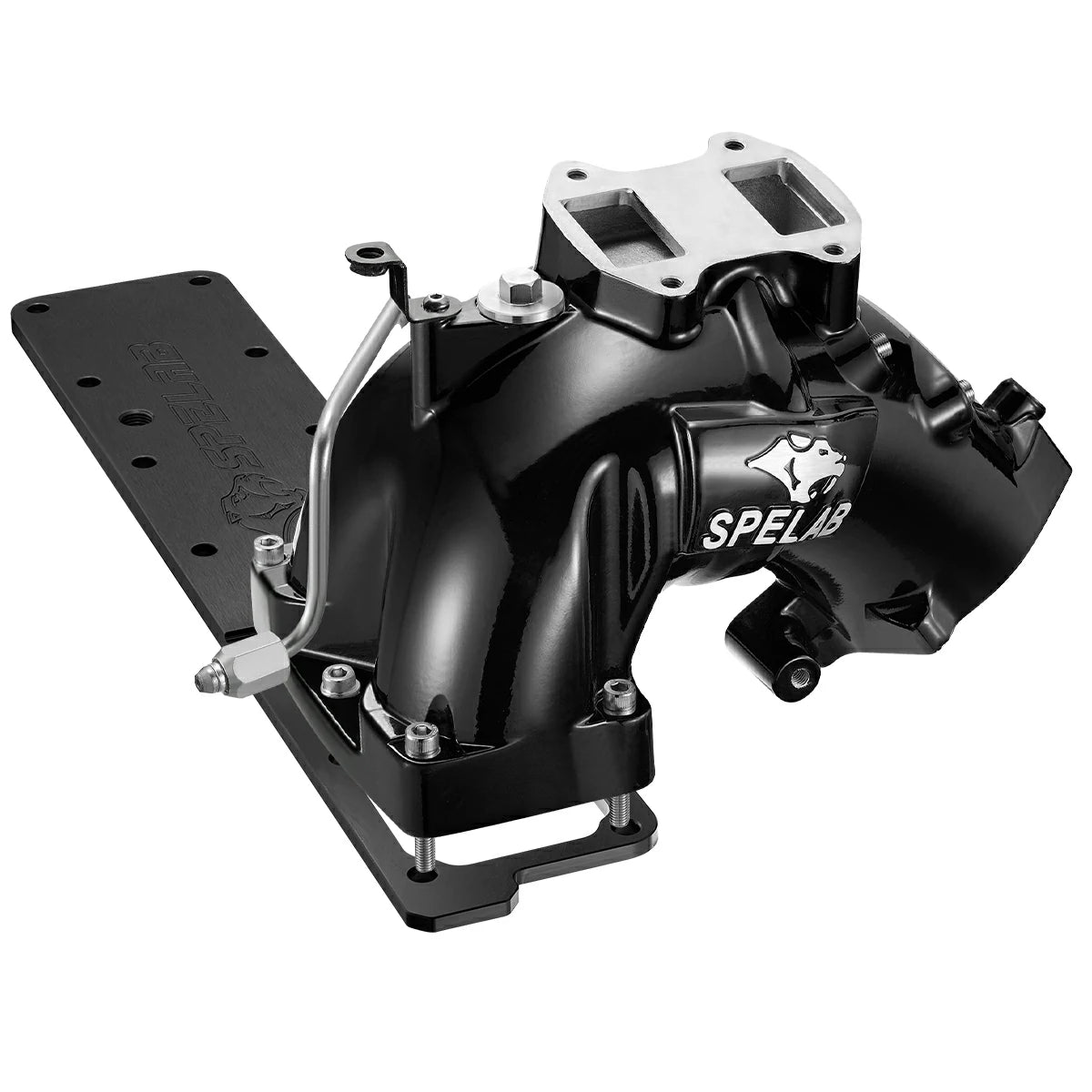
$278-$798
Buy NowAs you can see, the SPELAB manifold provides nearly double the airflow of the stock manifold. This increased airflow allows for better combustion, resulting in higher horsepower, better throttle response, and improved fuel efficiency. Combining this manifold with an EGR delete kit for Cummins can further optimize airflow and prevent the buildup of carbon deposits, making it a solid upgrade for performance-focused 6.7 Cummins owners.
Upgrading your intake manifold for 6.7 Cummins is one of the best ways to get a noticeable increase in power, especially when paired with other modifications. Next, we’ll discuss additional performance enhancements to consider.
Pro tip: Some builders even use epoxy to partially reshape certain parts of the intake runner to improve low-end airflow velocity and turbulence control. This shows that more airflow isn't always better—airflow shape and velocity matter just as much as volume.
4. Intake Manifold Considerations for 6.7L Powerstroke Owners
For many 6.7L Powerstroke owners, intake manifold upgrades usually come down to one question: how well will the factory setup hold up over time? While the OEM plastic intake manifold works in a stock, lightly used truck, it often becomes a concern once the truck sees regular towing, higher boost levels, or long heat-soaked drive cycles. Over time, repeated heat exposure and vibration can lead to cracking, boost leaks, or uneven airflow that affects drivability.
Replacing the factory manifold with a cast-aluminum alternative, such as the SPELAB Intake Manifold for 6.7L Powerstroke (2011–2019 F-250 / F-350), addresses these weak points directly. Rather than chasing peak airflow numbers, this upgrade focuses on airflow stability and structural durability — two areas where the OEM plastic design tends to fall short.
-
3.5" Enlarged Intake Passage
Provides a smoother, less restrictive airflow path, helping the turbo work more efficiently and deliver more consistent boost, especially under sustained load. -
Cast Aluminum Construction
Eliminates the cracking and heat-fatigue issues commonly associated with plastic manifolds, making it better suited for towing and high-temperature operation. -
Two-Piece Design for Practical Installation
Improves internal airflow layout while keeping the installation process straightforward and close to OEM service procedures. -
Direct Bolt-On Replacement
Installs using factory mounting points and supplied hardware, with no tuning required for normal operation. -
Works Well with Common Supporting Mods
Compatible with EGR delete setups, upgraded intercooler piping, cold air intakes, turbo upgrades, and custom tuning.

5. Other Performance Optimization Recommendations
While upgrading the intake manifold is a critical step in boosting horsepower, pairing it with other modifications can yield even greater results. For 6.7 Cummins owners, combining the intake manifold upgrade with a cold air intake system and exhaust system improvements can significantly enhance overall engine performance.
A cold air intake works by supplying cooler, denser air into the engine, which complements the increased airflow provided by the upgraded intake manifold. This combination results in better combustion efficiency, translating to more horsepower, torque, and improved throttle response.
In addition, upgrading your truck’s exhaust system can help the engine expel gases more efficiently. A less restrictive exhaust allows the engine to breathe better, especially at higher RPMs. This improvement is essential for those who frequently tow or haul heavy loads, as it helps the engine maintain power under stress.
If you're looking to take your 6.7 Cummins & 6.7 Power Stroke engine to the next level, consider pairing the SPELAB Intake Manifold with these modifications to maximize the power and efficiency of your vehicle.

Decision Matrix: Is a High-Flow Manifold Right for You?
✅ YES, Upgrade if:
- You have a tuned engine or upgraded turbo.
- You regularly tow heavy loads and struggle with high EGTs.
- You want to eliminate the Cummins grid heater bolt risk.
- You want improved throttle response and faster turbo spool.
❌ NO, Stay Stock if:
- Your truck is 100% factory stock with no future plans to tune.
- You only use the truck for light commuting.
- You are concerned with strict emissions inspections that require OEM visual appearance.
6. When Is Porting Not Worth It?
While a ported intake manifold can deliver real gains, it’s not always a smart upgrade in every situation:
- If your engine is completely stock, naturally aspirated, and unmodified, porting may offer little benefit.
- Poor porting work, or misaligned manifold-to-head interfaces, can introduce airflow disruption and lead to power loss.
- Without proper tuning to recalibrate fuel and ignition for the increased airflow, your engine might not take full advantage of the mod.
Porting is best suited for turbocharged diesel engines paired with supporting mods like cold air intakes, exhaust upgrades, and tuning.
7. Conclusion
Upgrading to a ported intake manifold can significantly enhance your engine's performance, but the horsepower gains depend on various factors, including the precision of the porting and the overall configuration of your engine. For 6.7 Cummins owners, upgrading the intake manifold is a proven way to increase airflow, improve fuel efficiency, and unlock more horsepower, especially when combined with other modifications like a cold air intake and an optimized exhaust system.
The SPELAB Intake Manifold for 6.7L Cummins 2007-2024 Dodge Ram 2500/3500 offers an excellent balance of performance and value, providing nearly double the airflow of the stock manifold. At $598.00, this upgrade is a solid investment for those looking to enhance their truck's capabilities, whether for everyday driving, towing, or off-road performance.
In summary, for the best results:
- Upgrade your intake manifold for 6.7 Cummins to the SPELAB model.
- Pair it with a cold air intake and performance exhaust system for maximum horsepower gains.
- Ensure proper installation and consider professional porting for precision airflow improvements.
Take the next step in optimizing your Cummins engine and experience the power gains for yourself!
Frequently Asked Questions
Q1: How much horsepower can a ported intake manifold add?
A1: A properly ported intake manifold typically adds between 10 to 20 horsepower on a tuned diesel engine. While the raw HP gain is impressive, the most noticeable differences are improved throttle response and lower EGTs (Exhaust Gas Temperatures) under load.
Q2: Is porting an intake manifold worth it for my 6.7 Cummins?
A2: Yes, it is one of the best reliability and performance upgrades for the 6.7 Cummins. Upgrading the restrictive factory intake horn not only boosts power but also provides a safer opportunity to address the grid heater bolt failure risk that plagues stock engines.
Q3: What’s the difference between a ported and a stock intake manifold?
A3: A ported manifold features enlarged, polished internal passages that minimize airflow resistance compared to rough-cast stock units. This "clean" airflow path reduces pumping losses, allowing the engine to pull in more oxygen with less effort.
Q4: Can I install a ported intake manifold by myself?
A4: Yes, it is a manageable DIY project for owners with moderate mechanical experience and basic hand tools. However, ensuring a perfect, leak-free seal at the cylinder head is critical; if you are uncomfortable with torque specs and gaskets, professional installation is recommended.
Q5: How much does the SPELAB Intake Manifold for 6.7 Cummins cost?
A5: The SPELAB high-flow intake manifold typically costs between $278 and $798 depending on the specific kit and configuration. Compared to expensive custom CNC porting, this bolt-on solution offers a superior CFM-per-dollar ratio.
Q6: Will a ported intake manifold affect my truck’s fuel efficiency?
A6: Yes, most owners see a 1–2 MPG improvement after upgrading. By reducing the energy the engine wastes on air intake (pumping losses), combustion becomes more efficient, particularly at highway speeds or when towing heavy trailers.
Q7: What is CFM, and why is it important for an intake manifold?
A7: CFM stands for Cubic Feet per Minute, measuring the volume of air the manifold can move. A higher CFM (like SPELAB’s 897 CFM) means more oxygen is available for the turbo to push into the cylinders, which is the key to creating more power without excessive heat.
Q8: Do I need other upgrades with a ported intake manifold for maximum HP?
A8: Yes, pairing the manifold with a cold air intake, high-flow exhaust, and a performance tune is essential for maximum gains. Performance upgrades work in a "loop"—the more efficiently you can get air in and out, the more power your tune can safely produce.
Q9: Will upgrading the intake manifold void my warranty?
A9: It depends on your dealer, but any modification that alters engine performance can potentially affect warranty claims. While many dealers overlook bolt-on intake parts, it is always safest to consult with your service advisor before performing performance modifications.
Q10: How does the SPELAB Intake Manifold compare to stock?
A10: The SPELAB manifold offers over double the airflow capacity (897 CFM) compared to the factory stock unit (421 CFM). This 113% increase in air volume ensures that even high-boost competition engines never starve for oxygen.
Q11: Is porting effective without a tune?
A11: You will feel a smoother throttle response without a tune, but you won't see the full 20+ HP gain. A custom tune allows the ECU to recalibrate fuel timing and boost levels to fully take advantage of the increased air volume provided by the manifold.
Q12: What’s more important: porting or port matching?
A12: Port matching is the essential foundation of any airflow upgrade. Even an aggressively ported manifold will lose power if the ports don't align perfectly with the cylinder head, as the resulting "step" creates massive turbulence and kills air velocity.
Q13: How does an intake manifold affect Exhaust Gas Temperatures (EGT)?
A13: A high-flow intake manifold reduces EGTs by 50-100°F by improving airflow efficiency. More efficient air delivery means the turbo doesn't have to work as hard under load, leading to lower operating temperatures during heavy towing.
Q14: Can I delete the grid heater when installing a new Cummins manifold?
A14: Yes, many high-flow manifolds are designed to eliminate the grid heater bolt failure risk. This is a popular reliability modification for 6.7 Cummins owners to prevent internal engine damage while simultaneously boosting horsepower.

John Lee
Mechanical Engineer | 10+ Years Experience
John has spent the last decade engineering and testing high-performance automotive components. Specializing in drivetrain durability and thermal management across Powerstroke, Cummins, and Duramax applications, he bridges the gap between OEM limitations and aftermarket performance. His philosophy: "Factory parts are just a starting point."



1 comment
The fuel line is not letting the intake forward enough to line up the bolt holes