
Updated on May 6, 2026.
Deleting an L5P Duramax can cost anywhere from roughly $3,000 for a basic DIY setup to $7,500 or more for a shop-installed build, with some 2020+ trucks costing even more because of ECM and TCM work. In this guide, fwe break down parts, tuning, labor, model-year differences, and the legal and warranty trade-offs so you can estimate the total project cost before buying a kit.
Key Takeaways: L5P Delete Costs at a Glance
- ✔ Total Budget: Expect to spend $4,500–$6,500 for 2017-2019 models, and $8,500–$11,000+ for 2020-2025 models due to advanced ECM encryption.
- ✔ The "Encryption Tax": 2020+ trucks require a complete E41 ECM exchange and mandatory TCM tuning for the 10-speed Allison, significantly driving up the price.
- ✔ Performance Gains: A successful delete typically yields +100-150 HP, improved throttle response, and the elimination of "Limp Mode" caused by DPF/EGR sensor failures.
- ✔ Risk Warning: Deleting will void your powertrain warranty and is intended for off-road/competition use only. Check your local emissions regulations before proceeding.
- ✔ Pro Tip: Always install CAN BUS delete plugs to protect factory harnesses from corrosion—a small $50-$100 investment that prevents massive electrical headaches later.
Understanding the L5P Duramax Delete Process
What is an L5P Duramax Delete?
An L5P Duramax delete typically refers to removing or bypassing factory emissions-related components such as the DPF, EGR system, and DEF system, then pairing the hardware changes with tuning. Owners usually research this topic for three reasons: total project cost, potential performance changes, and whether the setup is practical for their model year.
Why Consider Deleting Emission Systems?
Most owners researching an L5P delete are comparing cost versus outcome. Common motivations include reducing repeated emissions-related repairs, changing how the truck drives under load, and understanding whether a delete setup is worth the price compared with keeping the truck stock.
Below is a realistic breakdown of L5P delete cost, including hardware, tuning, labor, and the extra expense that often comes with newer model years.

Breakdown of Costs Involved
Components and Their Prices
The total cost to delete an L5P Duramax depends on four main categories: hardware, tuning, labor, and model-year-specific electronics work. As a starting point, owners usually budget separately for an EGR delete kit, DPF-related hardware, DEF-related components, and custom tuning. On many builds, tuning is not just another add-on cost—it is the part that determines whether the truck runs correctly after the hardware changes.
Installation and Labor Costs
Labor can vary just as much as parts pricing. A simple setup with straightforward access will cost less than a build that requires additional disassembly, ECM handling, or TCM-related work. For that reason, two owners with similar trucks may see very different final quotes even when the parts list looks similar on paper.
Real-World Pricing Insights: What L5P Owners Actually Pay
While typical component prices provide a baseline, actual costs for deleting and tuning an L5P Duramax can vary widely depending on the vehicle’s model year, location, and the depth of the modification. Here's a closer look at what L5P owners are really paying:
L5P Duramax Delete: Comprehensive Cost Breakdown
| Cost Factor / Component | 2017 - 2019 Models | 2020 - 2025 Models |
|---|---|---|
|
1. ECM Unlock/Replacement Essential for rewriting factory software |
E41 Unlock Service ($2,200 - $2,600) |
ECM Exchange (E41) ($3,000 - $4,500) |
|
2. TCM & Tuning Software Tuning credits and transmission calibration |
$800 - $1,200 (6-Speed Allison) |
$1,500 - $2,200 (10-Speed Mandatory) |
|
3. Delete Hardware (EGR/DPF) Piping and block-off plates |
$750 - $1,200 | $950 - $1,500 (Incl. CAN BUS plugs) |
|
4. Labor & Access Based on $150/hr shop rates |
$800 - $1,500 (Standard Access) |
$1,500 - $3,000 (May require cab-lift) |
|
5. Support Mods (CCV/Plugs) Essential connector protection |
$150 - $300 | $200 - $450 |
| 6. Estimated Total Project Cost | $4,700 - $6,800 | $8,500 - $11,500+ |
2026 pricing note: In many cases, 2017-2019 L5P trucks are less expensive to complete than 2020+ trucks because newer model years often involve more complicated ECM and TCM considerations. When owners compare quotes online, this is one of the biggest reasons the price range looks so wide.
2017-2025 L5P Duramax Delete Kit Product Page
Use this product page as the first pricing reference for L5P Duramax delete planning. Confirm your truck year, included hardware, product options, and whether your build may require additional ECM, TCM, or tuning support before comparing shop labor quotes.

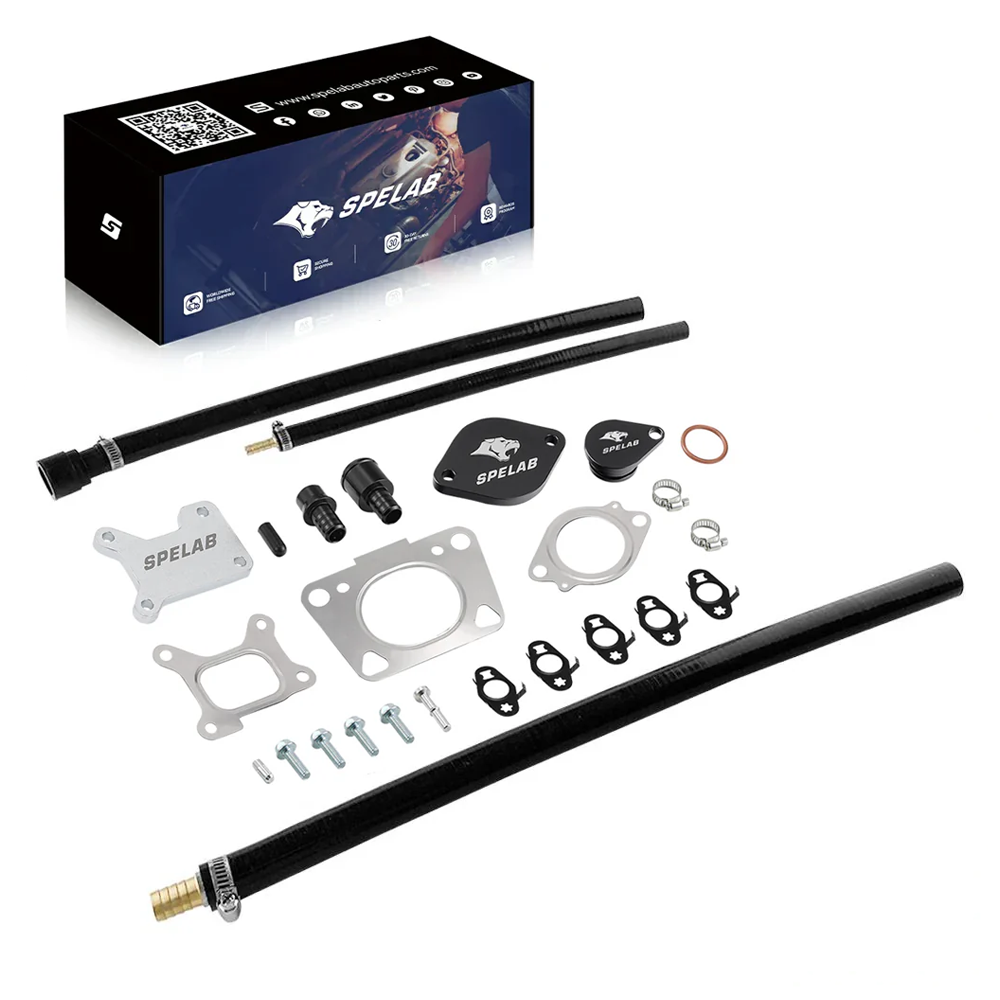
EGR/DPF Delete Kit 2017-2025 L5P 6.6L Duramax Applicable Products | SPELAB
Legal and Warranty Considerations
Legal Implications
Before pricing parts or tuning, owners should understand the legal side. Emissions-related modifications can create compliance issues depending on where the truck is registered, inspected, or serviced. That means the true “cost” of an L5P delete is not only parts and labor—it can also include registration, inspection, and resale complications.
Warranty Issues
Warranty impact is another major cost factor that buyers often underestimate. Once a truck is modified, future dealer support may become more limited, and any out-of-pocket repairs can quickly outweigh the initial savings some owners hope to get from reducing emissions-system maintenance.

Performance and Economic Benefits
Enhanced Engine Performance
Many owners report that a properly set up truck feels more responsive after emissions-related restrictions are removed and tuning is matched correctly. However, the result depends heavily on the truck’s model year, tune quality, hardware selection, and how the truck is actually used.
Fuel Economy Improvements
Fuel economy is one of the most talked-about reasons owners research delete cost, but real-world results vary. Some drivers may see efficiency gains, while others care more about drivability, towing behavior, or long-term maintenance trade-offs than MPG alone.
Choosing the Right Delete Kit
Features to Look for in a Delete Kit
When comparing L5P delete kits, buyers usually look at four things first: vehicle-year compatibility, included hardware, tuning requirements, and overall installation complexity. A kit that looks inexpensive at first can become much more expensive once missing components, extra tuning needs, or additional labor are factored in.
Recommended "While You're In There" Upgrades
Most L5P owners perform these two upgrades simultaneously to ensure long-term engine health:
- L5P CCV Reroute Kit: Stop oily sludge from re-entering your turbo and intake manifold.
- L5P CAN BUS Delete Plug Kit: Essential for protecting your factory electrical connectors from road salt and debris after removing sensors.
Why Choose SPELAB?
For buyers who are comparing options, SPELAB positions its L5P-related products around fitment coverage, bundled hardware, and support resources. Instead of choosing only on sticker price, it is smarter to compare what is actually included, what model years are supported, and whether the product page clearly explains any additional tuning or installation requirements.
$169.77 USD
Buy NowStep-by-Step Installation Guide
Pre-Installation Checklist: What You Need
Before you start unbolting parts, ensure you have ALL of the following. Missing the ECM unlock is the #1 mistake new owners make.
- ECM Unlock Service / Tool: (e.g., HP Tuners or unlocked ECM) - Required to start the truck after deleting.
- Tuning Device & Credits: To flash the new tune file.
- SPELAB EGR Delete Kit: Includes block-off plates and coolant hoses.
- DPF Delete Pipe / Exhaust: To replace the factory exhaust filter.
- DEF System Removal Tools: Basic socket set to remove the tank.
- Jack & Jack Stands: For safe under-vehicle access.
Installation Steps
- Disconnect the Battery: Begin by disconnecting the negative terminal of your truck's battery to ensure safety.
- Remove the DEF System: Locate and remove the DEF tank and associated components. Follow the detailed instructions provided in your delete kit.
- Delete the DPF: Using the tools, remove the DPF filter and replace it with the delete pipe included in your kit.
- Install the EGR Delete Kit: Remove the EGR valve and cooler, then install the block-off plates and reroute the exhaust as instructed.
- Flash the Modules (ECM & TCM): Connect your tuning interface (such as HP Tuners or EZ Lynk) to the OBDII port. For 2017-2019 models, verify your E41 unlock is active. For 2020+ models, ensure the swapped ECM is properly synced with your vehicle’s VIN. Flash the custom engine files first, followed by the transmission files to ensure the Allison 10-speed recognizes the new torque parameters.
- Post-Install "Jet Engine" Check: After the first start, listen for the signature L5P turbo whistle. Check all CAN BUS delete plugs to ensure no moisture can enter the open factory harnesses. Perform a 20-minute drive cycle to allow the transmission to "re-learn" the new shift logic.
Now that you know the detailed steps for installation, visit SPELAB for high-quality delete kits and expert support to enhance your L5P Duramax.
Conclusion
The cost to delete an L5P Duramax can vary more than most owners expect, especially once tuning, labor, and newer-model electronics are included. The smartest way to compare options is to start with your truck’s exact year, define whether you are pricing a DIY or shop-installed build, and then compare what each kit actually includes before making a purchase decision.
If you are comparing L5P-compatible parts, use the product details to verify fitment, included components, and support information before ordering.

check SPELAB 2020-2024 L5P 6.6L DURAMAX applicable delete kit
Frequently Asked Questions
Q: Can a bad air intake hose cause a check engine light?
A: Yes, a bad air intake hose will frequently trigger a check engine light. If the hose cracks after the MAF sensor, unmetered air enters the engine. This creates a lean condition and commonly triggers codes like P0171 or P0174. The ECU adds fuel to compensate, which turns on the light.
Q: Why does my engine idle rough but run better at higher RPM?
A: Vacuum leaks disrupt the air-fuel ratio most severely at low RPMs. Because airflow is low at idle, unmetered air causes a major imbalance. As RPM increases, the proportion of unmetered air becomes smaller, so the engine feels smoother. This pattern strongly suggests an intake leak.
Q: Is oil inside the intake hose normal?
A: A light film of oil is normal, but excessive pooling is a warning sign. Your PCV/CCV system naturally routes some blow-by gases back into the intake. However, heavy oil pooling indicates high blow-by, a failing PCV system, or turbo seal wear, which can quickly degrade a rubber hose.
Q: Can a collapsed intake hose reduce power?
A: Absolutely, a collapsed or leaking intake hose directly reduces horsepower. Under heavy throttle, engine vacuum or turbo suction can cause a weakened rubber hose to suck shut. This restricts airflow, starves the engine of oxygen, and creates severe hesitation during acceleration.
Q: Can an intake hose problem affect transmission shifting?
A: Yes, unmetered air can cause harsh or erratic shifting. On many modern trucks, transmission shift timing is calculated using engine load data from the MAF sensor. If airflow readings are inaccurate due to an intake leak, the transmission receives bad data, leading to unpredictable shifts.
Q: How do I confirm an intake hose leak without replacing parts?
A: You can confirm a leak using a physical stress test, a spray test, or fuel trim data. Physically flex the ribs to look for dry rot, carefully spray carb cleaner around the connections at idle to listen for RPM spikes, or check for high positive Short Term Fuel Trims (STFT) that normalize at higher RPMs.
Q: How long do factory rubber intake hoses typically last?
A: Factory EPDM rubber intake hoses typically last 4 to 8 years. Heat cycling, constant vibration, and exposure to oil vapor eventually cause the rubber to soften, swell, and crack—especially within the accordion folds.
Q: Can I drive with a cracked intake hose?
A: While you can limp it home, it is highly discouraged for regular driving. A cracked hose causes lean conditions that increase combustion temperatures. Ignoring this can lead to engine detonation, terrible fuel economy, and long-term internal damage.
Q: What is better—rubber, silicone, or aluminum intake tubing?
A: Reinforced silicone and aluminum are superior to factory rubber. Rubber is cheap but degrades from oil and heat. Silicone resists oil, handles extreme temperatures, and won't collapse or blow off under boost. Aluminum offers maximum airflow stability but requires high-quality silicone couplers to absorb engine vibration.
Q: When should I upgrade instead of simply replacing the hose?
A: You should upgrade if your vehicle is turbocharged, tuned, used for towing, or experiencing repeat hose failures. Switching to a reinforced silicone hose or a full cold air intake system prevents the rubber from collapsing under vacuum or blowing off under high boost, providing a permanent solution.

John Lee
Mechanical Engineer | 10+ Years Experience
John has spent the last decade engineering and testing high-performance automotive components. Specializing in drivetrain durability and thermal management across Powerstroke, Cummins, and Duramax applications, he bridges the gap between OEM limitations and aftermarket performance. His philosophy: "Factory parts are just a starting point."
Ready to Compare L5P Delete Options?
Before estimating the full project cost, confirm your L5P model year and product fitment. Start with the recommended L5P product page, or browse the Duramax all-in-one delete kit collection if you need another setup.