The GM LS3 engine is arguably the best crate engine of the 21st century. But fitting a modern, tall, fuel-injected V8 into a vintage chassis designed for a carbureted Small Block Chevy creates a host of logistical nightmares. Hood clearance, air intake routing, and clashing aesthetics can stall a project.
This guide explores how the SPELAB Single Plane Mid-Rise EFI Intake Manifold serves as the ultimate problem solver for Restomods and Pro-Touring builds.
TL;DR: The Bottom Line for Swappers
Too long; didn't read? Here’s the takeaway: The LS3 Mid-Rise Intake Manifold is the perfect choice for LS3 swaps. Its 4150 flange and mid-rise design solve hood clearance issues in classic cars, allow for a clean, retro "carbureted" look with modern EFI, and provide flexible throttle body placement for custom turbo setups. It's the ultimate bridge between modern LS power and vintage style.

1. The Geometry of Fitment: Why "Single Plane" Matters for Swaps
When swapping an LS into platforms like the Fox Body Mustang, Mazda RX-7, OBS Chevy Truck, or C2/C3 Corvette, the vertical height of the engine is the enemy. Choosing the right intake manifold is the key to solving this puzzle.
Mid-Rise vs. Hi-Ram vs. OEM
- OEM Plastic: While low profile, the front-facing throttle body often interferes with radiator fans or requires complex intake tubing that clutters the engine bay.
- Hi-Ram: Too tall. Requires cutting the hood, which ruins the clean lines of a classic car.
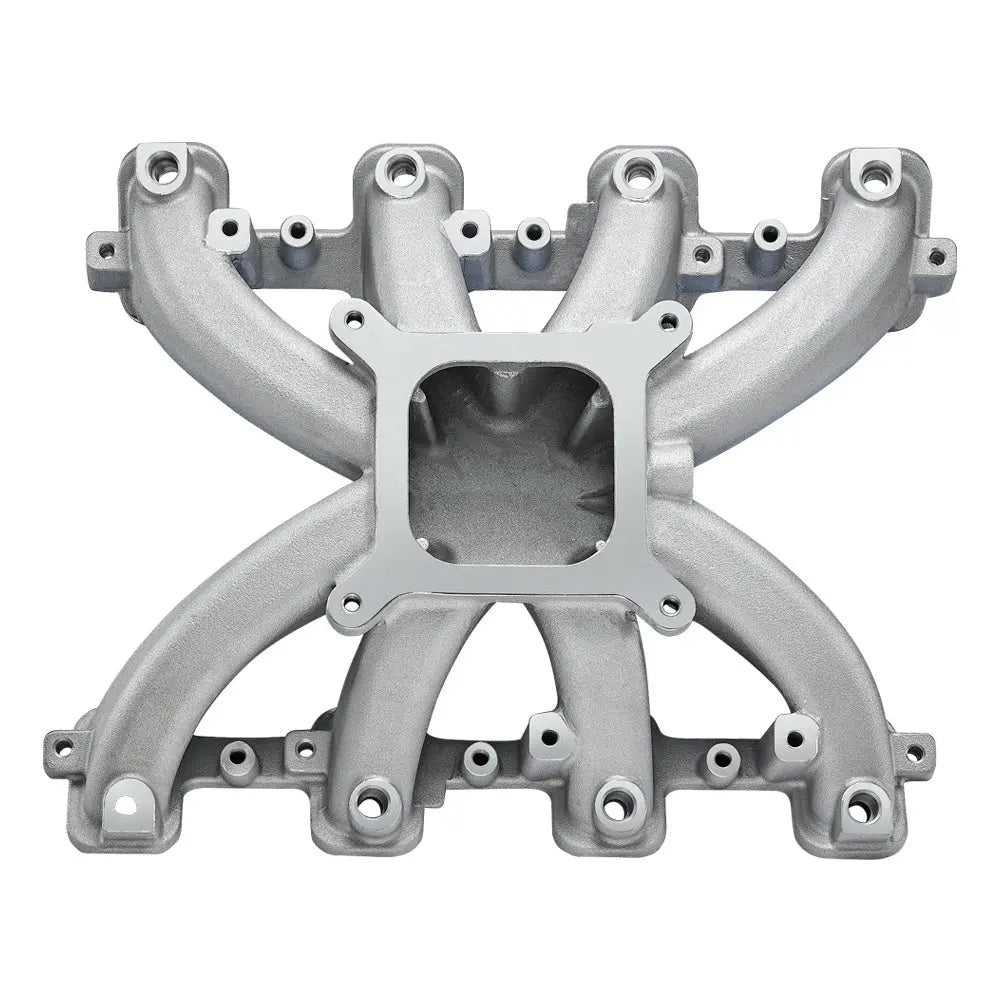
- SPELAB LS3 Single Plan Intake Manifold (Mid-Rise): This manifold features a "Vict Jr." style architecture. By mounting the throttle body vertically in the center, it offers the lowest possible installed height while maintaining high-flow runners. This allows the use of a standard "drop base" air cleaner to clear stock hoods.
2. The 4150 Flange: The Universal Translator
The core feature of theLS3 Mid-Rise Intake Manifold is the industry-standard 4150 square bore flange. For anyone undertaking an engine swap, this feature is a game-changer as it opens up a massive ecosystem of intake options.
Option A: The "Restomod" Sleeper (Throttle Body Injection)
You can bolt on a 4-barrel style throttle body.
Benefit: From the outside, it looks like a 1970s carbureted V8. Underneath, you have precise port fuel injection. The SPELAB manifold has pre-machined injector bungs, allowing you to run modern injectors at the port while using the throttle body just for air control.
Option B: The "Turbo" Elbow
For turbocharged swaps, you can mount a tight-radius 90-degree cast elbow to the 4150 flange. This is crucial for custom intercooler piping where a fixed front-facing stock manifold would hit the accessory drive. This level of flexibility is one of the many reasons to upgrade your manifold.
3. Torque, Power Band, and Displacement
A common myth is that "Single Plane manifolds kill low-end torque." While true for small displacement engines, the 6.2L (376 c.i.) LS3 behaves differently.
The LS3's massive rectangular intake ports flow over 300 CFM. The SPELAB single plane design allows all 8 cylinders to draw from a central plenum, equalizing air distribution.
The Reality: On a 6.2L engine, you might lose a negligible amount of torque below 2,500 RPM. In exchange, you gain massive flow potential from 4,000 to 7,500 RPM, right where the LS3 naturally wants to make power. For anyone looking to truly boost their engine's output, this trade-off is a clear win.
4. Installation Logistics: The Hidden Details
Upgrading to the SPELAB LS3 Single Plane Intake Manifold requires handling a few specific technical details:
- MAP Sensor Relocation
- Cast aluminum manifolds typically require a screw-in MAP sensor or a vacuum hose running to a remote sensor block.
- Throttle Cable vs. Drive-By-Wire (DBW)
- This manifold supports both. If converting to a mechanical throttle cable (common in older cars), the 4150 style setup is much easier to hook up.
- O-Ring Sealing
- The SPELAB manifold utilizes Viton O-ring gaskets (included) for a superior, reusable seal against vacuum leaks.
5. Comparison: SPELAB LS3 Mid-Rise Intake Manifold vs. The Competition
Why choose the SPELAB version over other cast manifolds?
- Cost-to-Value: The SPELAB kit includes the Fuel Rails and mounting hardware. Competitors often sell the bare manifold, forcing you to spend an extra $150-$200 on rail kits.
- Rectangular Port Precision: Specifically cast for the GM L92/LS3 head architecture, ensuring the port roof and floor align perfectly.
Direct Replacement, Easy Installation
Upgrade Single Plane LS3 Intake ManifoldConclusion: The Ultimate Problem Solver for Your LS Swap
The SPELAB LS3 Mid-Rise Intake Manifold is more than just an intake manifold; it is a bridge between eras. It allows the modern efficiency and power of the LS3 to coexist with the tight constraints and classic styling of your project car, making it the definitive choice for any serious swapper.
Technical Specifications
- Head Type: GM LS3 / L92 / L76 (Rectangular Port)
- Flange Type: 4150 Square Bore
- RPM Range: 2,500 - 7,500 RPM
- Material: Cast Aluminum
Frequently Asked Questions (FAQ)
- 1. Will this manifold fit under the stock hood of my classic car?
- With a drop-base air cleaner, the SPELAB LS3 Mid-Rise offers one of the lowest profiles for a 4150-style manifold, making it the best option for clearing most stock, flat hoods on classic muscle cars and trucks.
- 2. Does this kit come with fuel rails?
- Yes. Unlike many competitors, our kit includes a set of high-flow billet aluminum fuel rails and mounting hardware, providing exceptional value.
- 3. Can I use my stock LS3 injectors and throttle body?
- The manifold is designed for standard LS3 height injectors. You cannot use your stock DBW throttle body directly; you will need either a 4150-style throttle body or a 4-bolt to DBW adapter plate.
- 4. Is a single plane manifold bad for a street car?
- For a large 6.2L LS3, no. The minor loss in very low-end torque is easily offset by the massive gains in the mid-range and top-end, resulting in a much faster and more exciting car to drive.
- 5. Do I need to tune my engine after installing this manifold?
- Absolutely. A professional ECU tune is mandatory to adjust for the new airflow characteristics and safely unlock the full performance potential of the upgrade.
If hood clearance is not a concern and your goal is absolute maximum RPM and boost, see how our High-RPM Hi-Ram manifold takes performance to the next level.